Space Stories: Strange Asteroid Behavior, Another Earth in Our Solar System, and the Study of Galaxy Clusters

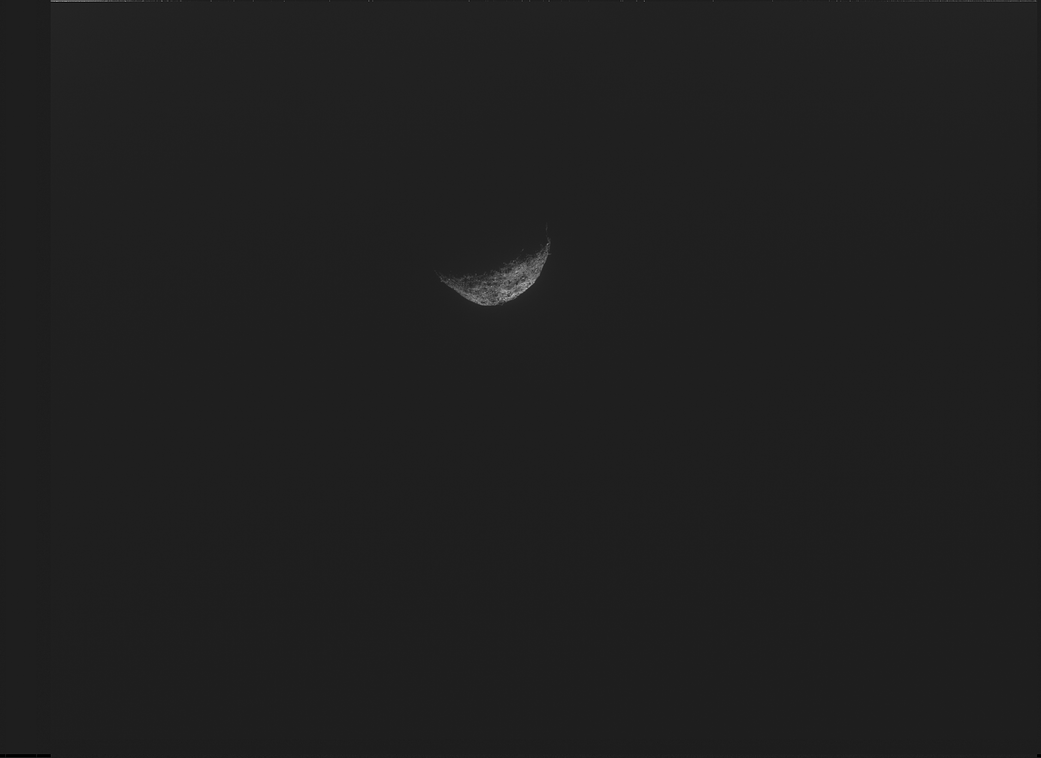
Image (Credit): Photo of Dimorphos taken by the DATA spacecraft. (NASA)

Here are some recent stories of interest.

Futurism: “Something Weird is Going On with the Asteroid NASA Smashed

Nearly a year ago, NASA successfully smashed an asteroid for the first time, in a landmark test to see whether we could divert a killer space rock before disaster — but now, the asteroid in question is behaving strangely. As New Scientist reports, a schoolteacher and his pupils seem to have discovered that the orbit of Dimorphos, the space rock socked by the Double Asteroid Redirection Test (DART) last September, has apparently continued slowing down, unexpectedly, in the year since the refrigerator-sized craft smashed into it.

Kindai University: “Possible Existence of Earth-Like Planet Predicted in the Outskirts of the Solar System

Researchers from Japan predict, based on computer simulations, the likely existence of an Earth-like planet in the distant Kuiper Belt. There are many unexplained anomalies in the orbits and distribution of trans-Neptunian objects, small celestial bodies located at the outer reaches of the solar system. Now, based on detailed computer simulations of the early outer solar system, researchers from Japan predict the possibility of an undiscovered Earth-like planet beyond Neptune orbiting the Sun. Should this prediction come true, it could revolutionize our understanding of the history of the solar system.

European Space Agency:X-ray mission lifts off to study high-energy Universe

The Japan Aerospace Exploration Agency’s (JAXA) X-Ray Imaging and Spectroscopy Mission (XRISM) lifted off on a H-IIA rocket from the Tanegashima Space Center in Japan at 08:42 JST / 00:42 BST / 01:42 CEST on 7 September 2023. The successful launch marks the beginning of an ambitious mission to explore the growth of galaxy clusters, the chemical make-up of the Universe, and the extremes of spacetime. XRISM is a collaboration between JAXA and NASA, with significant participation from ESA.

Two Space Probes will be Mothballed

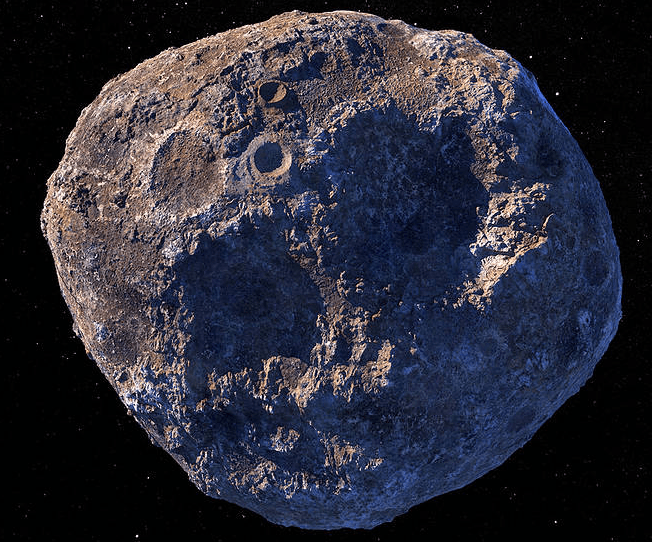
Image (Credit): Illustration of the asteroid Psyche. (NASA)

The delay in the launch of the Psyche spacecraft to visit the asteroid Psyche is having ripple effects on another NASA mission. The $50 million Janus mission with its two probes was supposed to accompany Psyche on the mission to observe two binary asteroid. However, too much time has passed for this separate mission be be accomplished due to the binary asteroids now being too distant from the main mission. Hence, the Janus probes will have to sit this one out. ARSTechnica has a full story on this development.

The good news is that the Psyche spacecraft should be launched this October. So not all is lost.

This will be a tough budget year under this Congress, so NASA will be lucky if it can keep most of its missions on track.

Space Quote: Did Harvard Professor Avi Loeb Find Evidence of Intelligent Alien Life?

Image (Credit): Characters from SyFy’s television series Battlestar Galactica. (SyFy)

“Our findings open a new frontier in astronomy of studying what lies outside the solar system through microscopes rather than telescopes.”

-Statement by Harvard Professor Avi Loeb to USAToday regarding his recent recovery of what is believed to be fragments of an asteroid from outside our solar system that crashed into the Earth back in 2014. More tests are being conducted on the pieces recovered from the Pacific Ocean to determine whether the material is natural or artificially made. If the latter, it may be the first evidence of intelligent life beyond Earth.

Pondering ‘Oumuamua on International Asteroid Day

Image (Credit): Artist’s rendering of Oumuamua, an asteroid from outside out solar system. (JPL/NASA)

On International Asteroid Day, I thought it was worth revisiting an earlier video from Cool Worlds Lab on the first detected asteroid from outside our solar system. The video, “‘Oumuamua: An Interstellar Visitor,” notes that scientists have never seen an asteroid within our solar system with these cigar-shaped dimension.

Scientists now believe that more that 10,000 of such alien comments are now present in our solar system. That may offer us an opportunity for a future mission to study such an asteroid and learn about another solar system (given that the asteroids tend to stick around for about 10 years). It may also give us a better idea as whether such asteroids could have introduced life into our solar system.

This is quite a bit to ponder on this day dedicated to pondering asteroids.

Remember International Asteroid Day

Credit: United Nations

This Friday, June 30th, is International Asteroid Day as adopted by the United Nations to “…observe each year at the international level the anniversary of the Tunguska impact over Siberia, Russian Federation, on 30 June 1908, and to raise public awareness about the asteroid impact hazard.”

NASA has set up page to celebrate the day, as has the European Space Agency. And the Asteroid Foundation is sponsoring a few days of activities leading up to the July 1 Asteroid Day Festival in Luxembourg.

Or you can simply watch your favorite asteroid disaster film on Friday evening.

However you mark the day, enjoy yourself, and look up!

Credit: Asteroid Foundation