Image (Credit): Launch vehicles for Amazon’s Project Kuiper. (Amazon)
Watch out SpaceX, Amazon is getting into the Internet satellite business as well. More importantly, beware astronomers and orbiting spacecraft, because the skies are going to be really crazy, and China has not even started with its massive program.
This week, Amazon announced plans to more forward with Project Kuiper, which will involve about 83 rocket launches involving Arianespace, Blue Origin, and United Launch Alliance. The Project will place 3,236 satellites into low Earth orbit (LEO) over a five-year period.
This is how Amazon describes Project Kuiper:
Project Kuiper aims to provide high-speed, low-latency broadband to a wide range of customers, including individual households, schools, hospitals, businesses, government agencies, disaster relief operations, mobile operators, and other organizations working in places without reliable internet connectivity. Amazon is designing and developing the entire system in-house, combining a constellation of advanced LEO satellites with small, affordable customer terminals and a secure, resilient ground-based communications network.
Of course, this is what SpaceX’s Starlink is already doing as it aims for 42,000 such satellites. In addition, Oneweb aims for about 600 such satellites (to be launched by SpaceX of all firms). And China is considering a similar system of 10,000 LEO satellites. This is just the list to date, which is quite a cluster of problems already.
So let me get this straight. We can get Dish TV cable services to every spot in the US using only 9 satellites, but we will need thousands and thousands of competing satellites crowding LEO and jeopardizing our space stations, weather and intelligence satellites, and astronomy efforts all for Internet services?
Why does it appear we are going backwards. I understand that the Dish satellites are about 22,000 miles away in geosynchronous orbits, but why can’t that be the model going forward rather than the billions of satellites that Mr. Musk thinks is possible? It strikes me as crazy to go down this path. All we need is one bad collision, and the cascading impact of that collision, to doom all of LEO.
Image (Credit): Pete Davidson in a Saturday Night Live skit. (NBC)
Okay, I can understand shooting actor William Shatner into space on a Blue Origin rocket given his work with Star Trek and his interest in space itself, but Pete Davidson from SNL fame? Really? Luckily, his part in the mission was scrubbed.
So who will go up into space tomorrow on Blue Origin’s New Shepard rocket? You may even ask if there will be a launch given the lack of media interest. And now we know why actors are key to the success of these private rocket missions unless they are doing something useful, like testing new scientific ideas or pushing to boundaries of space. Anything else is like listing the names of people flying to China on Delta Airlines.
I do not really care about celebrities in space (unless we leave them there), so I will provide the upcoming launches full crew manifest (in alphabetical order) without such hype:
Marty Allen
Marty Allen is a turnaround CEO and angel investor. During his tenure as CEO of Party America, he transformed the company from a broken California retail chain into a large nationwide retailer, leading the company through a bankruptcy restructuring and the acquisition of several competitors. He is also the former CEO of California Closet Company, leading the company to record sales and profitability. Marty also mentors CEOs through his board activities.
Sharon Hagle
Sharon Hagle founded SpaceKids Global in 2015, a nonprofit whose mission is to inspire students to excel in STEAM+ education with a focus on empowering young girls. SpaceKids hosts several annual challenges designed to inspire kids to pursue careers in the space industry, including national essay competitions and a partnership with the Girl Scouts of Citrus County. SpaceKids also participates in Club for the Future’s Postcards to Space program. To date, Sharon has reached nearly 100,000 students globally.
Marc Hagle
Marc Hagle is president and CEO of Tricor International, a residential and commercial property development corporation. Under his direction, the company has developed and owned more than 17.4 million square feet of properties across the United States, including shopping centers, warehouses, medical facilities, recreational facilities, drug stores, and office projects. Marc and his wife, Sharon, are avid philanthropists for numerous arts, sciences, health, and education-related charities.
Jim Kitchen
Jim Kitchen is a teacher, entrepreneur, and world explorer who has visited all 193 U.N.-recognized countries. He’s been a space dreamer since watching NASA’s Apollo rocket launches in Florida as a child. As a college student in the 1980s, he promoted low Earth orbit space trips for a startup. Since 2010, Jim has served on the faculty of University of North Carolina’s Kenan-Flagler Business School, teaching students to create world-changing for-profit and nonprofit ventures.
Gary Lai
Gary joined Blue Origin in 2004 and was among the first 20 employees. He is currently Senior Director and Chief Architect of New Shepard, responsible for all next generation designs, upgrades, and new product development for the New Shepard business. His prior positions include Senior Director of Design Engineering, System Architect, Crew Capsule Element Lead, NASA Commercial Crew Development Program Manager, Lead Systems Engineer, and Pathfinding Lead with responsibility for advanced research and development. Gary has been involved in product development, strategic planning, and business development for all Blue Origin product lines, including the New Glenn orbital launch vehicle, rocket engine programs, and Blue Moon.
Dr. George Nield
Dr. George Nield is the president of Commercial Space Technologies, LLC, which he founded to encourage, facilitate, and promote commercial space activities. He previously served as associate administrator for the Federal Aviation Administration Office of Commercial Space Transportation and was responsible for licensing and regulating all commercial launch activities. Earlier in his career, he held engineering roles at the Air Force Flight Test Center and the Orbital Sciences Corporation, and he was an assistant professor and research director at the U.S. Air Force Academy. Dr. Nield also served as the manager of the Flight Integration Office for NASA’s Space Shuttle Program.
Of course, I am not so interested in space tourism either, but I listed these names for fun this one time. If these flights lead to greater confidence at Blue Origin and something new that advances space travel or science, then I am fine. If these are just grandiose trips to the stars, then I am not so impressed.
Source/Credit: Star Wars: Galactic Starcruiser room from Disney World.
I thought we were trying to bring down the cost of space travel. Someone may need to inform Disney. It was already expensive enough for visit Disney World under normal circumstances, but now it is crazy if you want to be part of the new Star Wars adventure. Would you like to spend up to $20,000 for a two night stay in its Star Wars’ themed luxury suite? It is less than a spaceflight on Blue Origin, but at least you leave the ground with Blue Origin.
The new Star Wars immersive experience hotel opened March 1st, and I am sure plenty of people in this economy will plop down the money given that TSA will not be asking for the Covid test results before letting them return to Earth (unlike a trip to Earth-bound France).
Star Wars: Galactic Starcruiser is a revolutionary new 2-night experience where you are the hero. You and your group will embark on a first-of-its-kind Star Wars adventure that’s your own. It’s the most immersive Star Wars story ever created—one where you live a bespoke experience and journey further into a Star Wars adventure than you ever dreamed possible.
Looking at the website, you should plan to spend about $4,800 for a two night stay for two, and about $6,000 if you are a group of four. I would expect each room to come with massage droids, but I did not see that on the list of services. However, you do get a hair dryer with your room. Even with these prices, I found only six available nights over the next three months.
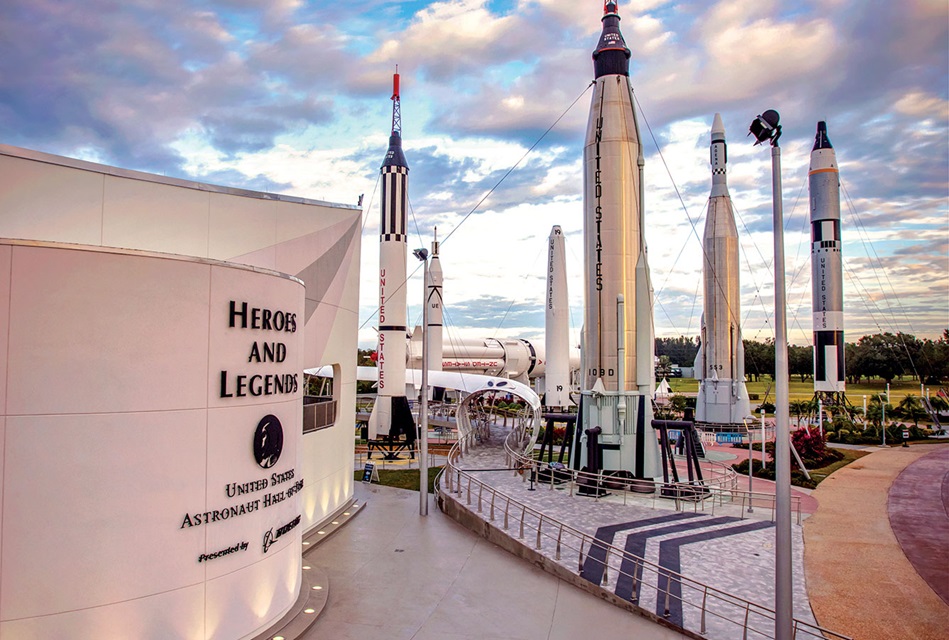
The Washington Post just had a piece about the high prices at the Disney parks, wondering whether the magic is gone. I am not sure about finding magic in a hotel room with no real windows, but I want to point out that Florida has other less expensive ways to get into the space spirit, from the Kennedy Space Center to the US Air Force Space and Missile Museum. Spend what you want, but I think you can keep the dream alive without giving the t-shirt off your back.
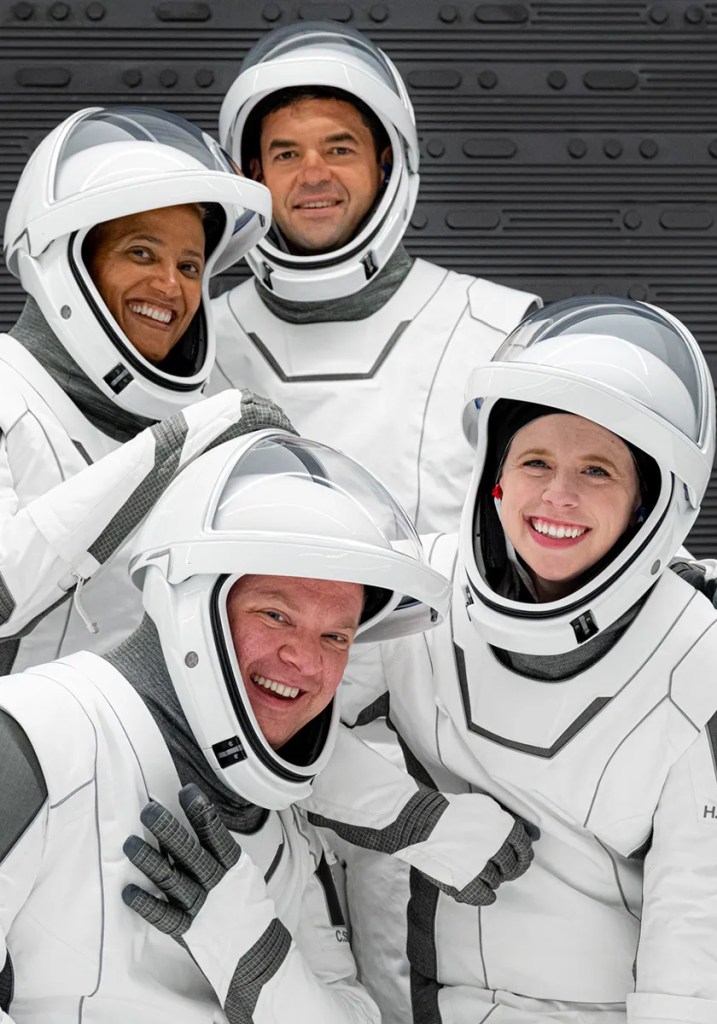
I guess once was not enough. Billionaire Jared Isaacman wants to spend even more money sending private citizens into space aboard SpaceX spacecraft. He funded his first private flight last September, called Inspiration 4, and now wants to do three more of these flights. The first one raised funds for St. Jude Children’s Research Hospital, whereas it is not clear whether these other voyages also relate to charitable causes.
Space tourism is all the rage these days, with Captain Kirk going up on Blue Origin’s capsule and Virgin Galactic sending Sir Richard Branson into space in preparation of paying customers in the near future. SpaceX always seemed to have more serious goals, but I suppose a buck is a buck.
The first of these three new flights is planned for later this year and will include a spacewalk and science experiments. The second will involve SpaceX’s Dragon, which is currently used for trips to the International Space Station (ISS). The third will involve SpaceX’s Starship created for lunar missions under NASA’s Artemis program.
Apparently, these new missions are expected to “…serve a bigger purpose of opening up space for everyone and making humankind a multiplanetary species, and ideally, have a benefit for the things we’re trying to accomplish back here on Earth.” Once might ask whether this bigger purpose, such as space walks and science experiments, can already be performed by professional astronauts aboard the ISS. It is hard to believe these new vanity missions are critical. And maybe dangerous stunts on such missions should only be performed by a professional team, but Mr. Isaacman wants to command the mission. I cannot see how having an accident on one of these flights will benefit SpaceX. I can still remember the blow-back after sending (and losing) the first teacher to space.
Space is still a dangerous place. Maybe money should not trump everything, including common sense. This seems more like a bored corporate executive spending $500,000 on a new fire truck, setting a few old buildings on fire, and then going in with an inexperienced crew to have fun putting out the blaze while claiming he is advancing the science of firefighting. I am not convinced.
With all the previous posts about NASA’s Artemis mission, I should have outlined the three stages ahead as we return to the Moon:
Artemis I: This stage involves an uncrewed flight test around the Moon. The new Space Launch System carrying the empty Orion spacecraft will launch from NASA’s Kennedy Space Center in Florida. The mission will last from four to six weeks. The European Space Agency has supplied a key piece for this mission – a service module, which will supply the spacecraft’s main propulsion system and power (and also house air and water for astronauts on future missions).
Artemis II: This next stage will confirm all of the Orion spacecraft’s systems operate as designed with crew aboard in the actual environment of deep space as the spacecraft circles the Moon. The mission is expected to last just over 10 days
Artemis III: This third and final stage will land a crew on the surface of the Moon. NASA has awarded Human Landing System contracts to Blue Origin, Dynetics, and SpaceX. This final stage will be followed by annual crewed missions to the Moon.
The ultimate goal of Artemis is to establish a presence on the Moon as well as build an orbiting Gateway that can serve as a multi-purpose outpost providing essential support for long-term human return to the lunar surface. The Gateway will also serve as a staging points for deep space exploration, such as travel to Mars.
This is a broad and hopeful mission. The only thing that seems a bit odd is the website mission statement for Artemis:
With Artemis missions, NASA will land the first woman and first person of color on the Moon, using innovative technologies to explore more of the lunar surface than ever before. We will collaborate with commercial and international partners and establish the first long-term presence on the Moon. Then, we will use what we learn on and around the Moon to take the next giant leap: sending the first astronauts to Mars.
I think the first focus of this multi-billion dollar lunar mission should be space exploration, which should also include a diverse crew. Maybe it is better to stick to the more universal statement in the earlier Artemis Plan:
Under the Artemis program, humanity will explore regions of the Moon never visited before, uniting people around the unknown, the never seen, and the once impossible. We will return to the Moonrobotically beginning next year, send astronauts to the surface within four years, and build a longterm presence on the Moon by the end of the decade…we will use the Moon as the stepping stone for our next greatest leap—human exploration of Mars.
You say potato and I say spuds.
Source/Credit: Artemis I mission map from NASA.
Note: NASA’s Artemis page was somewhat out of date when I posted this summary. For instance, in April 2021, SpaceX was chosen to provide the lunar lander.
Update: On March 31st, NASA announced it was looking for “…other U.S. companies to provide new lander development and demonstration missions from lunar orbit to the surface of the Moon.”






 Our Awesome Universe