If you are interested in the idea of settling Mars, and the book A City on Mars has not scared you away, then you should plan on tuning into the upcoming 25-part video series by the Mars Society.
In a news release, the Mars Society defines the new series in this way:
Created for a broad public audience, each video offers a clear, accessible look at how Mars exploration drives scientific discovery, technological innovation, economic growth, and long-term planetary resilience.
I recommend you view the series, but also read the book cited above. The authors of that book seem to think we should have a Mars plan that will settle humans in the next few centuries rather than they next few decades. Or maybe we should be settling on a space station or asteroid, as suggested in the book The Giant Leap, though I expect that a society with “Mars” in its name might disagree.
This is really getting ridiculous. With the reopening of the federal government, the public has moved onto a new topic, and once again it is sex offender Jeffrey Epstein and his emails. However, this time it touches upon an popular cosmologist who wrote a book about Star Trek.
According to recent news stories, cosmologist Lawrence Krauss, author of The Physics of Star Trek, wrote to Mr. Epstein back in 2018 asking for ways to handle sexual harassment complaints against him. Mr. Epstein was a financial supporter of a program run by Dr. Krauss at Arizona State University (ASU). That same year, Dr. Krauss announced his retirement as professor at ASU while dealing with such charges. Dr. Krauss was also a contributor to Scientific American magazine and sat on Scientific American’s board of advisers, but was removed from the board in 2018 for reasons related to allegations of sexual misconduct.
As has been reported endlessly, Mr. Epstein engaged with a very large group of individuals, so Dr. Krauss is not alone. Still, it is not something you want on your resume.
You can still find Dr. Krauss sharing ideas on his podcast, The Origins Podcast with Lawrence Krauss, as well as his substack, Critical Mass. Whether this Epstein topic comes up on either the podcast or substack is anyone’s guess.
For, after all, in science one achieves the greatest impact (and often the greatest headlines) not by going along with the herd, but by bucking against it.
I don’t believe he was talking about these latest headlines.
If you are looking for a new book to read, you might want to check out The Giant Leap by Caleb Scharf, who is director of astrobiology at Columbia University and the senior scientist for astrobiology at NASA’s Ames Research Center.
Here is a quick blurb from the publisher:
The story of life has always been one of great transitions, of crossing new frontiers. The dawn of life itself is one; so, too, is the first time two cells stuck together rather than drifting apart. And perhaps most dramatic were the moves from the sea to land, land to air. Each transition has witnessed wild storms of innovation, opportunity, and hazard. It might seem that there are no more realms for life to venture. But there is one: space.
In The Giant Leap, astrobiologist Caleb Scharf argues that our journey into space isn’t simply a giant leap for humankind—it’s life’s next great transition, an evolution of evolution itself. Humans and our technology are catalysts for an interplanetary transformation, marking a disruption in the story of life as fundamental as life’s movement from sea to land, and land to sky.
Inspired by Darwin’s account of his journey on the Beagle, and packed with stories from the past, present, and future of space travel, The Giant Leap thrills at both life’s creativity and the marvels of technology that have propelled us into the cosmos. And it offers an awesome glimpse of the grander vistas that wait in the great beyond.
Scientific American magazine interviewed the author to learn more about his views. One of the questions related to settling on Mars, which the author did not view as a best option for expanding outward into our Solar System:
We definitely need to study Mars and the moon, and maybe some of us should even try to live there. I mean, there’s all sorts of genuine reasons for doing that. But in the long term, it’s far better to engineer what you really need—to create environments that place fewer stressors on life that evolved on Earth over four billion years. Even if you build fabulous habitats on the moon or Mars, you’ll never have Earth-normal gravity in those places, for example.
Whether you make use of a natural object such as an asteroid or just construct an entirely artificial habitat out there, both would give you far more options than a planetary surface. You can spin your habitat to get Earth-like artificial gravity; you can engineer a lovely atmosphere that precisely fits our biological needs. You can set up seasons, choose where to orbit and have robust protection from cosmic radiation.
The interview covers a range of questions that delve into parts of the book. You may want to start with the interview before deciding to go further. It is a great launching point.
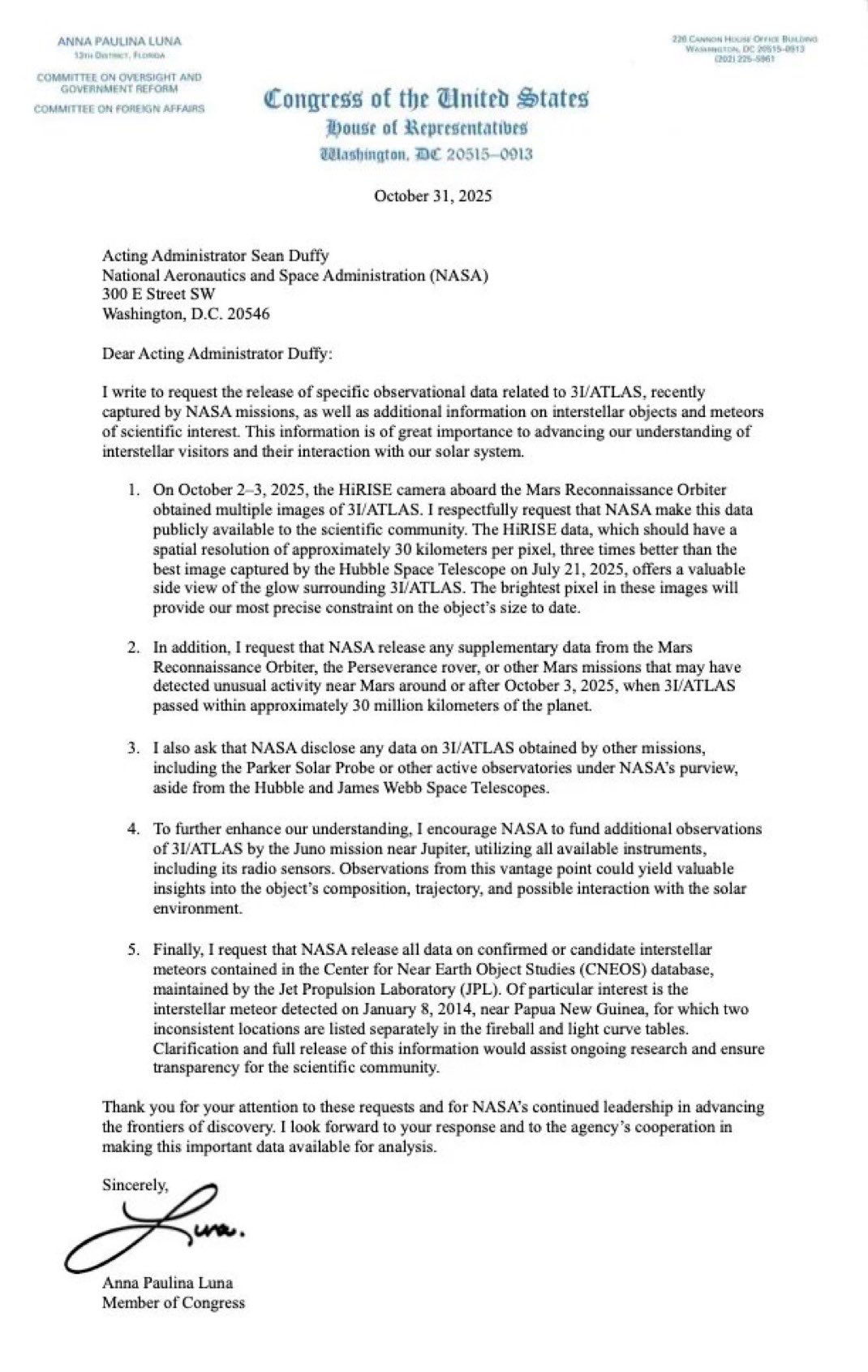
Congresswoman Anna Paulina Luna (R-FL) is very interested in obtaining some additional observational data from NASA regarding the interstellar comet known as 3I/ATLAS. In her letter to NASA (shown below), she said the information is “…of great importance to advancing our understanding of interstellar visitors and their interaction with our solar system.”
It appears this interest follows comments from Harvard scientist Avi Loeb about the object possibly being an alien spaceship.
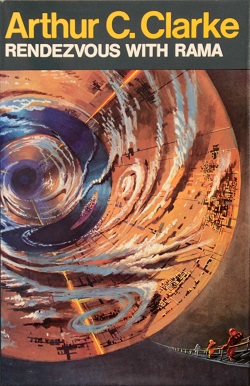
All of this is starting to sound the plot in Arthur C. Clark’s book Rendezvous with Rama.
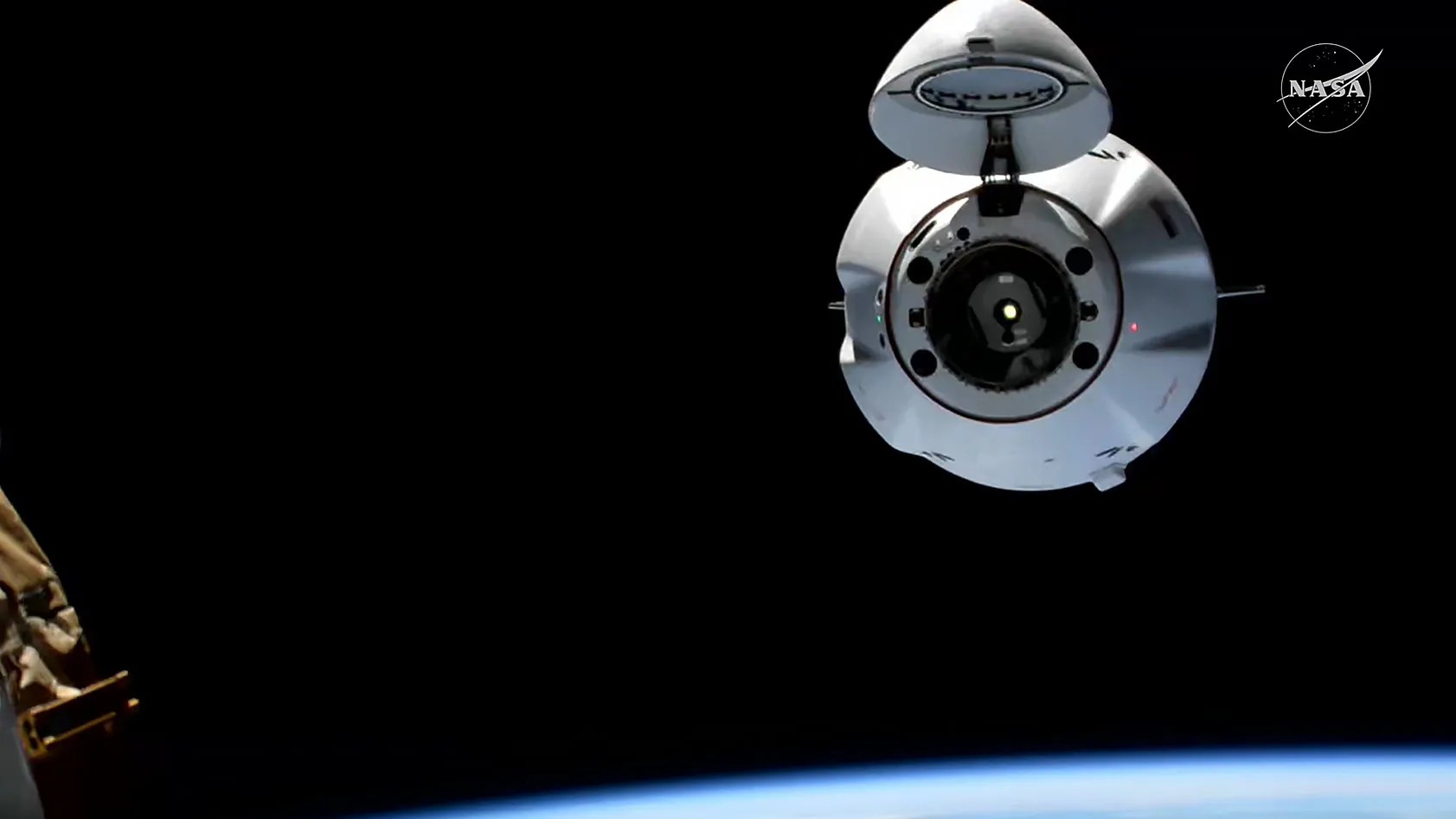
At 7:05 a.m. EDT, the SpaceX Dragon spacecraft docked to the forward port of the International Space Station’s Harmony module. The spacecraft carried over 5,000 pounds of scientific investigations and cargo to the orbiting laboratory on SpaceX’s 33rd commercial resupply services mission for NASA. The mission launched at 2:45 a.m. on Aug. 24 atop a SpaceX Falcon 9 rocket from Space Launch Complex 40 at Cape Canaveral Space Force Station in Florida.
Longtime readers will recognize the name Dean Regas, astronomy contributor to The Enquirer and former cohost of the PBS series “Star Gazers,” but they may not know that Regas is also the author of seven books about astronomy. His latest foray into the world of writing, “All About Orion,” is a children’s book focused on its namesake, Orion, with a twist: the book features braille writing and textile constellations as well as large print for blind and visually impaired children.
The JWST’s latest exoplanet atmosphere target is GJ 3929 b. Astronomers discovered it in TESS data in 2022. “Our analysis confirms the planetary nature of the transiting planet GJ 3929 b,” the authors of the 2022 paper wrote. “Its mass and radius (~ 0.43 Earth masses and ~1.15 Earth radii) put it into the regime of small Earth-sized planets.” Earth-like planets attract attention for obvious reasons. Now the JWST’s results are in, and the once-promising planet appears to be barren.