Movie/Book Review: Mickey 17

Credit: St. Martin’s Publishing Group

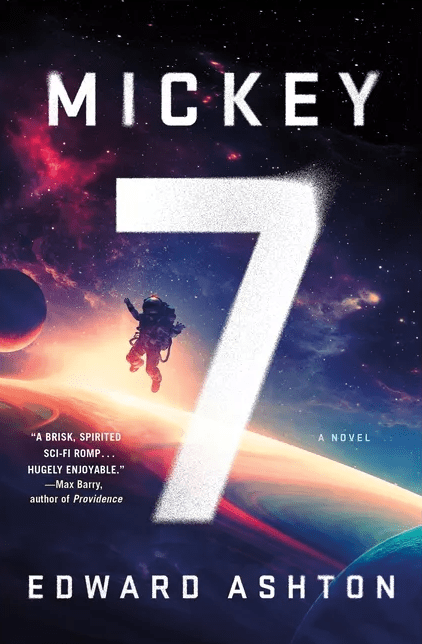
I recently read the book Mickey7 and thought to myself how it would make a great movie. I guess I was not alone since the movie was already in production.

It is the story of a crew member on a spacecraft who was literally dying to do his job. He performed the most dangerous tasks on the mission and when he died he would be reincarnated as the next version of himself. Hence, the term Mickey7 for the seventh iteration of his being.

So now it seems that Robert Pattinson wants to get in on the act, but this time as Mickey 17, who is therefore a little more experienced with death than the character in the book. The film cast also includes Steven Yeun, Naomi Ackie, Toni Collette, and Mark Ruffalo.

Unfortunately, you will need to wait for the film, which was supposed to be released last month. The Hollywood strike caused it to move to January 2025, much like Dune: Part Two was bumped from has year to this year.

That’s okay. Now you have plenty of time to read the book. Here is the teaser:

Dying isn’t any fun…but at least it’s a living.

Mickey7 is an Expendable: a disposable employee on a human expedition sent to colonize the ice world Niflheim. Whenever there’s a mission that’s too dangerous—even suicidal—the crew turns to Mickey. After one iteration dies, a new body is regenerated with most of his memories intact.

On a routine scouting mission, Mickey7 goes missing and is presumed dead. By the time he returns to the colony base, his fate has been sealed. There’s a new clone, Mickey8, reporting for Expendable duties. The idea of duplicate Expendables is universally loathed, and if caught, they face being recycled into protein to feed a hungry colony. Meanwhile, life on Niflheim is getting worse, and the native species are growing curious about their new neighbors, which has Commander Marshall very afraid. Ultimately, the survival of both lifeforms will come down to Mickey7.

That is, if he can just keep from dying for good.

Gift Ideas: Books by Astronauts

Credit: Hachette Go

Are you looking for that perfect book for a space enthusiast? You may want to take a look at some of the books authored by NASA astronauts in the last few years. Be it inspiration or adventure you are seeking, you can find it with these authors. Below are three books to consider as gift ideas.

Moonshot by NASA astronaut Mike Massimino:

Mike Massimino achieved his dream of exploring space. Now he distills stories and insights from NASA into an actionable guide to accomplish your biggest goals. Mike reveals how to make possible the seemingly impossible—on Earth. Written with characteristic wit and a big heart, Mike identifies ten hard-earned lessons of spaceflight and his other life experiences, including:

  • One in a Million Is Not Zero: The odds are against you. Do it anyway.
  • The Thirty-Second Rule: You’re going to make mistakes. Learn how to deal with them.
  • Be Amazed: The universe is an incredible place. Stop what you’re doing and look around.
  • Know When to Pivot: Change is inevitable. Accept and embrace it.

We all have our own personal “moon shots” we’d like to take in life, but as mission control will tell you, doing one big thing really means getting a thousand little things right along the way. Moonshot is the book that will show you how to do just that, and help set you on the right path to achieve your own personal and professional dreams.

Back to Earth by NASA astronaut Nicole Stott:

Stott imparts essential lessons in problem-solving, survival, and crisis response that each of us can practice to make change. She knows we can overcome differences to address global issues, because she saw this every day on the International Space Station. Stott shares stories from her spaceflight and insights from scientists, activists, and changemakers working to solve our greatest environmental challenges. She learns about the complexities of Earth’s biodiversity from NASA engineers working to enable life in space and from scientists protecting life on Earth for future generations. Ultimately, Stott reveals how we each have the power to respect our planetary home and one another by living our lives like crewmates, not passengers, on an inspiring shared mission.

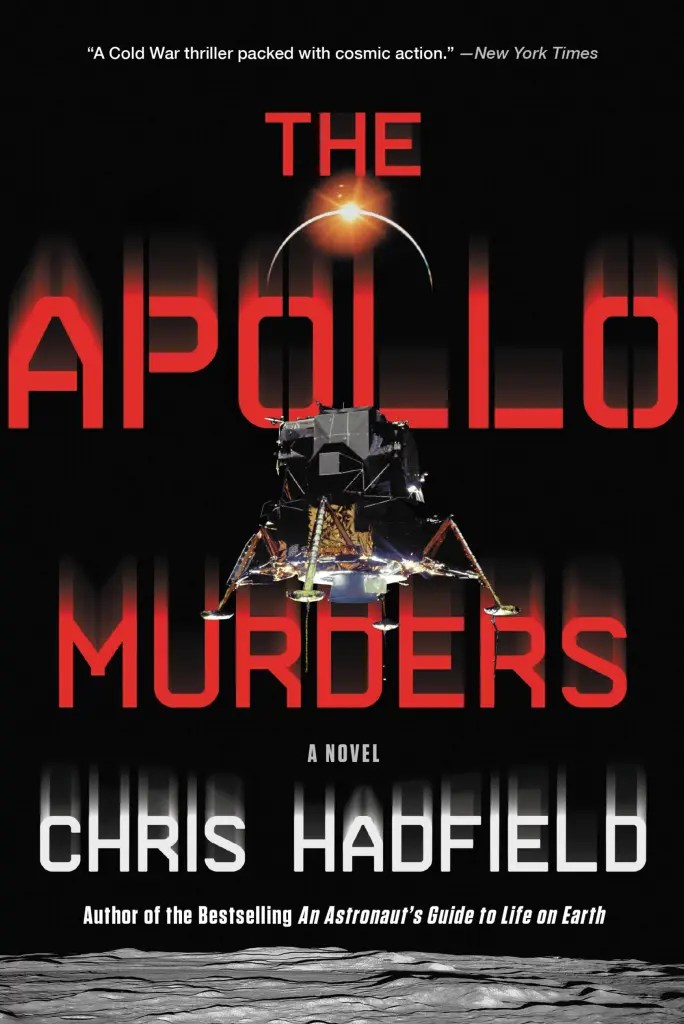
The Apollo Murders by astronaut Chris Hadfield:

NASA is about to launch Apollo 18. While the mission has been billed as a scientific one, flight controller Kazimieras “Kaz” Zemeckis knows there is a darker objective. Intelligence has discovered a secret Soviet space station spying on America, and Apollo 18 may be the only chance to stop it.

But even as Kaz races to keep the NASA crew one step ahead of their Russian rivals, a deadly accident reveals that not everyone involved is quite who they were thought to be. With political stakes stretched to the breaking point, the White House and the Kremlin can only watch as their astronauts collide on the lunar surface, far beyond the reach of law or rescue.

Credit: Seal Press
Credit: Mulholland Books

Space Quote: The Megachurch Called Star Trek

Credit: Gallery Books

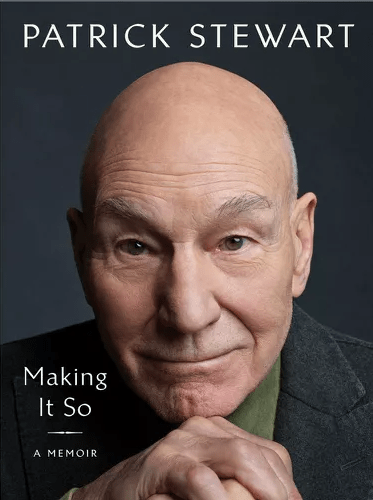
“Yes. I see it very, very clearly and very strongly. It was about truth and fairness and honesty and respect for others, no matter who they were or what strange alien creature they looked like. That was immaterial. They were alive. And if they needed help, Jean-Luc Picard and his crew, his team, were there to give it. So, yes, in a sense, we were ministers. And I have heard now so many times from individuals who have been honest enough and brave enough to tell me aspects of their life, of their health, of their mental health, and how it was all saved and improved by watching every week.”

-Actor Patrick Stewart in an interview with NPR responding to a question about whether he has noticed the fans’ religion-like reverence for Star Trek: The Next Generation. The conversation follows the release of Mr. Stewart’s new memoir, Making It So.

Podcast: Are We Ready to Start Settlements Off-Planet?

Credit: Penguin Press

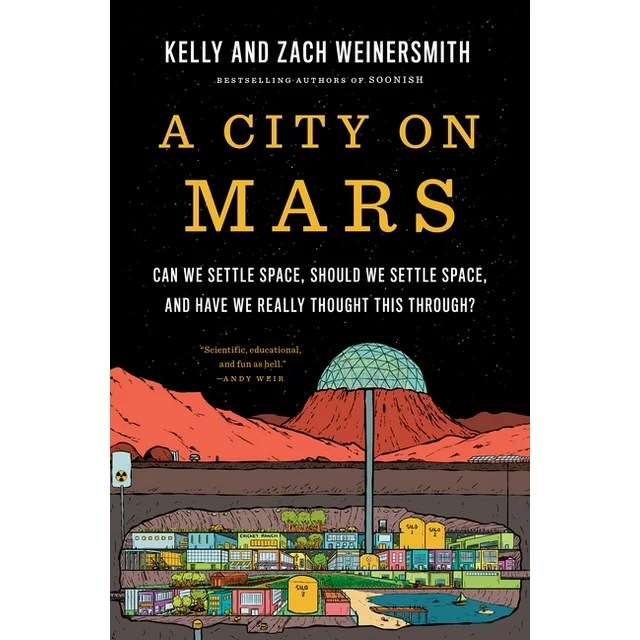
You may want to tune into another episode from The Planetary Society’s podcast Planetary Radio is you are pondering space settlements on the Moon and Mars. The recent program, A City on Mars, is a discussion with authors Kelly and Zach Weinersmith who wrote “A City on Mars: Can We Settle Space, Should We Settle Space, and Have We Really Thought This Through?

The bottom line is that we should not rush towards permanent settlements at either location until we know more about the human body, the human mind, and human politics (good luck with the last one).

The conversation covers a variety of risks, including the effects of gravity on the human body, the ability to procreate in space, and the effectiveness of treaties as nations plan to settle and mine the Moon and Mars. The authors note that we have not had ample time to study all of these issues even with the International Space Station (ISS) in orbit because this has not been the focus of many space efforts to date. For instance, the ISS does not test the impact of radiation on humans because it is in low Earth orbit within the protection of the planet’s magnetic field.

Overall, the authors advise time and more study before jumping into a settlement. This may mean putting off permanent settlements for a few hundred years.

And what about Elon Musk’s plan to start shipping colonists to Mars in his lifetime? As with many things related to Mr. Musk, he does oversell ideas. His energy in the infrastructure realm is good, but his predictions related to humanity in general are usually unreliable.

Image (Credit): Artist’s rendering of a Martian space city. (SpaceX)

Podcast: Bill Maher and Neil deGrasse Tyson Discuss Everything

You may know Bill Maher from his TV show Real Time, but he really lets loose on his podcast Club Random, which can be found in the form of a podcast or Youtube video. If you are interested, then there is not better place to start than with his recent sit down with astrophysicist Neil deGrasse Tyson.

The two friends discuss just about everything, with Bill sometimes barking at Neil, but it is all in good fun (and the drinks probably helped). You can hear about politics, a little bit of science, the state of the world today, and more.

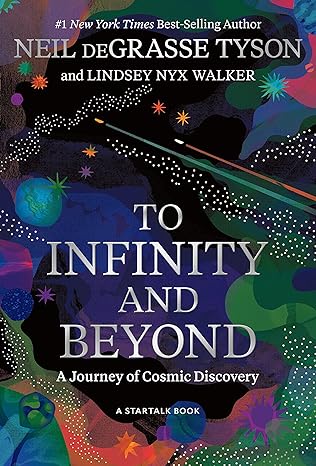
Neil deGrasse Tyson also brought his latest book to the program, To Infinity and Beyond: A Journey of Cosmic Discovery, but the two spend very little time covering the book and its contents. This was a podcast without a clear agenda, which is common for Bill Maher in these settings.

So if you just want to see Neil deGrasse Tyson relaxing with a friend, it is a great show.

Credit: National Geographic