A Day in Astronomy: The Arrival of the Expedition 1 Crew at the ISS

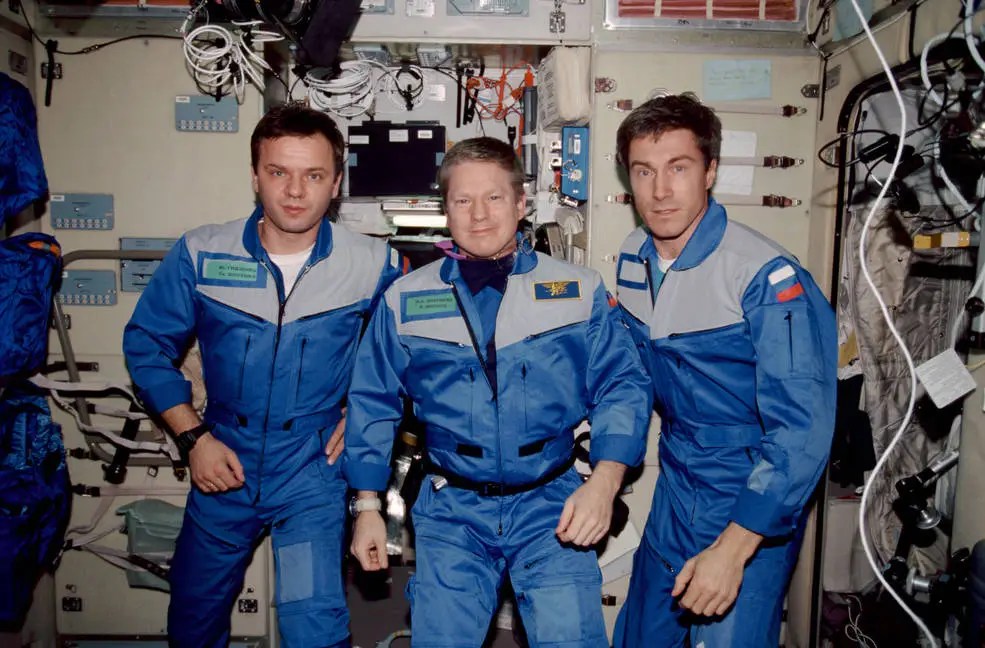
Image (Credit): The Expedition 1 crew of Yuri P. Gidzenko (left), William M. Shepherd, and Sergei K. Krikalev in the ISS’s Zvezda Service Module. (NASA)

It was 25 years ago on this day that the Expedition 1 crew arrived at the International Space Station (ISS), which marked the beginning of very successful space collaboration between five space agencies from the United States, Russia, the European Union, Japan, and Canada.

The Expedition 1 crew, arriving at the ISS aboard a Russian Soyuz capsule, consisted of NASA astronaut William M. Shepherd and Russian cosmonauts Yuri P. Gidzenko and Sergei K. Krikalev. This first mission of four months focused on the continued assembly of the station, with the Expedition 2 crew arriving in March 2001 aboard Space Shuttle Discovery.

Some of the key facts related to the ISS include:

  • In 24 hours, the space station makes 16 orbits of Earth, traveling through 16 sunrises and sunsets.
  • The living and working space in the station is larger than a six-bedroom house (and has six sleeping quarters, two bathrooms, a gym, and a 360-degree view bay window).
  • A spacecraft can arrive at the space station as soon as four hours after launching from Earth.
  • The space station travels an equivalent distance to the Moon and back in about a day.
Image (Credit): Drawing of the International Space Station with all of the elements labeled. (NASA)

Space Stories: New Canadian Radio Telescope, Our Empty Corner of the Universe, and Fortunate Collisions with Earth

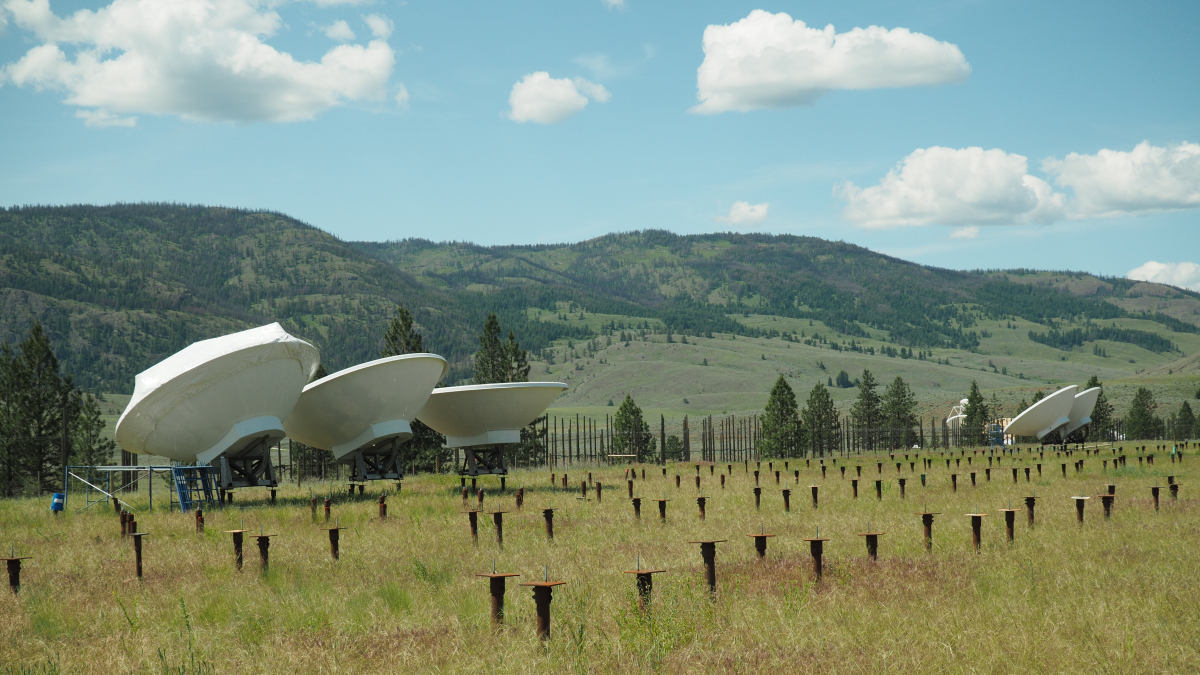
Image (Credit): The Canadian Hydrogen Observatory and Radio-transient Detector. (National Research Council of Canada)

Here are some recent space-related stories of interest.

McGill University: CHORD Will Be a Huge Leap Forward for Canadian Radio Astronomy

Construction is underway of CHORD, the most ambitious radio telescope project ever built on Canadian soil. Short for the Canadian Hydrogen Observatory and Radio-transient Detector, CHORD will give astronomers an unprecedented opportunity to explore some of the most exciting and mysterious questions in astrophysics and cosmology, from Fast Radio Bursts (FRBs) and dark energy to the measurements of fundamental particles, and beyond.

BBC Sky at Night Magazine: Earth Could Be Sitting in the Centre of a Giant Cosmic Void, According to Astronomers

It’s human to feel alarmed by the sheer emptiness of space. Now, astronomers from the University of Portsmouth in the UK suggest this unsettling vastness may be worse than we thought. They reckon Earth, our entire Solar System and even our entire Milky Way sits inside a mysterious giant hole. This void, they believe, may cause the cosmos to expand more quickly in our local environment than in other parts of the Universe.

University of Bern: “No Collision, No Life: Earth Probably Needed Supplies from Space

After the formation of the Solar System, it took a maximum of three million years for the chemical composition of the Earth’s precursor to be completed. This is shown by a new study by the Institute of Geological Sciences at the University of Bern. At this time, however, there were hardly any elements necessary for life such as water or carbon compounds on the young planet. Only a later planetary collision probably brought water to Earth, paving the way for life.

Looking for Canadian Space News?

This site generally covers space news from a US perspective, but there are plenty of other perspectives to consider as well. I will try to point out more of them as I go along.

On viewpoint is that of the Canadians. I found a nice website that covers the space news for that country. I recommend you visit Spaceq for an update on what the Canadian are up to. Some of the stories posted on the site now include:

Of course, Canada is a key partner in the Artemis program, including providing one of the astronauts for the Artemis II mission. Canada is also working on its own space missions as well, including plans to place a rover on the Moon.

Space Stories: Space Station Gap, Martian Job Losses, and Canadian Astronauts Announced for Upcoming Missions

Image (Credit): ISS view of Cuba back in December 2013. What you see here is a Russian Soyuz spacecraft is docked to the station. (NASA)

Here are some recent stories of interest.

SpaceNews.com: “NASA Acknowledges Possibility of Short-term Post-ISS Gap

While NASA seeks to maintain an uninterrupted human presence in low Earth orbit, an agency official said a short-term gap between the International Space Station and commercial successors would not be “the end of the world.” NASA’s current approach to its future in LEO counts on supporting development of commercial space stations with the goal of having at least one such station ready to support NASA astronauts and research by 2030, when the ISS is scheduled for retirement. A key question, though, will be whether any of the several companies working on such concepts will be ready by the end of the decade.

KRON4 News: “Hundreds of California Jobs at Stake if NASA Mars Mission Axed

Hundreds of tech and science jobs will be lost in California if NASA moves forward with a plan to cut funding from the Mars Sample Return (MSR) mission, according to state lawmakers. U.S. Senator Alex Padilla (D-Calif.) and Representative Adam Schiff (D-Calif.-30), sent a letter on Wednesday to NASA Administrator Bill Nelson to reverse a decision to slash the mission’s funding. The funding cut would “result in the loss of hundreds of California jobs, prevent the Jet Propulsion Laboratory (JPL) from making its 2030 launch window, and lead to the cancellation of billions of dollars in contracts supporting American businesses,” the lawmakers wrote.

Space.com: “Canada Assigns Astronauts to Launch on Boeing’s Starliner, Back up Artemis 2 Moon Mission

The Canadian Space Agency announced two astronauts will fly to space in the coming years on Wednesday (Nov. 22) as the country continues a historic ramp-up of its human space program in 2023. François-Philippe Champagne, the Minister of Innovation, Science and Industry of Canada, announced the assignments in front of a crowd of hundreds gathered in the lobby of Canadian Space Agency headquarters in Longueuil, Quebec.

Artemis Mission Astronauts Announced

Image (Credit): Newly-announced Artemis astronauts Commander Reid Wisemam, Pilot Victor Glover, Mission Specialist Jeremy Hansen, and Mission Specialist Christina Hammock Koch. (NASA)

Another step was taken today to get us closer to a Moon landing. Earlier today NASA announced the names of the four astronauts on the next Artemis II mission:

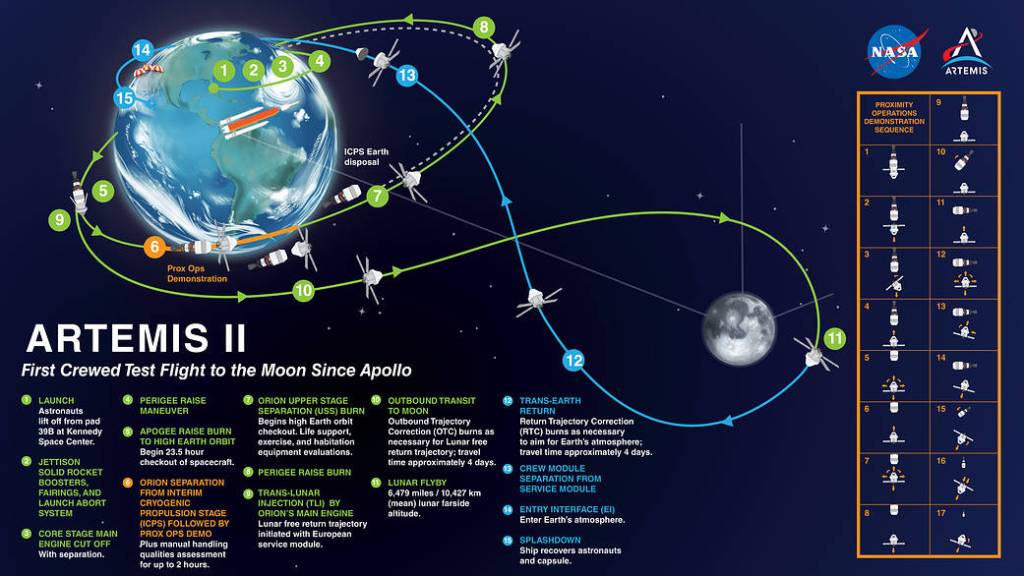
The Artemis II mission will require the four astronauts to take an Orion capsule around the Moon to test a variety of systems and ensure the safety of a later Moon landing as part of Artemis III. You can see a graphic of the Artemis II mission below.

At today’s ceremony announcing the crew, NASA Administrator Bill Nelson stated:

The Artemis II crew represents thousands of people working tirelessly to bring us to the stars. This is their crew, this is our crew, this is humanity’s crew…NASA astronauts Reid Wiseman, Victor Glover, and Christina Hammock Koch, and CSA astronaut Jeremy Hansen, each has their own story, but, together, they represent our creed: E pluribus unum – out of many, one. Together, we are ushering in a new era of exploration for a new generation of star sailors and dreamers – the Artemis Generation.

You can also watch NASA’s full announcement of the new crew here.

Credit: NASA