Space Quote: Robots Plan to Visit the Moon

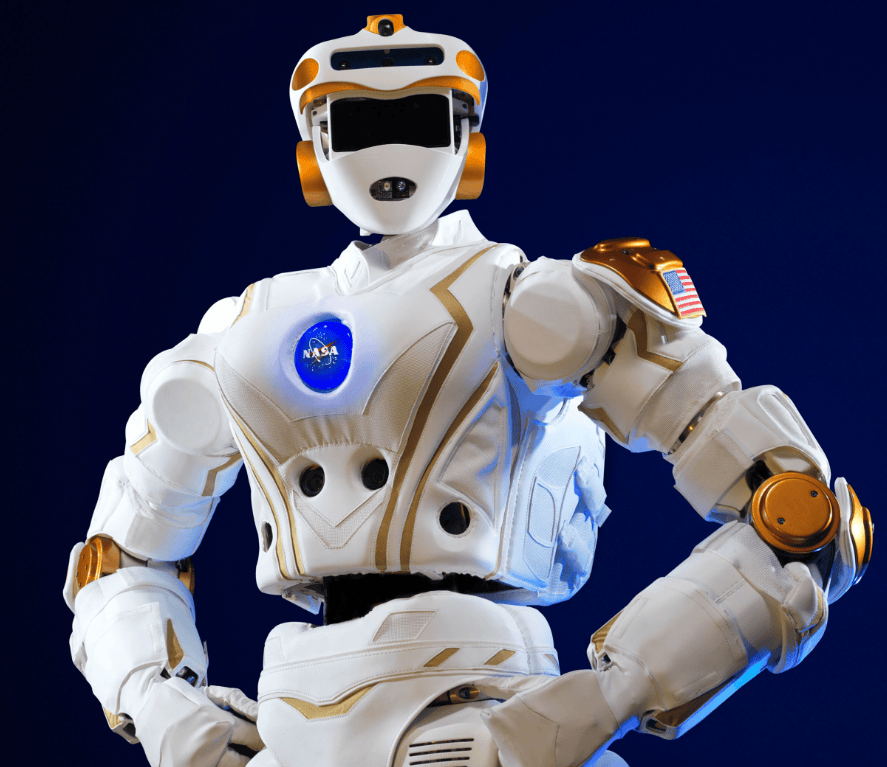
Image (Credit): NASA’s Valkyrie humanoid robot. (NASA)

“Our team is not trying to replace human explorers with robots but instead make human exploration safer and more sustainable by developing highly capable, reliable, and trustworthy robots to work in extreme environments…If we can send more capable robots, we can reduce the risk and make people more effective in doing the things that people do best.”

-Statement by Shaun Azimi, NASA’s Dexterous Robotics Team lead. The 16-member Dexterous Robotics Team at NASA’s Johnson Space Center in Houston includes team member who had experience with earlier robot experiments, including Robonaut 2, used on the International Space Station, and Valkyrie, which is NASA’s first bipedal humanoid robot. Future robots are expected to assist with the Moon Base, lunar exploration, and eventually greater work on Mars (beyond the rovers and helicopter already on the Martian surface). This means that artificial intelligence (AI) will be heading to the moon as well while we still try to figure out what to do with AI back here on Earth. AI is already being used on the Martian surface with the Perseverance and Curiosity rovers.
Crew-13 Safely Arrives at the ISS

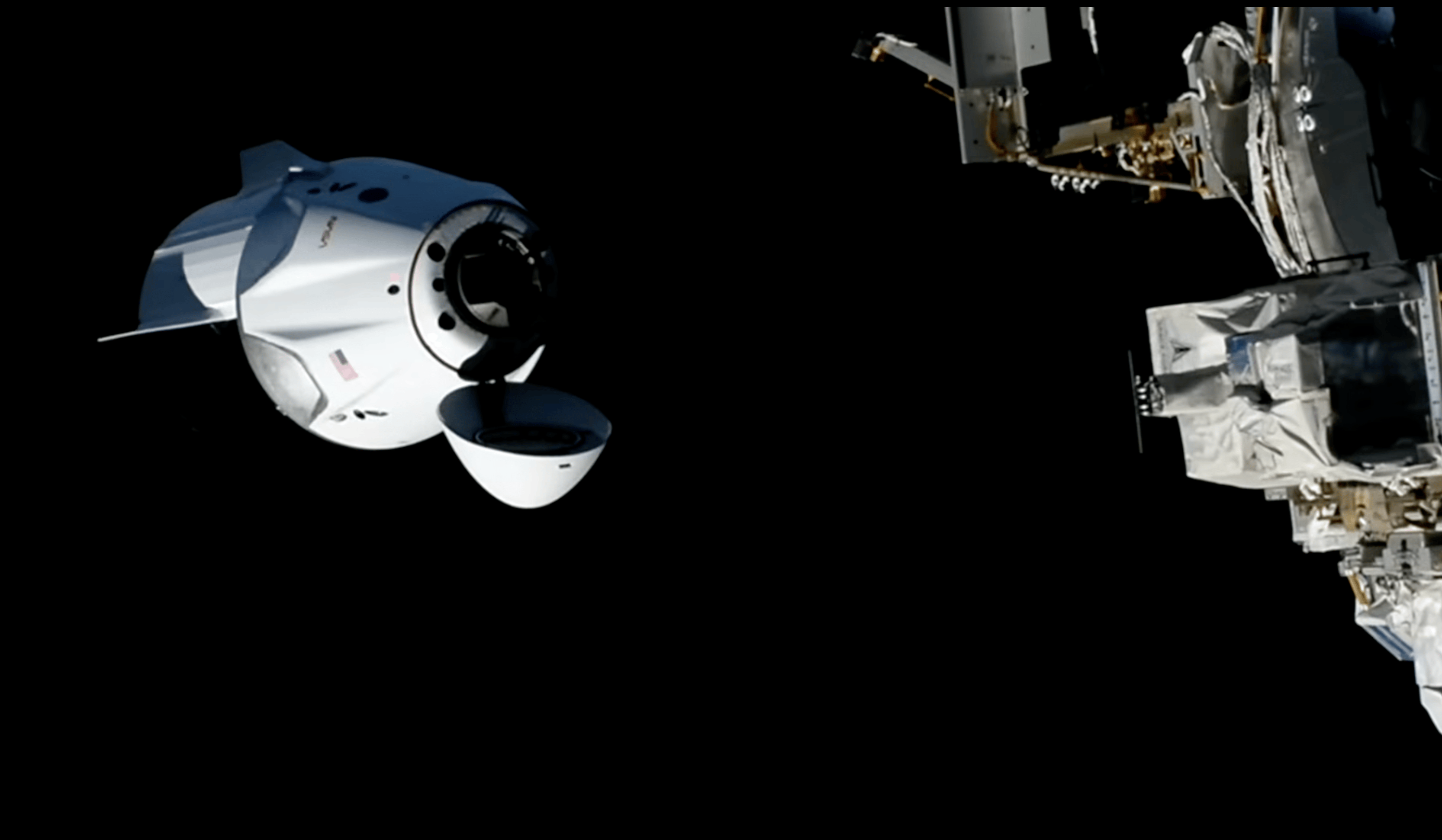
Image (Credit): The SpaceX Dragon, with its nose cone open and carrying four Crew-13 members, approaches the International Space Station for a docking yesterday evening. (NASA)

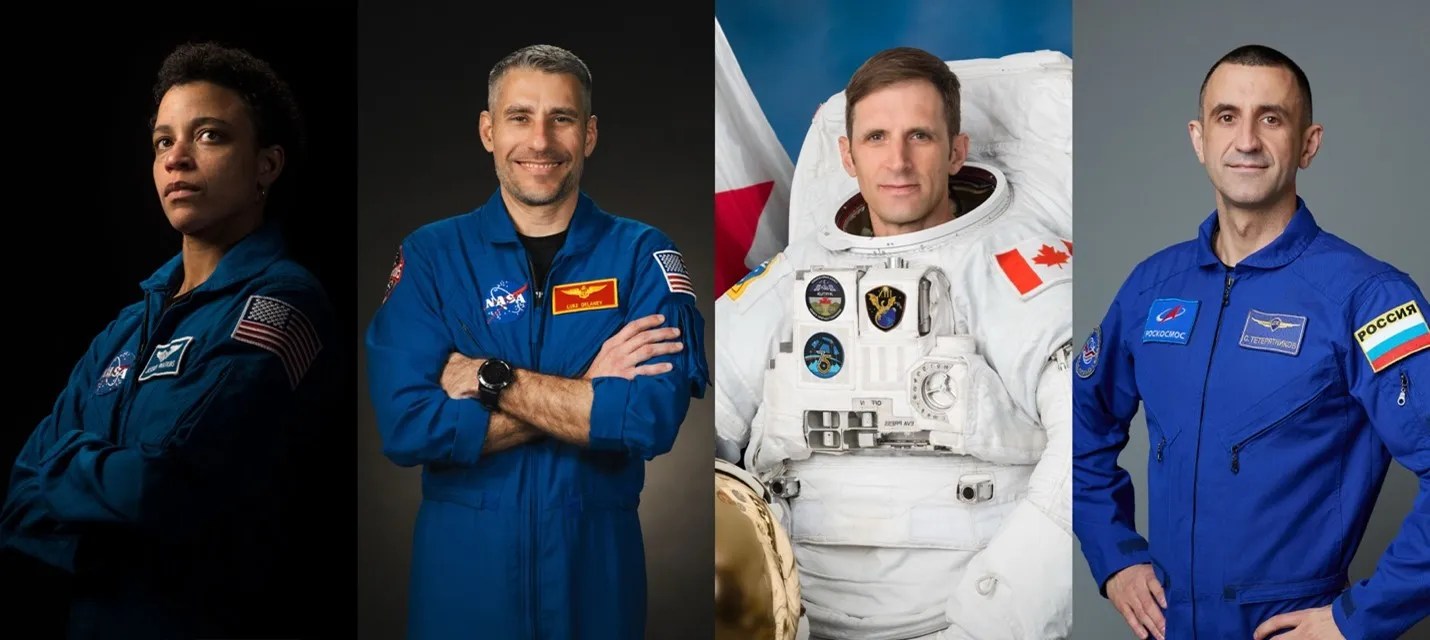
A new ISS crew was launched from Cape Canaveral at 11:10 a.m. EDT Thursday, October 1, 2026 . Crew-13, consisting of NASA astronauts Jessica Watkins and Luke Delaney, Canadian Space Agency (CSA) astronaut Joshua Kutryk, and Roscosmos cosmonaut Sergey Teteryatnikov. The ride to the space station was scheduled to be about 8 hours. The SpaceX Dragon capsule carrying the crew safely docked with the ISS at 9:19 p.m. EDT.

The new crew will replace Crew‑12 consisting of NASA astronauts Jessica Meir and Jack Hathaway, European Space Agency astronaut Sophie Adenot, and Roscosmos cosmonaut Andrey Fedyaev. These four crew members will be returning to Earth as soon as Monday, weather permitting.

Image (Credit): From left to right, Crew-13 NASA astronauts Jessica Watkins and Luke Delaney, CSA astronaut Joshua Kutryk, and Roscosmos cosmonaut Sergey Teteryatnikov. (NASA)

Pic of the Week: Colorful IC 348

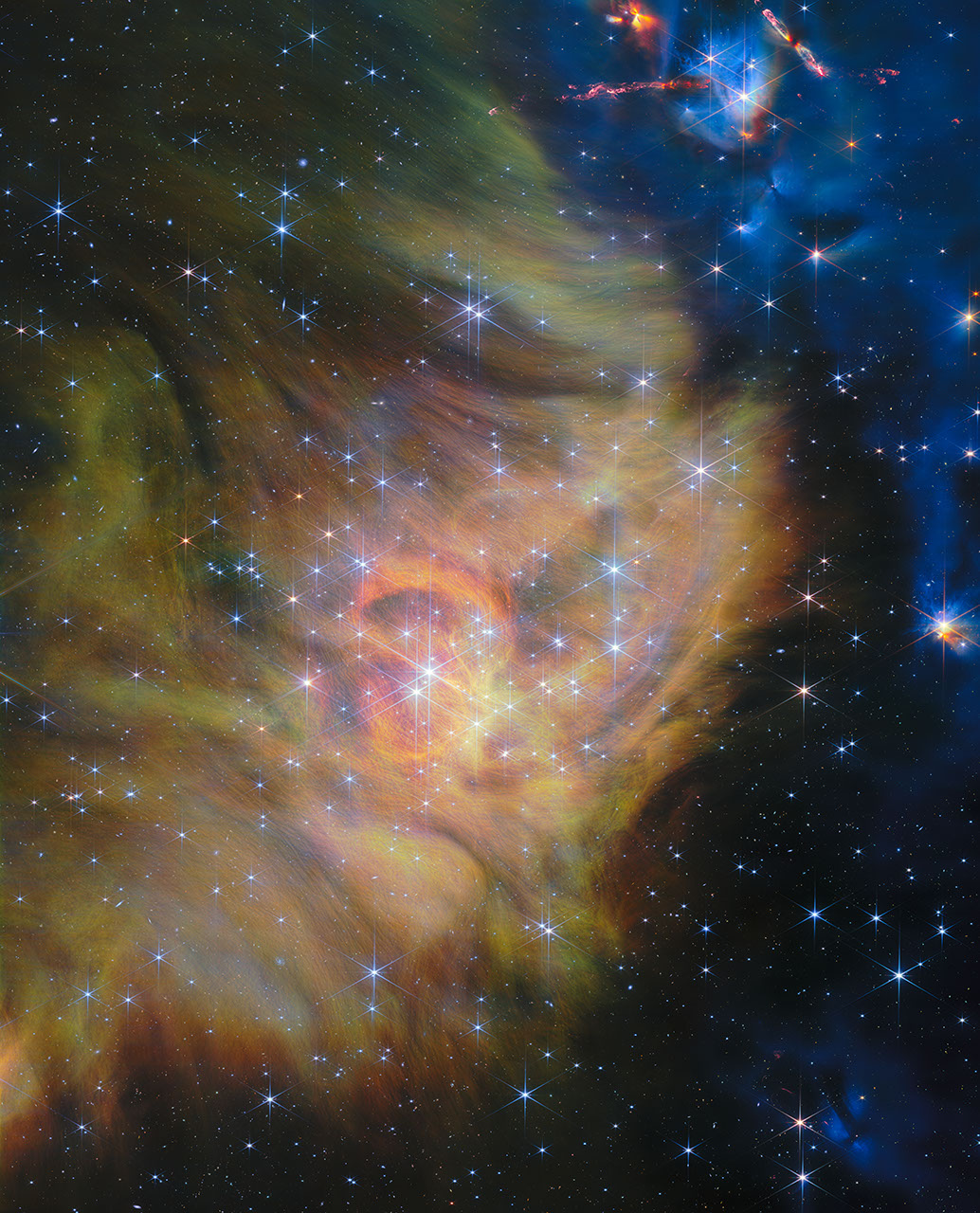
Image (Credit): IC 348 as captured by NASA’s JWST recently observed IC 348. (NASA, ESA, CSA, Kevin Luhman (PSU), Catarina Alves de Oliveira (ESA), Mahdi Zamani (ESA/Webb))

This week’s image is from the James Webb Space Telescope (JWST). With its sharp, amazing colors you would not think it is real, yet you are looking at a star-forming region about 1,000 light-years away called IC 348.

Here is NASA’s description of what you are seeing:

In regions like IC 348, cold clouds of molecular hydrogen gas collapse to form new stars, creating glowing, sculpted scenes like this one. The star-formation process can create widely varied objects, from massive stars that expire after only a few million years in core-collapse supernova explosions to the smallest and most common stars, which are long lived and produce powerful stellar storms.The smallest stars weigh in at around 8 percent of the Sun’s mass. Below this mass lies a strange class of objects called brown dwarfs. Brown dwarfs form in the same way stars do, through the collapse of molecular clouds. However, unlike stars, the cores of brown dwarfs never become hot enough to fuse ordinary hydrogen into helium (though many briefly fuse deuterium, or heavy hydrogen, early in their lives).