Amazon’s Project Kuiper is Underway

Image (Credit): Launch of the Amazon Project Kuiper prototypes from Cape Canaveral. (Amazon)

If you were worried about satellite traffic and its impact on astronomy, then you have one more thing to worry about. Yesterday, two prototype satellites were launched aboard an Atlas V rocket from the Cape Canaveral Space Force Station. They are part of Amazon’s Project Kuiper, which may lead to 3,200 additional satellites orbiting the Earth.

So what is Project Kuiper? Amazon explains it this way:

Project Kuiper is an initiative to increase global broadband access through a constellation of 3,236 satellites in low Earth orbit (LEO). Its mission is to bring fast, affordable broadband to unserved and underserved communities around the world.

Sounds a lot like SpaceX’s Starlink, doesn’t it? And plenty more similar projects are being planned by the Chinese and others.

It does make you wonder whether there is a better way. I understand the nationals security complications with satellites, but thousands upon thousands of satellites circling the Earth to provide similar Internet services to customers sounds wasteful, dangerous, and bothersome to astronomy. I liked it better when the wires were running under the seas or underground. This new approach will be a mess.

The Government Accountability Office issued a report last year highlighting some of the risks and mitigation ideas:

  • Increase in orbital debris. Debris in space can damage or destroy satellites, affecting commercial services, scientific observation, and national security. Better characterizing debris, increasing adherence to operational guidelines, and removing debris are among the possible mitigations, but achieving these is challenging.
  • Emissions into the upper atmosphere. Rocket launches and satellite reentries produce particles and gases that can affect atmospheric temperatures and deplete the ozone layer. Limiting use of rocket engines that produce certain harmful emissions could mitigate the effects. However, the size and significance of these effects are poorly understood due to a lack of observational data, and it is not yet clear if mitigation is warranted.
  • Disruption of astronomy. Satellites can reflect sunlight and transmit radio signals that obstruct observations of natural phenomena. Satellite operators and astronomers are beginning to explore ways of mitigating these effects with technologies to darken satellites, and with tools to help astronomers avoid or filter out light reflections or radio transmissions. However, the efficacy of these techniques remains in question, and astronomers need more data about the satellites to improve mitigations.

The report has a lot of good information, but I am not sure Amazon, SpaceX, or the Chinese will be paying any attention until a world body gets involved. National regulation will not be enough.

More likely than not, as with many of these areas in need of regulation, we are just one major accident away from new rules.
Space Quote: Venezuela Aims for the Moon

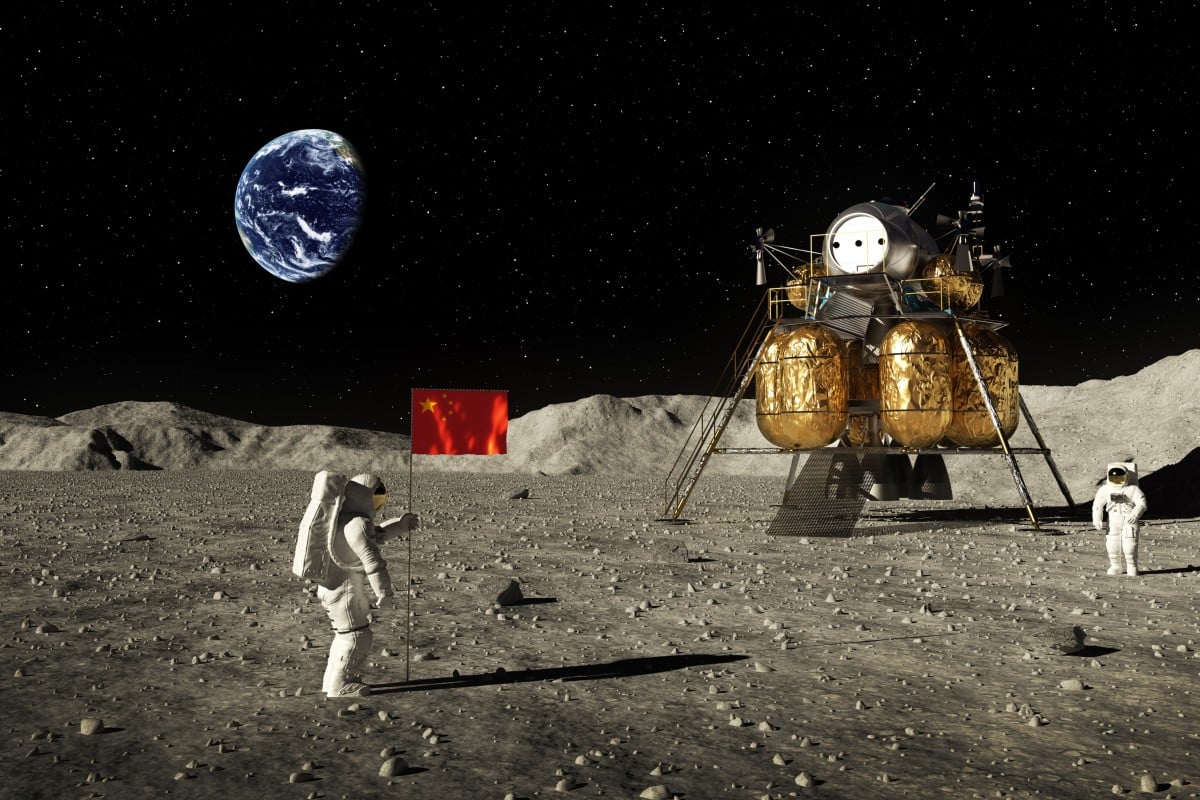
Image (Credit): Artist’s concept of a Chinese Moon base. (South China Morning Post)

“…scientific, technological, industrial and aerospace cooperation will sooner rather than later (send) the first Venezuelan man and woman to the moon in a Chinese spacecraft.”

Statement by Venezuelan President Nicolas Maduro in reference to an agreement with China that would train Venezuelan astronauts in China in preparation for a future Moon mission. China has previously stated its plans to land humans on the lunar surface by 2030 and establish a Moon base in the 2030s. Other countries have already signed agreements with China related to the lunar base, including Russia, Pakistan, and the United Arab Emirates.

Space Stories: Mars Ascent Vehicle, Dark Matter Stars, and a New Russian Space Station

Image (Credit): Artist’s rendering of the Mars Ascent Vehicle. (NASA)

Here are some recent stories of interest.

NASA/JPJ.com : “NASA Mars Ascent Vehicle Continues Progress Toward Mars Sample Return

NASA’s Mars Ascent Vehicle (MAV) recently reached some major milestones in support of the Mars Sample Return program. The Mars Ascent Vehicle would be the first launch of a rocket from the surface of another planet. The team developing MAV conducted successful tests of the first and second stage solid rocket motors needed for the launch. Mars Sample Return will bring scientifically selected samples to Earth for study using the most sophisticated instrumentation around the world. This strategic partnership with ESA (European Space Agency) features the first mission to return samples from another planet. The samples currently being collected by NASA’s Perseverance Rover during its exploration of an ancient river delta have the potential to reveal the early evolution of Mars, including the potential for ancient life.

ScienceNews : “The James Webb Telescope May Have Spotted Stars Powered by Dark Matter

The James Webb Space Telescope has spotted objects in the early universe that might be a new kind of star — one powered by dark matter. These “dark stars” are still hypothetical. Their identification in JWST images is far from certain. But if any of the three candidates — reported in the July 25 Proceedings of the National Academy of Sciences — turn out to be this new type of star, they could offer a glimpse of star formation in the early universe, hint at the nature of dark matter and possibly explain the origins of supermassive black holes.

CNN : “Russia Proposes Joint Research Module on Space Station for China, India, Brazil and South Africa

The head of Russia’s space agency has extended an offer to Moscow’s partners in the BRICS group – Brazil, IndiaChina and South Africa – to participate in the construction of a joint module for its planned orbital space station, state media reported Monday. Construction of the planned space station follows Moscow’s decision last year to end its decades-long partnership with NASA and withdraw from the aging International Space Station – one of the last remaining channels of cooperation between Russia and the United States.

Future Guests on the ISS and Tiangong Space Station

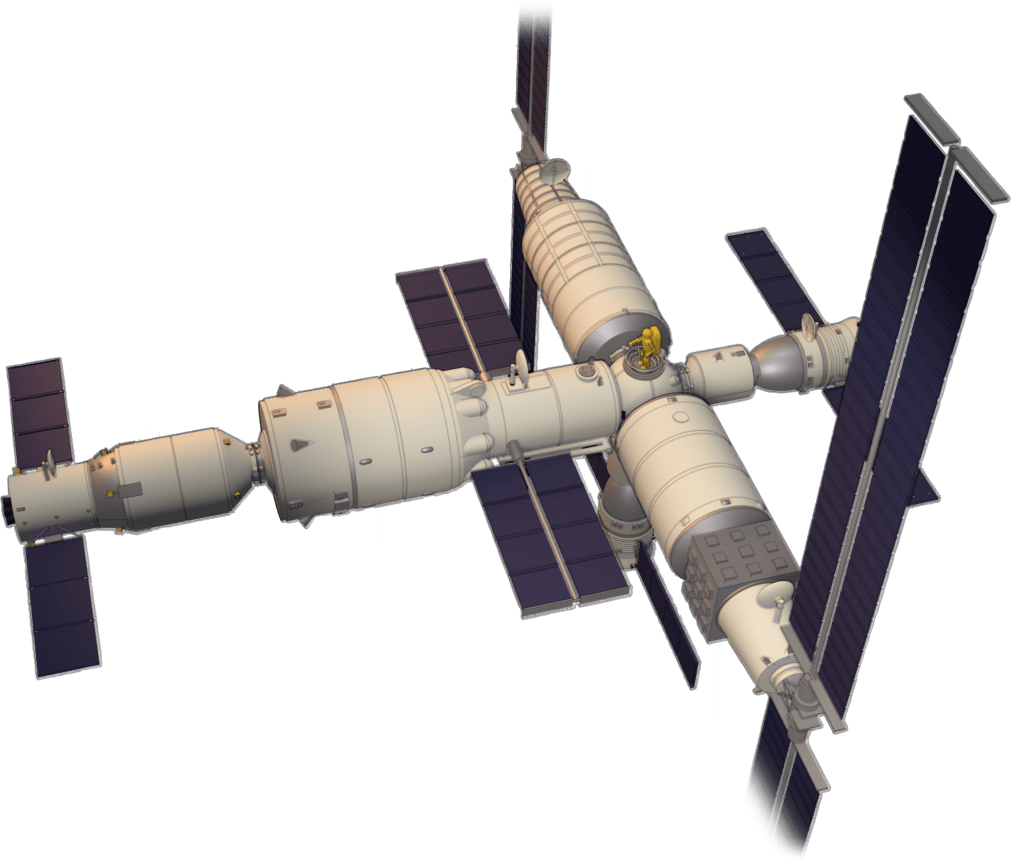
Image (Credit): China’s Tiangong space station. (The New York Times)

The CEO of the South African National Space Agency announced plans to send two female astronauts to the International Space Station (ISS). It is something that the space agency hopes to accomplish in the next two years.

This latest announcement appears to be based on Russian efforts to parlay better relations with African nations. The Russian RT news recently stated:

Roscosmos announced plans last month to expand its space partnerships with African countries. According to its director, an agreement will be signed with a number of the continent’s nations at the Russia-Africa summit this week in St. Petersburg.

In other news, the Chinese Tiangong space station is also getting visitors – zebrafish. The fish are part of experiments to learn more about bone loss in astronauts. The news story goes on to note that the Russians were the first to use zebrafish in space back in 1976.

Russia is also Heading to the Moon

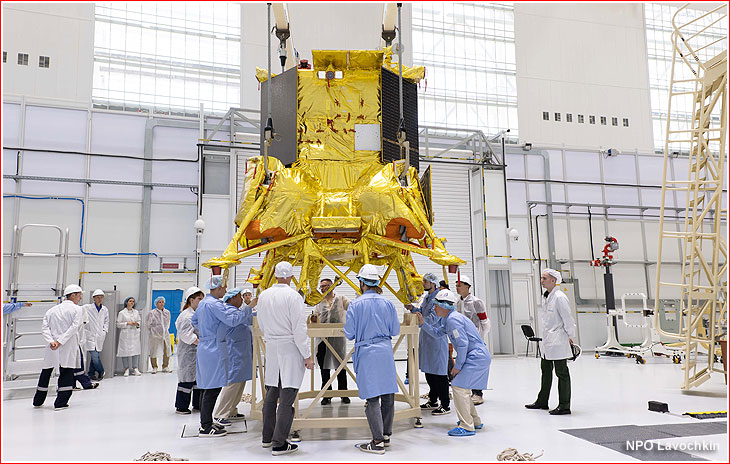
Image (Credit): Russia’s Luna-Glob-Lander. (https://www.russianspaceweb.com/)

As noted in an earlier post, India left for the moon’s south pole last week, but it won’t be alone for long. Russia is planning to launch its Luna-25 spacecraft, also called the Luna-Glob-Lander, next month. According to NASA, the mission has two primary scientific objectives at the Moon’s south pole:

  • to study composition of the polar regolith, and
  • to study the plasma and dust components of the lunar polar exosphere.

The last Luna mission was Luna-24 back in 1976 and involved the return of lunar samples to Earth.

The European Space Agency was planning to be part of this latest mission until the invasion of Ukraine, so Russia is on its own now.

I imagine simpler missions like this will be necessary if Russia plans to eventually build a moon base, though finding a partner may be tough. It is clear that the US and Russia are no longer in a neck-to-neck race back to the Moon. Only China seems to have the stamina to compete with NASA’s Artemis program, though the US is still in the lead for now.

The Luna-25 launch is planned for August 10 if all goes well.