
Happy Lunar New Year!


“We will pursue our manifest destiny into the stars, launching American astronauts to plant the Stars and Stripes on the planet Mars.”
-Inaugural statement by President Trump on January 20, 2024. He may want to check with NASA on the Artemis program given that the planned trip to the Moon has already cost taxpayers billions of dollars. He might also want to read a recent Politico story that discusses congressional preference for a Moon first program. The story quotes Texas Republican Brian Babin, who stated, “To bypass the moon would be a mistake.” It might also look bad to give the Moon to the Chinese long before we figure out a way to safely get to Mars. For all of Musk’s talk on this matter, the loss of a Starship rocket last week was not encouraging. We are having trouble enough getting ready to return to the Moon.
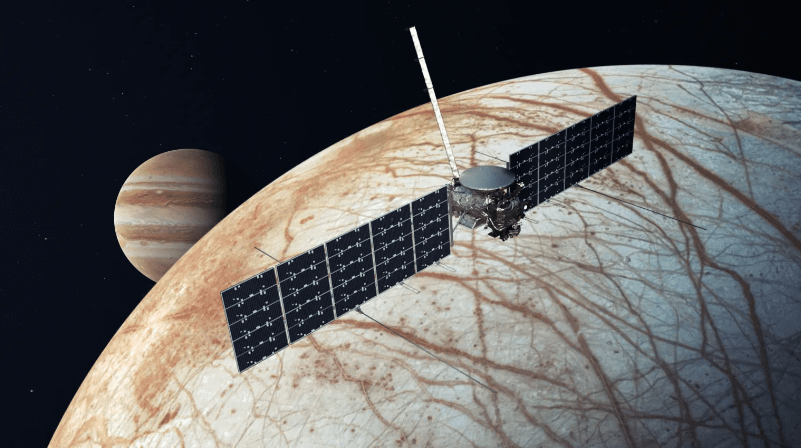
Another list worth highlighting at year-end covers all of the space missions from 2024. For example, this list from Freethink, “the top 10 space stories of 2024,” includes the launch of the Europa Clipper, China’s Chang’e 6 round-trip to the Moon, and a successful commercial launch to the Moon (Odysseus lunar lander).
Here are some other lists of missions from 2024:
Note: The Awesome-Universe list of top missions looking back in 2024 include:

While Elon Musk has talked endlessly about going to Mars with his Starship, it seems the U.S. Department of Defense (DOD) in the service of Mars, God of War, has other ideas for his rocket.
A recent Washington Post article, “Elon Musk’s Martian Dreams are a Boon to the U.S. military,” stated that DOD is looking to use the Starship for Earthbound battles, such as the quick deployment of soldiers and materiel into the Chinese theater. Sending rockets directly into the war zone with troops and supplies can turn a multi-week trip into a 90 minute trip. Another option is to keep key military supplies in Low-Earth Orbit so that they can be timely delivered when needed (in the way the DOD already pre-positions military equipment at sea and elsewhere).
The article states that the U.S. Air Force already has a five-year contract with SpaceX to make this rocket-based delivery possible. Space News reported on the $102 million contract award to SpaceX back in January 2022, which was to help “determine exactly what a rocket can achieve when used for cargo transport, what is the true capacity, speed, and cost of the integrated system.” A similar contract was awarded to Blue Origin in December 2021.
The Washington Post piece makes reference to a 2024 Army story, “Supporting Warfare in the Indo-Pacific Through Space-Based Sustainment,” which highlights these benefits:
The space domain remains completely underdeveloped regarding providing terrestrial materiel support and offers an ideal platform to sustain smaller units of action within the joint force, which would otherwise divert aircraft or naval vessels that could be used to support larger formations…Space-based logistics can facilitate the delivery of blood, weapons, 3D-printed parts, power, and food to the joint force and has the potential for delivery time to be measured in minutes, not hours or days. The impetus for this idea can be traced to the Cold War.
The Army story makes reference to a separate 2022 The Journal of the Joint Forces Staff College article, “The World in 90 Minutes or Less: Rocket Logistics and Future Military Operations,” that discusses the pros and cons of this rocket-based approach. The article also cites numerous companies in addition to SpaceX that should be considered for this new approach, including United Launch Alliance (ULA), Rocket Lab, Northrop Grumman, and Blue Origin.
In terms of advantages, the journal article notes:
The most significant difference between Rocket Logistics and conventional methods is the speed of delivery; rockets are expected to transport tons of material across the planet in under ninety minutes by using an orbital trajectory to reduce transit time. This presents a variety of logistical options to deliver valuable cargo within tactically relevant timelines, as opposed to hours or days (e.g. fourteen hours of flight time for a plane traveling from New York City to Nairobi, Kenya). The second advantage of Rocket Logistics is that movement above 100 kilometers in altitude is not governed by national airspace regulations. This means that the rocket would only need permission to access the nation’s airspace from which it departed and the nation in which it will land.
Of course, there are some limitations, including limited launch facilities, specific fuel needs, long turnaround time, and G-forces that may limit the types of cargo carried. For instance, the journal article notes:
While cargo aircraft are relatively sedentary in their acceleration profiles, a rocket can produce more G-forces than fighter aircraft. NASA and civilian space companies recognize this and limit flight parameters for the protection of cargo. Despite acceleration limitations, G-forces must be considered when planning the operational usage of rocket cargo.
There is a lot of money to be made in wars, and potentially more ongoing demand than a risky mission to Mars. Is this the future of SpaceX? Will it become further wrapped into the military-industrial complex (with its Starlink and other assets) at the expense of missions off planet?
The planned review of NASA and other federal agencies by the Trump administration may have an answer. But one thing you can be sure of, particularly with Musk in the middle of the review, is that SpaceX will be making plenty of money whether its goal is landing on the Red Planet or defeating Red China.

“To be clear, we are far from anything being settled, but based on what I’m hearing it seems at least 50-50 that Nasa’s Space Launch System rocket will be canceled.”
-Comment by US space journalist Eric Berger as quoted in an article from The Conversation titled “Trump May Cancel NASA’s Powerful SLS Moon Rocket—What That Would Mean for Elon Musk and the Future of Space Travel.” The bottom line in the story is that SpaceX is not ready to replace the main component of the Artemis program, meaning any attempt to scrap the rocket will most likely scrap U.S. attempts to get back to the Moon before the Chinese.

