Will China Beat Us to the Moon?

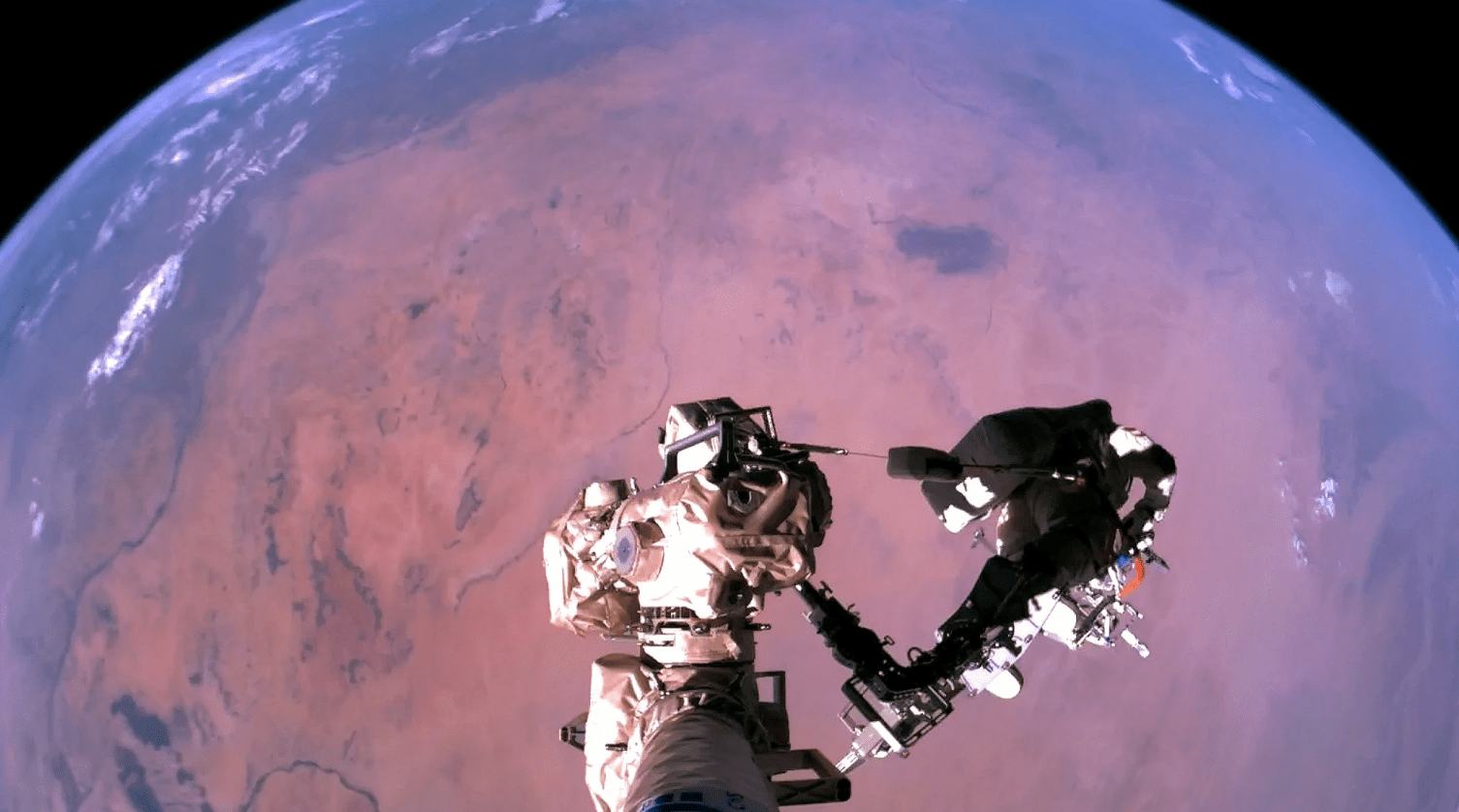
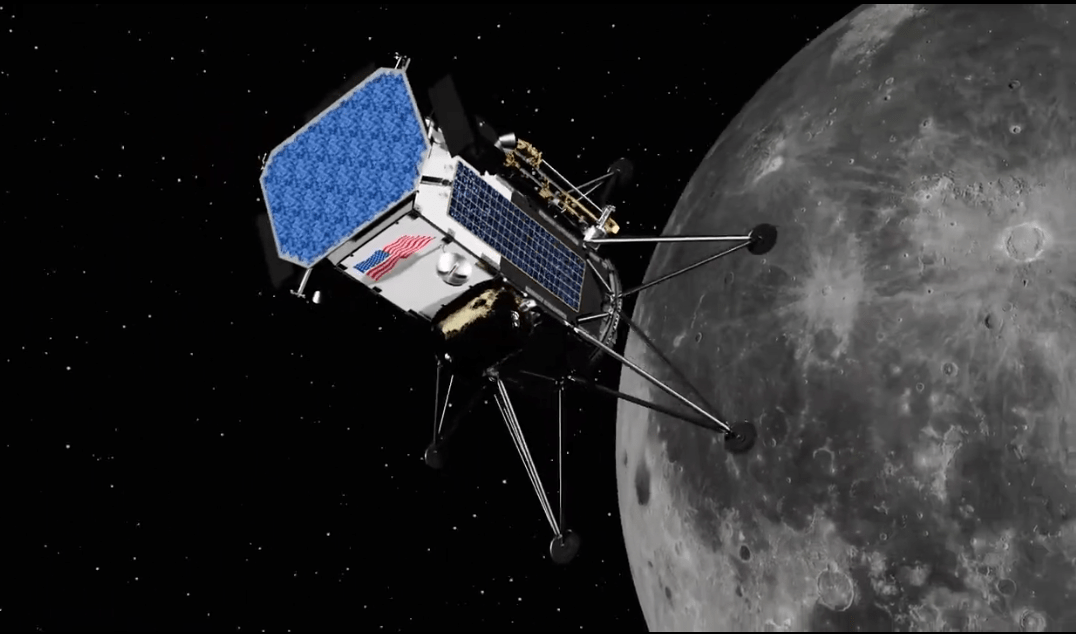
Image (Credit): A manufactured image, but it may be a reality soon enough. (Asia Times)

With the newly announced delays related to the Artemis lunar program, it is fair to ask whether the U.S. might fall behind the Chinese when it comes to a crewed lunar mission (of course, we won that battle 50 years ago, but you know that I mean).

All reports indicate that the Chinese wants to place humans on the Moon by 2030, but they are not expected to beat the Artemis timetable of a lunar landing in 2026. Of course, it is important that NASA stick to this timetable.

NASA Administrator Bill Nelson recently stated:

I do not have a concern that China is going to land before us…I think that China has a very aggressive plan. I think they would like to land before us, because that might give them some PR coup. But the fact is that I don’t think they will. I think it is true that their date that they announced keeps getting earlier. But specifically, with us landing in September of ’26, that will be the first landing.

Obstacles remain on what will prove to be a difficult mission even if it is a repeat. We already saw Russia’s failed attempt to simply land on the Moon last year, and the problems with last week’s NASA-funded commercial launch towards the Moon was worrying.

Nothing can be taken for granted in this new space race.

Space Stories: A Volcanic Moon, an Indian X-ray Launch, and New Chinese Communication Satellites

Image (Credit): JunoCam image of Jupiter’s moon Io during its close encounter. The image was taken at an altitude of about 1,500 miles. (NASA JPL and Southwest Research Institute)

Here are some recent stories of interest.

Forbes: “A NASA Spacecraft Just Had A Close Encounter With A Volcanic Moon—See The Stunning First Image

NASA’s spacecraft Juno just had a super-close encounter with the most volcanic world in the solar system—but its stunning first image could be among its last after 56 orbits of Jupiter. On December 30, the bus-sized spacecraft—orbiting Jupiter since 2016—got very close to Io, the giant moon of Jupiter. It reached a mere 930 miles (1,500 kilometers) from the moon’s surface. However, the spacecraft’s camera has suffered radiation damage and may not last much longer.

Fox51 News: “India Kicks Off 2024 with X-ray Astronomy Satellite Launch

India began 2024 with the launch of an X-ray astronomy satellite aboard the sixtieth flight of its Polar Satellite Launch Vehicle. The PSLV C58 mission lifted off at 9:10 AM local time (03:40 UTC) on Monday, Jan. 1, from the Satish Dhawan Space Centre. XPoSat, or X-ray Polarimeter Satellite, carries a pair of instruments that will be used to study X-ray emissions from astronomical sources. After deploying XPoSat, PSLV C58’s upper stage has remained in orbit as the third flight of the PSLV Orbital Experimental Module (POEM-3), serving as a free-flying platform hosting a range of attached payloads.

SpaceNews: “First Satellite for Chinese G60 Megaconstellation Rolls Off Assembly Line

The first satellite for a second planned Chinese low Earth orbit communications megaconstellation has been produced in new facilities in Shanghai. A new generation flat-panel satellite rolled off the assembly at the G60 digital satellite production factory in Shanghai’s Songjiang District Tuesday, Dec. 27, according to Chinese press reports. The satellite is the first for the G60 Starlink low Earth orbit communications megaconstellation. An initial 108 satellites of a total of around 12,000 G60 Starlink satellites are to be launched across 2024.

Space Stories: Japan Bolsters it Space Investments, The Next Starship, and Russia’s Declining Space Program

Image (Credit): Artist’s rendering of JAXA’s proposed lunar rover with Toyota. (Toyota/JAXA)

Here are some recent stories of interest.

Forbes: “Modern Space Race: Japan Pledges $6.6 Billion For Developing Space Sector As U.S. And China Plan Historic Missions

The Japanese government has said it will establish a $6.6 billion (¥1 trillion) fund to develop the country’s space industry as programs in the U.S., Russia, China and India rush to put men on the moon, build lunar sites and plan for the future of the International Space Station in a renewed race for celestial supremacy...Nikkei, a Japanese newspaper, reported that funding will be given to companies developing technologies that could be used to support national security or those that could rival Elon Musk’s SpaceX by developing rockets and “satellite constellations”—groups of satellites that operate as one system.

PayloadSpace.com: “SpaceX Announces a Starship Version Two is in the Works

With just two Starship integrated test flights under its belt, SpaceX announced last week it is already working on a major overhaul of its second-stage Starship vehicle. The design changes will be significant enough to speciate the ship, giving it the title of Version 2. SpaceX plans to finish and launch four or five additional Starship V1 prototypes before transitioning to its V2 product line, Elon Musk said on X. Insights gained from the upcoming flights will be integrated into the next-gen rocket.

Center for European Policy Analysis: “Russia’s Earthly Aggression Cripples its Celestial Plans

When the US imposed sanctions to degrade Russia’s aerospace industry, including embargoes on semiconductors, lasers, sensors, and navigation equipment, Dmitry Rogozin, then chief of Russia’s space program, warned it might cause the International Space Station to fall on the US or Europe. These comments and others from a supposedly serious scientific organization did cause a crash — the decades-old US-Russia space partnership was effectively ended after decades of joint work, including the Soviet era, that had benefited science, détente, and humanity. The events of 2022-2023 have made it more likely Russia would step away from exploration and, with China, focus on military applications in space. 

Note: The helpful graphic below is used in the Center for European Policy Analysis story.

AI Shown to be Useful for a Mars Mission

Image (Credit): Martian impact crater located on Vastitas Borealis with residual water ice. (ESA/DLR/FU Berlin (G. Neukum))

While the media is continually writing about artificial intelligence (AI) doing a kid’s homework and then destroying the world, maybe AI does have some utility in preparing us for a second world.

A study published in Nature Synthesis found that AI may be useful in finding ways to extract oxygen from water on Mars. Scientists from China used AI to analyze about 3.7 million formulae to identify a chemical that could break down water. A single researcher would have needed about 2,000 years to perform similar analysis.

While other programs are also looking at ways to extract oxygen from the Martian surface or atmosphere (such as NASA’s MOXIE), this study demonstrates the power of AI and its ability to potentially produce other needed material for survival on Mars.

Mr. Musk may not like AI, but he may want to have it on hand if he ever finds himself on Mars.

Space Stories: Name-dropping on Europa, Flying Toolboxes, and Space Veggies

Image (Credit): NASA’s Europa Clipper. (NASA)

Here are some recent stories of interest.

NASA JPL: “Time is Running Out to Add Your Name to NASA’s Europa Clipper

Six weeks remain for you to add your name to a microchip that will ride aboard the spacecraft as it explores Jupiter’s moon Europa. It’s not every day that members of the public have the chance to send their names into deep space beyond Mars, all the way to Jupiter and its moon Europa. But with NASA’s Europa Clipper, you have that opportunity: Names will ride aboard the spacecraft as it journeys 1.8 billion miles (2.6 billion kilometers) to this icy moon, where an ocean hides beneath a frozen outer shell. The deadline to join the mission’s “Message in a Bottle” campaign is only six weeks away. The campaign closes at 11:59 p.m. EST, Dec. 31, 2023.

NBC News: “Look! Up in the sky! It’s a bird! It’s a plane! It’s … a tool bag?

That’s no moon. An astronaut’s tool bag that accidentally floated away during a routine spacewalk at the International Space Station is now orbiting Earth and may be bright enough to spot by keen-eyed skywatchers. The bag drifted away from the space station this month when NASA astronauts Jasmin Moghbeli and Loral O’Hara were performing maintenance on the exterior of the orbiting outpost.

LiveScience: “China Successfully Grows Lettuce and Tomatoes Aboard Tiangong Space Station

China’s Shenzhou 16 astronauts have been growing vegetables aboard the Tiangong space station, as part of plans for future deep space exploration. Mission commander Jing Haipeng and rookie astros Zhu Yangzhu and Gui Haichao have been aboard Tiangong since late May and are due to return to Earth on Oct. 31, after handing over control of the station to the newly arrived Shenzhou 17 mission crew. Jing and company have spent time cultivating veggies using two sets of specialized equipment. The first started operation in June and has reaped four batches of lettuce. The second one was put into operation in August for growing cherry tomatoes and green onions.