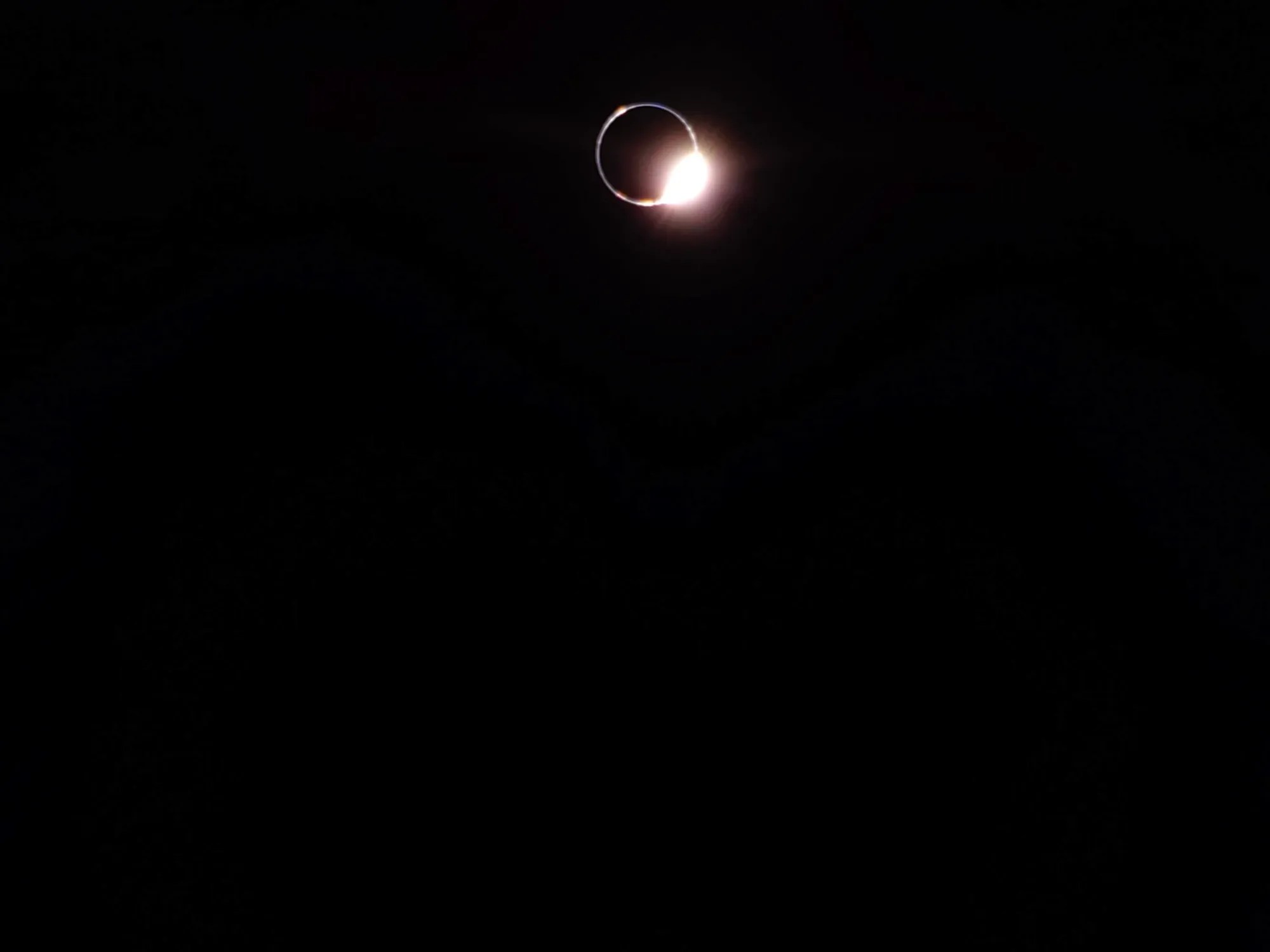
Image (Credit): The March 14, 2025 total lunar eclipse as seen from the Moon’s surface thanks to Firefly’s Blue Ghost Mission 1 lunar lander. (Firefly Aerospace)
If you were lucky enough to capture the total lunar eclipse last Friday, you are lucky. However, the image above shows a very different view of the event from an even luckier little craft on the Moon’s surface. That’s right, Firefly’s Blue Ghost lunar lander took a moment away from its work to snap this amazing image of a solar eclipse caused by the Earth blocking to Sun’s light.
The future should bring more craft and even humans to the lunar surface, which will provide many more amazing images of our floating blue marble.
Image (Credit): The SpaceX Falcon 9 rocket standing ready earlier in the week to launch the Crew-10 members to the ISS. (SpaceX)
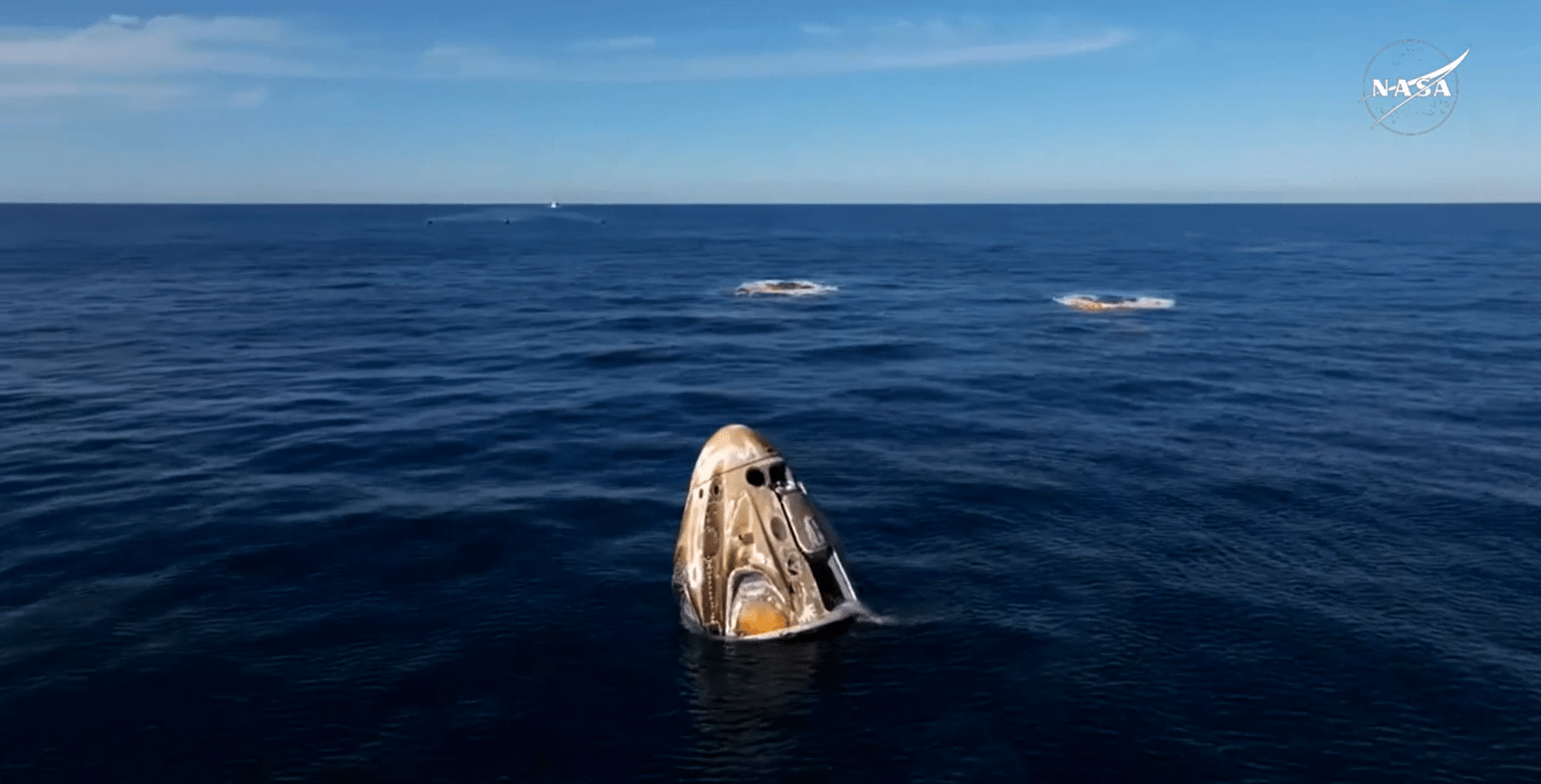
Yesterday saw the launch of the Crew-10 members from NASA’s Kennedy Space Center in Cape Canaveral. The Crew-10 members heading to the International Space Station (ISS) are NASA astronauts Anne McClain and Nichole Ayers, JAXA (Japan Aerospace Exploration Agency) astronaut Takuya Onishi, and Roscosmos cosmonaut Kirill Peskov.
This new crew will relieve the current ISS crew, which includes two astronauts (Suni Williams and Butch Wilmore) who arrived at the station last year on the Boeing Starliner only to stay longer than anticipated.
NASA has shown innovation by integrating Williams and Wilmore into the Expedition 72 crew and keeping them busy. Both of their attitudes have been positive throughout this process, regardless of all the drama back on Earth started by Elon Musk about a “rescue.”
NASA doesn’t do drama. We can expect a safe and professional transition of crews.
The work NASA conducts in space leads to ongoing innovations benefiting people on Earth. Some of these latest technologies, which have been successfully transferred from NASA to the commercial sector, are featured in the latest edition of Spinoff 2025 publication now available online. The publication features more than 40 commercial infusions of NASA technologies, including research originated at NASA’s Glenn Research Center in Cleveland.
When the National Aeronautics and Space Administration‘s lease on its current Washington, D.C. headquarters expires in 2028, Ohio members of Congress want NASA to move its headquarters to Ohio. In a Tuesday letter to Vice President JD Vance and President Donald Trump’s nominee to be NASA Administrator, Jared Isaacman, Ohio Congress members argue that bringing the headquarters of the nearly 18,000 employee agency to their state would align with broader government efforts to decentralize federal agencies and reinvigorate parts of the country outside Washington.
Astronomers have discovered 128 new moons orbiting Saturn, further solidifying the planet as the “moon king” of our solar system. Astronomers from Taiwan, Canada, France and the U.S. announced the discovery on Tuesday. The findings push Saturn’s moon count to 274, towering over the previous record-holder Jupiter, which has 95 moons. The recent discovery points to what astronomers have speculated for decades, that Saturn’s rings were caused by a massive collision about 100 million years ago, researcher Mike Alexandersen, an astronomer at the Center of Astrophysics, told USA TODAY. A collision of such size could explain the small moons that orbit Saturn.
Image (Credit): One of the last images of the eighth Starship flight on Thursday right before the rocket exploded. (SpaceX)
Let’s start with the good news. This past week two U.S. commercial space companies put landers on the Moon. Both Firefly’s Blue Ghost and Intuitive Machines’ Athena are now residents of the Moon. This is a terrific accomplishment for these relatively new players.
Now the bad news. Athena landed incorrectly and cannot carry out its mission. In fact, it died after only one day on the lunar surface. In addition, the Lunar Trailblazer that accompanied Athena on this mission with plans to orbit and map the Moon also appears to be a lost cause. And finally, SpaceX’s eighth test of its Starship ended with a fiery explosion over the Caribbean, much like its seventh test.
Add to this the potential dismantling of NASA should rumors of a 50 percent cut be true, and you have a very mixed week with too little good news (much like the stock market).
One common element in at least two of the stories – Starship explosion and NASA cuts – relates to Mr. Musk. One wonders whether more attention to SpaceX and less time ransacking the federal government might have led to better outcomes this week. I’m not a rocket scientist, but that seems to make some sense to me.
Image (Credit): Athena approaching the Moon on March 6, 2025. (NASA)
This week’s image is from earlier today when Intuitive Machines’ Athena lunar lander was approaching the Moon’s South Pole. The good news is that the lander made it safely to the surface. However, the lunar lander may have landed in an odd way, creating solar generating issues similar to the company’s first attempt at landing this time last year.
NASA and Intuitive Machines are still trying to determine the status of the lander as well as its exact location. The lander’s goal was to land in Mons Mouton, a lunar plateau near the Moon’s South Pole. NASA’s Lunar Reconnaissance Orbiter should help to pinpoint the lander’s location and orientation in the next few days.
Hopefully, some if not all of the planned experiments are still possible. But for now it’s just a matter of waiting for more news on the mission.




 Our Awesome Universe