Ice Delays New Glenn Rocket Launch and Firefly Heads to the Moon

Credit: Blue Origin

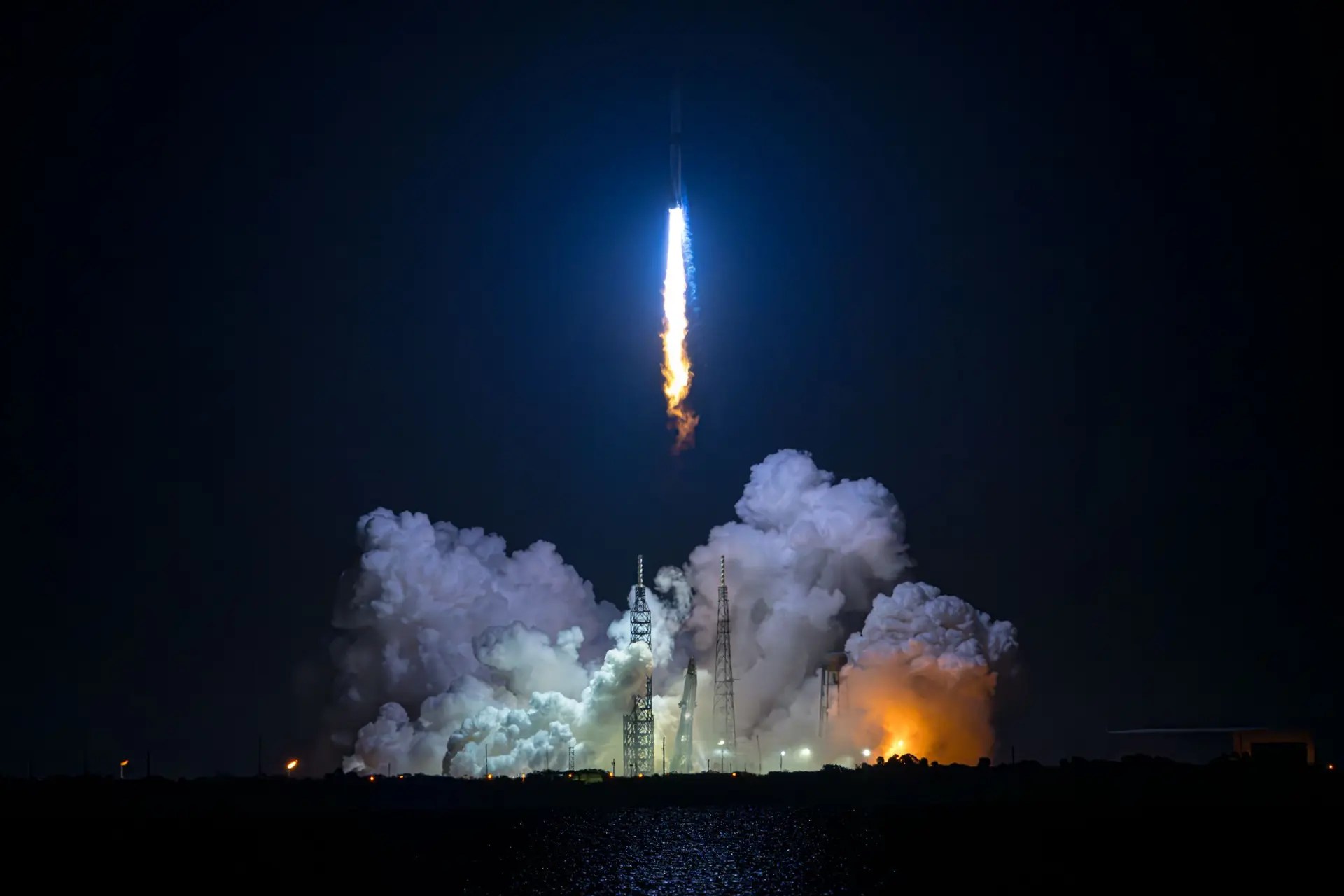
Blue Origin’s New Glenn rocket launch was pushed off again earlier today when ice was found building up on one of the lines related to the hydraulic systems.

At 3:09 a.m. EST, Blue Origin stated:

We’re standing down on today’s launch attempt to troubleshoot a vehicle subsystem issue that will take us beyond our launch window. We’re reviewing opportunities for our next launch attempt.

As a result, the new launch date is set for Thursday, January 16.

In the meantime, watch for the launch on Wednesday of Firefly Aerospace’s Blue Ghost Mission One as part of NASA’s Commercial Lunar Payload Services (CLPS) program. This mission will deliver 10 science and technology payloads to the Moon, including

  • testing regolith sample collection,
  • Global Navigation Satellite System abilities,
  • radiation tolerant computing, and
  • lunar dust mitigation. 

Firefly Aerospace notes:

Blue Ghost will spend approximately 45 days in transit to the Moon, allowing ample time to conduct health checks on each subsystem and begin payload science. Blue Ghost will then land in Mare Crisium and operate payloads for a complete lunar day (about 14 Earth days). Following payload operations, Blue Ghost will capture imagery of the lunar sunset and provide critical data on how lunar regolith reacts to solar influences during lunar dusk conditions. The lander will then operate for several hours into the lunar night.

Image (Credit): Blue Ghost Mission One schedule. (Firefly Aerospace)

New Glenn Rocket Launch Planned for January 10

Image (Credit): The New Glenn rocket on the launch pad at Launch Complex 36 in Cape Canaveral. (Blue Origin)

It appears the New Glenn rocket test will take place this Friday, January 10. Blue Origin is using the language “no earlier than,” but this is the best estimate at the moment.

Here is the language from the company’s press release:

New Glenn’s inaugural mission (NG-1) is targeting no earlier than Friday, January 10, from Launch Complex 36 at Cape Canaveral Space Force Station, Florida. The three-hour launch window opens at 1 a.m. EST (0600 UTC). NG-1 is our first National Security Space Launch certification flight.

The payload is our Blue Ring Pathfinder. It will test Blue Ring’s core flight, ground systems, and operational capabilities as part of the Defense Innovation Unit’s (DIU) Orbital Logistics prototype effort.

Our key objective is to reach orbit safely. We know landing the booster on our first try offshore in the Atlantic is ambitious—but we’re going for it.

“This is our first flight and we’ve prepared rigorously for it,” said Jarrett Jones, SVP, New Glenn. “But no amount of ground testing or mission simulations are a replacement for flying this rocket. It’s time to fly. No matter what happens, we’ll learn, refine, and apply that knowledge to our next launch.”

Fingers crossed.

Update: The launch has been moved to Sunday, January 12.

Second Update: The launch has been moved to Monday, January 13.

Space Stories: Support for the Near Space Network, Another Interesting Exoplanet, and Firefly Gets Fourth Lunar Contract

Image (Credit): Part of NASA’s Near Space Network. (NASA)

Here are some recent stories of interest.

SatnewsNASA Selects Four Commercial Companies to Support Near Space Network

NASA has selected multiple companies to expand the agency’s Near Space Network’s commercial, direct-to-Earth capabilities services, which is a mission-critical communication capability that allows spacecraft to transmit data directly to ground stations on Earth. The work will be awarded under new Near Space Network services contracts that are firm-fixed-price, indefinite-delivery/indefinite-quantity (IDIQ) contracts. Project timelines span from February 2025 to September 2029, with an additional five-year option period that could extend a contract through Sept. 30, 2034. The cumulative maximum value of all Near Space Network Services contracts is $4.82 billion.

Daily GalaxyNASA Discovers Massive Planet Bigger Than Earth with Gas Tied Exclusively to Living Organisms

Scientists have made a groundbreaking discovery on a planet over eight times the mass of Earth, located 120 light-years away. Using advanced technology, researchers detected a gas in its atmosphere that, on Earth, is only produced by living organisms. Could this be the first real hint of life beyond our planet? While the findings are intriguing, they come with questions that still need answering.

Express NewsTexas-based Firefly Aerospace Gets Another NASA Moon Mission, a $179.6M Deal That’s Part of Artemis

NASA gave Texas-based Firefly Aerospace a Christmas present of sorts — a $179.6 million deal to deliver six scientific instruments to the lunar surface as part of the Artemis program, which is intended to put astronauts back on the moon. Awarded a week before the holiday, the contract is the fourth for the Cedar Park company under the space agency’s Commercial Lunar Payload Services initiative. The $2.6 billion program aims to create a lunar economy while learning more about the moon in preparation for the first crewed flights to the lunar surface in more than 50 years.

2024 Space Hightlights – Missions

Image (Credit): An artist’s rendering of NASA’s Europa Clipper spacecraft over Europa. (NASA/JPL-Caltech)

Another list worth highlighting at year-end covers all of the space missions from 2024. For example, this list from Freethink, “the top 10 space stories of 2024,” includes the launch of the Europa Clipper, China’s Chang’e 6 round-trip to the Moon, and a successful commercial launch to the Moon (Odysseus lunar lander).

Here are some other lists of missions from 2024:

Note: The Awesome-Universe list of top missions looking back in 2024 include:

NASA Accomplishments in 2024

NASA has plenty of good news to share from 2024, as highlighted in its NASA: Best of 2024 video and accompanying press release.

Just a few of these accomplishments include:

  • In February, the first Moon landing through the agency’s Commercial Lunar Payload Services initiative brought NASA science to the lunar surface on Intuitive Machines’ Nova-C lander successfully capturing data that will help us better understand the Moon’s environment and improve landing precision and safety.
  • After launching into space in February, NASA’s Plankton, Aerosol, Cloud, ocean Ecosystem (PACE) satellite mission is successfully transmitting first-of-their-kind measurements of ocean health, air quality, and the effects of a changing climate.
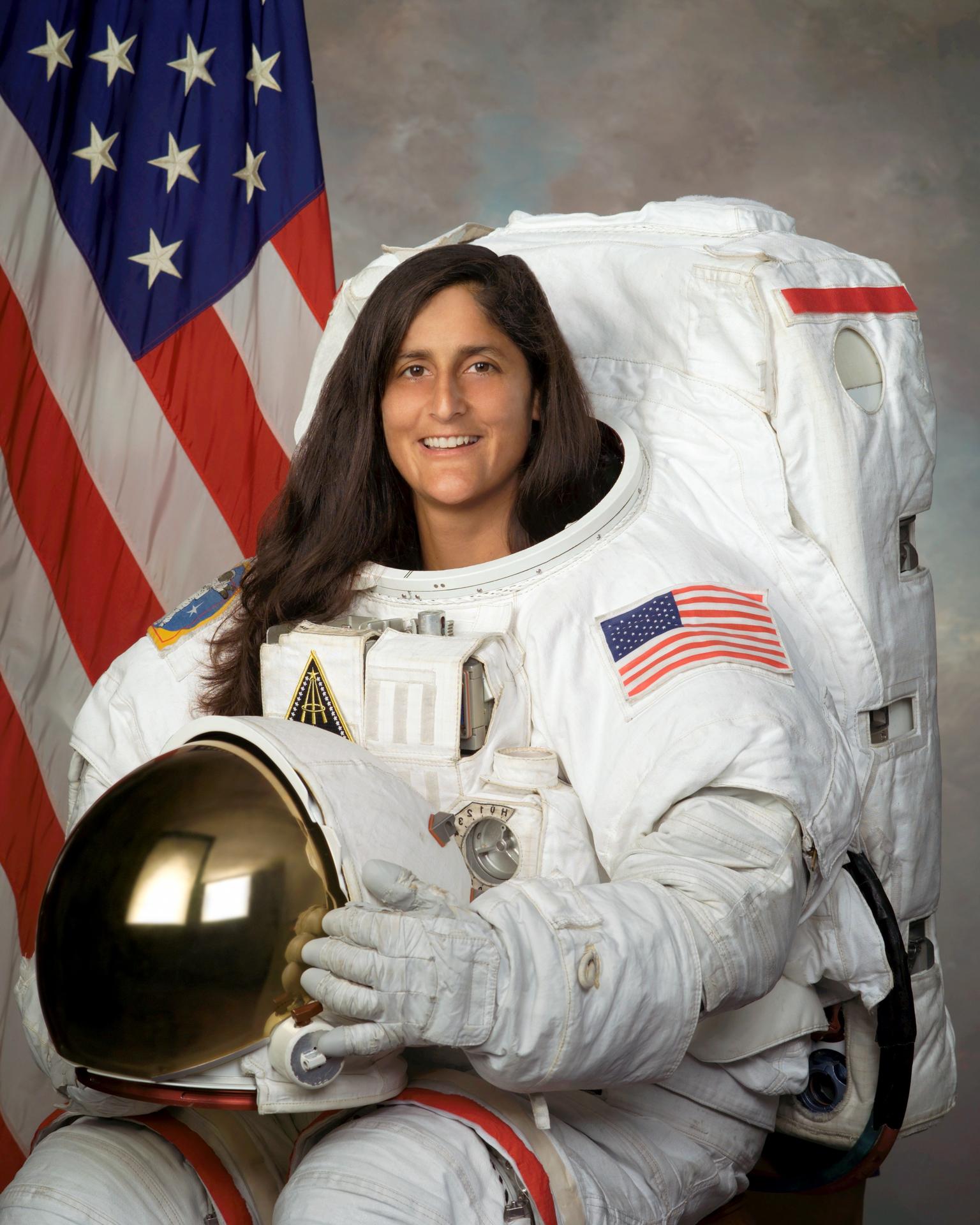
  • In June, NASA astronauts Butch Wilmore and Suni Williams safely arrived at the space station aboard Boeing’s Starliner spacecraft following launch of their flight test. With Starliner’s arrival, it was the first time in station history three different spacecraft that carried crew to station were docked at the same time. Starliner returned uncrewed in September following a decision by NASA. Wilmore and Williams, now serving as part of the agency’s Crew-9 mission, will return to Earth in February 2025.
  • Deployed NASA’s Advanced Composite Solar Sail System in space, marking a successful test of its composite boom technology.
  • Awarded nearly $45 million to 21 higher-education institutions to help build capacity for research, and announced the recipients of grants that will support scientific and technical research projects for more than 20 universities and organizations across the United States.

The long list from which this was taken is impressive. However, we also need to note a few of the problems this year. This includes troubled commercial missions to the Moon, a Boeing crew stranded on the International Space Station after a problematic Starliner test, delays in the SpaceX Starship rocket tests, a cancelled Moon rover, budget cuts at NASA as well as layoffs at JPL, cost overruns on the Mars Sample Return mission, and a delay in the Artemis II and III launch dates.

This does not override the accomplishments, but it puts them into context at a time of changing administrations in Washington. This will come with hard questions about the viability of current missions as well as the cost of future missions.

I agree 2024 has plenty of proud moments. That said, 2025 will be a very challenging year for NASA. The agency will need solid answers to hard questions, cost effective options for struggling missions, and plenty of public support to weather calls for additional budget cuts.

I have confidence NASA will come out of this even stronger, even if it is a bit bruised in the process.