NASA’s Crew-9 Mission on its Way to the ISS

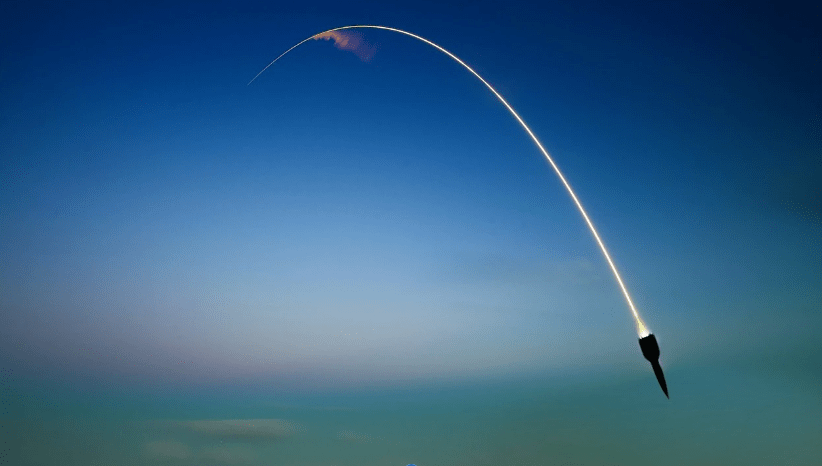
Image (Credit): The launch earlier today of a SpaceX Falcon 9 rocket carrying tNASA’s SpaceX Crew-9 mission to the ISS. (NASA/Keegan Barber)

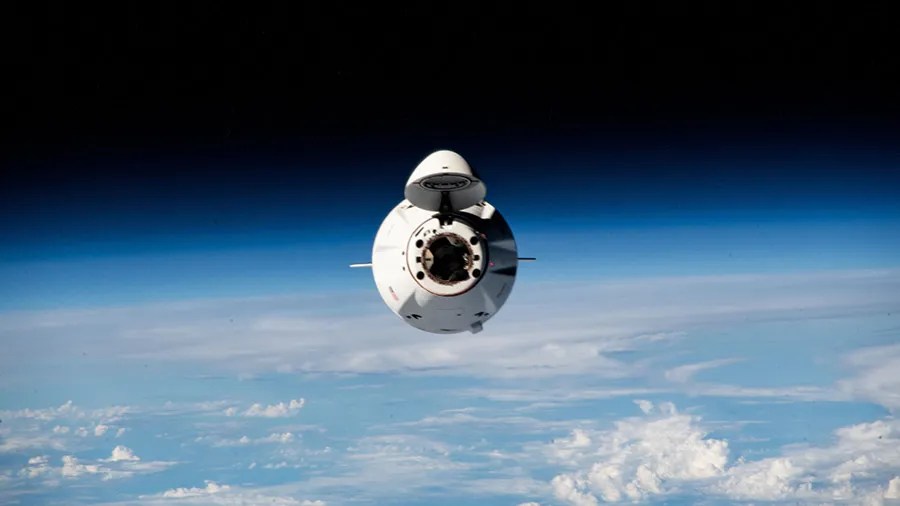
Earlier today, NASA contractor SpaceX successfully launched the Crew-9 mission towards the International Space Station aboard a Falcon 9 rocket. The two crew members should be aboard the station tomorrow to join the rest of the Expedition 72 crew, who arrived at the station as part of two earlier launches.

While some are calling this a “rescue mission,” it is really a planned mission with a truncated crew roster to accommodate the two Boeing Starliner astronauts on the return back to Earth. Nothing to see here folks.

NASA Administrator Bill Nelson said it best:

This mission required a lot of operational and planning flexibility. I congratulate the entire team on a successful launch today, and godspeed to Nick and Aleksandr as they make their way to the space station…Our NASA wizards and our commercial and international partners have shown once again the success that comes from working together and adapting to changing circumstances without sacrificing the safe and professional operations of the International Space Station.

NASA has become quite flexible this year as it works with its commercial partners.

Audit Report: Keeping the ISS Afloat is Getting Harder Every Day

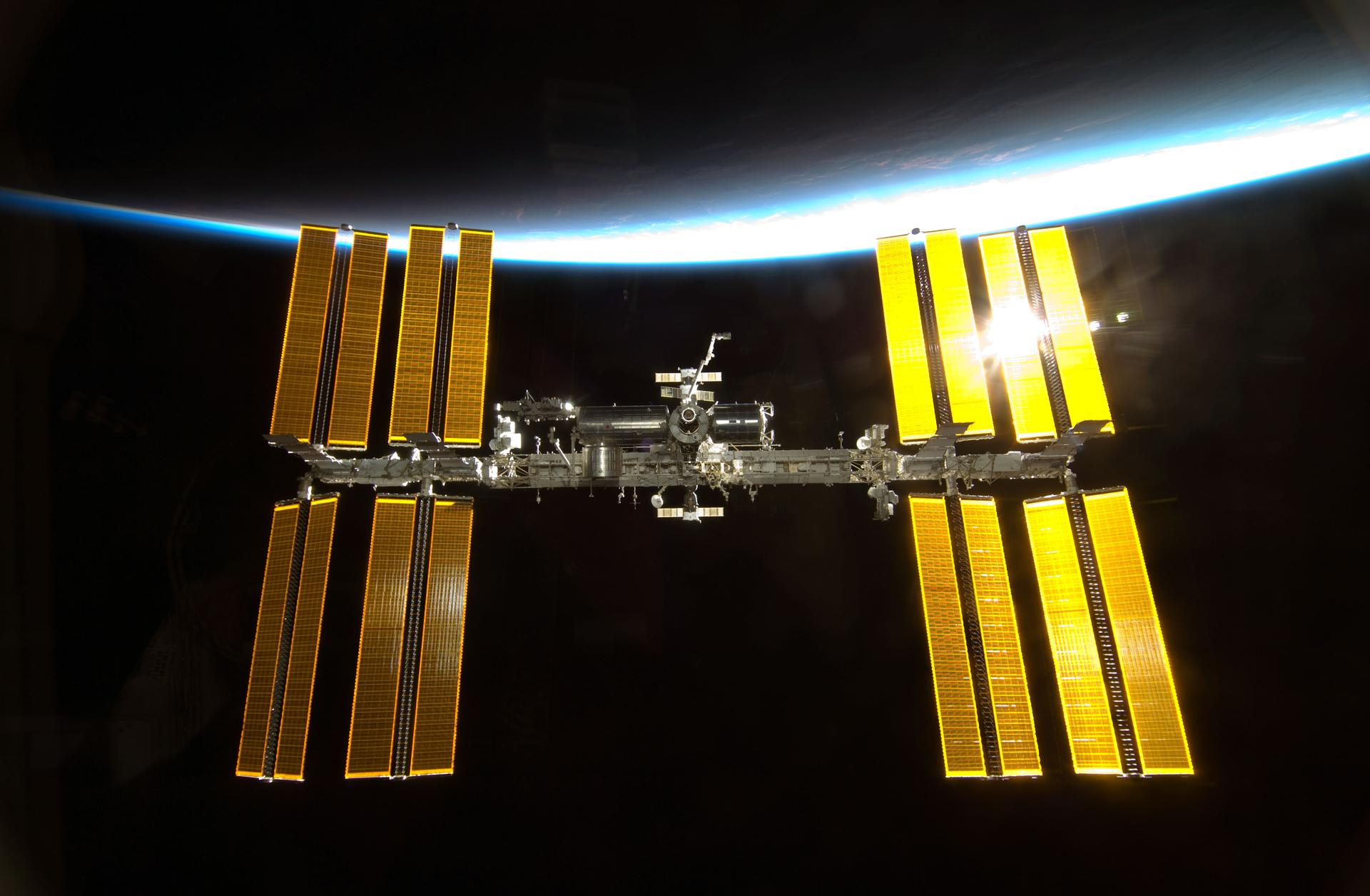
NASA’s Office of Inspect General (OIG) issued an audit report this week, NASA’s Management of Risks to Sustaining ISS Operations through 2030 (IG-24-020), that highlighted the ongoing issues NASA faces to keep the International Space Station (ISS) in orbit as well as plan its decommissioning.

The OIG auditors specifically noted concerns regarding (1) repairing and maintaining the integrity of the station, (2) too little redundancy in the commercial partners carrying crews and supplies to the station, (3) continued risk of micro meteoroids and debris damaging the station, (4) lack of ready-to-use capsules to escape the station in an emergency, and (5) lack of Russian commitment to de-orbiting the station at the end of its life.

That’s a long list of concerns, none of which are surprising given the complexity of the space station and the ongoing environmental issue, be it commercial partners, exterior space, or Russian commitment. It is amazing that the station has had so few major issues to date.

These issues need to be resolved for the current station and be considered as part of any new stations (government-run or commercial), whether they are orbiting the Earth, the Moon, or even Mars.

Space Stories: Axiom Space Struggling Financially, Intuitive Machines Gets $4.8 billion NASA Contract, and Water and Hydroxyl Widespread on Moon

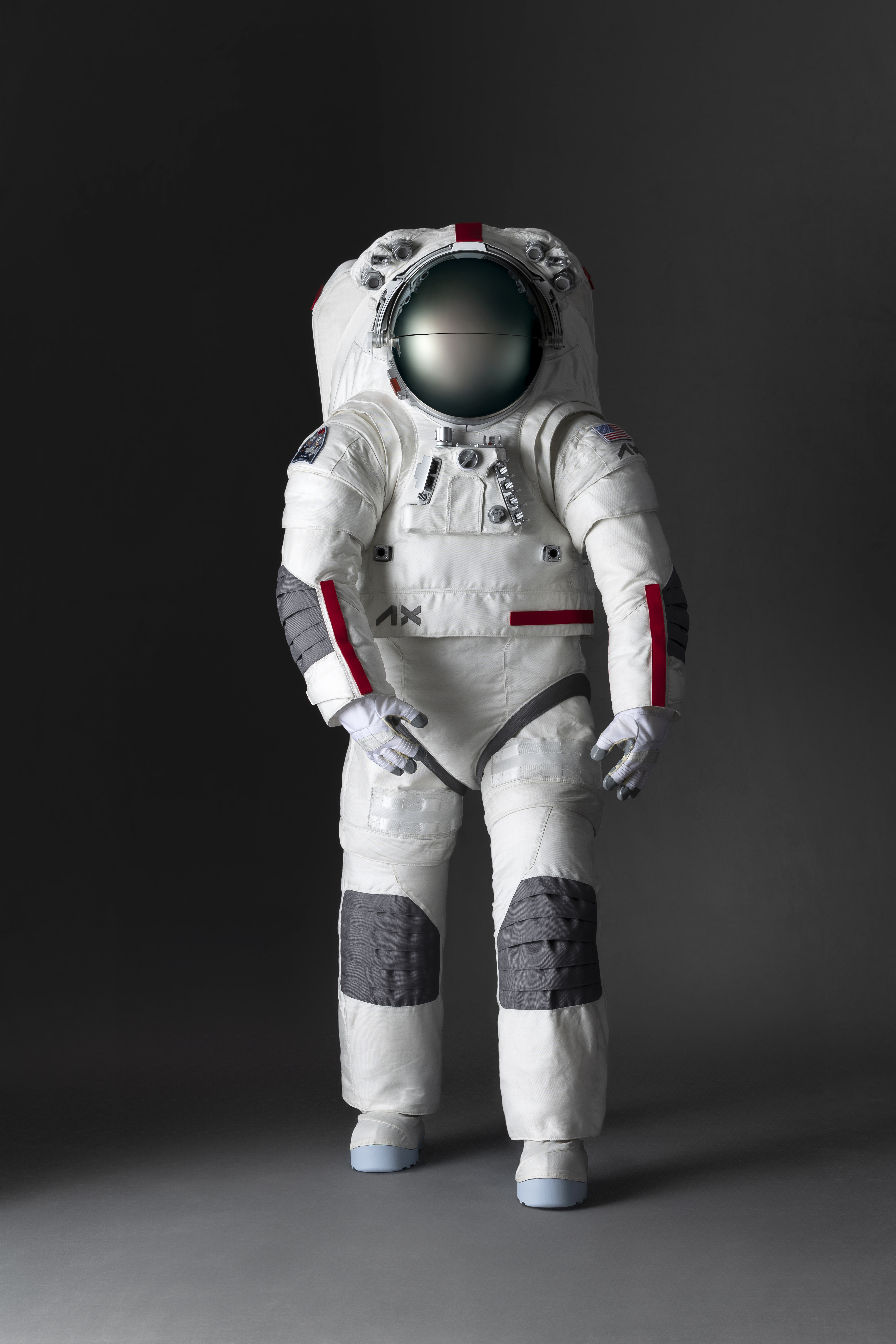
Credit: Axiom Space

Here are some recent stories of interest.

ARS TechnicaA Key NASA Commercial Partner Faces Severe Financial Challenges

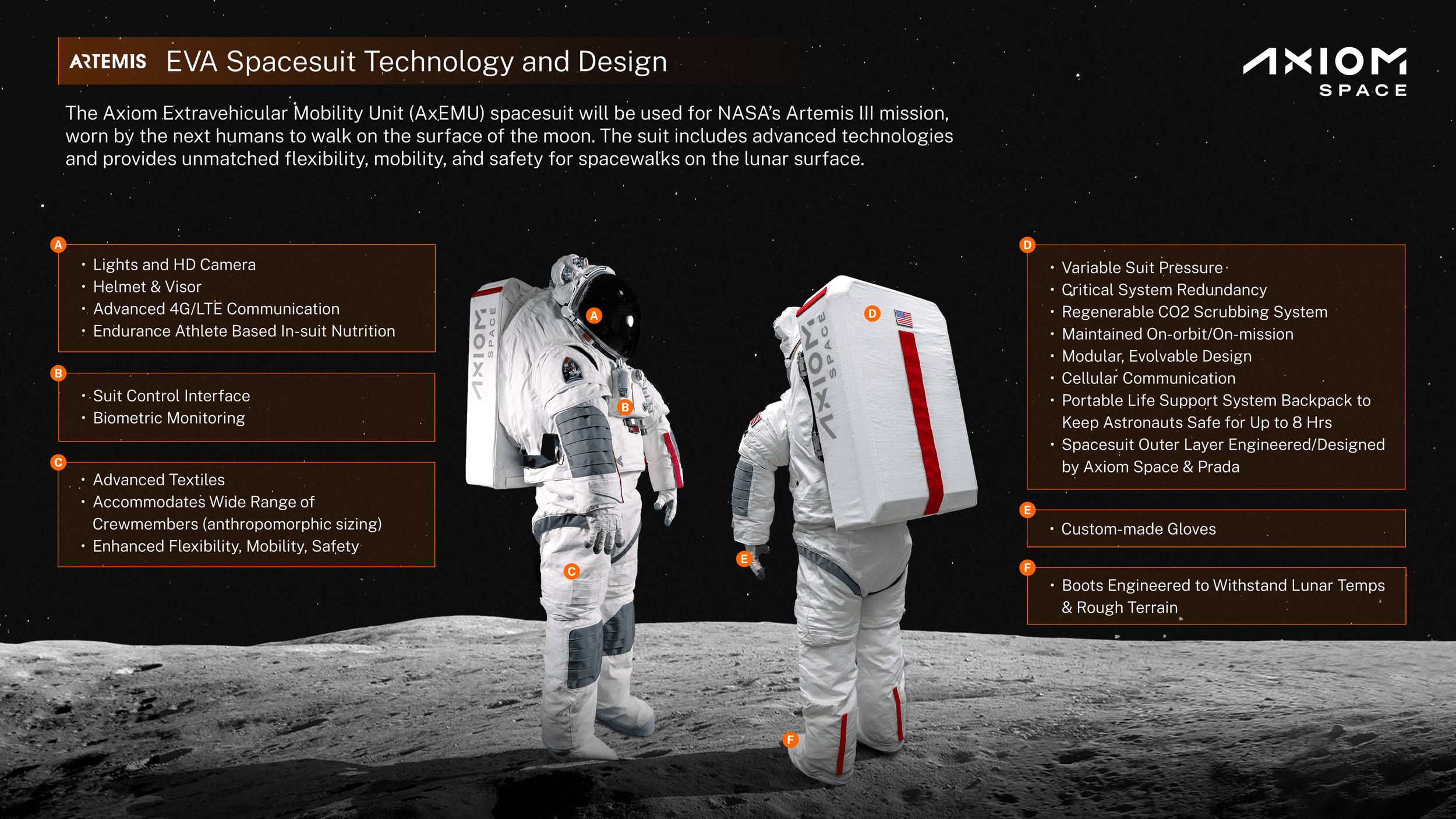
Axiom Space is facing significant financial headwinds as the company attempts to deliver on two key commercial programs for NASA—the development of a private space station in low-Earth orbit and spacesuits that could one day be worn by astronauts on the Moon. Forbes reports that Axiom Space, which was founded by billionaire Kam Ghaffarian and NASA executive Mike Suffredini in 2016, has been struggling to raise money to keep its doors open and has had difficulties meeting its payroll dating back to at least early 2023. In addition, the Houston-based company has fallen behind on payments to key suppliers, including Thales Alenia Space for its space station and SpaceX for crewed launches.

ReutersIntuitive Machines Clinches $4.8 billion Navigation Services Contract from NASA

Intuitive Machines said on Tuesday it has bagged a navigation and communication services contract of up to $4.82 billion from NASA for missions in the near space region. As part of the contract, which has a base period of five years with an additional five-year option period, Intuitive will deploy lunar relay satellites and provide communication and navigation services to aid NASA’s Artemis campaign.

Planetary Science InstituteSources of Water and Hydroxyl are Widespread on the Moon

A new analysis of maps of the near and far sides of the Moon shows that there are multiple sources of water and hydroxyl in the sunlit rocks and soils, including water-rich rocks excavated by meteor impacts at all latitudes. “Future astronauts may be able to find water even near the equator by exploiting these water-rich areas. Previously, it was thought that only the polar region, and in particular, the deeply shadowed craters at the poles were where water could be found in abundance,” said Roger Clark, Senior Scientist at the Planetary Science Institute and lead author of “The Global Distribution of Water and Hydroxyl on the Moon as Seen by the Moon Mineralogy Mapper (M3)” that appears in the Planetary Science Journal. “

Space Quote: NASA’s Space Expertise at Risk of Eroding

Image (Credit): The Artemis-1 rocket next to NASA’s Vehicle Assembly Building at the Kennedy Space Center in Florida on Nov. 3, 2022. (Voice of America)

“Extreme caution is needed to ensure that NASA’s critical relationships with commercial partners do not erode NASA’s own expertise, particularly in early-phase developmental efforts, and the agency should work to maintain a balance between benefiting from its partners’ capabilities and maintaining advanced internal skills. The report recommends that NASA drastically increase its investment in internal research and development to advance early-stage, mission-critical technologies that are not commercially available currently. It also makes a range of recommendations for maintaining an expert workforce, including the adoption of a new human capital strategy, and coordination with Congress to refresh the NASA Flexibility Act of 2004 and gain more appointment and hiring authority.”

-September 10, 2024 press statement for the National Academies of Sciences, Engineering, and Medicine’s recent report NASA at a Crossroads: Maintaining Workforce, Infrastructure, and Technology Preeminence in the Coming Decades. The report was requested by Congress in the CHIPS and Science Act of 2022. The National Academies of Sciences, Engineering, and Medicine convened an independent expert committee to evaluate whether NASA’s current workforce, infrastructure, technological capabilities, and their interfaces can meet its strategic goals. 

Pic of the Week: The First Commercial Spacewalk

Image (Credit): SpaceX Polaris Dawn crew conducts first private spacewalk. (SpaceX/Polaris)

This week’s image shows the first commercial spacewalk as part of the Polaris Dawn mission launched into space earlier this week by SpaceX. All four crew members were exposed to space as part of the process earlier today, but only two exited the spacecraft. The spacecraft was between 118 to 435 miles above the Earth during the spacewalks.

NASA Administrator Bill Nelson posted this comment to Twitter/X:

Congratulations @PolarisProgram and @SpaceX on the first commercial spacewalk in history!

Today’s success represents a giant leap forward for the commercial space industry and @NASA ‘s long-term goal to build a vibrant U.S. space economy.