Space Stories: Spaceplane Planned for ISS, AI Assists Astronomy, and Water Older Than the Sun

Image (Credit): Artist’s rendering of the Dream Chaser DC-100 spaceplane. (Sierra Space)

Here are some recent stories of interest.

New Atlas: World’s First Commercial Spaceplane in Final Stages Before Debut ISS Flight

The world’s first winged commercial spaceplane has arrived at NASA’s Kennedy Space Center in Florida, its final destination before its first mission to the International Space Station (ISS) later this year. Following rigorous testing at Ohio’s Neil Armstrong Test Facility, the Dream Chaser DC-100 spaceplane named Tenacity got the green light to commence final pre-launch preparations, such as finishing its thermal protection system and payload integration, before it hitches a ride on a United Launch Alliance (ULA) Vulcan rocket to deliver 7,800 pounds (3,540 kg) of food, water and science experiments to the ISS.

MIT Technology Review: Astronomers are Enlisting AI to Prepare for a Data Downpour

In deserts across Australia and South Africa, astronomers are planting forests of metallic detectors that will together scour the cosmos for radio signals. When it boots up in five years or so, the Square Kilometer Array Observatory will look for new information about the universe’s first stars and the different stages of galactic evolution.  But after syncing hundreds of thousands of dishes and antennas, astronomers will quickly face a new challenge: combing through some 300 petabytes of cosmological data a year—enough to fill a million laptops…In preparation for the information deluge, astronomers are turning to AI for assistance, optimizing algorithms to pick out patterns in large and notoriously finicky data sets. Some are now working to establish institutes dedicated to marrying the fields of computer science and astronomy—and grappling with the terms of the new partnership.

BBC Sky at Night: Earth’s Water is Even Older Than the Sun, Having Formed Billions of Years Ago, Say Astronomers

How old is Earth’s water? Could it be older even than the planet itself? A team of astronomers say they’ve found the “missing link” that shows how water is delivered from gaseous star-forming regions in space to planets like Earth. The research suggests that Earth’s water is even older than the Sun. The news comes as a result of studies of a dusty planet-forming disc surrounding a star 1,300 lightyears from Earth

Blue Origin is Open for Tourism Again

Image (Credit): The crew from Sunday’s NS-25 flight (from left to right): Gopi Thotakura (pilot), Mason Angel, Carol Schaller, Ed Dwight, Ken Hess, and Sylvain Chiron. (Blue Origin)

It has been some time, but Blue Origin is once again bringing tourists into space. Yesterday’s launch from Texas included five passengers and the pilot.

One of the passengers on the New Shepard rocket was former Air Force Captain Ed Dwight. Mr. Dwight was one of the nation’s first Black astronaut candidate, though he never had the opportunity to fly until yesterday. He was also the oldest person to go into space, beating Star Trek’s William Shatner’s age by a few months. After the flight, Mr. Dwight stated, “I thought I really didn’t need this in my life, but now I need it in my life.”

If you are interested in taking such a flight, just visit this Blue Origin link for more information. The site points out that you only need two days to prepare for a flight:

Our on-site astronaut training program is meticulously designed to teach everything you’ll need to know for a safe spaceflight. Over two days, you’ll learn about New Shepard’s mission profile, safety systems, zero-g protocols, and execute mission simulations.

While I am sure plenty of people are happy that this part of the commercial space industry is operational again, I am looking forward to more commercial success with the resupply of the International Space Station, particularly the upcoming launch of the Boeing Starliner.

Starliner Launch Delayed Again

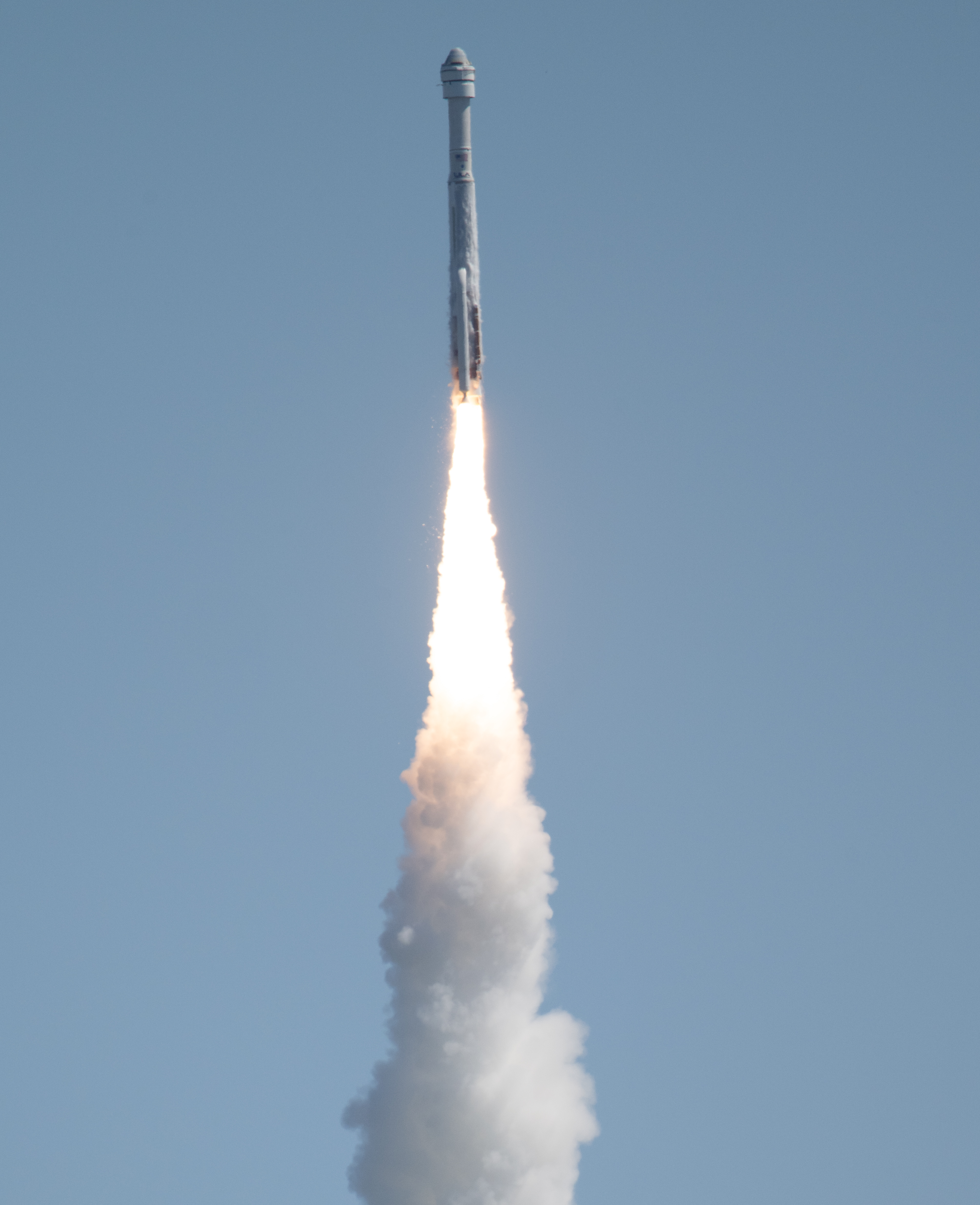
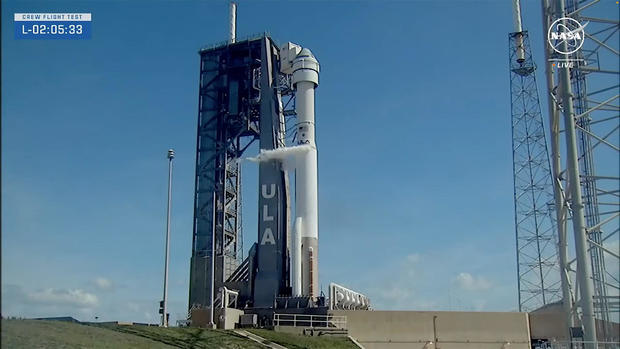
Image (Credit): The Boeing’s CST-100 Starliner spacecraft atop a United Launch Alliance Atlas V during a launch attempt of NASA’s Boeing Crew Flight Test on Monday, May 6, 2024, at Cape Canaveral Space Force Station in Florida. (NASA/Joel Kowsky)

If you were hoping to a Boeing Starliner launch to the International Space Station (ISS) today, then you will be disappointed (again). The launch is not expected until Friday May 25 at the earliest.

In a press release, Boeing noted:

The additional time allows teams to further assess a small helium leak in the Boeing Starliner spacecraft’s service module traced to a flange on a single reaction control system thruster. Pressure testing performed on May 15 on the spacecraft’s helium system showed the leak in the flange is stable and would not pose a risk at that level during the flight. The testing also indicated the rest of the thruster system is sealed effectively across the entire service module. Boeing teams are working to develop operational procedures to ensure the system retains sufficient performance capability and appropriate redundancy during the flight. As that work proceeds, NASA’s Commercial Crew Program and the International Space Station Program will take the next few days to review the data and procedures to make a final determination before proceeding to flight countdown.

All we can do is hope and wait. I expect astronauts Suni Williams and Butch Wilmore, who are ready to crew the Starliner, are even more impatient.

Update: The proposed May 25 launch date is now dead as well. NASA has yet to provide a new date for what will be a historic launch if it ever gets underway.

Space Stories: Robot Trains on the Moon, Commercial Space Stations, and Russian Lunar Reactors

Image (Credit): Artist’s rendering of the Flexible Levitation on a Track system on the lunar surface with planet Earth on the horizon. (NASA/Ethan Schaler)

Here are some recent stories of interest.

NDTV: NASA Announces Plans To Build First Railway System On Moon

As the National Aeronautics and Space Administration (NASA) readies to return astronauts to the moon, it has announced its plans to build a levitating robot train on the lunar surface. In a blog post, the American space agency provided details about the project called “Flexible Levitation on a Track (FLOAT)”, which aims to provide a “robotic transport system” to support future lunar activities of astronauts visiting the moon. The transport system will be critical to the daily operation of a sustainable lunar base in the 2030s, NASA said in a statement. 

IEEE Spectrum: Commercial Space Stations Approach Launch Phase

A changing of the guard in space stations is on the horizon as private companies work toward providing new opportunities for science, commerce, and tourism in outer space. Blue Origin is one of a number of private-sector actors aiming to harbor commercial activities in low Earth orbit (LEO) as the creaking and leaking International Space Station (ISS) approaches its drawdown. Partners in Blue Origin’s Orbital Reef program, including firms Redwire, Sierra Space, and Boeing, are each reporting progress in their respective components of the program. The collaboration itself may not be on such strong ground. Such endeavors may also end up slowed and controlled by regulation so far absent from many new, commercial areas of space.

Newsweek: Russia Reveals New China Nuclear Moon Base Details

Details about joint plans between Moscow and Beijing to put a lunar nuclear reactor within the next decade have been revealed by the head of Russia’s space agency. In March, Roscosmos announced plans to work with China to build an automated nuclear reactor to power a proposed lunar base that the two countries would operate together within the next decade. To construct the site, Roscosmos director general Yury Borisov said two months ago it was looking at using nuclear-powered rockets to transfer cargo to the moon, but had not yet figured out how to build these spacecraft safely. In an article published Wednesday by state news outlet RIA Novosti, Borisov said that development of the plant was underway and the countries were working on creating experimental and research facilities as part of the project.

Boeing Needs Just One More Day

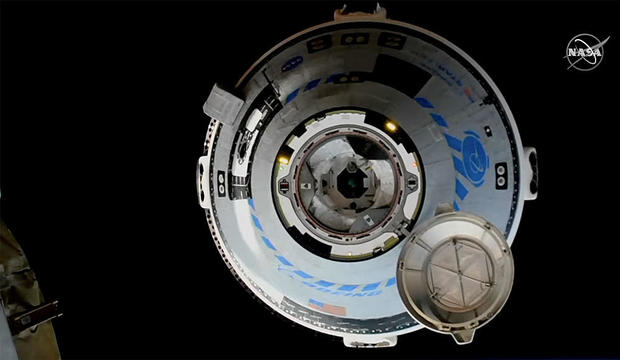
Image (Credit): Starliner autonomous uncrewed flight test to the ISS in May 2022. (NASA)

Today was supposed to be the day that Boeing launched a crewed capsule to the International Space Station (ISS), but things did not go according to plan (again). Two hours before the planned launch a valve issue on the Atlas V rocket’s second stage put everything on hold. A launch as early as tomorrow is still possible if the matter can be resolved.

The two astronauts aboard the Starliner capsule, Suni Williams and Butch Wilmore, will need to come back another day to lead this historic mission. The Starliner will be the second commercial vehicle contracted by NASA to bring and return astronauts from the station. SpaceX has been performing this task since its first successful crewed test flight in 2020.

Boeing needs this win after so many bad stories over the years, and not just the stories associated with the Starliner mission. Serious aircraft woes has put a spotlight on the company. A successful launch will not erase the past, but it would be much needed positive press.

Update: Okay, Boeing will need at least until May 17 to inspect the problem valve and prepare for a new launch. Not a great start, but at least the are still expecting a May launch.