This week’s image is the best space exploration image winner in The Planetary Society’s Best of 2024 contest. It shows the Odysseus lunar lander, launched on February 15, leaving the Earth behind as it travels to the Moon. You can read more about the lunar mission to the lunar South Pole by visiting this NASA mission page.
Visit The Planetary Society for more on the Best of 2024 winners, including the most exciting upcoming planetary science mission. I won’t spoil the news. You can read about it yourself.
Image (Credit): The return of the Starship booster on November 19, 2024. It splashed down in the Gulf of Mexico. (SpaceX)
The sixth test of SpaceX’s Starship was a success this past Tuesday, even without the repeated stunt of a tower capturing the booster rocket. The launch from the Starbase pad in Brownsville, Texas allowed SpaceX to test additional features related to the rocket, including igniting one of its Raptor engines while in space. Overall, it was a quick turnaround from another successful test flight last month.
SpaceX also received additional good news this week when it learned that Colorado-based Lunar Outpost selected SpaceX’s Starship as the party to deliver its lunar rover to the Moon. Lunar Outpost is one of several companies working with NASA to ensure a rover is on the lunar surface as part of the Artemis mission. NASA has yet to select one or more companies to build and test the rovers on the Moon.
All of this is good news for SpaceX and NASA, assuming the Starship stays on schedule, NASA funding of Artemis continues, and a new administration in DC continues to support the Artemis approach.
Image (Credit): The crew of NASA’s upcoming Artemis II mission. (NASA)
With NASA now facing a new administration in Washington, it is worth looking at where the agency is at the moment and what may need some attention. The 2024 Report on NASA’s Top Management and Performance Challenges, released by the NASA Office of the Inspector General (OIG), is a good place to start.
Here are a few of the challenges facing NASA at the moment:
Improving the Management of Major Programs and Projects
Changing requirements, significant technical issues, increased costs, and schedule delays continue to impact the sustainability of major programs and projects.
Cost increases and schedule delays often create cascading effects across NASA’s portfolio of projects.
Without complete, credible, timely, and transparent cost and schedule commitments for the Agency’s major projects, it is difficult for NASA, Congress, and stakeholders to make informed decisions about the prioritization of efforts and the Agency’s long-term funding needs.
Partnering with Commercial Industry
The transition to commercial space systems will require significant long-term financial investments by NASA and private companies as well as growing demand for non-NASA customers to ensure long-term economic viability.
Commercial partners are competitors in an emerging industry, developing modern space transportation capabilities and associated operations that have never been available.
The challenge to commercial partnerships comes in balancing the speed of development, flexibility, and adherence to timelines against the safety and reliability of new technology.
Enabling Mission Critical Capabilities and Support Services
NASA faces challenges with its mission critical capabilities including attracting and retaining a highly skilled and diverse workforce and managing outdated infrastructure and facilities needed for science, aeronautics, and exploration missions.
NASA’s decentralized information technology management structure and lack of strategic leadership negatively affect the Agency’s ability to protect and fully utilize computer systems and data vital to its mission.
NASA’s contract management practices have consistently led to increased costs and overly generous award fees.
This is quite a list, and the report goes into great detail on all of them. Of course, this is not SSA or the IRS with a pretty standard day-to-day mission, and where future expectations of the agency are easily foreseeable. As the auditors note, NASA is dealing with high-risk, complex issues requiring highly skilled workers who have to maintain many current programs around the solar system while also assisting a newly emerging private space industry here in the United States (which is pinching its staff). Moreover, looking back at the beginning of the universe as well as searching for sources of life in the universe today are big missions. We are asking a lot of NASA. This is rocket science and much, much more.
In addition, since I expect Elon Musk will try to claim that he came up with these issues on his own, I thought it was worth highlighting this report now. NASA knows it has a lot to do and it is working to solve these matters each and every day.
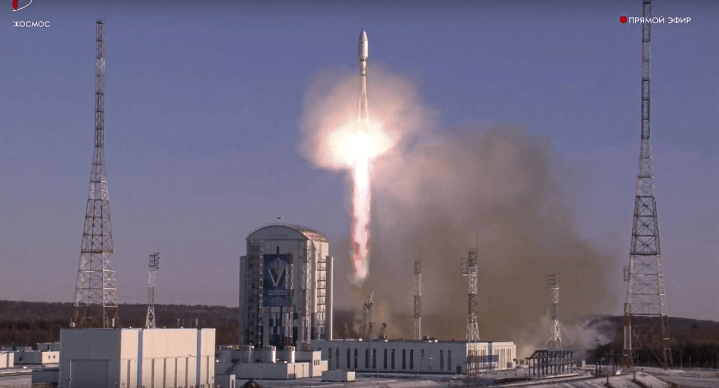
Image (Credit): Russia’s launch of the Kowsar and Hodhod satellites from Vostochny launch-pad in far eastern Russia. (Roscosmos)
While Americans are contemplating this week’s election, the Russians were up to more mischief this week. I am not talking about North Korean soldiers being used to attack Ukraine. I am referring to the Russians launching two Iranian satellites via a Soyuz rocket on Tuesday (yes, the same date as the US election).
One of the satellites is the Kowsar, a high-resolution imaging satellite, and the second the Hodhod, which is a small communications satellite. Both are said to be private sector cubic satellites, representing the first private sector Iranian satellites to be launched to date. Tehran Timesstates that both satellites are being used for agricultural purposes.
Hassan Salarieh, the head of the Iranian Space Agency stated:
Achieving significant goals in this field is unattainable without robust participation from private enterprises. We believe that the private sector should enter this field in a competitive environment, considering market criteria.
The partnership between Russia and Iran regarding potentially dual-use space technology, at a time when both nations are involved in military actions against their neighbors, is not good news for peace.
Image (Credit): The Dragon capsule approaching the ISS earlier this week with Argentina in the background. (NASA)
This week’s image from NASA shows the uncrewed Dragon capsule approaching the International Space Station (ISS) on Tuesday, November 5th. Once connected with the station, the crew removed the cargo that included new scientific gear. You can read more about the ongoing operations on the ISS here.