Space Stories: Rogue Exoplanets, ISS Power Problems, and Eco-Friendly Airlines

Image (Credit): Artist’s rendering of a rogue exoplanet. (NASA/JPL-Caltech)

Here are some recent stories of interest.

Space.com : “400 Earth-size Rogue Planets could be Wandering the Milky Way

New predictions suggest an upcoming NASA space telescope could spot over 400 Earth-mass worlds hidden throughout the Milky Way that have “gone rogue” and therefore wander our galaxy alone.  Such orphan worlds are thought to start their lives in a planetary system, akin to the solar system, but get kicked at some point out by a mechanism thus far unknown. Despite the familiar picture of planets neatly orbiting a star, new research suggests such orphaned starless worlds may outnumber stars in the Milky Way by 20 to 1. This implies untethered worlds in our galaxy are around six times more common than planets orbiting parent stars. 

ABC News : “NASA Power Outage Temporarily Halts Contact with Space Station

A NASA power outage disrupted communication between Mission Control and the International Space Station on Tuesday. Mission Control couldn’t send commands to the station and talk with the seven astronauts in orbit. The power outage hit as upgrade work was underway in the building at Houston’s Johnson Space Center. Space station program manager Joel Montalbano said neither the astronauts nor station were ever in any danger and that backup control systems took over within 90 minutes. The crew was notified of the problem through Russian communication systems, within 20 minutes of the outage.

GeekWire : “Boeing and NASA Partner with Alaska and Other Airlines on Eco-friendly X-66A Aircraft

Boeing and NASA say they’ll collaborate with Seattle-based Alaska Airlines and four other major airlines on the Sustainable Flight Demonstrator project, which aims to put Boeing’s innovative X-66 braced-wing aircraft design through flight tests in the 2028-2029 time frame. The X-66A makes use of a concept known as the Transonic Truss-Braced Wing, or TTBW, which features ultra-long, ultra-thin, drag-reducing wings that are stabilized by diagonal struts.

Travel to Moon and Mars Not Most Important Missions for the Public

While both Buzz Aldrin and I believe that lunar and Martian colonies are important, it would appear the public has other ideas about NASA’s priorities. The graphic above shows in a recent Pew Research Center study indicates the more Americans are interested in monitoring the Earth’s climate as well as watching for asteroids.

Even finding exoplanets that could support life seems to be more important than occupying local moons and planets. I am not sure how that would help us now if we want to spread the risk of living on one planet, as some propose. We are nowhere near sending a probe to exoplanets, let alone getting humans there.

The study has quite a bit to ponder, including:

  • 58% of U.S. adults believe it is essential to include the use of human astronauts in the U.S. space program, while 41% say astronauts are not essential;
  • Some 44% of Americans have a great deal of confidence private companies will make a profit in their space-related ventures;
  • As the public considers the possibilities ahead for ordinary citizens to orbit the Earth in a spacecraft, more Americans say they would not want to orbit the Earth than say they would (58% to 42%); and
  • About seven-in-ten Americans (72%) say it is essential for the U.S. to continue to be a world leader in space exploration, and eight-in-ten (80%) say the space station has been a good investment for the country.

I am not sure the survey shows a lot of consistency in the answers, but this can be a difficult topic at the outset. NASA should just be worried if Americans saw no reason for a space program, which does not seem to be the case. As noted above, the majority of Americans want a strong space program. Let’s see if that helps with the ongoing congressional budget discussions.

Safety Concerns Are Not a Personal Insult

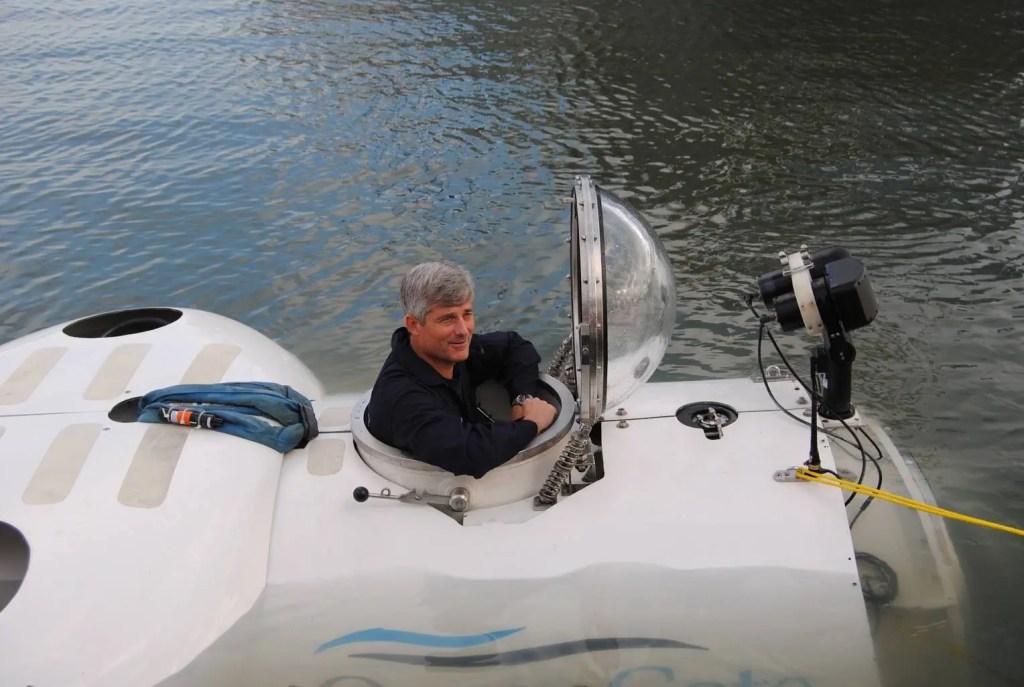
Image (Credit): The late Stockton Rush, CEO of OceanGate. (OceanGate)

If you go to the OceanGate Expeditions website, home of the recently lost Titan submersible, you will notice two statements that say it all:

  • A PR blurb for interested tourists: “95% of the Earth’s ocean is unexplored. You can change that.”
  • And the current status of the expeditions for interested tourists: “OceanGate has suspended all exploration and commercial operations.”

Exploring is fine, but you are not helping to explore the other 95 percent of the Earth’s ocean if you keep going down to the same spot. In addition, “commercial” operations should not be resumed until safety is part of the package.

The New York Post recently published an article, “Titan Sub CEO was on ‘Predatory’ Hunt for Rich Clients to Join Deadly Dive, Industry Leader Says,” highlighting how Stockton Rush ignored safety concerns shared by others, seeing them as a personal insult.

I hope a few other CEOs out there looking at commercial space tourism opportunities are closely reviewing this gruesome case study.

Pic of the Week: Starship Prepares for a Future Flight

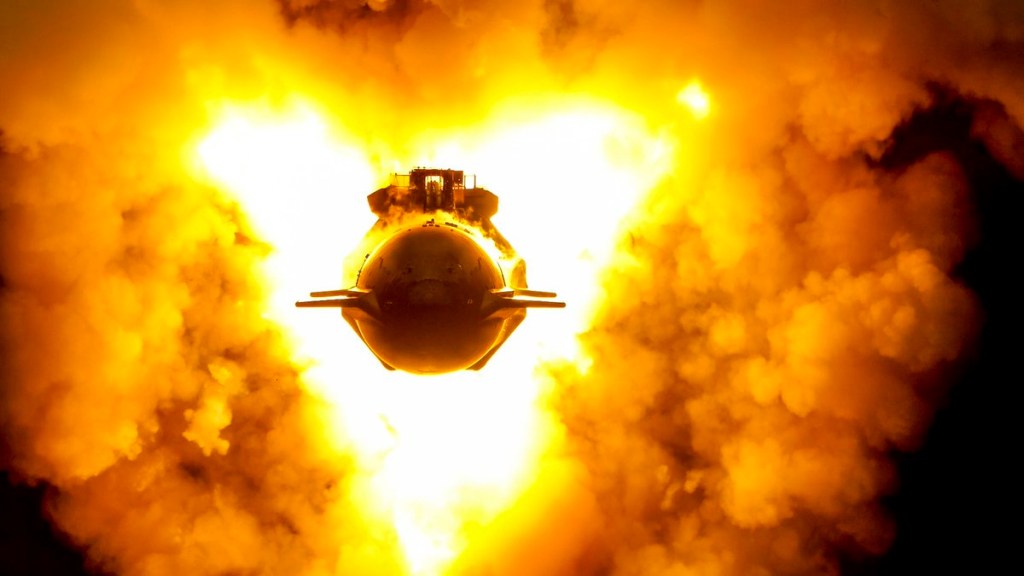
Image (Credit): June 26, 2023 Starship engine test viewed from above. (SpaceX)

The image above shows the SpaceX Ship 25 rocket from above as it tested it engines on June 26, 2023. Presumably, Elon Musk was tweeting out this and other such shots, but given the restrictions placed on Twitter these days, you may not be able to acquire this on your own without an account.

As far as the next Starship launch, the exact date has yet to be shared. However, NASA is already talking about delaying the Artemis III lunar mission, which will use the Starship, from 2025 to 2026.

A Success for Virgin Galactic

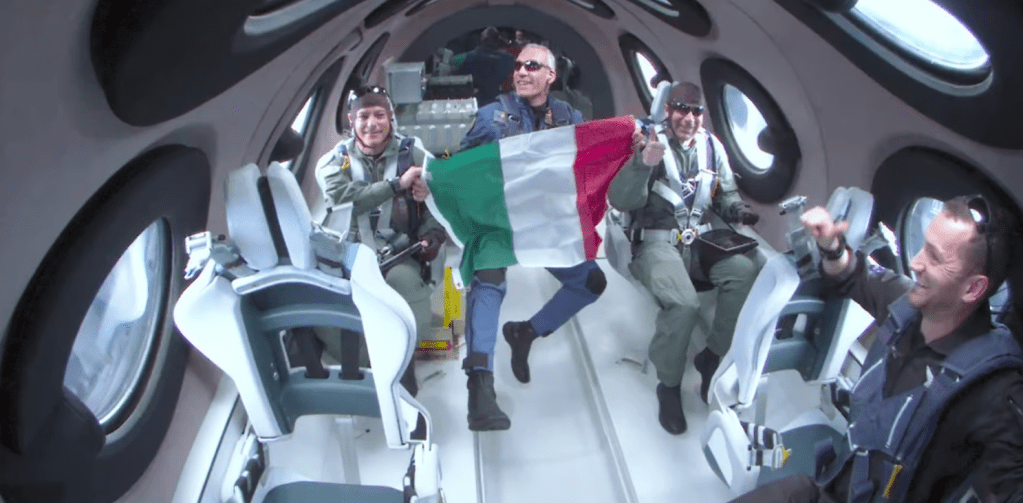
Image (Credit): Interior of Galactic 01 after the successful launch. (Virgin Galactic)

Last Thursday, Virgin Galactic successfully brought paying customers to space, or at least to the edge of space. In this case, it was three Italians, an instructor, and two pilots. You can watch a video of the flight here.

Below is the statement by Virgin Galactic’s CEO:

Tourist flights (at $450,000 per seat) are expected to begin next month. It is too bad that this flight comes so close to the loss of the Titan submersible, but the show must go on.

I expect we might learn just as much about our home planet at the bottom of the sea than miles up in the atmosphere, but such learning will be dangerous and need the right people and skills. The rest is playful profits.