Top Astronomy Stories in 2022

Image (Credit): The stellar nursery 30 Doradus, nickname of the Tarantula Nebula, captured by the James Webb Space Telescope. (webb.nasa.gov)

Given that 2022 was a busy year, I thought I would highlight the top astronomy stories on the site – the good and the bad covering space missions to TV shows. Unlike other websites, I waited until the new year to create the list just in case we were visited by extraterrestrials. In this way, we now have a full catalog of the 2022 happenings.

Here is the list in no particular order other than science first, politics and commercial space second, and entertainment third.

  1. James Webb Space Telescope begins operation – see site link here;
  2. Double Asteroid Redirection Test (DART) successfully shifts the course of an asteroid pair – see site link here;
  3. Artemis I Orion capsule successfully orbits the Moon – see site link here;
  4. Commercial satellites become an increasing threat to Earth-based telescopes – see site link here;
  5. China completes its first space station – see site link here;
  6. Boeing is closer to being the second U.S. company to send astronauts to the International Space Station – see site link here;
  7. Ukraine invasion derails the Russian space program – see site link here;
  8. Russia reconfirms support for International Space Station – see site link here;
  9. Star Trek gets it right by returning to the past with Strange New Worlds – see site link here; and
  10. Star Wars gets it right with its new Andor series. – see site link here.

I cannot wait to see what 2023 will bring.

Space Quote: Is Opaque SpaceX the Only Game in Town?

Image (Credit): SpaceX’s mission control room located in Hawthorne, California. (SpaceX)

“Nobody really knows anything about the financials of SpaceX…No balance sheet or financial report is available. We have a very large company of 10,000 people — a main contractor to NASA and the Defense Department — and there is absolutely no information available on its financial health.”

-Statement by Pierre Lionnet, the research and managing director of Eurospace, regarding the situation at SpaceX in a December 29, 2022 New York Times article, “31 Hours Inside SpaceX Mission Control.” Overall, it was a very positive article about the situation on the ground at SpaceX, but maybe it is time to push even harder for greater redundancy in the U.S. space program. Mr. Musk’s troubles at Twitter have already spilled over into Tesla. Will SpaceX be next? One of the people interviewed for the article noted that SpaceX is the “only game in town.” We already had this rocket dependency with the Russians, and look where we would have been if we did not expanded into the commercial sector. I think even greater expansion would be advantageous as Mr. Musk continues to spin out of control.

Rocket Lab’s Electron Launches from MARS

Image (Credit): The Electron rocket on the launchpad. (Rocket Lab)

Rocket Lab has big plans for the Mid-Atlantic Regional Spaceport (MARS) where tomorrow it will launch the first of its U.S. based Electron rockets. The December 18th mission from the Virginia spaceport will depart from NASA’s Wallops Flight Facility. While Rocket Lab has been launching the Electron from New Zealand, it is starting up operations in Virginia and may become a big presence on the mid-atlantic coast.

The Electron, a 60-foot rocket, is intended for short turnaround of smaller loads. This sounds ideal to the customer base for satellites in Washington, DC just up the road. If all goes well, the larger Neutron rocket will also be launched from MARS in the near future. Ultimately, the VA facility may host monthly Rocket Lab launches.

In an earlier press release, Rocket Lab noted its going potential with both Launch Complex 1 in New Zealand and the new Launch Complex 2 in Virginia:

While “Virginia Is For Launch Lovers” will be Electron’s first launch from the U.S., Rocket Lab has already conducted 32 Electron missions from Launch Complex 1 in New Zealand, delivering 152 satellites to orbit for customers including NASA, the National Reconnaissance Office, DARPA, the U.S. Space Force and a range of commercial constellation operators. Electron is already the most frequently launched small orbital rocket globally and now with the capacity of the pads at Launch Complex 1 and 2 combined, Rocket Lab has more than 130 Electron launch opportunities every year. 

Tomorrow’s launch will be an important test of the company’s new approach. If all goes well, it is good news for the Virginia economy as well as the U.S. commercial space industry.

Update: The launch has been delayed due to weather until Monday, December 19th.

Second Update: The Monday launch was delayed again due to weather. Stay tuned for a new launch date.

Space Stories: Bezos on the Moon, Strange Oort Objects, and Europe Visits Venus

Image (Credit): Artist’s rending of the Blue Origin lunar cargo lander. (Blue Origin)

Here are some recent stories of interest.

Reuters: “Bezos’ Space Company Teams with Lockheed, Boeing for NASA Moon Lander Pitch

Jeff Bezos’ space company Blue Origin is partnering with Boeing Co and Lockheed Martin Corp to pitch a lunar lander to NASA as the agency seeks to send humans to the moon again, the companies announced on Tuesday. The joint moon lander proposal, led by Blue Origin, marks the companies’ second attempt to win a coveted moon lander contract as NASA seeks more options for getting astronauts to the lunar surface under its multibillion dollar Artemis program.

Western University: “‘Unexpected’ Space Traveller Defies Theories About Origin of Solar System

Researchers from Western have shown that a fireball that originated at the edge of the Solar System was likely made of rock, not ice, challenging long-held beliefs about how the Solar System was formed. Just at the edge of our Solar System and halfway to the nearest stars is a collection of icy objects sailing through space, known as the Oort Cloud. Passing stars sometimes nudge these icy travellers towards the Sun, and we see them as comets with long tails. Scientists have yet to observe any objects in the Oort Cloud directly, but everything detected so far coming from its direction has been made of ice. Theoretically, the very basis of understanding our Solar System’s beginnings is built upon the foundation that only icy objects exist in these outer reaches and certainly, nothing made of rock.

Universe Today: “ESA’s Upcoming Mission Will Tell us if Venus is Still Volcanically Active

The EnVision mission is ESA’s fifth medium-class mission to Venus. It’s being planned in a partnership between NASA and ESA, and NASA will be providing the synthetic aperture radar instrument, which will map the surface (much as Magellan did). In addition to the two radars, the orbiter will carry spectrometers to study the atmosphere and surface. They will monitor trace gases in the atmosphere and analyze surface composition. The idea is to look for surface changes that might be linked to signs of active volcanism. Along with the VERITAS and DAVINCI missions, EnVision should reveal all we need to know about volcanic activity on Venus.

Lunar Traffic Jam – Japan Heads to the Moon

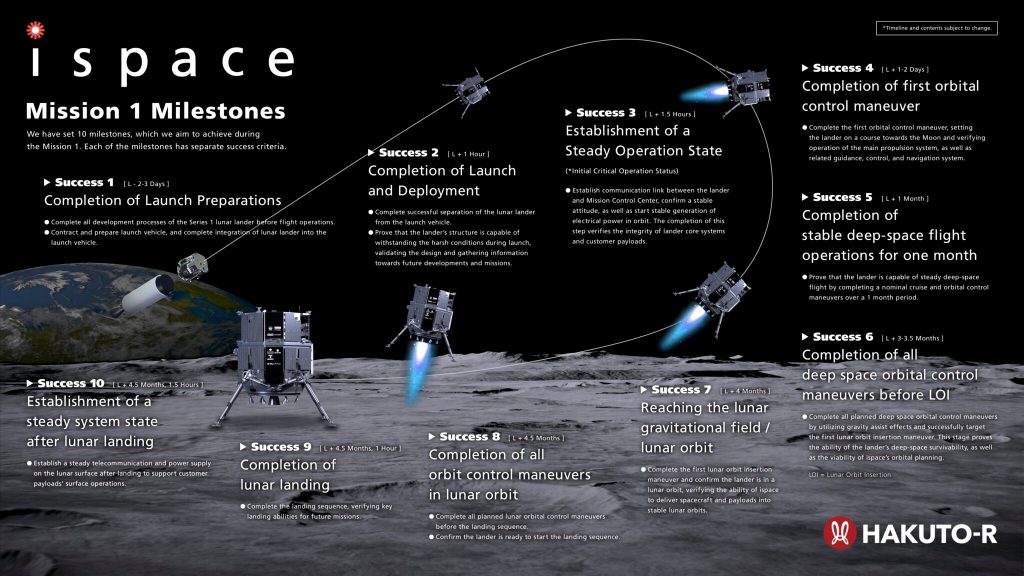
Image (Credit): iSpace mission milestones for the upcoming lunar landing. (iSpace)

While the Orion spacecraft was heading back to Earth, the Japanese HAKUTO-R Mission 1 lunar lander was on its way to the Moon. The name HAKUTO refers to the white rabbit that lives on the moon in Japanese folklore.

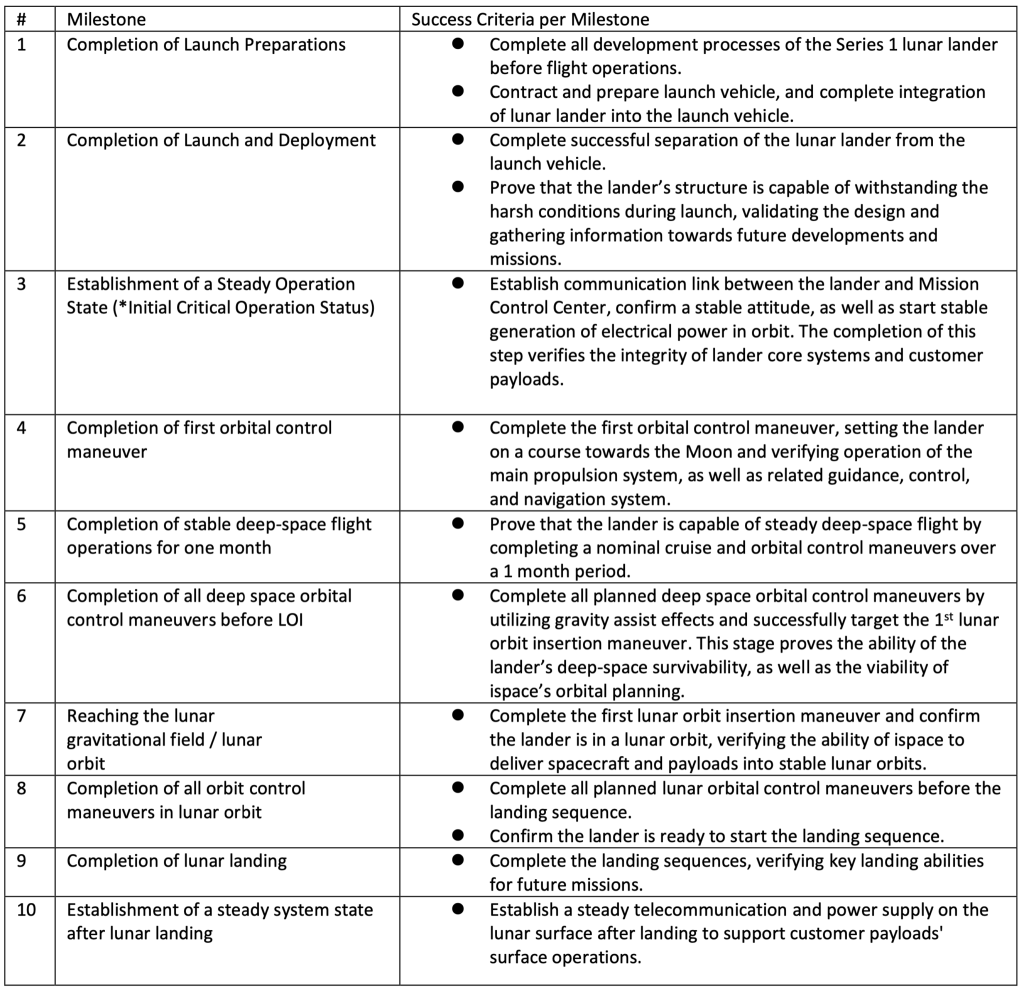
The Japanese private firm iSpace is behind the lunar mission, becoming the first private company to place a lander on the Moon. The lunar lander’s milestones are shown below, with the landing to occur next April.

Both the mission and payload are multinational. Investors in iSpace include the Development Bank of Japan, Suzuki Motor, Japan Airlines, and Airbus Ventures, which the payload includes items from the U.S. (including a NASA satellite looking for water), Canada, Japan (rover), and the United Arab Emirates (rover).

This should be the first of many iSpace lunar missions, demonstrating the role of commercial parties in the ongoing race back to the Moon.

Image (Credit): Milestones for the AKUTO-R Mission 1 lunar lander. (iSpace)