If at First You Don’t Succeed: Jared Isaacman is Really Back

Image (Credit): Artist’s rendering of Blue Origin’s Blue Moon Mark 1, which is a single-launch, lunar cargo lander. (Blue Origin)

President Trump has had a change of heart on Jared Isaacman, his initial nominee for NASA administrator until he withdrew that nomination earlier this year.

Earlier today, the President posted the following:

Jared’s passion for Space, astronaut experience, and dedication to pushing the boundaries of exploration, unlocking the mysteries of the universe, and advancing the new space economy, make him ideally suited to lead NASA into a bold new era.

So what has changed in the last few months to make Mr. Isaacman “ideally suited” to lead NASA as compared to when he was determine unsuitable? I cannot think of anything other than the end of the President’s feud with Elon Musk. Of course, that was recently replaced with Elon Musk’s feud with acting NASA Administrator Sean Duffy, who proposed reopening competition for the first manned Moon landing this century due to delays with SpaceX’s Starship.

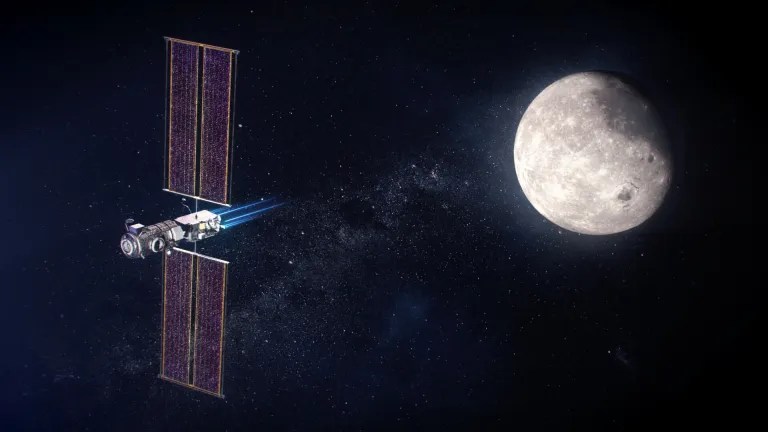
Will Mr. Isaacman save Musk’s Moon mission? He may calm some of the acrimony for the time being, but any new NASA administrator had better have a solid plan to get Americans back on the Moon before China does. Mr. Isaacman may be friends with Mr. Musk, but should he be confirmed he will head a weakened space agency that is struggling with a complex Moon mission that may be much less complex without the Starship refueling plans. In fact, Blue Origin just submitted a new Moon mission plan that drops this refueling altogether.

It is not impossible the winds will shift again, leaving Mr. Isaacman adrift once more. That is how it is in Washington these days. Fickle leadership leads to fickle decision-making and fickle planning.

The Chinese are not having these issues at the moment as they aim to be on the Moon by 2030.

Starship Has Successful 11th Launch

Image (Credit): The Starship rocket on the launchpad in Texas on Monday, October 13th, just prior to launch. (SpaceX)

The Starship launches have been going a little better, with yesterday’s 11th launch meeting its goals, including the release of a practice satellite.

Following the launch, SpaceX stated:

Every major objective of the flight test was achieved, providing valuable data as we prepare the next generation of Starship and Super Heavy...Focus now turns to the next generation of Starship and Super Heavy, with multiple vehicles currently in active build and preparing for tests. This next iteration will be used for the first Starship orbital flights, operational payload missions, propellant transfer, and more as we iterate to a fully and rapidly reusable vehicle with service to Earth orbit, the Moon, Mars, and beyond.

I like that ending, which sounds like something you would hear on the airport bus as you approach the rental lot, “…with service to Earth orbit, the Moon, Mars, and beyond.”

Let’s just hope this bus can get NASA to its next destination on time.

Video: Plans for the First Commercial Space Station

If you are eager to understand what comes after the International Space Station (ISS), you might enjoy Vast’s video showing plans for the Haven-1 and Haven-2 missions as well as other future projects.

Vast’s Haven-1 is a single-module station expected to be launched in May 2026. Once Haven-1 is in orbit, four crew members will be launched to the Haven-1 station via a SpaceX Dragon for a two-week mission. This will be the first real test of the new commercial space station module, which is expected to stay in orbit for three years so three additional crews can visit and conduct research and even manufacture in space.

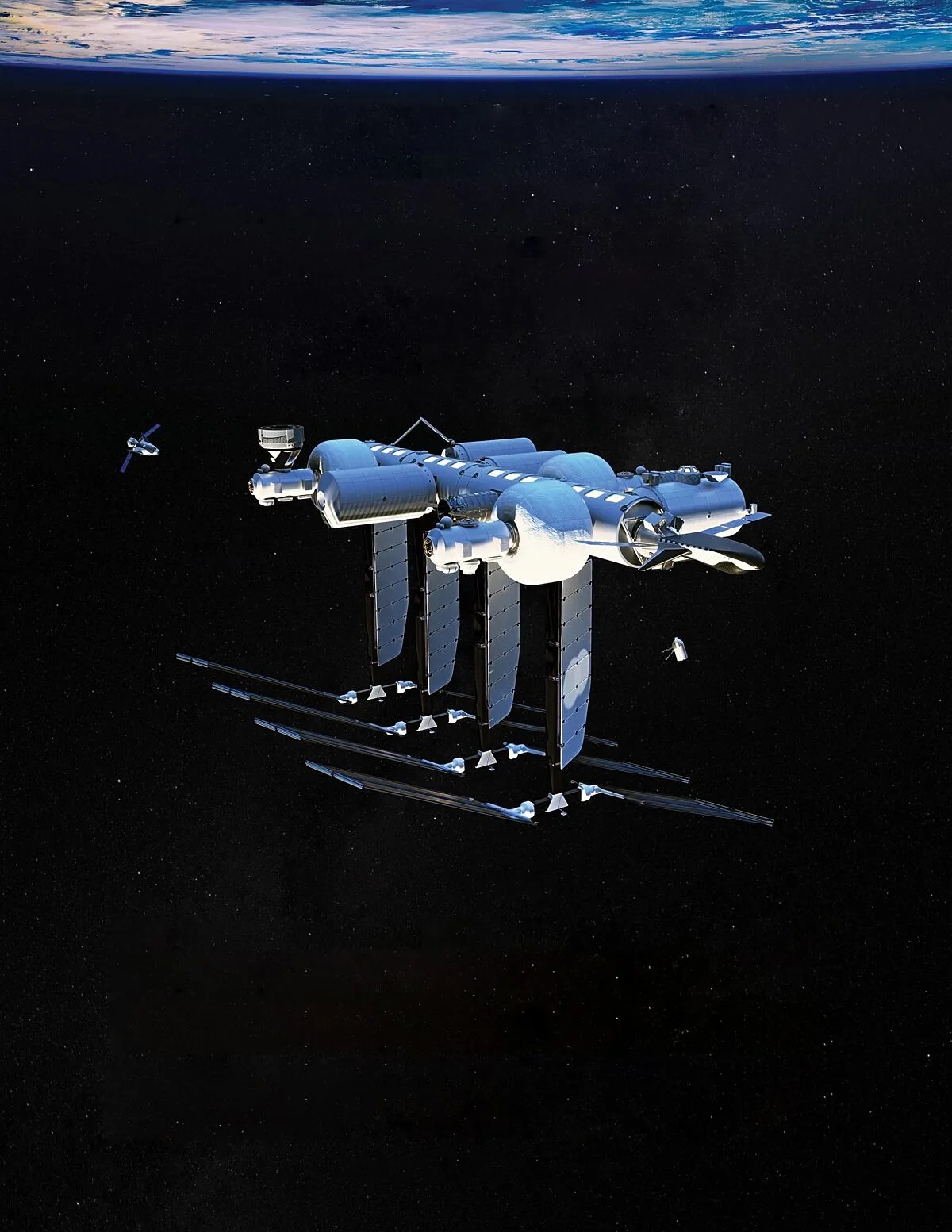
Haven-2 will follow with a larger module. The plan is to link a series of modules to create an expanded station (see image below). The construction of Haven-2 is expected to be underway while the ISS goes out of service in 2030.

Vast is one of numerous companies hoping to fill the gap left by the departing ISS. Whether it is selling seats to NASA scientists, commercial entities, or space tourists, this American company based in California sees a future in space stations.

Audit Report: ISS Spacesuit Issues

Image (Credit): Figure from the NASA OIG audit report, NASA’s Management of ISS Extravehicular Activity Spacesuits. (NASA OIG)

NASA has spent a significant amount of money on the Extravehicular Mobility Unit (EMU) spacesuits used during spacewalks on the International Space Station (ISS). Even so, these suits have ongoing problems that need to be resolved given that they will be critical to the ISS mission until the decommissioning of the station in 2030.

The NASA Office of Inspector General (OIG) has reported on issues with these spacesuits in the past and recently issued a new report on the status of the spacesuits. In its September 30th report, NASA’s Management of ISS Extravehicular Activity Spacesuit, the auditors noted that the contractor maintaining the spacesuits, Collins Aerospace, is having problems, including:

…considerable schedule delays, cost overruns, and quality issues that significantly increase the risk to maintaining NASA’s spacewalking capability.

The auditors stated that lack of competition for these spacesuit services as well as ineffective contract incentives are making the problems a permanent part of the program. While NASA has promoted competition for many years, these spacesuits designed 50 years ago have not benefited from this new approach, in part because the companies that feed into the supply line are slowly disappearing.

It seems dual-use rockets are much more in demand than antique spacesuits, potentially making spacesuits one of the weaker links in the space industry.

Note: Collins Aerospace ended a separate contract with NASA last year to develop a new ISS EMU. Collins continues with its contract to maintain the current EMU.

We Need More Ukrainian Initiative in the Space Industry

Image (Credit): The Ukrainian Flamingo cruise missile. (Fire Point)

It is a sad truth that war can create some useful items that propel mankind forward. Maybe these inventions would have occurred anyway, but the desire to survive can certainly stimulate the mind.

Ukraine is a perfect example. Recent stories about its Flamingo cruise missile indicate that the same Ukranian know-how that created the drones was also used to design a cruise missile that costs $500,000 a piece and can penetrate deep into Russian territory. Such quick innovation by Fire Point, the Ukrainian defense firm that created the new cruise missile, puts even Elon Musk to shame (remember, Musk tried to start SpaceX with old Russian rockets).

Ukraine has already knocked about 20 percent of Russia’s petroleum producing capacity offline, and now this. With a range of approximately 1,800 miles, the Flamingo has plenty of military targets that can severely damage Russia’s war-making capabilities.

Just think if all of this ingenuity had been put towards a peaceful space program. Of course, this war too shall end, and Ukraine may have some promising industries that can be quickly retooled for a space program.

Ukraine had a strong space industry when it was part of the USSR, and these latest foolhardy efforts by Putin to reestablish that Soviet empire may instead only reestablish the Ukranian space industry.