Space Stories: New Lunar Lander on Display, Caltech Approves a Radio Telescope, and Missing Galactic Dark Matter

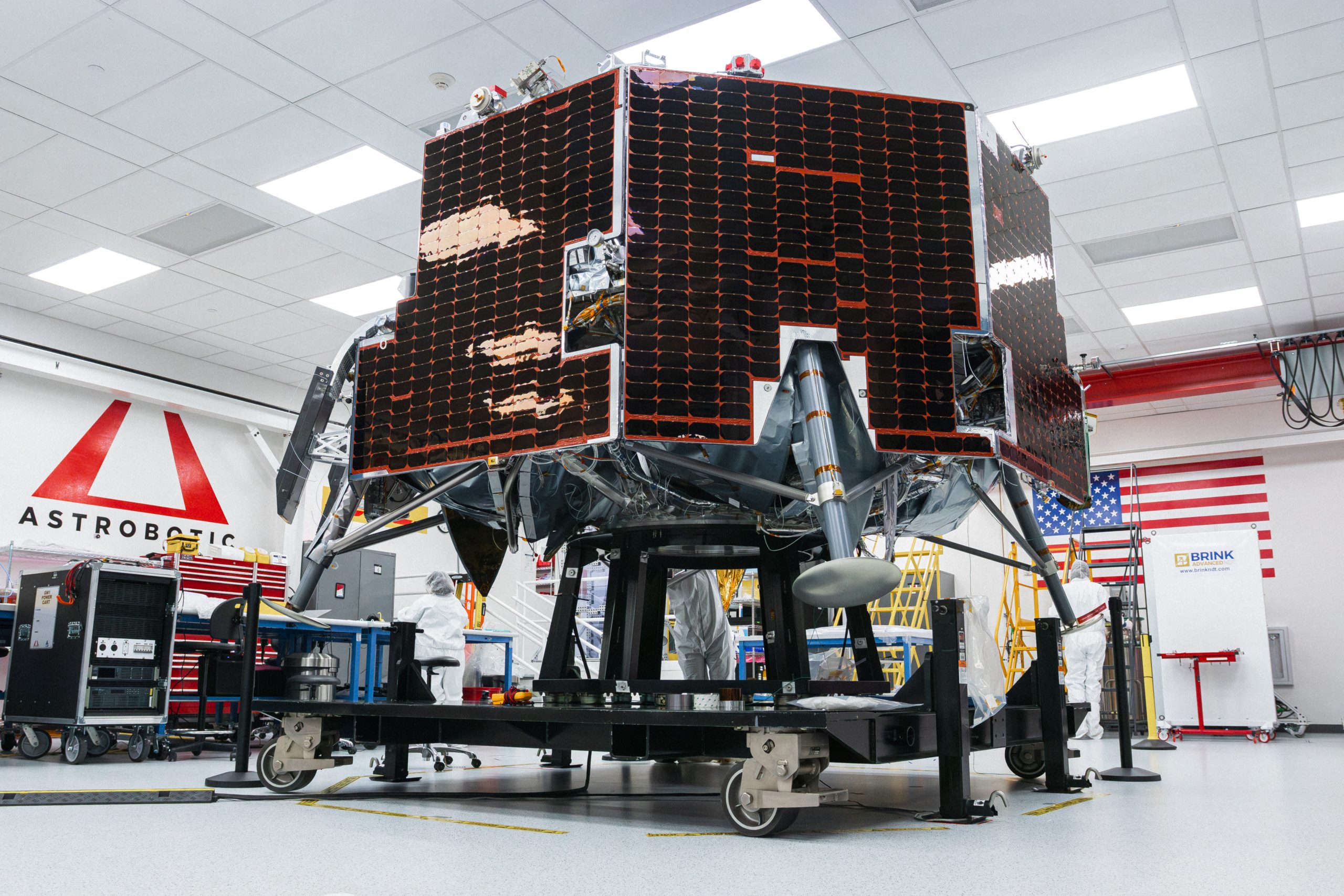
Image (Credit): Astrobotic Technology’s Griffin-1 lunar lander. (Astrobotic Technology)

Here are some recent space-related stories.

—Satnews: “Pittsburgh’s Moonshot: Astrobotic Unveils Griffin-1 Lander Ahead of Historic NASA ‘Moon Base II’ Mission“

Emerging as a powerful symbol of regional industrial pride and the rapid privatization of deep-space logistics, Astrobotic Technology has officially unveiled its massive Griffin-1 lunar lander. The vehicle, which has been formally designated by NASA as the primary infrastructure vehicle for the Moon Base II task order under the Commercial Lunar Payload Services (CLPS) program, represents a critical stepping stone toward establishing a permanent, self-sustaining human presence on the lunar surface. Unlike smaller, first-generation commercial scouts, the Griffin platform is an “infrastructure-class” logistics vehicle engineered to transport heavy industrial cargo. Boasting a massive 625 to 650-kilogram payload capacity, the stout aluminum isogrid lander is designed to ferry bulky machinery, scientific sensor arrays, and alternative energy installations directly to the rugged, hazardous terrain of the lunar south pole.

—Newser: “Giant Nevada Project Could Transform Astronomy“

Caltech has approved the final design for the Deep Synoptic Array, a $200 million radio telescope project that will blanket a chunk of desert with 1,650 dishes over roughly 120 square miles—an array designed to scan the sky about 100 times faster than any existing telescope. Backed in part by Schmidt Sciences, the philanthropic effort of former Google CEO Eric Schmidt and his wife Wendy, the project is slated to be finished by 2029 and will be powered by a supercomputer that turns torrents of radio signals into sharp images on the fly.

—W.M. Keck Observatory: “Astronomers Discover Third Galaxy Without Dark Matter“

Astronomers using W. M. Keck Observatory on Maunakea, Hawaiʻi Island, have discovered the third known galaxy apparently lacking dark matter, part of a strange linear structure that may have formed during a violent collision between galaxies. The discovery strengthens evidence for a rare and previously unseen process in which ordinary matter becomes separated from dark matter, offering astronomers a powerful new way to study one of the universe’s greatest mysteries.

Note: Here is the podcast version of this post.

The Next Space Race May Blind Astronomers and the Rest of Us

Credit: Pixabay

While most of the attention regarding the space race with China revolves around the Moon at the moment, another space race is brewing that will become a big problem for astronomers if the race is successful. This second race is one to place data centers into orbit.

Over the years, astronomers have been expressing concerns about the impact that thousands of satellites on ground-based telescope. However, that is nothing compared to the number of data center satellites being planned for the future. SpaceX has already requested permission from the Federal Communications Commission for at least one million data center satellites. And other US companies such as Google with its Project Suncatcher, as well as the Chinese with similar investments, have their own plans to toss data centers into orbit.

We are fast-tracking ourselves towards the world of Disney’s WALL-E where we have polluted the night sky beyond recognition. Is this really necessary? Do we have other options?

Fortunately, we do, including Google’s planned data center in Texas, which will power itself from renewable energy. Another example is China’s efforts to put data centers in the ocean. Like the night sky, the ocean is a big place with a lot of possibilities if done right.

AI has already brought up enough concerns pertaining to childhood health, jobs for new graduates, and even a real armed Skynet determining its own targets. Do we really need to also surround the planet with more than a million satellites feeding into this questionable new world?

It may be time to take some of these decisions away from the stock market and ponder them for a few a little longer. Even Elon Musk was expressing such concerns in 2023. He signed a letter from the Future of Humanity Institute that stated:

Should we let machines flood our information channels with propaganda and untruth? Should we automate away all the jobs, including the fulfilling ones? Should we develop nonhuman minds that might eventually outnumber, outsmart, obsolete and replace us? Should we risk loss of control of our civilization? Such decisions must not be delegated to unelected tech leaders.

That was a smart idea then, and it makes even more sense today before we go crazy spending billions, if not trillions, or dollars on a new space race that re-energizes a questionable technology while blotting out the night sky for those who are willing to look outside of our planetary bubble to learn from the universe.

It was B. F. Skinner who said:

The real problem is not whether machines think but whether men do.

Summer Reading: Three Books Discussed by the Planetary Society

Credit: McNally Editions

Now that we are past Memorial Day, it is time to start thinking about that beach vacation.

To help with your reading selections, below I have highlighted episodes from Planetary Radio’s Book Club Edition that discussed three different books. I have included a link to the podcast as well as a quick summary from each book jacket.

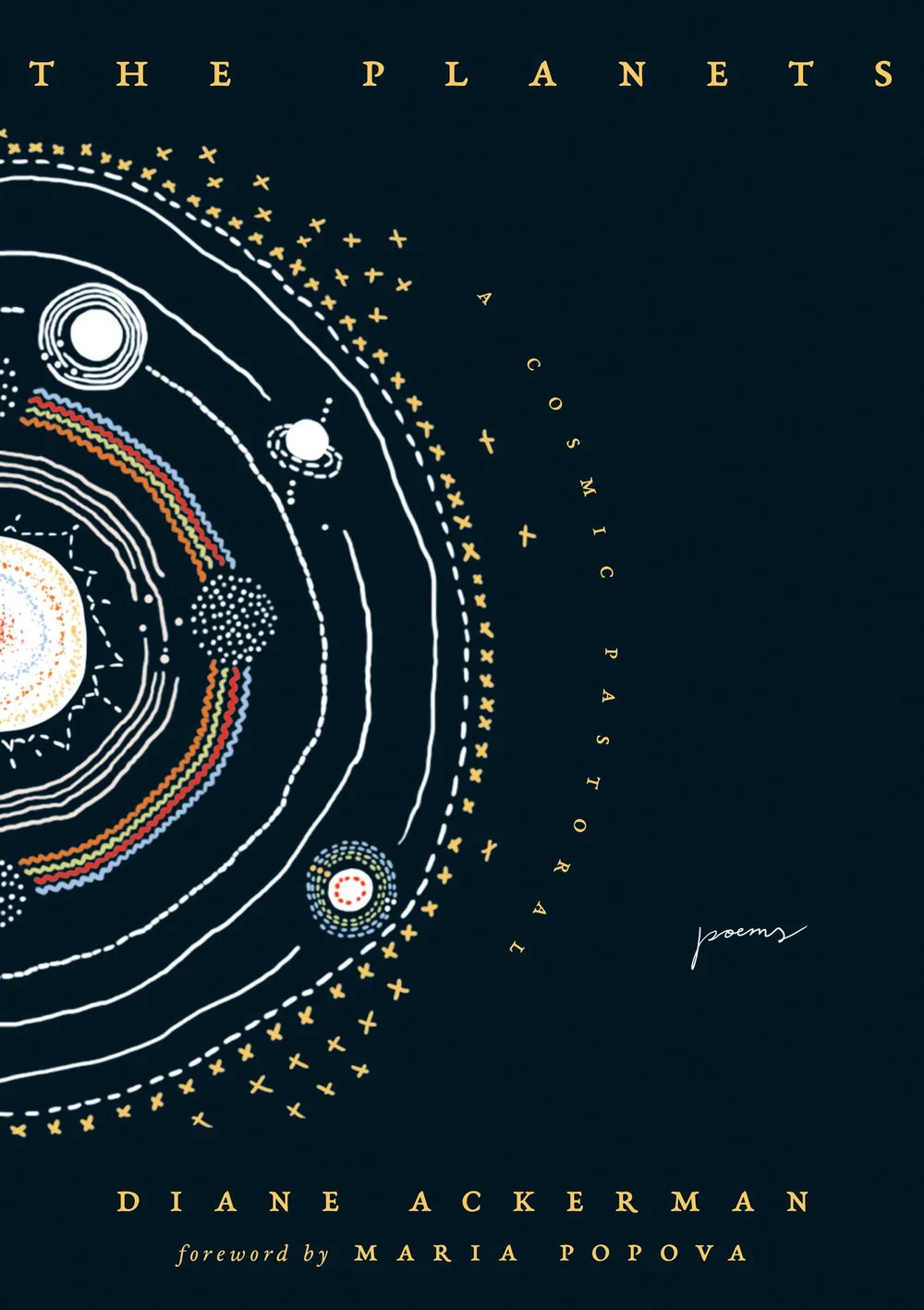
Diane Ackerman and “The Planets: A Cosmic Pastoral”

First published in 1973, The Planets: A Cosmic Pastoral introduced not only a splendid new poet but a whole new adventure in poetry. With bravura style, unbridled imagination, and a connoisseur’s eye for precise scientific detail, Diane Ackerman’s debut brought us an unforgettable ode to each planet in our solar system, not to mention the moon, the comet Kohoutek, and the asteroid belt, as well as  strange voyages to the stars, the bottom of the sea, through the human body, and into the mind.

Diane Ackerman herself says: “I’ve always been baffled by people who write about nature only in terms of, say, junipers and cornfields, eschewing all things so-called ‘scientific,’ as if science were, per se, the spoil-sport of feeling. So wonderless a view of nature really doesn’t appeal to me.” The Planets is a rare fusion of art and science—one of the great poetic works of cosmic imagination.

Founder and CEO Peter Beck on “The Launch of Rocket Lab”

The Launch of Rocket Lab takes you behind the scenes of one of the most innovative aerospace companies in the world. From humble beginnings in Auckland to launching rockets from the Mahia Peninsula and Virginia and listing on the Nasdaq, this is the remarkable story of Kiwi ingenuity on a global scale.

The book chronicles how Rocket Lab founder Peter Beck and his team challenged traditional aerospace giants to create a revolutionary approach to satellite launches, overcoming extraordinary technical and business challenges along the way.

Through exclusive interviews and unprecedented access, discover how Rocket Lab is redefining our approach to space with their Electron rocket, Photon satellite bus, ambitious interplanetary missions and the new Neutron Rocket. Featuring hundreds of beautiful high quality images from the archives and new graphics.

Caleb Scharf and “The Giant Leap: Why Space is the Next Frontier in the Evolution of Life”

The story of life has always been one of great transitions, of crossing new frontiers. The dawn of life itself is one; so, too, is the first time two cells stuck together rather than drifting apart. And perhaps most dramatic were the moves from the sea to land, land to air. Each transition has witnessed wild storms of innovation, opportunity, and hazard. It might seem that there are no more realms for life to venture. But there is one: space.  
 
In The Giant Leap, astrobiologist Caleb Scharf argues that our journey into space isn’t simply a giant leap for humankind—it’s life’s next great transition, an evolution of evolution itself. Humans and our technology are catalysts for an interplanetary transformation, marking a disruption in the story of life as fundamental as life’s movement from sea to land, and land to sky.   
 
Inspired by Darwin’s account of his journey on the Beagle, and packed with stories from the past, present, and future of space travel, The Giant Leap thrills at both life’s creativity and the marvels of technology that have propelled us into the cosmos. And it offers an awesome glimpse of the grander vistas that wait in the great beyond.  

Note: An earlier post on this site also discussed Mr. Scharf’s book.

Space Quote: Not All is Lost at Launch Complex 36

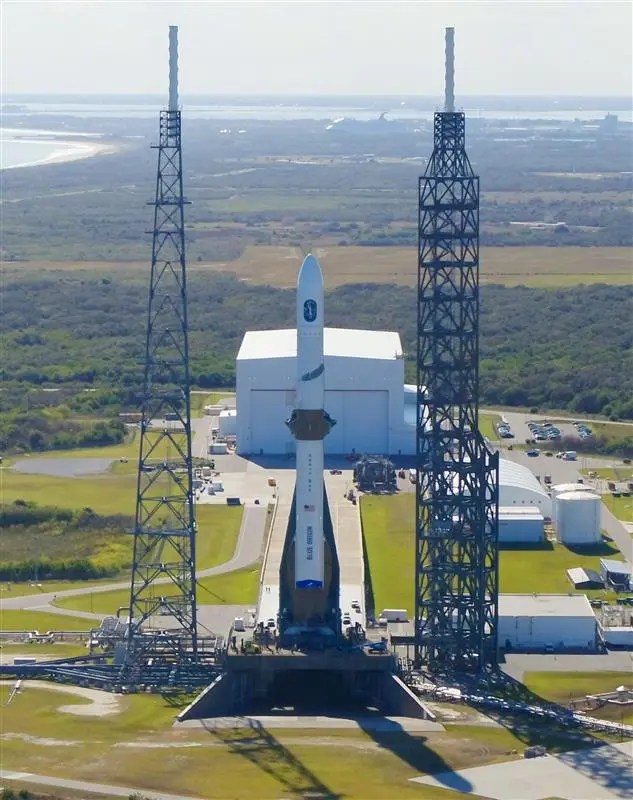
Image (Credit): Photo of Launch Complex 36 (LC-36), located at Cape Canaveral Space Force Station, prior to Thurday’s explosion. Completed in 2021, Blue Origin invested more than $1 billion to rebuild the launch site from the ground up. (Blue Origin)

“We have regained some access to Launch Complex 36 and are actively investigating the hotfire anomaly. We will start clearing the pad soon and have a good rebuild plan in place. The booster and GS2s in the integration facility appear healthy from quick looks.”

-Statement on Twitter/X by Blue Origin CEO Dave Limp regarding the Cape Canaveral Launch Complex 36 facility damaged by the explosion of a New Glenn rocket on Thursday. The “GS2s” refer to the New Glenn second stages housed at Launch Complex 36 with the booster. Eric Berger, senior space editor at Ars Technica, stated:

The company does not have another launch site for New Glenn. It has begun preliminary work on a nearby pad, LC-36B, and has plans to develop another site at Vandenberg Space Force Base in California. But these projects are just getting started...Rebuilding the company’s pad, or finishing a new one, will likely take at least a year.

Space Quote: NASA Has Lessons for Automating American Industry

Credit: Image by David Yonatan González Aburto from Pixabay.

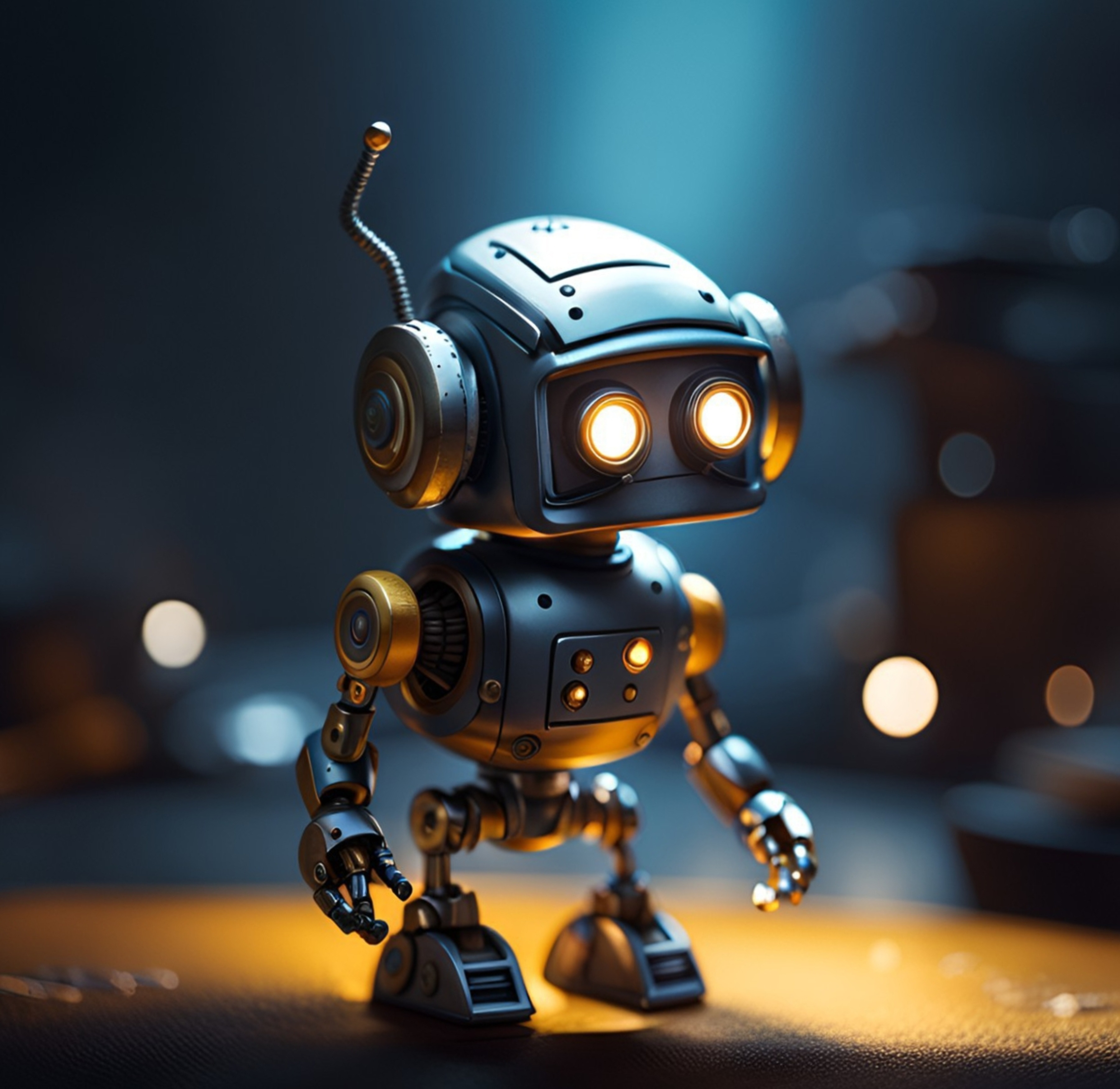
“At NASA, decades of designing humanoid robots for environments that don’t forgive narrow thinking revealed that the machines that failed were the ones built for a single scenario. The ones that succeeded could multitask and be reprogrammed– for deployment in different settings. The arm built for the Space Shuttle, for example, was designed to position an astronaut who would catch and later release a satellite. It turned out the robot was better at making the catch itself — but positioning astronauts proved useful for other tasks, like repairing the Hubble Space Telescope.”

-Statement by Dr. Robert Ambrose, Chairman of Robotics and Artificial Intelligence at alliant and former Chief of the Software, Robotics and Simulation Division at NASA. He was discussing robotics in a Fortune magazine story titled “Former NASA Robotics Chief: America is Building the Wrong Kind of Robots — and China Knows It.” It is nice to see that NASA can teach the private sector a few things about preparing for the future. The agency has a wealth of information that can be shared with the private sector and allied countries. We just need to recognize the treasure trove of information we have accumulated at NASA over the years and do our best to preserve it and build upon it.