More Satellite Pollution Impacting Ground Telescopes

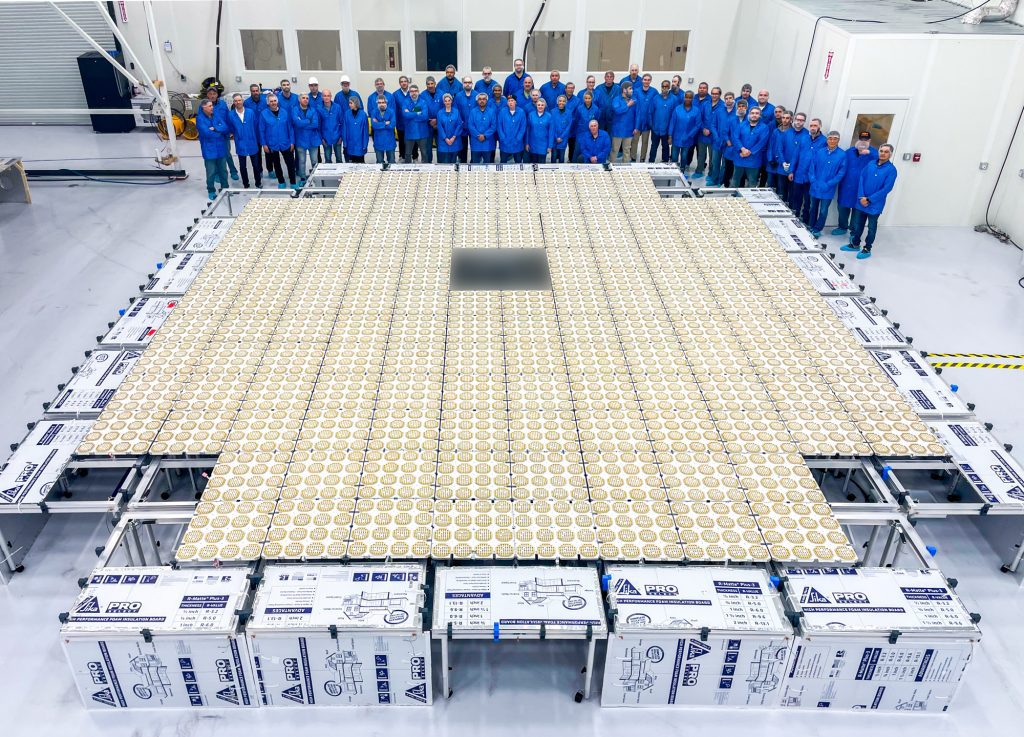
Image (Credit): AST SpaceMobile’s BlueWalker 3 test satellite, which is 693 square feet in size. (AST SpaceMobile)

It is called Bluewalker 3, and it may change the night sky for years to come. Launched in September 2022 aboard a SpaceX rocket, the Bluewalker3 prototype communications satellite from AST SpaceMobile spread its 693 square feet antenna array in low-Earth orbit. It has now become as bright as the brightest stars in the evening sky. And more of these satellites will soon be launched – 168 of them.

Needless to say, astronomers on the ground are perturbed. As noted in Science, astronomer Meredith Rawls of the University of Washington, Seattle, stated, “It’ll show up as a superbright streak in images and potentially saturate camera detectors at observatories.”

That is not to say it will be the brightest man-made object in the night sky. The International Space Station wins that battle being about 40 times brighter than the Bluewalker3, but there is only one ISS versus the 168 Bluewalker satellites being planned.

But wait, there’s more. The Bluewalker satellites direct-to-mobile cell service will also impact radio astronomers.

All of this has astronomers up in arms, leading to complaints against the use of such satellites. The Federal Communications Commission (FCC) is monitoring the matter.

As reported by NBC News, the FCC is also placing new restrictions on satellites at the end of their mission life, but this will not help with all of the new satellites going up today that will be crowding the night sky for many years to come.

If this continues, we may need that planned lunar base as a telescope collection point, at least until the objects orbiting the Moon become a problem.

Iranian Astronomy Collaboration, Anyone?

Image (Credit): The Iranian National Observatory at night. (Shia News Association)

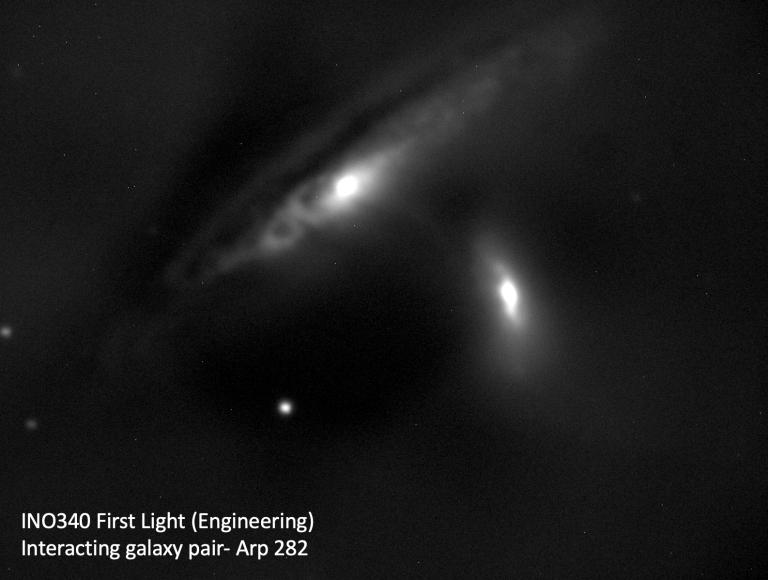
The Iranian National Observatory (INO) is now operational, with its first images now available (see sample below). After 20 years and $25 million, Iranian astronomers now have their own view of the heavens. Fine tuning of the telescope is underway, but it should soon be ready for its initial focus on the evolution of galaxies and stars as well as the study of exoplanets.

Sadly, this positive scientific news is overshadowed by international sanctions, riots in Iran, and the nation’s involvement in the sale of drones to Russia now being used to bomb Ukrainian cities.

Even with all of these problems, INO Project Director Habib Khosroshahi, an astronomer at the Institute for Research in Fundamental Sciences in Tehran, recently stated in Tehran Times, “The door is open from our side…” for collaboration with other science teams around the world.

It would be great if collaborative science could continue in this time of strife, as demonstrated by work on the International Space Stations, but it will be very difficult.

Image (Credit): First images of the INO showing to interacting galaxies. (INO)

Arecibo Observatory Gone Forever

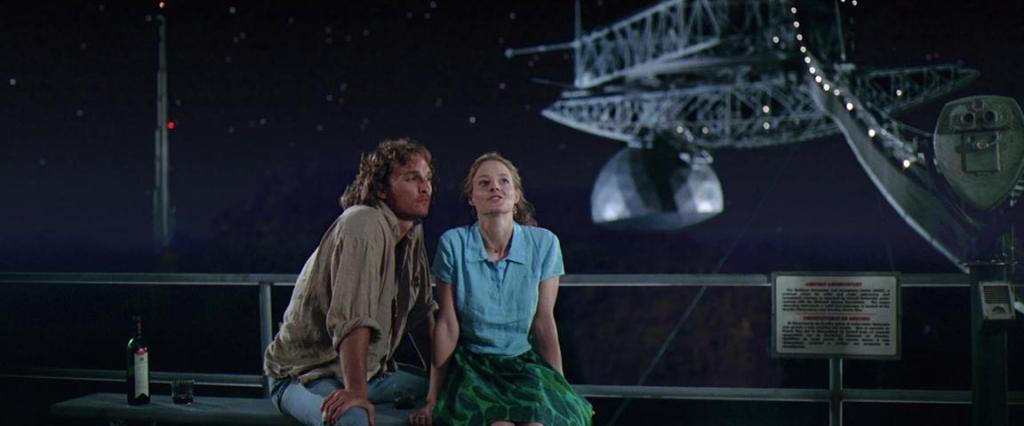
Image (Credit): Matthew McConaughey and Jodie Foster at the Arecibo Observatory in the movie Contact. (Warner Bros.)

If you were hoping that the Arecibo Observatory in Puerto Rico would have a second life, it may be time to say goodbye. Efforts to rebuild the radio telescope since it collapsed in 2020 have ended. Nature reports that the US National Science Foundation (NSF) has given up on the idea of rebuilding the telescope and instead plans to establish an educational center at the site.

You may have memories from the 1997 film Contact where Matthew McConaughey and Jodie Foster enjoyed some private time at the Observatory. Her character Dr. Ellie Arroway was working at the Observatory as part of the Search for Extraterrestrial Intelligence works (SETI) program. In fact, the SETI connection is true. You can see a SETI tribute to the telescope here.

Of course, scientists will remember almost 60 years of work with the radio telescope. While it was initially built for military purposes, it was soon transformed into a scientific site and served as the largest radio telescope on the planet for some time. As far as scientific accomplishments, here are a few of them from the NSF:

  • 1967: Arecibo discovered that the rotation rate of Mercury is 59 days, not the previously estimated 88 days.
  • 1981: Arecibo produced the first radar maps of the surface of Venus.
  • 1992: Arecibo discovered the first ever exoplanet: In subsequent observations, an entire planetary system was found around the pulsar PSR 1257+12.
  • 2008: Astronomers use Arecibo to detect for the first time, methanimine and hydrogen cyanide molecules — two organic molecules that are key ingredients in forming amino acids — in a galaxy 250 million light-years away.

So many new telescopes have come online in the past 60 years that some will say we will be fine with an educational center. This is true, but it is also worth remembering each of the telescopes along the way that helped us to understand this awesome universe of ours.

Image (Credit): The damaged Arecibo Observatory reflector dish after suffering damage from a broken cable. (University of Central Florida)

Have You Heard of Super-Mercuries?

Image (Credit): Surface of Mercury captured by NASA’s MESSENGER spacecraft.(NASA/Johns Hopkins University Applied Physics Laboratory/Carnegie Institution of Washington)

I often here of super-Earths among the spotted expolanets, but super-Mercuries? They are less common, with only eight spotted to date, including two recently found around exoplanet using the Echelle SPectrograph for Rocky Exoplanet and Stable Spectroscopic Observations (ESPRESSO) spectrograph on the European Southern Observatory’s Very Large Telescope in Chile. The two super-Mercuries were spotted in the star system HD 23472 along with two super-Earths.

Researcher researcher Susana Barros with the Astrofísica e Ciências do Espaço’s, who led the team that found the new super-Mercuries, stated:

For the first time we have discovered a system with two super-mercuries. This allows us to obtain clues about how these planets were formed, which could help us exclude some possibilities. For example, if an  impact large enough to create a Super-Mercury is already very unlikely, two giant impacts in the same system seems very improbable. We still don’t know how these planets are formed but it appears to be connected to the composition of the parent star. This new system can help us find out.

Much of the exoplanet talk to date has been about super-Earths and mini-Neptunes, so it is nice to see a super-Mercury thrown into the mix. With the exoplanet search is still in its early days, expect more local planet terminology to be added to the discussion.

For more on the super-Mercury story, go here.

Podcast: Scientists Discuss the JWST

It is worth checking out the BBC’s Sky at Night podcast if you want to follow the stars or just listen to astronomers discussing the night sky. Two recent episodes in particular, both related to the James Webb Space Telescope (JWST), should be on your podcast list.

  • How James Webb Space Telescope Observes the Universe (broadcast on August 26, 2022): Dr Pamela Klaassen, an instrument scientist, reveals the science behind how JWST studies the cosmos, what its images show us, and the secrets it might uncover. She also discusses her work studying very large stars. Finally, the discussion covers the Square Kilometre Array Organization and how this brand new ground-based observatory will work in tandem with the JWST to unlock the secrets of the Universe.
  • Exploring Exoplanets with JWST (broadcast on August 22, 2022): Dr Hannah Wakeford from the University of Bristol is part of an international collaboration of exoplanet hunters looking to see how the JWST can reveal the secrets of worlds orbiting stars beyond our solar system. One exoplanet priority for the JWST discussed during the episode is WASP-39b, the results of which were recently shared with the public.