Nearby Planetary System Discovery: Two Earth-sized Planets

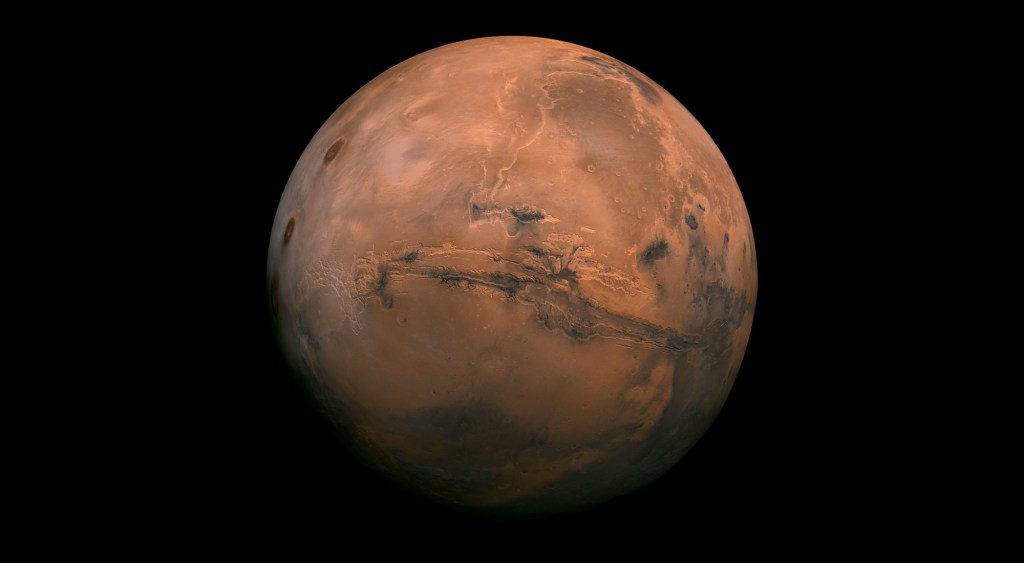
Image (Credit): Artist’s image of two new planets orbiting HD 260655. (NASA)

MIT News reports a star about 33 light years away contains two Earth-like planets, one that is 1.2 times the size of the Earth and the second that is about 1.5 times the size.

The discovery of these exoplanets orbiting the M-dwarf star, named HD 260655, came about when scientists combined data from NASA’s Transiting Exoplanet Survey Satellite (TESS) with data from the High Resolution Echelle Spectrometer (HIRES) in Hawaii and CARMENES at the Calar Alto Observatory in Spain. 

While both planets are too close to their sun, and thereby too hot to have liquid water on their surface, they are still objects for further study. The article quotes Michelle Kunimoto, a postdoc in MIT’s Kavli Institute for Astrophysics and Space Research and one of the discovery’s lead scientists:

Both planets in this system are each considered among the best targets for atmospheric study because of the brightness of their star…Is there a volatile-rich atmosphere around these planets? And are there signs of water or carbon-based species? These planets are fantastic test beds for those explorations.

World’s First Liquid Mirror Telescope

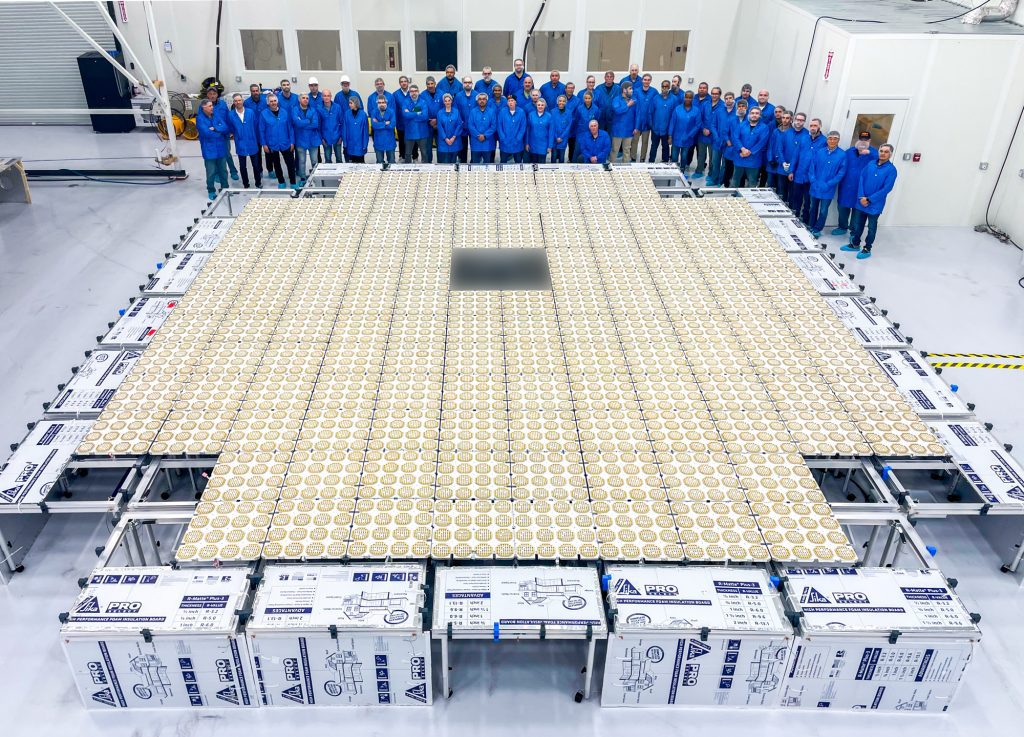
Image (Credit): Top view of the International Liquid Mirror Telescope located at the Devasthal Observatory of the Aryabhatta Research Institute of Observational Sciences showing the liquid mercury mirror covered by a thin mylar film. (India Today)

An earlier post mentioned NASA’s plans for a liquid mirror telescope in space. Well, India now has one here on Earth.

The Indian Express reports that the liquid mirror telescope was designed and built at the Advanced Mechanical and Optical Systems Corporation and the Centre Spatial de Liege, Belgium. While funded by Canada and Belgium, it will be maintained and operated by India. The article states:

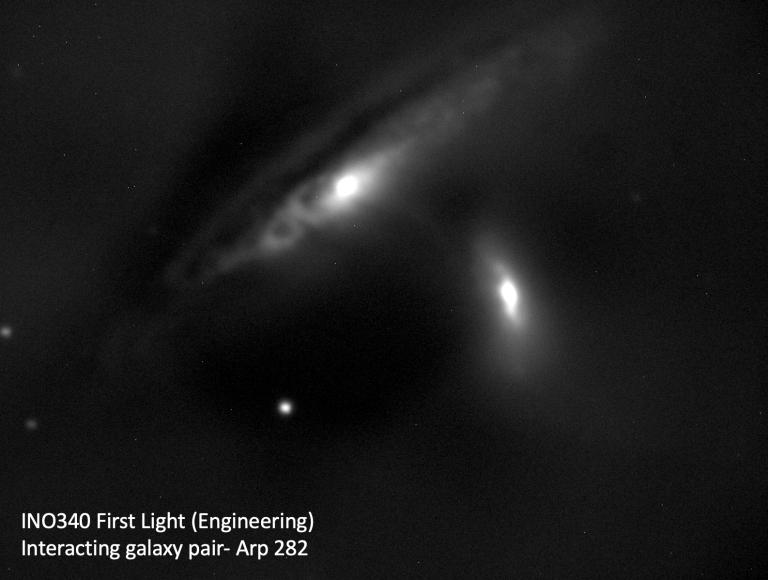
India’s first liquid-mirror telescope, which will observe asteroids, supernovae, space debris and all other celestial objects from an altitude of 2,450 metres in the Himalayas, has seen its first light. It has now entered the commissioning phase and will start scientific observations some time in October this year.

Liquid mirror telescopes have a few advantages, including being inexpensive to build and providing a very efficient way to image a large area of the sky. A disadvantage is that such a telescope must lie flat on Earth and can only observe what passes overhead (unlike space where the lack of gravity may offer other options). Even so, India expects to obtain plenty of information using this new form of telescope.

A new way to view the heavens. This may be the start of something pretty amazing.

The Future of Mauna Kea and its Telescopes

Image (Credit): Observatories on Mauna Kea in Hawaii. (EastVillage Images/Shutterstock)

Finding the right place to build a telescope is crucial in a time of growing cities and brighter skies, which is why the telescopes atop of Mauna Kean in Hawaii are a great resource. Is that about to change? It is not clear, but a Hawaiian State bill is attempting to transfer ownership of the site. Here is a summary of House Bill 2400:

Establishes the Mauna a Wakea stewardship authority as the sole authority for management of state-managed lands on Mauna a Wakea. Requires the authority to develop a single plan that dictates the management of land uses; human activities, uses, and access; stewardship; education; research; disposition; and overall operations. Requires the authority to develop a framework to limit astronomy development on Mauna a Wakea. Allows the authority to prohibit certain commercial use and activities on Mauna a Wakea. Requires an application and fee for all recreational users of Mauna a Wakea. Establishes the Mauna a Wakea management special fund. Repeals the Mauna Kea lands management special fund. Appropriates funds.

The telescopes have been the subject of debate among Native Hawaiians who do not want to see more construction on the mountain, nor like what is already there. The land beneath the multiple observatories is under lease from the state of Hawaii’s Board of Land and Natural Resources (BLNR) and administered by the University of Hawaii. In 1968, BLRN provided a 65-year lease to the University of Hawaii. The bill is looking to change this arrangement by creating a new authority to oversee the use of the land. The astronomy community is generally against this bill as it would add to restrictions on the use of the land and put control of the site primarily into the hands of parties opposed to the telescopes.

The bill follows the completion of a working group study on the matter. The expectation among many in the community has been that the mountain would eventually be returned to its natural state. The working group study makes this clear: “All observatories on Mauna a Wākea shall plan for and finance their decommissioning process as a condition for any lease on Mauna a Wākea.”

Will the approved House bill pass the full Senate? That’s a whole other matter, though it has been approved by a number of committees. Only time will tell if astronomy will die a slow death on a mountain top.

Pic of the Week: Test-Bed Telescope 2

Source/Credit: Test-Bed Telescope 2 from the ESA.

This week’s photo is from the European Space Agency (ESA) and shows a recently-completed telescope in Chile designed to detect dangerous asteroids. Here is the full story:

Part of the world-wide effort to scan and identify near-Earth objects, the European Space Agency’s Test-Bed Telescope 2 (TBT2), a technology demonstrator hosted at ESO’s La Silla Observatory in Chile, has now started operating. Working alongside its northern-hemisphere partner telescope, TBT2 will keep a close eye on the sky for asteroids that could pose a risk to Earth, testing hardware and software for a future telescope network.

In Case You Missed It: The Vatican’s Space Observatory

Source/Credit: The telescope domes on the roof of the Vatican Observatory, at the Apostolic Palace in Castel Gandolfo from Andreas Solaro/AFP via Getty Images.

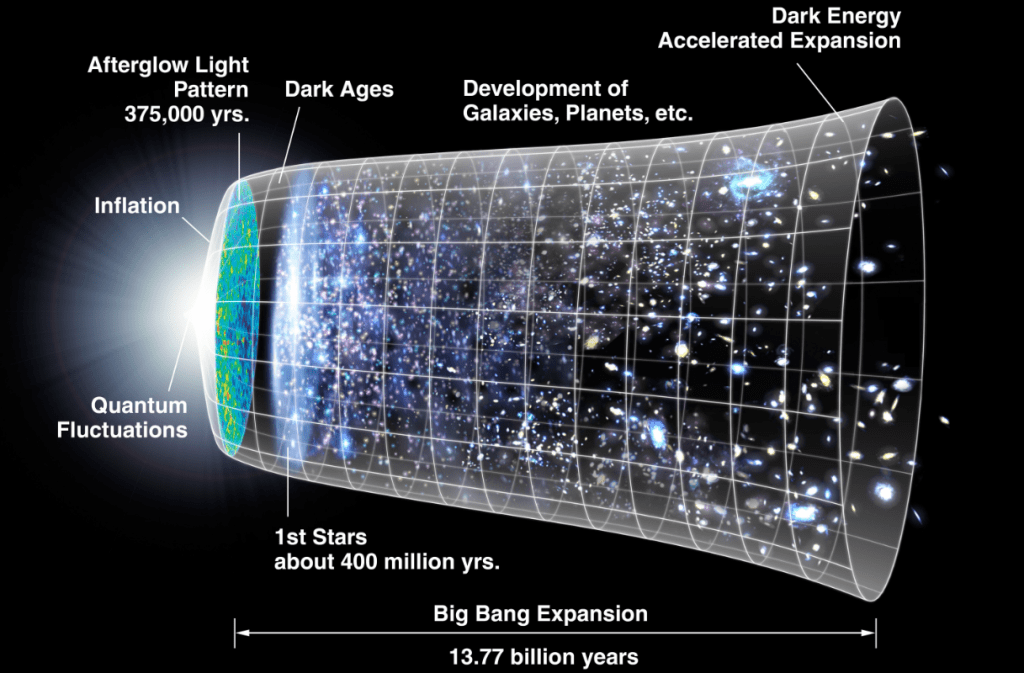
Just in case you missed it, I recommend you read NPR’s June 2021 article, “The Vatican’s Space Observatory Wants To See Stars And Faith Align.” You can read about the interplay of astronomy and the Catholic Church. For instance, did you know the idea of the Big Bang originated with a Belgian priest? Or that the Vatican Observatory coordinates with NASA on space issues?

You can learn more from the article. You might also want to visit the Vatican Observatory’s website or listen to one of the podcasts from the Observatory.

Click the image of Brother Guy Consolmagno for a video.