European/Russian Rover Coordination Now Dead

Image (Credit): Drawing of the ESA’s ExoMars martian rover called the Rosalind Franklin. (ESA)

The European Space Agency (ESA) has decided to terminate cooperation with Russia on the ExoMars rover mission. The joint mission, planned for September 2022, was suspended earlier this year after Russia invaded Ukraine. The ESA has now cut all links on the project and hopes to work with NASA on some aspects of the mission.

The rover, named the Rosalind Franklin, would be the first European rover to visit Mars. It is designed to explore the surface of Mars as well as collect and analyse samples. The plan is to land the rover at a site with high potential for finding well-preserved organic material, particularly from the very early history of the planet.

Both Covid and the war in Ukraine have delayed the rover mission, but the ESA will see it through, alone if necessary, but hopefully with others. Maybe Russia can be a partner again in the future, but it will need new leadership that knows how to play well with others.

JWST: An Early Image of Galaxies

Image (Credit): Galaxy cluster SMACS 0723. (NASA, ESA, CSA, and STScI)

Earlier today, President Biden released one of the first images (shown above) from the James Webb Space Telescope (JWSP). A full release is scheduled for tomorrow at this location: https://www.nasa.gov/webbfirstimages.

The image shows galaxy cluster SMACS 0723, which represents thousands of galaxies in a patch of sky approximately the size of a grain of sand held at arm’s length by someone on the ground.

Here is a little more from NASA on what we are seeing:

The image shows the galaxy cluster SMACS 0723 as it appeared 4.6 billion years ago. The combined mass of this galaxy cluster acts as a gravitational lens, magnifying much more distant galaxies behind it. Webb’s NIRCam has brought those distant galaxies into sharp focus – they have tiny, faint structures that have never been seen before, including star clusters and diffuse features. Researchers will soon begin to learn more about the galaxies’ masses, ages, histories, and compositions, as Webb seeks the earliest galaxies in the universe.

It’s certainly a good start. Stay tuned for more.

Pic of the Week: The Durable Hubble

Image (Credit): The Hubble Space Telescope. (NASA/ESA)

This week’s image is the Hubble Space Telescope, still going strong after more than 32 years. It left the Space Shuttle Discovery’s cargo bay on April 25, 1990. With all of the attention on the James Webb Space Telescope (JWST), it’s important to remember this dependable space telescope that brought us so many amazing images over the years, including those shown below.

Given the concern over the recent concerns about a micrometeroid impacting the JWST, let’s not forget that the Hubble had a few growing pains as well. Most importantly, it had to deal with a flawed mirror that required astronauts to visit the space telescope so they could add five pairs of corrective mirrors. More than three years had passed before the astronauts could make this correction. So the current issues with the JWST are pretty minor by comparison.

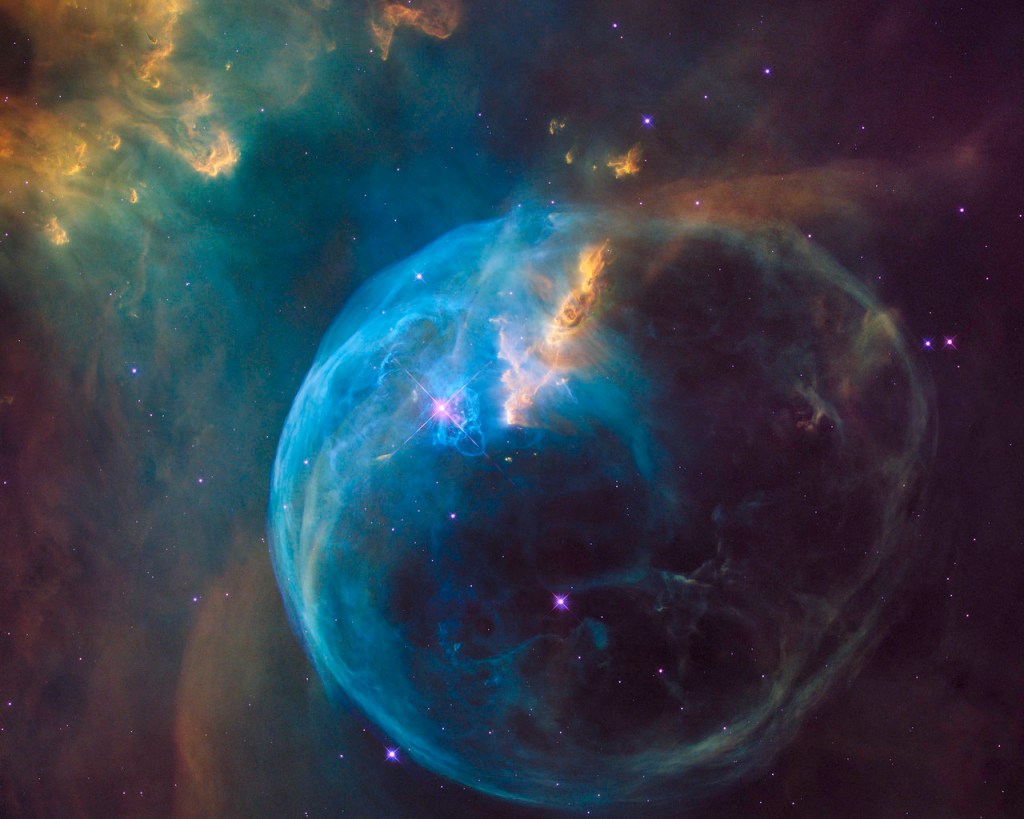
Image (Credit): The Bubble Nebula, also known as NGC 7635, located 8 000 light-years away. (NASA/ESA)
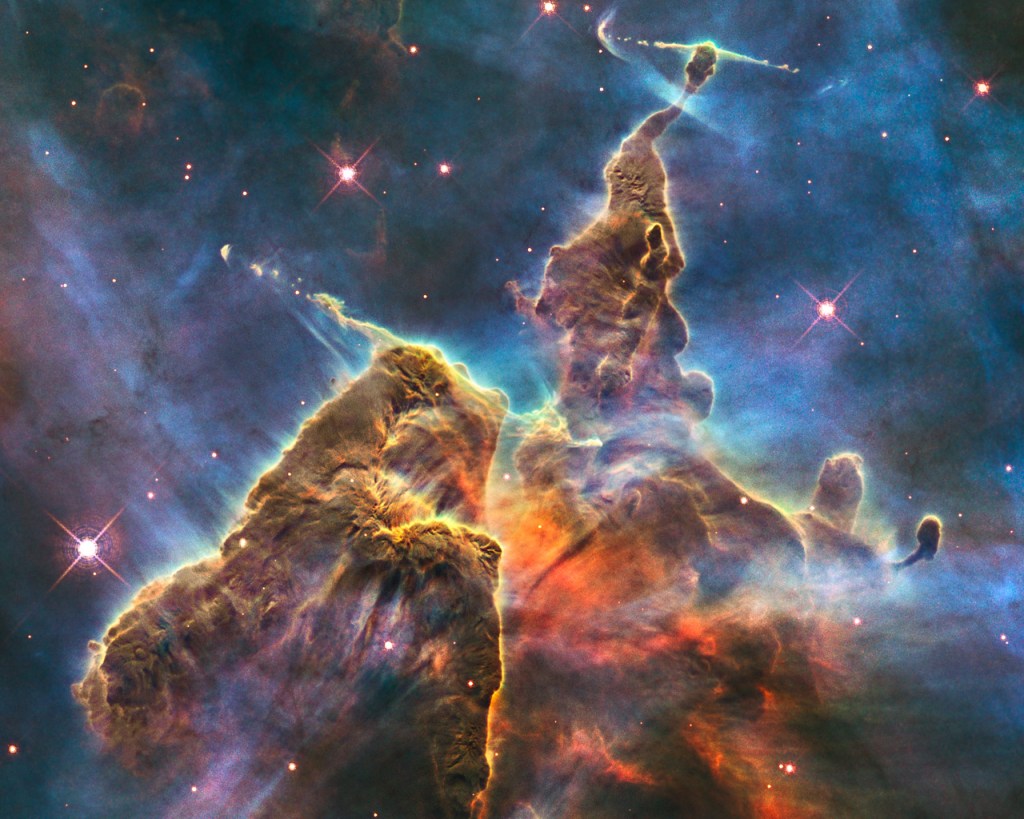
Image (Credit): A pillar of gas and clouds within the stellar nursery called the Carina Nebula, located 7500 light-years away in the southern constellation of Carina. (NASA/ESA).
Image (Credit): The planet Jupiter. (NASA/ESA)

A Day in Astronomy: Cassini Orbits Saturn

Image (Credit): On July 29, 2011, Cassini captured five of Saturn’s moons in a single frame with its narrow-angle camera. This is a full-color look at a view that was originally published in September 2011. Moons visible in this view: Janus is on the far left; Pandora orbits just beyond the thin F ring near the center of the image; brightly reflective Enceladus appears above center; Saturn’s second largest moon, Rhea, is bisected by the right edge of the image; and the smaller moon Mimas is seen just to the left of Rhea.. (NASA/JPL-Caltech/Space Science Institute)

On this day 2004, the Cassini spacecraft entered the orbit of Saturn. A collaboration of NASA, the European Space Agency (ESA), and the Italian Space Agency, the mission containing NASA’s Cassini space probe and ESA’s Huygens probe was launched in October 15, 1997. Cassini remained in orbit around Saturn from 2004 to 2007. The Cassini spacecraft spent 20 years in space – 13 of them exploring Saturn and its moons.

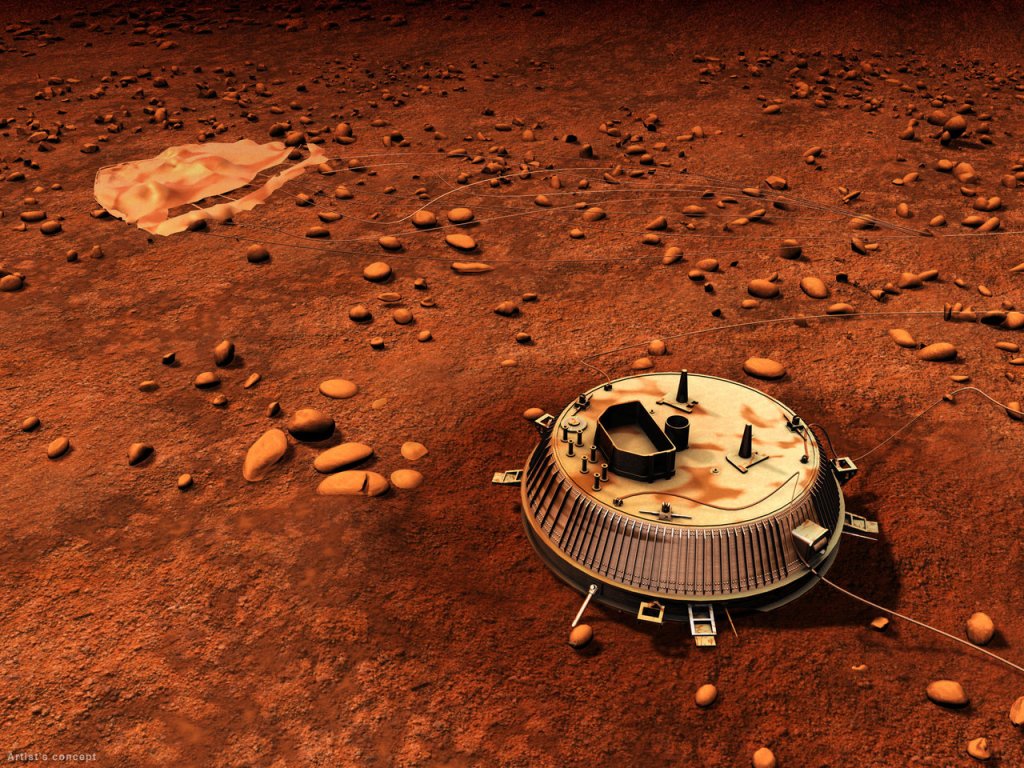
The ESA’s Huygen’s probe entered the atmosphere of Saturn’s largest moon Titan on January 14, 2005 to study the moon’s smog-like atmosphere and take pictures from the surface. The probe was not designed to survive past landing, though it was able to take photos for about three hours before it died. You can watch the probe enter Titan’s atmosphere in this video from ESA.

Image (Credit): An artist’s concept of the Huygens probe on Titan. (NASA)

Pic of the Week: Dwarf Starburst Galaxy Henize 2-10

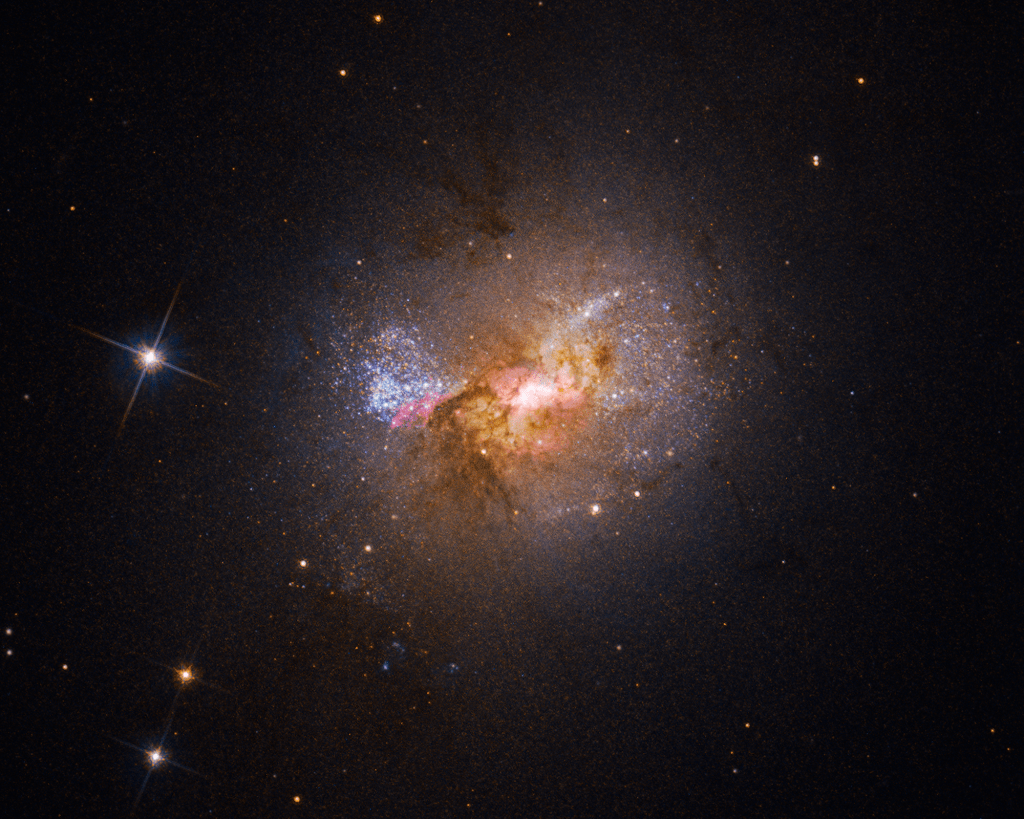
Image (Credit): Dwarf starburst galaxy Henize 2-10. (NASA, ESA, Zachary Schutte (XGI), Amy Reines (XGI), Alyssa Pagan (STScI))

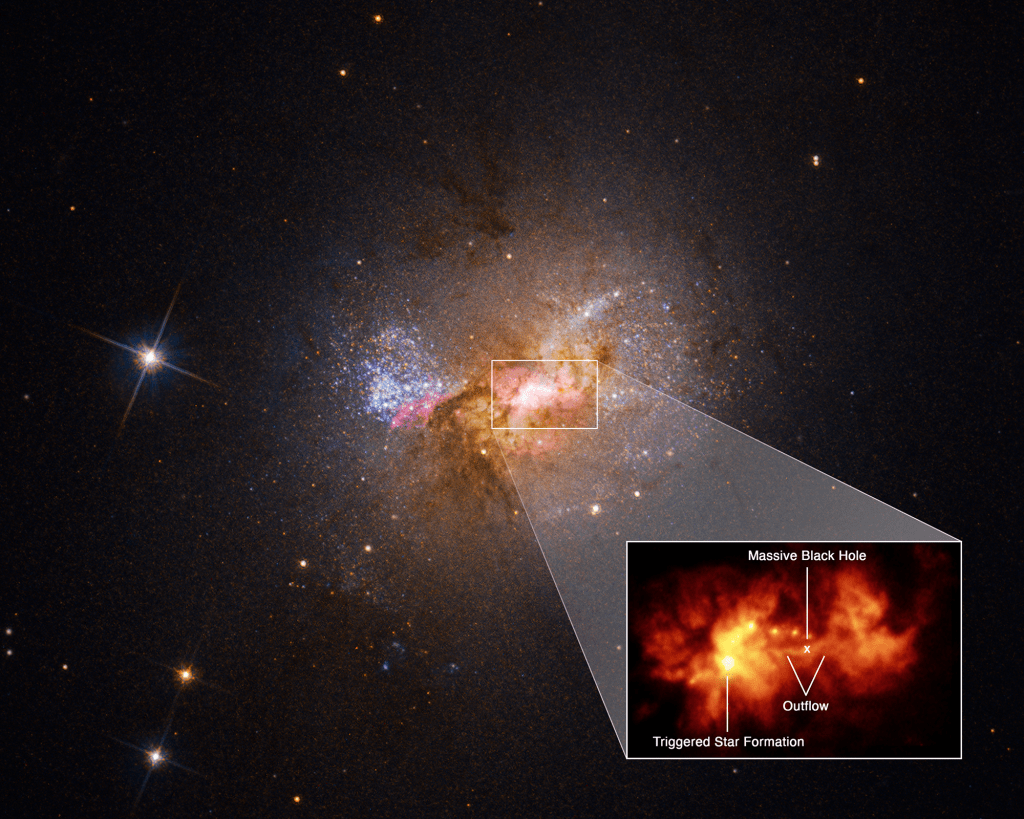
This week’s photo is from the Hubble Space Telescope. It shows the Dwarf starburst galaxy Henize 2-10, which lies 34 million light years away. NASA notes that “The bright region at the center, surrounded by pink clouds and dark dust lanes, indicates the location of the galaxy’s massive black hole and active stellar nurseries.”

The image below better illustrates the link between the massive black hole and the related star formation. NASA explains:

A pullout of the central region of dwarf starburst galaxy Henize 2-10 traces an outflow, or bridge of hot gas 230 light-years long, connecting the galaxy’s massive black hole and a star-forming region. Hubble data on the velocity of the outflow from the black hole, as well as the age of the young stars, indicates a causal relationship between the two. A few million years ago, the outflow of hot gas slammed into the dense cloud of a stellar nursery and spread out, like water from a hose impacting a mound of dirt. Now clusters of young stars are aligned perpendicular to the outflow, revealing the path of its spread.

Image (Credit): Dwarf starburst galaxy Henize 2-10 with a pullout showing the black hole and related star formation. (NASA, ESA, Zachary Schutte (XGI), Amy Reines (XGI), Alyssa Pagan (STScI))