Moon Craters and the Russians

Image (Credit): USSR’s Luna 2 spacecraft. (Worldhistoryproject.org)

So who owned the rocket stage that hit the Moon earlier this month? I had earlier noted the speculation pertaining to both SpaceX and then the Chinese rockets. Surprisingly, it is still is not clear who owned that rocket stage and maybe we will never know. That is not a good answer for the European Space Agency’s Space Safety Programme, which stated:

The upcoming lunar impact illustrates well the need for a comprehensive regulatory regime in space, not only for the economically crucial orbits around Earth but also applying to the Moon.

While that case has yet to be solved, we are pretty certain about the first Earth-launched rocked to hit the Moon. We can blame the Soviets for that strike back in 1959 with its Luna 2 (nicknamed the Lunik 2). At least the goal in that case was to hit the Moon.

Launched on September 12, 1959, it took 35 hours to travel the distance between the Earth and Moon. Luna 1, launched by the Soviets earlier that year, was supposed to hit the Moon but it missed by about 3,700 miles. You can see more about Luna 2 via this dated news clip.

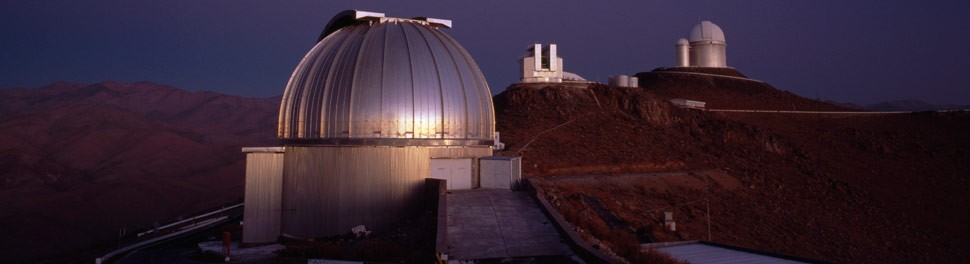
Pic of the Week: Test-Bed Telescope 2

Source/Credit: Test-Bed Telescope 2 from the ESA.

This week’s photo is from the European Space Agency (ESA) and shows a recently-completed telescope in Chile designed to detect dangerous asteroids. Here is the full story:

Part of the world-wide effort to scan and identify near-Earth objects, the European Space Agency’s Test-Bed Telescope 2 (TBT2), a technology demonstrator hosted at ESO’s La Silla Observatory in Chile, has now started operating. Working alongside its northern-hemisphere partner telescope, TBT2 will keep a close eye on the sky for asteroids that could pose a risk to Earth, testing hardware and software for a future telescope network.

Local Black Hole: False Alarm

Source/Credit: MPG/ESO 2.2-metre telescope at ESO’s La Silla Observatory in Chile.

You may have remembered this NASA tweet from September 2020:

HR 6819 is the closest black hole we’ve detected so far, and it lies about 1,000 light-years away. ⚫️ Statistics say there should be one as close as 65 light-years, though we may never detect it unless it lights up!

The original European Space Agency (ESA) press release noted that an invisible object has two companion stars, one of which orbits the unseen object every 40 days. The data for this finding used the MPG/ESO 2.2-metre telescope at ESO’s La Silla Observatory in Chile.

Well, you can relax. The ESA announced last week that HR 6819 is not a black hole based on new data from ESO’s Very Large Telescope (VLT) and Very Large Telescope Interferometer (VLTI):

Our best interpretation so far is that we caught this binary system in a moment shortly after one of the stars had sucked the atmosphere off its companion star. This is a common phenomenon in close binary systems, sometimes referred to as “stellar vampirism” in the press,explains Bodensteiner, now a fellow at ESO in Germany and an author on the new study. “While the donor star was stripped of some of its material, the recipient star began to spin more rapidly.

So, mystery solved. Now we need to talk about local vampires!

Another Russian Casualty: Mars

Source/Credit: The Exomars rover from the ESA.

Yesterday, the European Space Agency (ESA) announced that another space program has been impacted by the Russia’s invasion of Ukraine:

Regarding the ExoMars programme continuation, the sanctions and the wider context make a launch in 2022 very unlikely. ESA’s Director General will analyse all the options and prepare a formal decision on the way forward by ESA Member States.

The ESA website on the Exomars program notes that it is a two part mission searching for life on Mars: the Trace Gas Orbiter launched in 2016 and the Exomars rover and surface platform planned for launch in 2022. NASA also contributed to this latest mission:

NASA’s participation in the 2022 ExoMars Rover mission includes providing critical elements to the premier astrobiology instrument on the rover, the Mars Organic Molecule Analyzer (MOMA). By studying organic molecules, the chemical building blocks of life, MOMA is designed to help answer questions about whether life ever existed on Mars, along with its potential origin, evolution and distribution on the Red Planet.

The list of impacted space missions will only grow.

Russia Interrupts Space Missions

Source/Credit: Guiana Space Center launch pads from the ESA.

Be prepared. With the ongoing Russian invasion of Ukraine and the related U.S. and European sanctions, we can expect some delays and cancellations in upcoming space missions. The latest news story is Russia’s pull out of the Guiana Space Center in Kourou, French Guiana, leading to the delayed launch of two European Space Agency (ESA) Galileo navigation satellites that were to be sent into orbit on Soyuz rockets.

Director General of Russia’s Roscosmos tweeted:

In response to EU sanctions against our enterprises, Roscosmos is suspending cooperation with European partners in organizing space launches from the Kourou cosmodrome and withdrawing its technical personnel, including the consolidated launch crew, from French Guiana.

Luckily, the world is becoming less and less reliant on Russian rockets. Nonetheless, it would be better for Russia to focus on scientific missions again rather than military missions. Rockets should be aimed at the stars instead of the Ukrainian people.