Image (Credit): Assistant Professor of Astronomy David Kipping sharing his story of rejection. By the way, the image behind him is the exomoon Pandora from the movie Avatar. (Cool Worlds Lab)
A few months back, Assistant Professor of Astronomy David Kipping shared a short video regarding his organization’s failure to secure James Webb Space Telescope (JWST) time to search for exomoons that he knows are there. His organization, Cool Worlds Lab, has done some amazing work studying and publicizing issues related to astronomy. You should visit his site for some challenging topics.
What is unique about his video is that it was recorded only one hour after he learned that his organization would not be able to use JWST for his exomoon search and he wanted to share what rejection felt like “in real time.” He goes on to say that such rejection is part of science, as brutal as it may feel at the moment, noting that for every seven JWST proposals, only one will be approved.
Fortunately, we have scientists out there with very thick skin sharing new ideas and proposals. And Dr. Kipping will not be giving up on his exomoon push anytime soon. That is good news for all of us.
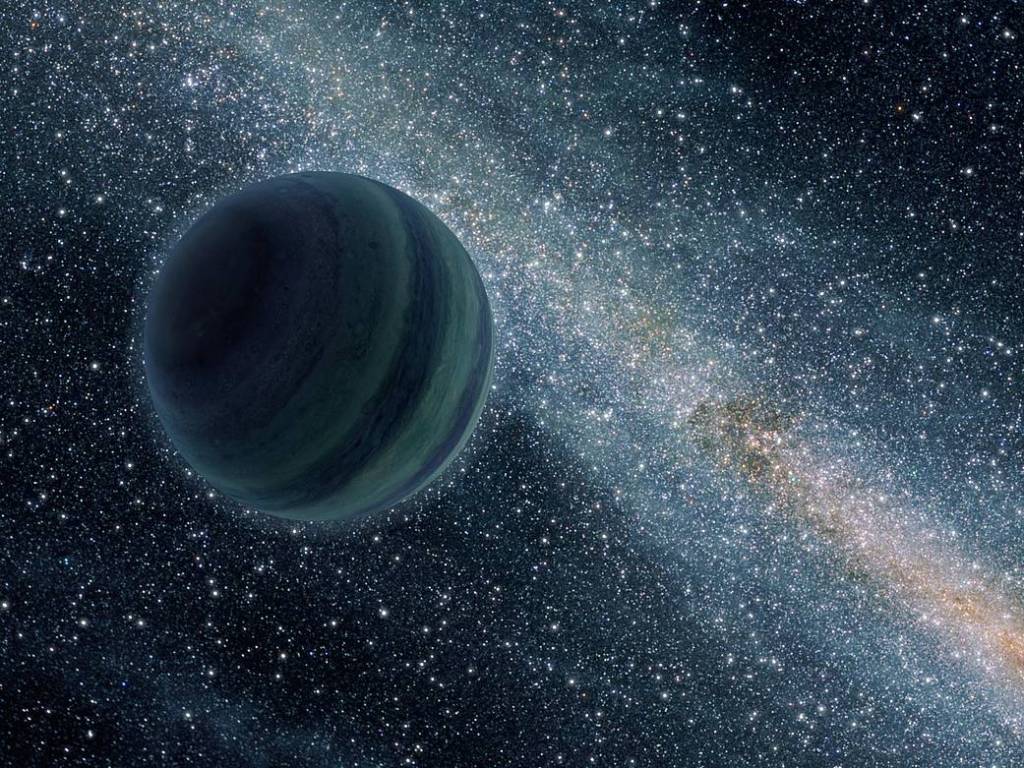
New predictions suggest an upcoming NASA space telescope could spot over 400 Earth-mass worlds hidden throughout the Milky Way that have “gone rogue” and therefore wander our galaxy alone. Such orphan worlds are thought to start their lives in a planetary system, akin to the solar system, but get kicked at some point out by a mechanism thus far unknown. Despite the familiar picture of planets neatly orbiting a star, new research suggests such orphaned starless worlds may outnumber stars in the Milky Way by 20 to 1. This implies untethered worlds in our galaxy are around six times more common than planets orbiting parent stars.
A NASA power outage disrupted communication between Mission Control and the International Space Station on Tuesday. Mission Control couldn’t send commands to the station and talk with the seven astronauts in orbit. The power outage hit as upgrade work was underway in the building at Houston’s Johnson Space Center. Space station program manager Joel Montalbano said neither the astronauts nor station were ever in any danger and that backup control systems took over within 90 minutes. The crew was notified of the problem through Russian communication systems, within 20 minutes of the outage.
Boeing and NASA say they’ll collaborate with Seattle-based Alaska Airlines and four other major airlines on the Sustainable Flight Demonstrator project, which aims to put Boeing’s innovative X-66 braced-wing aircraft design through flight tests in the 2028-2029 time frame. The X-66A makes use of a concept known as the Transonic Truss-Braced Wing, or TTBW, which features ultra-long, ultra-thin, drag-reducing wings that are stabilized by diagonal struts.
While both Buzz Aldrin and I believe that lunar and Martian colonies are important, it would appear the public has other ideas about NASA’s priorities. The graphic above shows in a recent Pew Research Center study indicates the more Americans are interested in monitoring the Earth’s climate as well as watching for asteroids.
Even finding exoplanets that could support life seems to be more important than occupying local moons and planets. I am not sure how that would help us now if we want to spread the risk of living on one planet, as some propose. We are nowhere near sending a probe to exoplanets, let alone getting humans there.
The study has quite a bit to ponder, including:
58% of U.S. adults believe it is essential to include the use of human astronauts in the U.S. space program, while 41% say astronauts are not essential;
Some 44% of Americans have a great deal of confidence private companies will make a profit in their space-related ventures;
As the public considers the possibilities ahead for ordinary citizens to orbit the Earth in a spacecraft, more Americans say they would not want to orbit the Earth than say they would (58% to 42%); and
About seven-in-ten Americans (72%) say it is essential for the U.S. to continue to be a world leader in space exploration, and eight-in-ten (80%) say the space station has been a good investment for the country.
I am not sure the survey shows a lot of consistency in the answers, but this can be a difficult topic at the outset. NASA should just be worried if Americans saw no reason for a space program, which does not seem to be the case. As noted above, the majority of Americans want a strong space program. Let’s see if that helps with the ongoing congressional budget discussions.
Tomorrow, July 12th, is the first anniversary of the James Webb Space Telescope (JWST). As a result, NASA has a few events planned that you may want to attend.
Webb mission experts will be available to conduct live, remote interviews with broadcast media, in both English and Spanish. Details about scheduling these interviews are available online. Webb experts also are available for interviews outside of this window upon request.
4 p.m.: NASA Science Live online
Two Webb experts will be featured on a NASA Science Live episode, discussing how Webb has made an impact in its first year on exploring the distant universe, characterizing exoplanet atmospheres, and understanding the solar system. The show will air live on the NASA Science Live website, as well as YouTube, Facebook, and Twitter. Viewers of this episode can submit questions on social media using the hashtag #UnfoldtheUniverse or by leaving a comment in the chat section of the Facebook or YouTube stream.
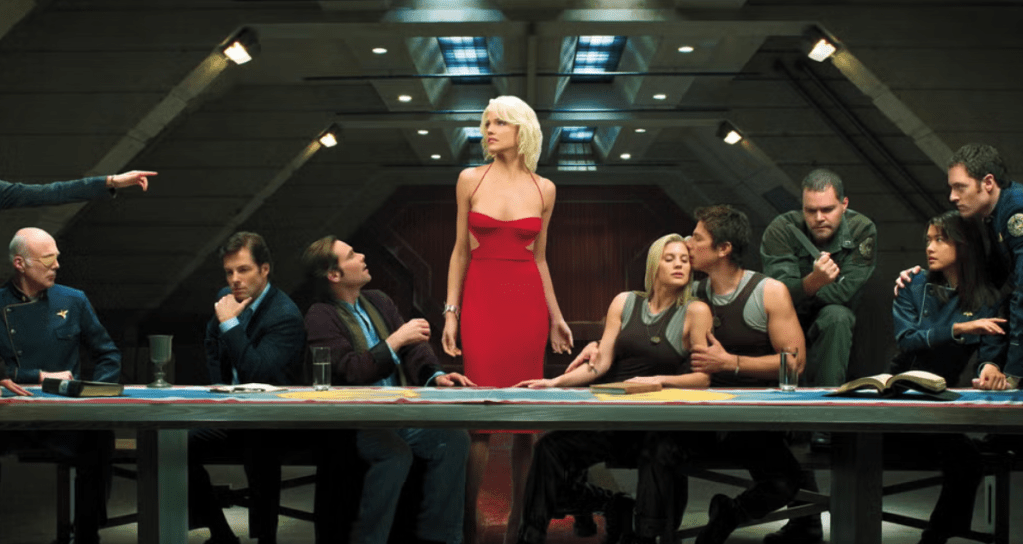
Image (Credit): Characters from SyFy’s television series Battlestar Galactica. (SyFy)
“Our findings open a new frontier in astronomy of studying what lies outside the solar system through microscopes rather than telescopes.”
-Statement by Harvard Professor Avi Loeb to USATodayregarding his recent recovery of what is believed to be fragments of an asteroid from outside our solar system that crashed into the Earth back in 2014. More tests are being conducted on the pieces recovered from the Pacific Ocean to determine whether the material is natural or artificially made. If the latter, it may be the first evidence of intelligent life beyond Earth.




 Our Awesome Universe