“Mauve will open a new window on stellar activity that has previously been largely hidden from view…By observing stars in ultraviolet light, wavelengths that can’t be studied from Earth, we’ll gain a much deeper understanding of how stars behave and how their flares may impact the environment of orbiting exoplanets. Traditional ground-based telescopes just can’t capture this information, so a satellite like Mauve is crucial for furthering our knowledge.”
–Statement by Professor Giovanna Tinetti, Chief Scientist and Co-founder of Blue Skies Space, regarding today’s launch of the Mauve cubesat satellite. This satellite contains a 13 cm telescope that will be used to observe hundreds of stars in the ultraviolet and visible wavelengths over a three-year period. Data from this mission will be sold via subscriptions, and used to study the stars and how their activity influences the habitability of distant exoplanets. You can find more information on the mission here.
The Astrophysical Journal Letters abstract of the study findings:
The evolution and structure of sub-Neptunes may be strongly influenced by interactions between the outer gaseous envelope of the planet and a surface magma ocean. However, given the wide variety of permissible interior structures of these planets, it is unclear whether conditions at the envelope–mantle boundary will always permit a molten silicate layer or whether some sub-Neptunes might instead host a solid silicate surface. In this work, we use internal structure modeling to perform an extensive exploration of surface conditions within the sub-Neptune population across a range of bulk and atmospheric parameters. We find that a significant portion of the population may lack present-day magma oceans. In particular, planets with a high atmospheric mean molecular weight and large envelope mass fraction are likely to instead have a solid silicate surface, since the pressure at the envelope–mantle boundary is high enough that the silicates will be in solid postperovskite phase. This result is particularly relevant given recent inferences of high-mean molecular weight atmospheres from JWST observations of several sub-Neptunes. We apply this approach to a number of sub-Neptunes with existing or upcoming JWST observations and find that in almost all cases, a range of solutions exist that do not possess a present-day magma ocean. Our analysis provides critical context for interpreting sub-Neptunes and their atmospheres.
Citation: Bodie Breza et al. Not all sub-Neptune exoplanets have magma oceans. ApJL993 L46 (2025).
An international team of researchers has just revealed the existence of three Earth-sized planets in the binary stellar system TOI-2267 located about 190 light-years away. This discovery, published in Astronomy & Astrophysics, is remarkable as it sheds new light on the formation and stability of planets in double-star environments, which have long been considered hostile to the development of complex planetary systems.
In recent weeks, copies of an intriguing policy document have started to spread among space lobbyists on Capitol Hill in Washington, DC. The document bears the title “Athena,” and it purports to summarize the actions that private astronaut Jared Isaacman would have taken, were his nomination to become NASA administrator confirmed. The 62-page plan is notable both for the ideas to remake NASA that it espouses as well as the manner in which it has been leaked to the space community.
Space can surprise even those who spend their lives studying it. People often think of our solar system as just a few planets and a bunch of empty space. Yet new observations suggest we have been living inside a hot, less dense region, and that there may even be a strange “cosmic interstellar channel,” or tunnel, connecting us to distant stars. After years of careful mapping, a new analysis reveals what appears to be a channel of hot, low-density plasma stretching out from our solar system toward distant constellations.
Image (Credit): June Lockhart in the television series Lost in Space. (20th Century Fox Television)
Actress June Lockhart passed away last Thursday at the age of 100. She had a storied career in both movies and television, including the 1960s television shows Lassie and Lost inSpace.
Lost in Space was a somewhat silly story about the Robinson family migrating from an overpopulated Earth to a exoplanet orbiting Alpha Centauri. Of course, just like the story in Gilligan’s Island, the five-and-a-half year tour turned into a new adventure among the stars.
The show was best known for the robot always spouting “Danger, Will Robinson!” in reference to the son whose mother was played by June Lockhart. Of course, Star Trek premiered during that same period with some of the same silliness. It seems we did not achieve our darker sentiments about humans in space until somewhat later.
With regard to her time with Lost in Space, Ms. Lockhart stated to Fox News:
I was over the moon – pun intended. … I have been told that my contribution inspired many astronauts to pursue a career in space science and exploration … it is lovely to know that I touched so many people by doing things that interested me!
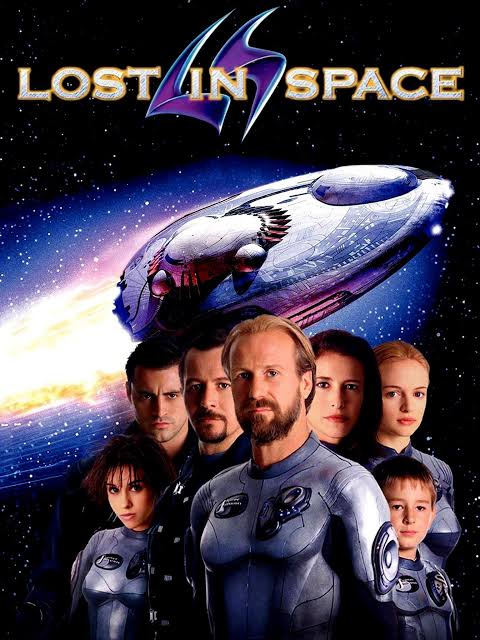
The 1998 movie Lost in Space did little to revive interest in the series (or space from what I can tell), but the Neflix television series of the same name did a nice job bringing the Robinson family back to life. If you are looking for a great updated adventure story about a boy and his robot traveling through space, you might want to start with the Netflix version.
You can read more on Ms. Lockhart’s life and career at these sites:
This time last year I highlighted a paper that discussed a possible exomoon circling an exoplanet called WASP-49Ab located about 635 light-years away . It was spotted by the European Southern Observatory’s Very Large Telescope in Chile.
Well, now the James Webb Space Telescope (JWST) has provided data related to another possible exomoon orbiting a hot Jupiter-like exoplanet called WASP-39b. It is located about 700 million light-years away.
In a Scientific American article titled “Have Astronomers Finally Found an Exomoon?” we learn that a paper is being released shortly outlining the argument for this potential “hypervolcanic exomoon.” This presumed IO-like exomoon is being cooked by the parent sun.
Recent infrared spectroscopy from the James Webb Space Telescope (JWST) has spurred analyses of common volcanic gases such as carbon dioxide (CO2), sulfur dioxide (SO2), alongside alkali metals sodium (Na I) and potassium (K I) surrounding the hot Saturn WASP-39 b. We report more than an order-of-magnitude of variability in the density of neutral Na, K, and SO2 between ground-based measurements and JWST, at distinct epochs, hinting at exogenic physical processes similar to those sourcing Io’s extended atmosphere and torus. Tidally-heated volcanic satellite simulations sputtering gas into a cloud or toroid orbiting the planet, are able to reproduce the probed line-of-sight column density variations. The estimated SO2 flux is consistent with tidal gravitation predictions, with a Na/SO2 ratio far smaller than Io’s. Although stable satellite orbits at this system are known to be < 15.3 hours, several high-resolution alkali Doppler shift observations are required to constrain a putative orbit. Due to the Roche limit interior to the planetary photosphere at ~ 8 hours, atmosphere-exosphere interactions are expected to be especially important at this system.
It is a dense summary, but also a hopeful finding that may lead to more focused searches for exomoons.
The addition of exomoons to the list of new discoveries will only increase the chances that some form of life can be found among he many solar systems we can study. Interestingly enough, we are still probing our own solar system’s moons with the same hope.





 Our Awesome Universe