Image (Credit): Launch of Russia’s Progress MS-30 lifting off from Baikonur Cosmodrome in Kazakhstan. (NASA)
While things are still unstable with the Russians here on Earth, the International Space Station (ISS) resupply missions continue. Yesterday saw the launch of the Progress MS-30 cargo spacecraft from Kazakhstan. The supplies should be at the ISS by late tomorrow.
Whatever is happening between the US and Russia with regards to Ukrainian negotiations, it is good to see that space science is still taking place in the background.
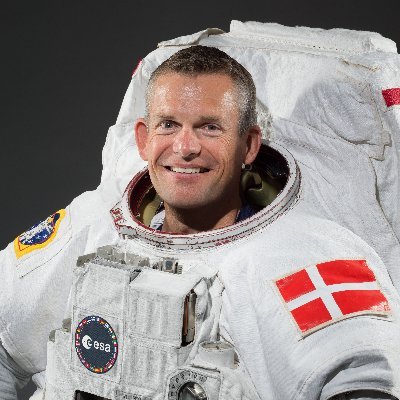
Image (Credit): European Space Agency astronaut Andreas Mogensen (Twitter/X)
“You know as well as I do, that Butch and Suni are returning with Crew-9, as has been the plan since last September. Even now, you are not sending up a rescue ship to bring them home. They are returning on the Dragon capsule that has been on ISS since last September.”
–Comments by Andreas Mogensen, a Danish astronaut who commanded the ISS between September 2023 to early 2024, in response to Elon Musk’s constant tweets about his efforts to “rescue” the two Starliner astronauts on the International Space Station (ISS). NASA already resolved the issue, yet Mr. Musk seems to need the attention given that otherwise the media keeps ignoring his actions (such as harassing federal employees, including those at NASA).
Professor Justin Walsh from Chapman University and the University of South Carolina has co-directed the first full-scale archaeological investigation of a site in space, in this case the International Space Station (ISS). He will share aspects of this work as well as discuss how social science disciplines like archaeology can be useless tool for improving life on Earth and in space.
It is nice to see scientific discussions about NASA programs are still underway in this uncertain environment. We are lucky to have so many private groups like AIA to encourage and host such events.
The event starts at 7pm at the University of Maryland. It is free and open to the public. You can learn more about the event at this link.
You can also read more about the ISS archaeology program at this link.
Yuri Borisov, who has red Roscosmos since July 2022, was dismissed from his position last Thursday. It was called a normal rotation. However, you may recall the failed Russian attempt to put its Luna-25 lander on the Moon in August 2023, which happened during Mr. Borisov’s tenure.
His replacement is Dmitry Bakanov, who served as a deputy transport minister. Mr. Bakanov also ran the Gonets Satellite System company before joining the government. Gonets is more-or-less the Russian version of SpaceX’s Starlink.
Roscosmos has been struggling the last few years with troubled missions, including a leaking in one of its International Space Station (ISS) modules and cancelled partnerships with other nations due to Russia’s invasion of Ukraine. That said, its Soyuz rockets and spacecraft continue to be major components supporting the ISS.
Image (Credit): Boeing’s Space Launch System. (NASA)
As if things could not get worse over at NASA, it now has to contend with Boeing’s financial problems. Boeing is considering laying off about 400 employees working on the Space Launch System (SLS), or about one third of the employees working on the system. The SLS is the backbone of the Artemis program returning the U.S. to the Moon and eventually Mars.
This follows problems last year with Boeing’s Starliner mission to the International Space Station. The two astronauts on the first manned Starliner mission are still on the station due to safety concerns about their return to Earth on the same spacecraft that brought them to the station.
None of this portends well for Boeing, NASA, or the space industry in general. This may simply throw more work towards SpaceX, making NASA more reliant on a company whose head seems more interesting in tearing down the U.S. government than focusing on the U.S. space mission. Besides, after the loss of the latest Starship, SpaceX is not in any position to replace what would be lost with the SLS. The end of the SLS may simply mean the end of any chance for the U.S. to beat China to the Moon.
This may serve the interests of Elon Musk, who always preferred going Mars, but given the lack of preparation for such a mission beyond a rocket (including lessons learned from the Artemis program), it seems even the Mars mission may be drifting into the sunset.
We need a strong NASA and clear mission priorities that are achievable in the short term. With a billionaire tourist taking over as NASA’s new leader, we need to be very careful NASA does not simply become another Dancing with the Stars for C-list celebrity wannabes.




 Our Awesome Universe