Here are some recent stories of interest.
—John Hopkins Applied Physics Laboratory: “Uranus’ Moon Miranda May Have an Ocean Beneath Its Surface, New Study Finds“
A new study suggests Uranus’ moon Miranda may harbor a water ocean beneath its surface, a finding that would challenge many assumptions about the moon’s history and composition and could put it in the company of the few select worlds in our solar system with potentially life-sustaining environments. “To find evidence of an ocean inside a small object like Miranda is incredibly surprising,” said Tom Nordheim, a planetary scientist at the Johns Hopkins Applied Physics Laboratory (APL) in Laurel, Maryland, a study co-author, and the principal investigator on the project that funded the study. “It helps build on the story that some of these moons at Uranus may be really interesting — that there may be several ocean worlds around one of the most distant planets in our solar system, which is both exciting and bizarre.”
—Space News: “NASA Evaluating “Next Steps” for VIPER Lunar Rover Mission“
NASA expects to determine by early next year the next steps for a lunar rover mission it canceled in July amid some confusion over the timing of that decision. Speaking at an Oct. 28 meeting of the Lunar Exploration Analysis Group (LEAG), Joel Kearns, deputy associate administrator for exploration in NASA’s Science Mission Directorate, said the agency was reviewing responses to a request for information (RFI) the agency issued in August seeking alternative uses for its Volatiles Investigating Polar Exploration Rover (VIPER) spacecraft.
—Scientific American: “The International Space Station Has Been Leaking for Five Years“
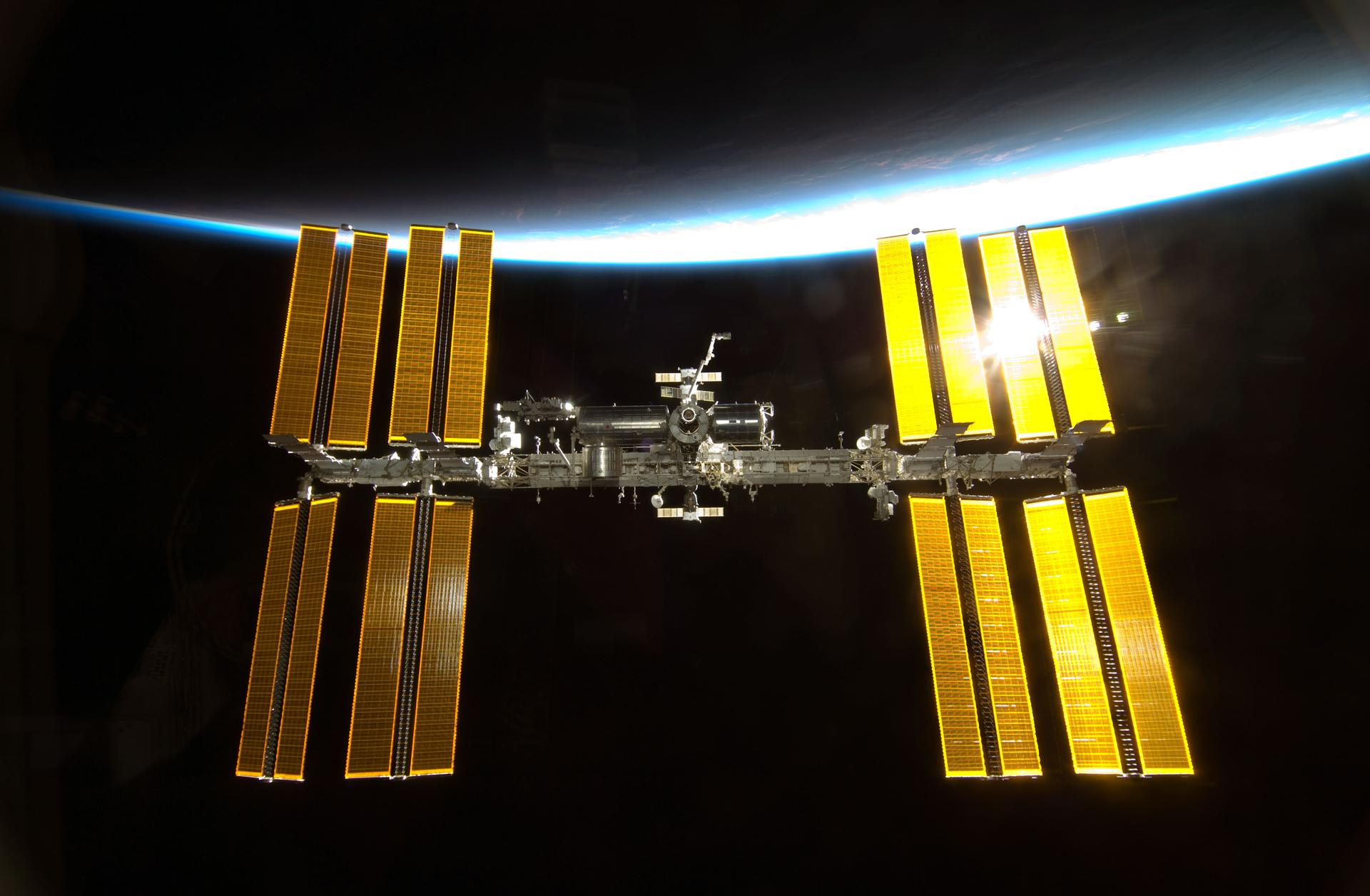
In the hostile conditions beyond Earth, a spacecraft is all that stands between an astronaut and certain death. So having yearslong seemingly unfixable leaks on the International Space Station (ISS) sounds like a nightmare scenario. It’s also a reality, one that a recent agency report calls “a top safety risk.” Amid months of headlines about astronauts stranded by Boeing’s Starliner vehicle and NASA’s announcement of a contract with Elon Musk’s SpaceX to destroy the ISS early next decade, the ongoing concerns about the leaks come as another reminder that supporting a long-term population in space is a challenge that’s quite literally out of this world.