Image (Credit): China’s Tiangong space station captured by a returning Shenzhou spacecraft. (CMSA)
China is getting ready to send a new crew to its Tiangong space station tomorrow. The Shenzhou-18 spacecraft will carry three new crew members to the station, replacing the crew that has been on the station since last October.
The current crew had to deal with space debris that damaged its solar panels and led to a power loss. Two spacewalks were recently conducted to make the necessary repairs. The arriving crew is coming with additional repair material, including “space debris protection reinforcements for extravehicular piping, cables and critical equipment,” according to China Daily.
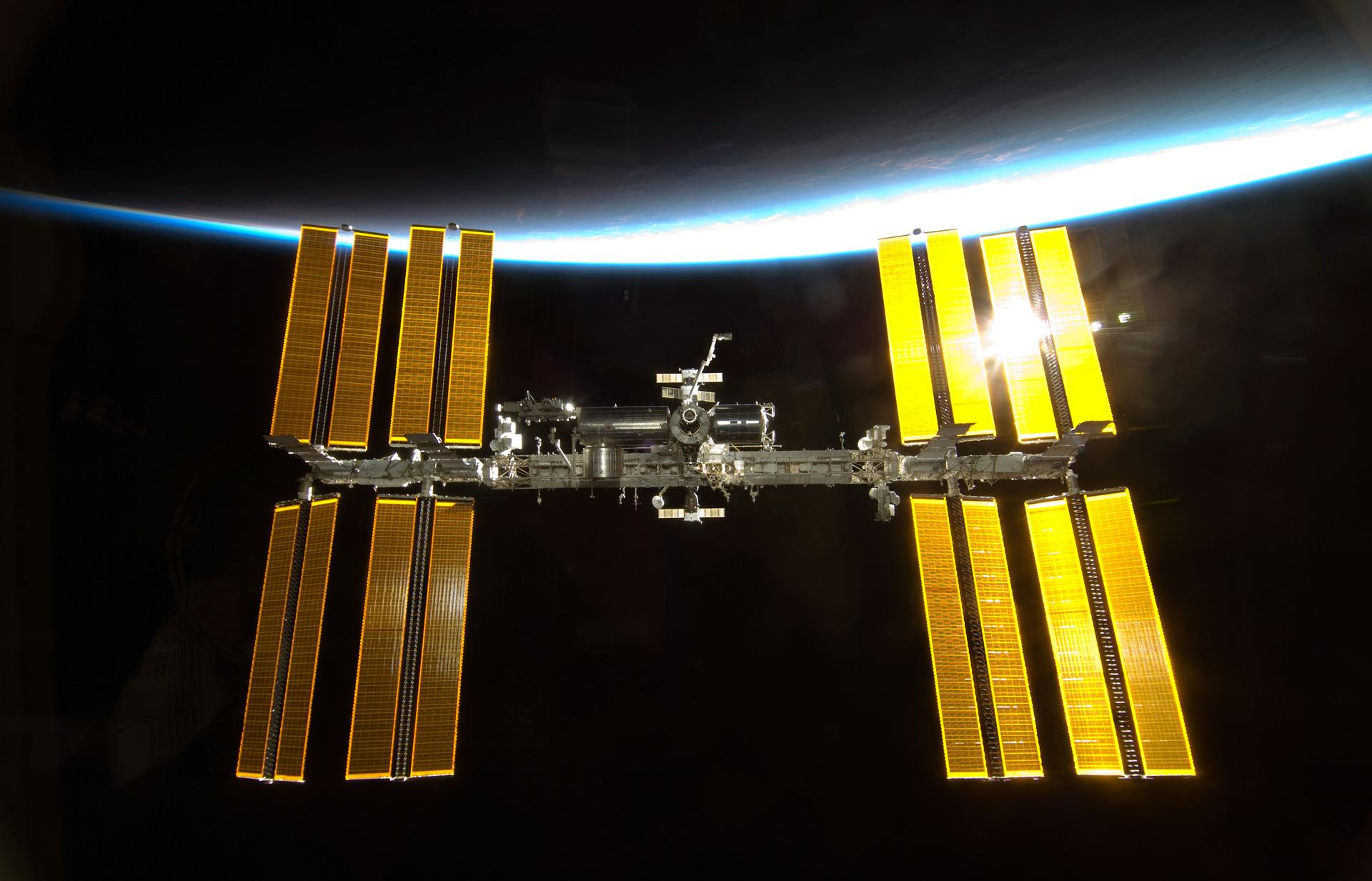
Unfortunately, space debris is a constant hazard in orbit. The International Space Station (ISS) has dodged debris as well as repairing damaged areas. Of course, the ISS is also dropping space debris on Florida, but that’s a different story.
Distinct from their Earth counterparts, ISS E. bugandensis strains have exhibited resistance mechanisms that categorise them within the ESKAPE pathogen group, a collection of pathogens recognised for their formidable resistance to antimicrobial treatments. During the 2-year Microbial Tracking 1 mission, 13 strains of multidrug-resistant E. bugandensis were isolated from various locations within the ISS. We have carried out a comprehensive study to understand the genomic intricacies of ISS-derived E. bugandensis in comparison to terrestrial strains, with a keen focus on those associated with clinical infections. We unravel the evolutionary trajectories of pivotal genes, especially those contributing to functional adaptations and potential antimicrobial resistance. A hypothesis central to our study was that the singular nature of the stresses of the space environment, distinct from any on Earth, could be driving these genomic adaptations. Extending our investigation, we meticulously mapped the prevalence and distribution of E. bugandensis across the ISS over time. This temporal analysis provided insights into the persistence, succession, and potential patterns of colonisation of E. bugandensis in space. Furthermore, by leveraging advanced analytical techniques, including metabolic modelling, we delved into the coexisting microbial communities alongside E. bugandensis in the ISS across multiple missions and spatial locations. This exploration revealed intricate microbial interactions, offering a window into the microbial ecosystem dynamics within the ISS.
Citation: Sengupta P, Muthamilselvi Sivabalan SK, Singh NK, et al. Genomic, functional, and metabolic enhancements in multidrug-resistant Enterobacter bugandensis facilitating its persistence and succession in the International Space Station. Microbiome 12(1):62 (2024). https://doi.org/10.1186/s40168-024-01777-1
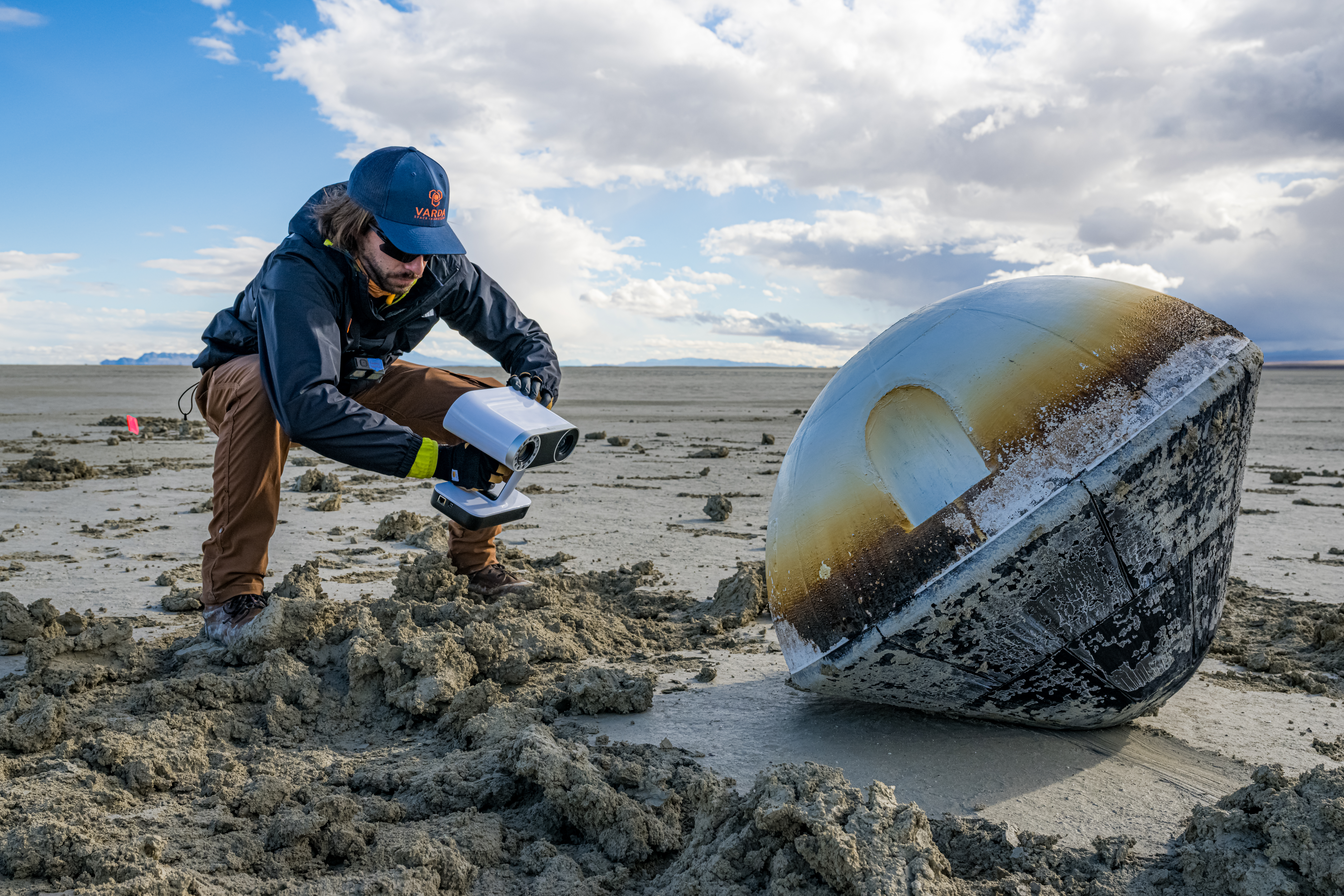
The International Space Station is not the only orbiting platform for experiments. Varda Space Industries has its own orbiting facility, or at least it had one in orbit for 10 months until it returned to Earth in February (shown below). And now the company has another $90 million in funding to continue to develop its capsules.
Varda, founded in 2020, represents the next phase of the space industry, where lower cost launches allow companies to be creative with their own spacecraft. In this case, biopharma is being asked to consider the advantages of a launches that remove gravity from the equation:
While gravitational forces do not directly impact thermodynamic properties of systems, they do significantly impact kinetic and hydrodynamic processes. Microgravity suppresses convection and sedimentation, resulting in more uniform supersaturation, as well as diffusion-driven transport. The resulting environment enables crystallization outcomes that lead to improvements in bioavailability, enhanced physicochemical properties, differentiated intellectual property, and new routes of administration — all realized by conducting research in microgravity.
While Varda is taking advantage of the lower launch costs made available by reusable rockets, it too wants to have reusable capsules down the line to reduce costs even further. Of course, it is not as glamorous as a permanently manned space station, but these crewless capsules should be sufficient for the needs of many if not most companies.
Note: Varda is also the name of a dwarf planet, which took its name from JRR Tolkien’s Middle Earth.
Image (Credit): The W-1 capsule after landing in the Utah desert. (Varda Space Industries/John Kraus)
ESA’s Mars Express recently looped around Mars for the 25,000th time – and the orbiter has captured yet another spectacular view of the Red Planet to mark the occasion. The new high-altitude view was taken by Mars Express’s High Resolution Stereo Camera (HRSC). It features many of Mars’s towering volcanoes and even includes a surprise appearance from the planet’s largest moon, Phobos.
A piece of metal came crashing through a home in Florida that is believed to be from a 5,800-pound battery pallet discarded by the International Space Station (ISS). Naples homeowner Alejandro Otero was on vacation when he received a call from his son, saying he heard a ‘tremendous sound’ and there were gaping holes in the ceiling and floor – while explaining whatever fell almost hit him. The two-pound, cylinder object has since been recovered by NASA to determine its origin and if found to be space junk, the agency could be liable for damages.
The White House on Tuesday directed NASA to establish a unified standard of time for the moon and other celestial bodies, as the United States aims to set international norms in space amid a growing lunar race among nations and private companies. The head of the White House Office of Science and Technology Policy (OSTP), according to a memo seen by Reuters, instructed the space agency to work with other parts of the U.S. government to devise a plan by the end of 2026 for setting what it called a Coordinated Lunar Time (LTC).
Image (Credit): The approach of the Soyuz MS-25 spacecraft as seen from the ISS. (NASA TV)
Earlier today, the two cosmonauts and one astronaut that launched on the Russian Soyuz MS-25 mission over the weekend safely attached themselves to the International Space Station. The station is now hosting a crew of 10.
Both cosmonauts Oleg Novitskiy and cosmonaut Marina Vasilevskaya (of Belarus) from this latest mission will return to Earth in the Soyuz MS-24 capsule in about 12 days along with NASA astronauts Loral O’Hara, who will have spent a total of 204 days on the station.
It’s a game of musical spacecraft, but it seems the routine is working and, other than the occasional leak, all is well with the station and its crew.





 Our Awesome Universe