Space Quote: A Thank You From Russia

Image (Credit): Roscosmos head Yuri Borisov. (Dogruso.com)

Say hello to the entire American team. They proved themselves to be very worthy in this situation and lent us a helping hand…You set an example for the whole world on how to work together in the most challenging and difficult situation. Let many politicians learn from you.

-Statement by Yuri Borisov, head of Russian space agency Roscosmos, on Tuesday praising Russia-U.S. cooperation at the International Space Station (ISS) following a major coolant leak from a Soyuz crew capsule. The transcript was quoted in The Moscow Times. The ISS remains one of the limited areas where the U.S. and Russia are still cooperating given the situation in Ukraine.

Space Stories: ISS Leak, Revamped Space Council, and Asteroid Space Stations

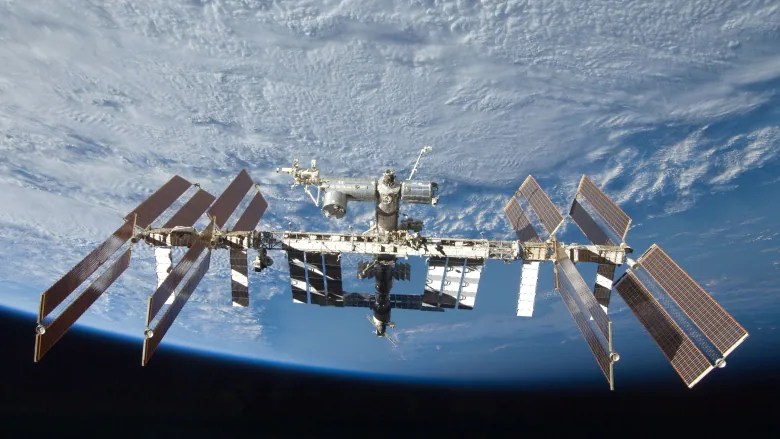
Image (Credit): International Space Station. (Canadian Space Agency)

Here are some recent stories of interest.

CBS News: “Soyuz Ferry Ship Temperatures Remain Within Limits Despite Major Coolant Leak

Temperatures in a Russian Soyuz crew ferry ship docked at the International Space Station — a lifeboat for three of the lab’s seven crew members — remain within safe limits despite a dramatic overnight leak in the spacecraft’s cooling system, officials said Thursday. The leak developed around 7:45 p.m. EST Wednesday amid preparations for a planned 6-hour and 40-minute spacewalk by cosmonauts Sergey Prokopyev and Dmitri Petelin to move a radiator from the Rassvet module, where the Soyuz MS-22/68S spacecraft is docked, to the new Nauka laboratory module.

SpaceNews.com: “White House Revamps Membership of National Space Council Advisory Group

The White House announced the new membership of an advisory group of the National Space Council Dec. 16 with wholesale changes in the roster reflecting a new emphasis on climate change and workforce issues. Vice President Kamala Harris, chair of the National Space Council, announced a roster of 30 members of the Users’ Advisory Committee (UAG), the advisory group that supports the council on various space topics. Their membership on the committee is pending a formal appointment by the NASA administrator, a formality linked to NASA’s role in hosting the UAG.

Phys.org: “Rubble Pile Asteroids Might be the Best Places to Build Space Habitats

There has long been a dream of building a massive rotating space station to call home, such as the one featured in “2001: A Space Odyssey,” but the challenges of construction are huge, not to mention the logistics of lifting such large quantities of steel and other materials into space. A rotating station would need to be at least hundreds of feet across to make artificial gravity practical The bigger the better. So engineers have proposed spinning up asteroids as a kind of ready-built station. We would need to dig out the interior, but this would give us materials we could use.

Space Stories: Hungarians in Space, A Constantly Manned Chinese Space Station, and Lunar Water

Here are some recent stories of interest.

SpaceNews.com: “Hungary to spend $100 million on private astronaut mission to ISS

The Hungarian government plans to spend $100 million to send an astronaut to the International Space Station in two years through a deal with Axiom Space. In a presentation at the European Space Agency’s ministerial council meeting Nov. 22, Péter Szijjártó, Hungarian foreign minister, said the country was in the middle of a process to select an astronaut to fly on a month-long mission to the ISS in late 2024 or early 2025. Axiom Space announced in July it signed a memorandum of understanding with the government of Hungary regarding that country’s Hungarian to Orbit (HUNOR) program, which would fly a Hungarian astronaut to space on a future Axiom Space mission. That announcement, though, provided few details about when that person would fly.

Associated Press: “Chinese Spaceship with 3 Aboard Docks with Space Station

Three Chinese astronauts docked early Wednesday with their country’s space station, where they will overlap for several days with the three-member crew already onboard and expand the facility to its maximum size. Docking with the Tiangong station came at 5:42 a.m. Wednesday, about 6 1/2 hours after the Shenzhou-15 spaceship blasted off atop a Long March-2F carrier rocket from the Jiuquan Satellite Launch Center...The station’s third and final module docked earlier this month, one of the last steps in China’s effort to maintain a constant crewed presence in orbit.

UniverseToday.com: “Tiny Cubesat Will Shine an Infrared ‘Flashlight’ Into the Moon’s Shadowed Craters, Searching for Water Ice

A tiny spacecraft is ready to head out for a big job: shining a light on water ice at the Moon’s south pole. Lunar Flashlight is a cubesat about the size of a briefcase, set to launch on December 1 on a SpaceX Falcon 9 rocket, sharing a ride with the Hakuto-R Mission to the Moon. The tiny 14 kg (30 lb) spacecraft will use near-infrared lasers and an onboard spectrometer to map the permanently shadowed regions near the Moon’s south pole, where there could be reservoirs of water ice.


Another ISS Resupply Mission Underway

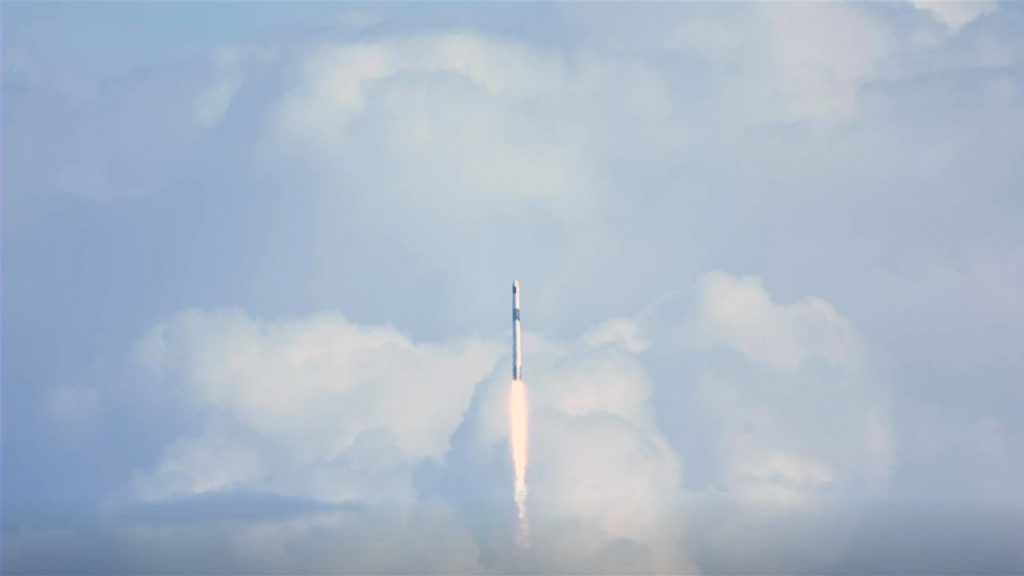
Image (Credit): SpaceX’s Falcon 9 rocket leaving NASA’s Kennedy Space Center in Florida at 2:20 p.m. EST November 26, 2022. (NASA)

Earlier today, a SpaceX rocket sent more supplies towards the International Space Station (ISS). The Falcon 9 rocket successfully sent the Dragon capsule on its way towards a rendezvous with the ISS tomorrow morning. You can read about some of the cargo here.

For example, part of the cargo will assist with the growing of dwarf tomatoes in space. Gioia Massa, NASA Life Sciences project scientist and VEG-05 principal investigator, stated:

We are testing tomatoes, looking at the impacts of light spectrum on how well the crop grows, how delicious and nutritious the tomatoes are, and the microbial activity on the fruit and plants…We also are examining the overall effect of growing, tending, and eating crops on crew behavioral health. All of this will provide valuable data for future space exploration.

Even with all of the excitement targeted at the Moon and Artemis these days, the everyday work on the ISS continues.

Japan Supports the ISS Through 2030 and Expands Support for the Lunar Gateway

Image (Credit): Graphic showing Lunar Gateway elements from commercial and international partners. (NASA)

Late last week, the White House announced that Japan plans to support the operations of the International Space Station (ISS) through 2030 as well as further collaborate with the United States on the Artemis Lunar Gateway platform that will orbit the Moon.

On November 17, Vice President Kamala Harris stated:

The United States welcomes Japan’s intention to extend its support of International Space Station (ISS) operations through 2030, following the United States’ announcement of our ISS extension one year ago. In addition, our two countries are taking a step forward by reaching an agreement on collaboration on the Lunar Gateway orbiting platform, which will pave the way for the return of humanity to the Moon.

Under a previous agreement that has been expanded further, Japan’s JAXA has promised a number of contributions to the Lunar Gateway, including:

  • Critical components of the International Habitation (I-HAB) module that will provide the heart of the Gateway space station’s life support capabilities, as well as space for crew to live, conduct research, and prepare for lunar surface activities during Artemis missions. Japan will provide I-HAB’s Environmental Control and Life Support System (ECLSS), thermal control system functions, and cameras.
  • Batteries for I-HAB, the Habitation and Logistics Outpost (HALO) module, the initial crew cabin for astronauts visiting the Gateway, and the European System Providing Refueling Infrastructure and Telecommunication (ESPRIT) refueling module.
  • The JAXA HTV-XG spacecraft for launch and delivery of a logistics resupply mission for Gateway, scheduled for no later than 2030.

With the successful start of Artemis I lunar mission, it is good to hear that partner nations are increasing their support for a return to the Moon as well as plans to travel to Mars. While the United States went to the Moon alone last century, the Artemis partnership ensures this century’s return to the Moon is an international project.