If you are eager to understand what comes after the International Space Station (ISS), you might enjoy Vast’s video showing plans for the Haven-1 and Haven-2 missions as well as other future projects.
Vast’s Haven-1 is a single-module station expected to be launched in May 2026. Once Haven-1 is in orbit, four crew members will be launched to the Haven-1 station via a SpaceX Dragon for a two-week mission. This will be the first real test of the new commercial space station module, which is expected to stay in orbit for three years so three additional crews can visit and conduct research and even manufacture in space.
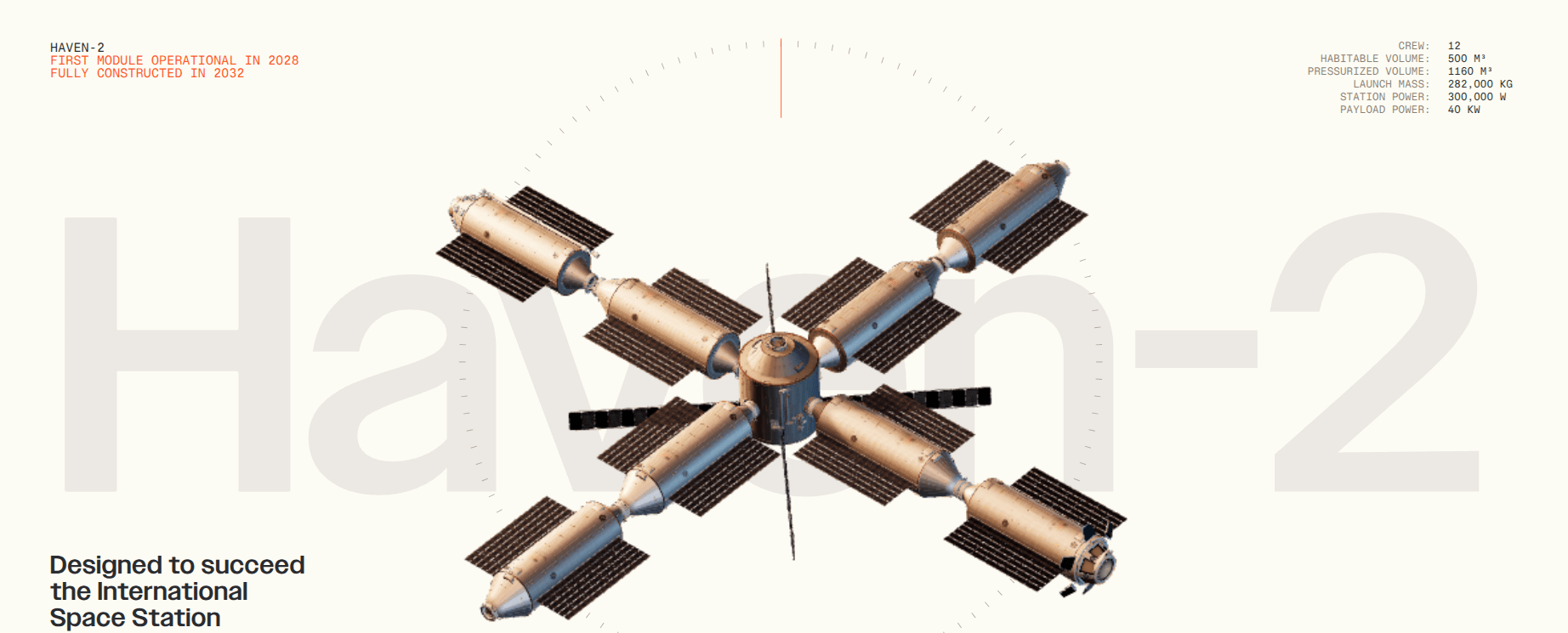
Haven-2 will follow with a larger module. The plan is to link a series of modules to create an expanded station (see image below). The construction of Haven-2 is expected to be underway while the ISS goes out of service in 2030.
Vast is one of numerous companies hoping to fill the gap left by the departing ISS. Whether it is selling seats to NASA scientists, commercial entities, or space tourists, this American company based in California sees a future in space stations.
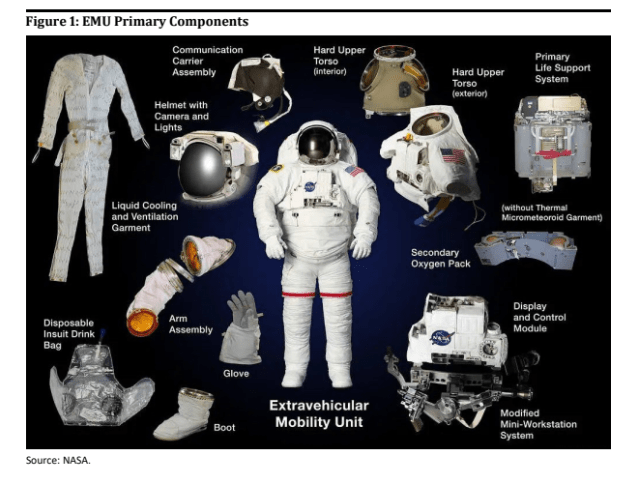
Image (Credit): Figure from the NASA OIG audit report, NASA’s Management of ISS Extravehicular Activity Spacesuits. (NASA OIG)
NASA has spent a significant amount of money on the Extravehicular Mobility Unit (EMU) spacesuits used during spacewalks on the International Space Station (ISS). Even so, these suits have ongoing problems that need to be resolved given that they will be critical to the ISS mission until the decommissioning of the station in 2030.
The NASA Office of Inspector General (OIG) has reported on issues with these spacesuits in the past and recently issued a new report on the status of the spacesuits. In its September 30th report, NASA’s Management of ISS Extravehicular Activity Spacesuit, the auditors noted that the contractor maintaining the spacesuits, Collins Aerospace, is having problems, including:
…considerable schedule delays, cost overruns, and quality issues that significantly increase the risk to maintaining NASA’s spacewalking capability.
The auditors stated that lack of competition for these spacesuit services as well as ineffective contract incentives are making the problems a permanent part of the program. While NASA has promoted competition for many years, these spacesuits designed 50 years ago have not benefited from this new approach, in part because the companies that feed into the supply line are slowly disappearing.
It seems dual-use rockets are much more in demand than antique spacesuits, potentially making spacesuits one of the weaker links in the space industry.
Note: Collins Aerospace ended a separate contract with NASA last year to develop a new ISS EMU. Collins continues with its contract to maintain the current EMU.
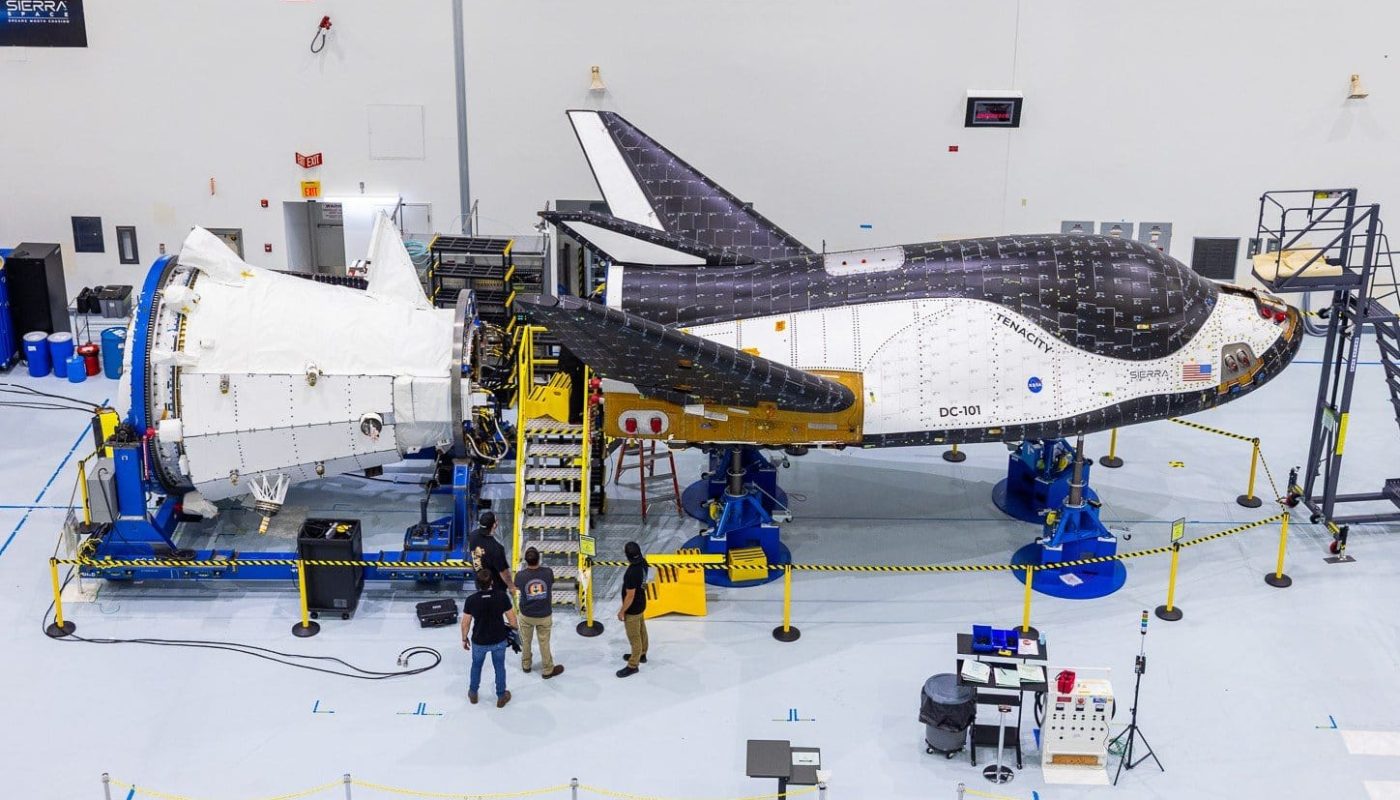
Image (Credit): The Dream Chaser and Shooting Star Cargo Module. (Sierra Space)
Back in 2016 NASA was looking for more commercial cargo haulers for its International Space Station (ISS), and Sierra Space’s reusable Dream Chaser spaceplane was one of those options. NASA contracted for multiple resupply missions to the ISS. However, all of that is now over.
NASA has announced that the contract has been modified so that Sierra Space is only to provide a “free flight demonstration” in 2026. What that means is that NASA will give the company a chance to prove its technology, but it will stop financing these efforts. And NASA will not commit to any future resupply missions, but may choose to do so at a later point.
It sounds like quite a gut-punch to another commercial option for the ISS at the same time that Boeing’s Starliner is still limping along. That leaves SpaceX and Northrop Grumman as the only players on the field as the station heads towards it decommissioning in 2030.
Sierra Space can certainly pursue other commercial space opportunities, which is expected to include commercial space stations at some point in the future. Even so, it appears NASA has lost confidence in the company’s ability to deliver on earlier promises related to the ISS.
In a recent press release, the company has put the most positive spin it can on this new arrangement:
Sierra Space is prioritizing first-flight readiness with Dream Chaser, targeting a launch in late 2026 to align with expected launch vehicle availability. Sierra Space and NASA worked together to reach this mutually beneficial agreement that provides greater mission flexibility for Dream Chaser’s first flight. This flight aims to demonstrate critical capabilities for NASA’s ISS resupply and future Commercial LEO Destinations (CLD) missions and position Dream Chaser as a national asset available for future national security and defense demonstrations.
Sierra Space has many other ongoing projects under a variety of government and private sector contracts, including NASA. For instance, it signed a contract with NASA earlier this year to study the use of the company’s expandable space station technology on the Moon.
So the company will be staying busy even after this latest setback. That said, getting the Dream Chaser into orbit on schedule has to remain a key priority for a company that want’s to be a big player in the space race ahead.
Image (Credit): Northrop Grumman’s insignia for the flight of its first Cygnus XL. (Northrop Grumman)
The Russian’s cargo spaceship arrived without incident at the International Space Station (ISS) over the weekend, but the NASA cargo spaceship has not been as smooth. The Northrop Grumman Cygnus XL cargo ship has experienced engine issues, which will delay its arrival. It was originally supposed to unload its cargo tomorrow morning (September 17).
This latest mission, labeled NG-23, is the first to use the Cygnus XL spacecraft, which has 33 percent more cargo capacity than the spacecraft it replaces.
Northrop Grumman’s vice president of civil space systems, Ryan Tintner, stated:
Our Cygnus XL is another step towards a thriving commercial space economy. The spacecraft carries more cargo, making each mission more efficient. We’ve supported NASA and the space station for decades, and we know what it takes to develop advanced capabilities for exploring space.
This is not a good start for the new spacecraft. Hopefully, the glitch will be quickly resolved. The spacecraft carries 11,000 pounds of needed supplies.
Image (Credit): Russia’sProgress 93 cargo spacecraft launches from the Baikonur Cosmodrome in Kazakhstan. (NASA+)
Even with the recent Russian drones invading Polish airspace, things are on schedule at the International Space Station (ISS). A Russian Soyuz rocket successfully launched the Progress 93 cargo spaceship into orbit yesterday to resupply the ISS on Saturday.
Things may still be a bit crazy here on Earth, but the ISS mission continues.
Update: The Grumman Cygnus XL cargo spacecraft safely launched on Sunday, September 14. The spacecraft is scheduled to dock with the ISS on Wednesday, September 17.




 Our Awesome Universe