Space Stories: Mars Ascent Vehicle, Dark Matter Stars, and a New Russian Space Station

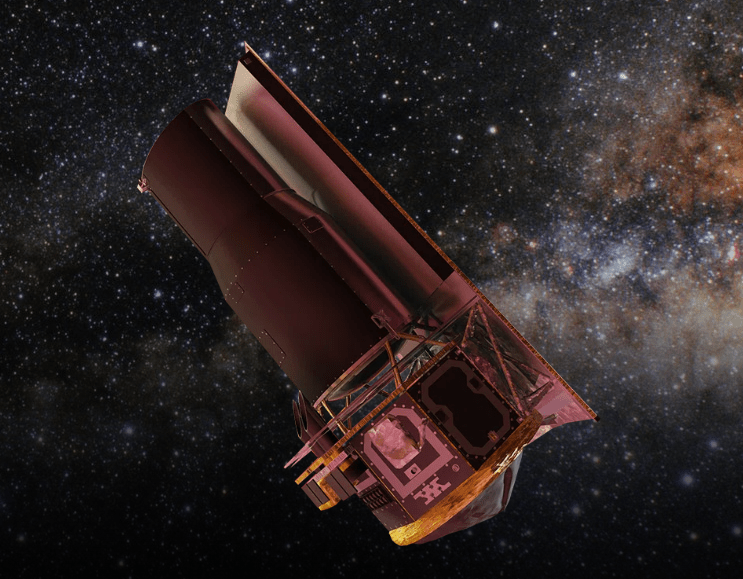
Image (Credit): Artist’s rendering of the Mars Ascent Vehicle. (NASA)

Here are some recent stories of interest.

NASA/JPJ.com : “NASA Mars Ascent Vehicle Continues Progress Toward Mars Sample Return

NASA’s Mars Ascent Vehicle (MAV) recently reached some major milestones in support of the Mars Sample Return program. The Mars Ascent Vehicle would be the first launch of a rocket from the surface of another planet. The team developing MAV conducted successful tests of the first and second stage solid rocket motors needed for the launch. Mars Sample Return will bring scientifically selected samples to Earth for study using the most sophisticated instrumentation around the world. This strategic partnership with ESA (European Space Agency) features the first mission to return samples from another planet. The samples currently being collected by NASA’s Perseverance Rover during its exploration of an ancient river delta have the potential to reveal the early evolution of Mars, including the potential for ancient life.

ScienceNews : “The James Webb Telescope May Have Spotted Stars Powered by Dark Matter

The James Webb Space Telescope has spotted objects in the early universe that might be a new kind of star — one powered by dark matter. These “dark stars” are still hypothetical. Their identification in JWST images is far from certain. But if any of the three candidates — reported in the July 25 Proceedings of the National Academy of Sciences — turn out to be this new type of star, they could offer a glimpse of star formation in the early universe, hint at the nature of dark matter and possibly explain the origins of supermassive black holes.

CNN : “Russia Proposes Joint Research Module on Space Station for China, India, Brazil and South Africa

The head of Russia’s space agency has extended an offer to Moscow’s partners in the BRICS group – Brazil, IndiaChina and South Africa – to participate in the construction of a joint module for its planned orbital space station, state media reported Monday. Construction of the planned space station follows Moscow’s decision last year to end its decades-long partnership with NASA and withdraw from the aging International Space Station – one of the last remaining channels of cooperation between Russia and the United States.

Space Stories: Venusian Balloons, Sun Observations, and a Private Moon Trip

Image (Credit): Test of the one-third scale prototype aerobot designed to withstand the corrosive chemicals in Venus’ atmosphere. (Near Space Corporation)

Here are some recent stories of interest.

NASA.gov: “JPL’s Venus Aerial Robotic Balloon Prototype Aces Test Flights

A scaled-down version of the aerobot that could one day take to the Venusian skies successfully completed two Nevada test flights, marking a milestone for the project…The shimmering silver balloon ascended more than 4,000 feet (1 kilometer) over Nevada’s Black Rock Desert to a region of Earth’s atmosphere that approximates the temperature and density the aerobot would experience about 180,000 feet (55 kilometers) above Venus. Coordinated by Near Space, these tests represent a milestone in proving the concept’s suitability for accessing a region of Venus’ atmosphere too low for orbiters to reach, but where a balloon mission could operate for weeks or even months.

SkyandTelescope.org: “‘Chinese Observatory Will Study Violent Events on the Sun

China has launched a solar observatory to study solar flares and eruptions, and their connection with the Sun’s magnetic field…[the Advanced Space-based Solar Observatory (ASO-S)] is planned to operate at 720 kilometers (447 miles) above Earth’s surface in a Sun-synchronous orbit that will allow it to observe the Sun at all times. Its primary, four-year mission is timed to make the most of the 2024–2025 solar maximum, when the Sun is at its most active during its 11-year cycle.

Space.com: “‘SpaceX Says its 2nd Private Starship Trip Around the Moon will Help Make Humanity Multiplanetary

SpaceX’s newly announced tourist mission to the moon could help humanity extend its footprint far beyond Earth, company representatives say. That mission, which was revealed today (Oct. 12), will send wealthy entrepreneur Dennis Tito, his wife Akiko and 10 other people on a weeklong journey around the moon aboard SpaceX’s huge Starship vehicle, which is still in development. Who those 10 other passengers will be is unknown; only the Titos have reserved seats at the moment.

A Day In Astronomy: The Launch of the Mars Odyssey

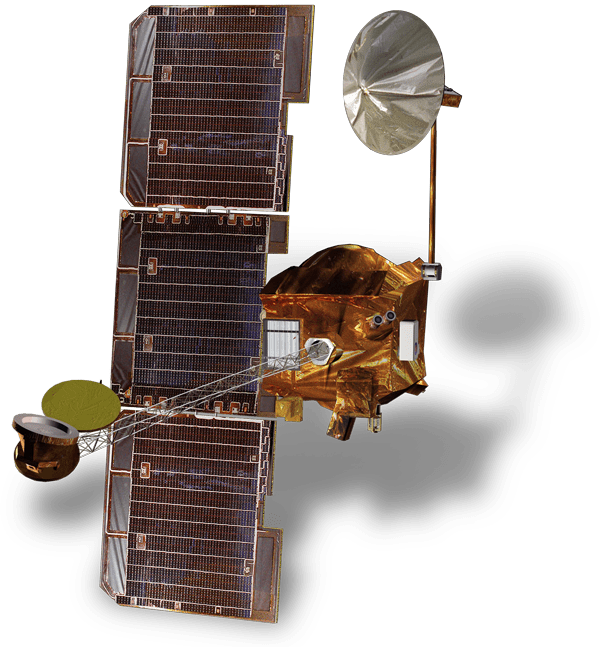
Image (Source): The Mars Odyssey orbiter. (NASA)

On this day in 2001, NASA’s Mars Odyssey orbiter was launched towards Mars to map and search the Red Planet for water. The mission itself took its name from Arthur C. Clarke’s novel 2001: A Space Odyssey.

The Mars Odyssey successfully discovered Martian water. Project Scientist Jeffrey Plaut of NASA’s Jet Propulsion Laboratory in Southern California, which leads the Odyssey mission, stated that “Before Odyssey, we didn’t know where this water was stored on the planet…We detected it for the first time from orbit and later confirmed it was there using the Phoenix lander.”

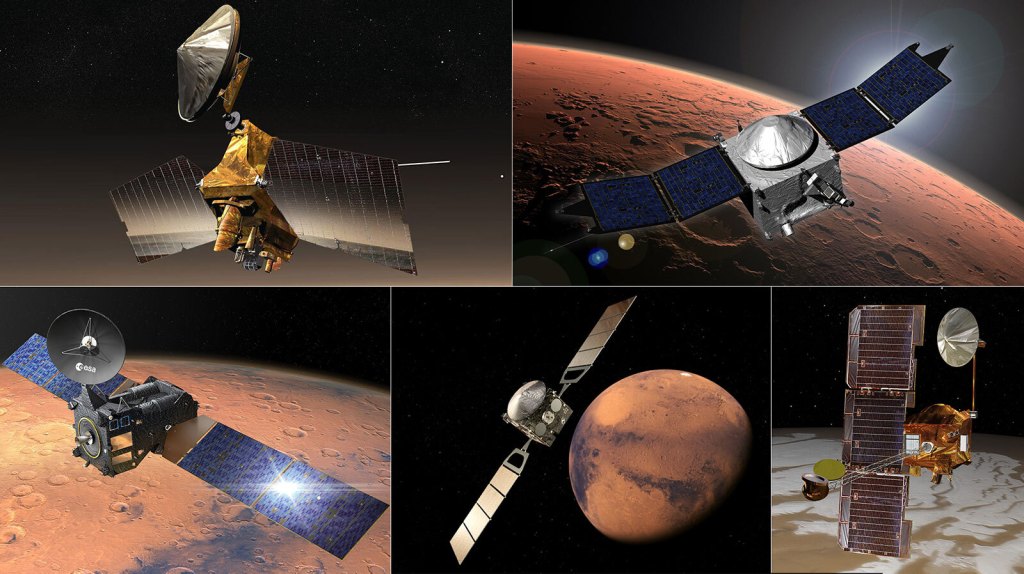
In addition to conducting its own studies, the Mars Odyssey was also used as a space satellite relaying data between Earth and Mars from other scientific missions, such as NASA’s Spirit and Opportunity rovers. The orbiter is part of what is called the Mars Relay Network, currently consisting of five orbiters (see below).

The Mars Odyssey is now the oldest oldest spacecraft still working at the Red Planet. It should be able to continue its work through 2025. You can find more information about the mission from this NASA site.

Image (Credit): Five spacecraft currently in orbit about the Red Planet make up the Mars Relay Network to transmit commands from Earth to surface missions and receive science data back from them. Clockwise from top left: NASA’s Mars Reconnaissance Orbiter (MRO), Mars Atmospheric and Volatile EvolutioN (MAVEN), Mars Odyssey, and the European Space Agency’s (ESA’s) Mars Express and Trace Gas Orbiter (TGO). (NASA/JPL-Caltech, ESA)

NASA’s Travel Agency

Source: NASA’s Jet Propulsion Laboratory.

If you are getting tired of staying home these days, NASA has some fun destinations in mind for you. Late last year, NASA’s Jet Propulsion Laboratory (JPL) put together “Visions of the Future” to show you where the space agency hopes to go someday. You may not want to pack just yet, but whether it is this solar system or some other solar system, NASA wants to help.

The poster above for Kepler-16b comes with this enticing description:

Like Luke Skywalker’s planet “Tatooine” in Star Wars, Kepler-16b orbits a pair of stars. Depicted here as a terrestrial planet, Kepler-16b might also be a gas giant like Saturn. Prospects for life on this unusual world aren’t good, as it has a temperature similar to that of dry ice. But the discovery indicates that the movie’s iconic double-sunset is anything but science fiction.

You might also enjoy this NASA video showing some space activities in these prime locations.

I dropped in a few more posters below, but be sure to check out all of them. A big thanks also to the folks at JPL for these fun images. The 14 posters were created by nine artists, designers, and illustrators.

Of course, these free photos are already being sold on Etsy.com and elsewhere as posters and t-shirts.

Source: NASA’s Jet Propulsion Laboratory.