Space Stories: Stranded Mars Samples, Cancelled Lunar Rover, and New Plans for Martian Travel

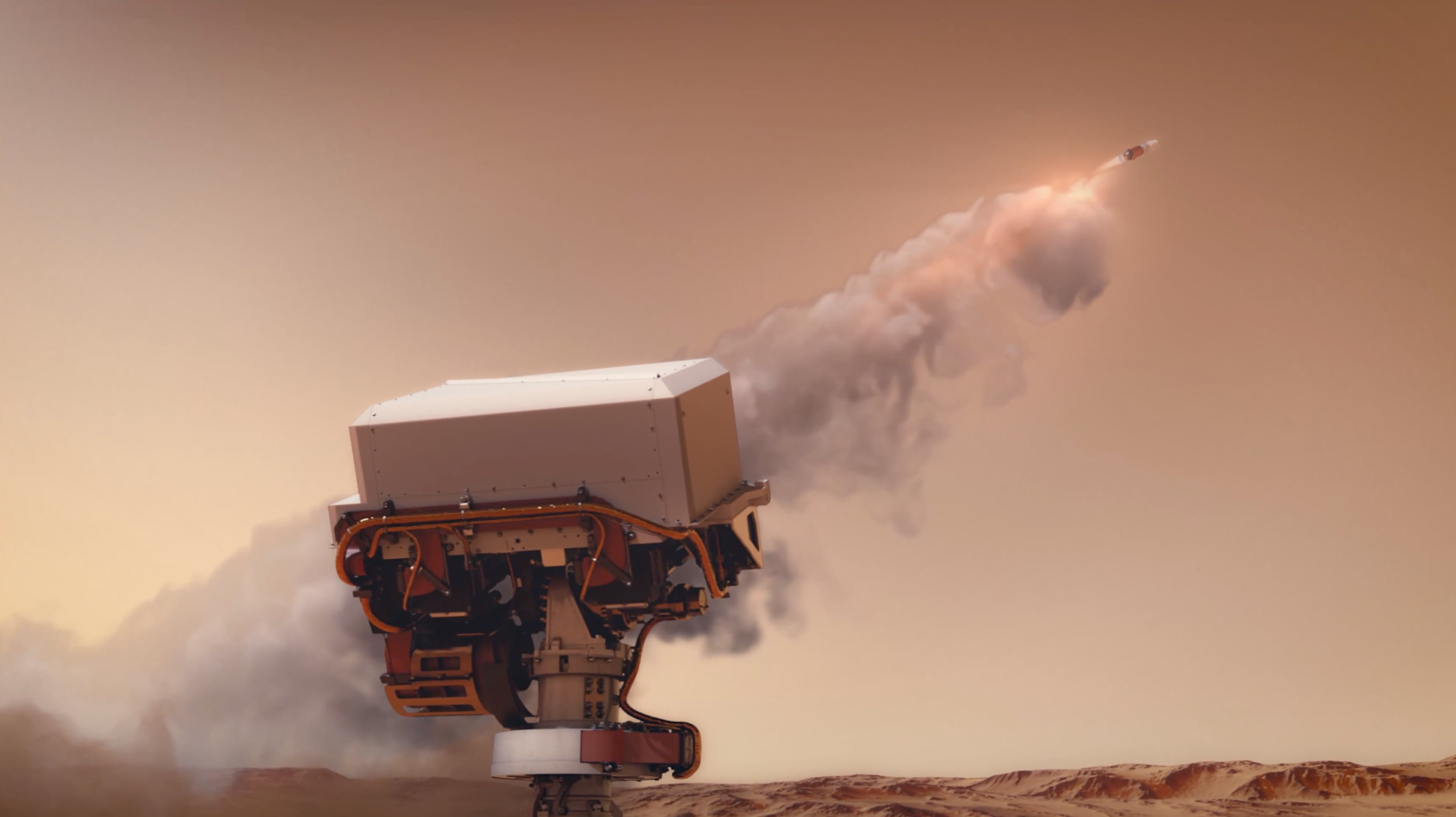
Image (Credit): Artist’s rendering of a Mars Sample Return initiative. (NASA)

Here are some recent space-related stories of interest.

Scientific American: NASA Spent Billions to Bring Rocks Back from Mars. Trump Wants to Leave Them There

on May 2 the White House’s Office of Management and Budget (OMB) dropped a budgetary bombshell, proposing to cut NASA’s top-line funding by a quarter, slash the space agency’s science budget by nearly half and entirely eliminate [the Mars Sample Return (MSR)}. The cancellation is justified, the OMB document claims, because MSR is “grossly overbudget” and its goals of sample return will instead “be achieved by human missions to Mars.”

Space News: NASA Backtracks on VIPER Commercial Partnership

 NASA has canceled plans to find a commercial partner to launch a robotic lunar rover and will instead pursue “alternative approaches” to fly the mission. In a May 7 statement, NASA said it is canceling a solicitation it released in February seeking proposals from industry on ways they could work with NASA to launch the Volatiles Investigating Polar Exploration Rover (VIPER) spacecraft. NASA envisioned having a company send VIPER to the south polar regions of the moon and handing operations of the rover there to look for water ice.

Politico: NASA, in Surprise Shift, May Launch Rockets to Mars Next Year

NASA is considering launching rockets to Mars next year, a major shift in priorities that could boost the fortunes of Elon Musk’s space company and speed up the timeline for astronauts to reach the red planet. The sudden switch follows the release of the White House’s 2026 budget proposal, which would increase funding for Mars-related projects by $1 billion and pay for the launches. It also signals the Trump’s administration’s intentions to prioritize sending people to Mars.

Trump Administration Proposes 25 Percent Cut to NASA’s Budget

It should come as no surprise at this point that NASA will fall victim to massive budget cuts like so many other civilian agencies. While it will not disappear like the US Agency for International Development, it will be severely wounded as the result of a proposed 25 percent cut to its budget.

The White House’s proposed 2026 budget is setting aside $7 billion for the Moon missions and $1 billion for Mars missions, but it seems just about everything else is up for grabs. For instance, we would see the show shutdown of the Space Launch System rocket and the Orion spacecraft so they could become fully commercial. In addition, the orbiting lunar Gateway will be cut completely.

Specifically, the budget summary states:

The Budget phases out the grossly expensive and delayed Space Launch System (SLS) rocket and Orion capsule after three flights. SLS alone costs $4 billion per launch and is 140 percent over budget. The Budget funds a program to replace SLS and Orion flights to the Moon with more cost-effective commercial systems that would support more ambitious subsequent lunar missions. The Budget also proposes to terminate the Gateway, a small lunar space station in development with international partners, which would have been used to support future SLS and Orion missions.

Moreover, the Mars funding would not cover the sample return mission. Hence, SpaceX might get a boost to head towards Mars while we are stranding samples that help us to understand why we might want to go to Mars. We will also see the end of the Nancy Grace Roman Space Telescope, pruning back the accomplishments we have made since the Hubble Space Telescope to make the universe more available to scientists and the public.

If we ignore the future of the Artemis mission for a moment, a NASA press release boasted about all the events over the past 100 days to prepare for the Artemis mission. This is a hopeful sign that the Moon mission is still vital and viable at the moment, even with the defunding efforts underway. However, given some of the recent failures of the private sector efforts to reach the Moon, and the continual delays in SpaceX’s Starship, the future for Moon missions after the SLS does not look too promising at the moment.

The future also looks somewhat bleak when you look at proposed cuts to NASA’s funding for space science, space technology, and STEM programs. The endless faith in the private sector forgets the benefits of a government supporting and nudging these efforts.

As Casey Dreier, Chief of Space Policy for The Planetary Society, clearly stated:

These cuts would cause irreparable losses, throwing away billions of dollars invested by the U.S. taxpayers in productive space hardware and infrastructure. Space science is a critical national investment that engages our cutting edge economic, scientific, and educational abilities across the country.

Musk Gives Up His Day Job

Credit: Image by OpenClipart-Vectors from Pixabay.

Elon Musk has decided to step away from the Department of Government Efficiency (DOGE) after watching his reputation crater, his car company falter, and his rockets litter the Caribbean. Plus he damaged NASA, the space agency that funds his company SpaceX. Maybe he finally realized that a plumber has no business pretending to be brain surgeon.

The most disturbing part of Musk’s short time with the government is his lies about fraud, attacks on government employees, and horrible math regarding savings. For example, regarding the US Agency for International Development, he called it a “criminal organization” and then said it is “Time for it to die.” He never took the time to even understand the organization or verify his “findings”, most of which were wrong. I cannot believe a single Fortune 500 company would want this guy anywhere near its operations. So why would you trust any organization headed by this man?

We can only hope this means he will start to take the development of Starship seriously, since his company is still contracted to assist NASA with its Artemis mission to the Moon. So far in 2025, SpaceX has lost both of its Starship rockets (#7 and #8) over the Caribbean, though it was scheduled to conduct 25 tests in 2025, or twice a month.

Mr. Musk may know nothing about government programs, but he is supposed to know something about rockets. He cannot bully or lie his way out of this one. As with Tesla, performance and promises is everything, and he seems to be struggling.

And now before he can come close to meeting his NASA commitments, he is promising to send Starship to Mars next year, tweeting ““Starship will hopefully depart for Mars at the end of next year with Optimus explorer robots!”.

Maybe it is time to stop listening to this man.

Today’s NASA Nominee Hearing

It appears Mr. Isaacman will become the next NASA Administrator based on his careful answering of questions at his nomination hearing, but there was some weakness in his support for a Moon mission in both his prepared testimony as well as his answers to later questions.

In his prepared statement, Mr. Isaacman’s emphasis was Mars with reluctant support for something happening on the Moon:

As the President stated we will prioritize sending American astronauts to Mars. Along the way, we will inevitably have the capabilities to return to the Moon and determine the scientific, economic, and national security benefits of maintaining a presence on the lunar surface.

I read that as him saying a return to the Moon is an option.

Chairman Cruz was far more adamant about a Moon mission in his opening statement, saying:

The Artemis missions and the entire Moon-to-Mars program, which have enjoyed consistent bipartisan support, serve as the stepping stone to landing American astronauts on Mars. In fact, this stepping stone approach is the law as enacted by Congress. We must stay the course. An extreme shift in priorities at this stage would almost certainly mean a Red Moon—ceding ground to China for generations to come. I am hard pressed to think of a more catastrophic mistake we could make in space than saying to Communist China, ‘The moon is yours. America will not lead.’

In the question and answer period, Senator Cruz asked about the return to the Moon and received this weak response from Mr. Isaacman:

I don’t think we have to make any tough trades here, Senator. I think if we can concentrate our resources at the world’s greatest space agency, we don’t have to make a binary decision of moon versus Mars or moon has to come first versus Mars.

So Chairman Cruz continued:

If China beats us to the moon, what consequences might America face?

Mr. Isaacman replied:

We certainly cannot lose…If we do not lead the way and we’re following, we may be following forever, the consequence of which could be extraordinary.

That response sounds a little better, though it may upset Mr. Musk who has a preference for Mars, particularly a Mars mission that has federal funds going to his company.

It appears Mr. Isaacman has forgotten that the Moon is a stepping stone to Mars and not a speed bump. NASA is almost ready for a nearby Moon mission that can be accomplished in weeks, but a Mars mission that will take years is not even close to ready, no matter what Mr. Musk says.

Republicans and Democrats need to hold Mr. Isaacman’s feet to the fire to ensure the Artemis program is fully funded and continues before any designs are set for a Mars mission.

Protect NASA Astrobiology Research

Image (Credit): Artist’s conception of a planetary lineup showing habitable-zone exoplanets with similarities to Earth, featured on the far right. (NASA/Ames/JPL-Caltech)

The astrobiology community is looking for individuals to show their support for NASA’s efforts in this area. In a white paper highlighting the benefits of astrobiology research, some of the key points are:

  • Preserve Astrobiology Leadership: Astrobiology is a pillar of NASA’s mission with a storied legacy that must be safeguarded.
  • Unprecedented Discoveries Ahead: Mars, Ocean Worlds, and exoplanet missions in the coming decades could finally answer one of humanity’s most profound questions: “are we alone?
  • Public Passion and Impact: The public passionately supports the search for life – a pursuit that inspires, unites, and advances STEM engagement.
  • NASA’s Unique Role: NASA’s unique capabilities and infrastructure position it as a leader in astrobiology, working in collaboration with U.S. academia and industry to advance this field.
  • Preserve Astrobiology at Its Peak: Astrobiology is thriving; workforce and research funding reductions must not derail our best chance to find life beyond Earth.

At a time of unprecedented threats to NASA’s program and mission, it is important to send a message to Congress and others that we have just begun to understand the universe and its potential for other forms of life, and now is not the time to back away.

The paper notes:

As NASA navigates the administration’s government-wide workforce optimization initiative, it is vital that we do not undermine astrobiology research – a field at the very heart of our agency’s purpose and future. Acting leadership has rightly stated that any reductions must align with mission needs. Few needs are more central to NASA’s science mission than understanding life’s existence beyond Earth.

The same site provides a link to an endorsement page.

I expect this is one of many initiatives to bring attention to the threats facing our space program. It is true that some efficiencies can be found in government with the right level of analysis and careful consideration of existing programs (as has been done in the past), but that is not happening right now with the random and unexplainable cuts.