Musk: Let Them Eat Burgers

Image (Credit): The Telsa Diner in Hollywood, CA. (Tesla)

So, what is the next step for Elon Musk now that he decimated NASA and the federal government in general? A trip to the Moon? A trip to Mars?

No, his next goal is serving burgers and fries. That’s right, Mr. Musk is now proudly selling diner food at his Tesla Diner in Hollywood where you can charge your Tesla (if you have not given it away), talk with a robot (because employees are expensive), and get your food served to you by someone on roller skates (most likely these employees will also replaced with robots to eliminate any lawsuits).

For $13 you can get an All-beef Snap-o-Razzo hot dog and fries. None of that freeze-dried food they would be serving on a trip to Moon should that ever happen.

I just hope that Mr. Musk is still working on his space-related projects in addition to all of his other companies, his new political party, and now his restaurant chain. Otherwise one might start to think this guy is starting to loose his focus.

Now hand me one of those fried chicken and waffle thingies, please.

Image (Credit): Menu item from the Tesla Diner. (Tesla)

Martian Rock Sells for Millions

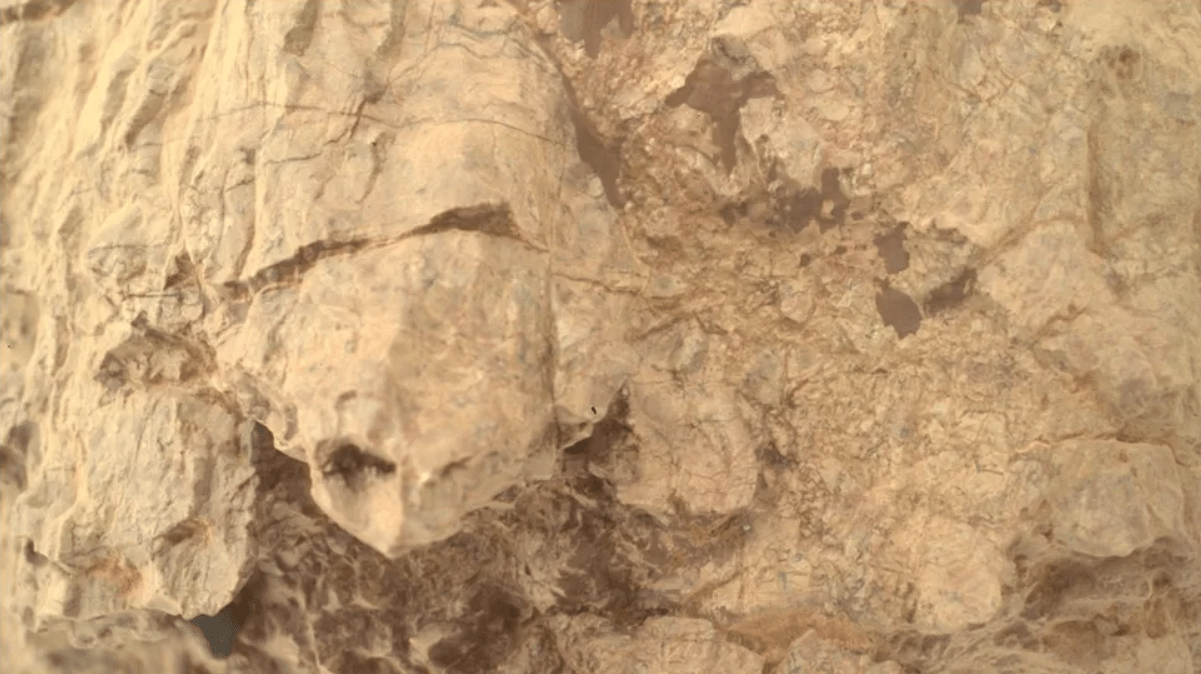
Image (Credit): Mars rock NWA 16788. (Sotheby’s)

NASA may face problems getting Martian rocks back to Earth, but the rocks that already made it this far are being sold to the highest bidder.

Earlier this week a rock from Mars sold for $5.3 million at a Sotheby’s New York auction. Officially named NWA 16788, the meteorite weighs 54 pounds. Located in the Sahara Desert in 2023, it is believed to have traveled to Earth after being blasted off the Martian surface by an incoming asteroid.

So who bought it? That information has not been shared, but if Elon Musk bought it I would consider that cheating. He needs to get to Mars on his own and fulfill his destiny (while giving the rest of us a break).

Space Quote: What’s the Strategy, NASA?

Credit: Image by Petra from Pixabay.

“You’re losing the managerial and core technical expertise of the agency…What’s the strategy and what do we hope to achieve here?”

-Comment by Casey Dreier, chief of space policy at The Planetary Society, regarding recent news that 2,145 senior-ranking NASA employees will be departing NASA as part of the ongoing downsizing of the agency. It is not clear whether these cuts align with the White House’s earlier statements that it wanted to put humans on the Moon and Mars. The saying used to be measure twice, cut once. With this White House it is cut twice and toss out the measuring tape.

Is Musk Taking a Chainsaw to SpaceX?

Credit: Image by Mostafa Elturkey from Pixabay.

The press is all abuzz about Elon Musk’s latest statements regarding his establishment a new political party called the America Party. Some of the stories also relate to his continued inattention to his companies, particularly Tesla. Fortune magazine quoted one security tech analyst who stated:

Very simply Musk diving deeper into politics and now trying to take on the Beltway establishment is exactly the opposite direction that Tesla investors/shareholders want him to take during this crucial period for the Tesla story.

The same concerns exist with SpaceX, even it if is a private company. Elon Musk has been distracted by politics for too long as his companies take a back seat. His budget-cutting work for President Trump tanked Tesla sales around the world while his recent divorce with the White House caused President Trump to ask whether the government needed to cut off contracts to SpaceX. Throughout, it has been a roller coaster for his customers and investors.

Surprisingly, even Treasury Secretary Scott Bessent commented on the board of directors at Tesla and SpaceX during CNN’s State of the Union, noting:

I imagine that those boards of directors did not like this announcement yesterday (Saturday) and will be encouraging him to focus on his business activities, not his political activities.

AInvest also ssued this warning over the weekend:

Musk’s political pivot is a gamble with no clear playbook. While his companies’ technological prowess and market dominance provide a cushion, the interplay of regulatory risks, political spending, and third-party uncertainty demands vigilance.

It also doesn’t help that some of President Trump’s friends are now calling for the nationalization of SpaceX. For example, Trump advisor Steve Bannon has already suggested the White House should consider using the Defense Production Act to take control SpaceX. That would be an extremely serious step.

Mr. Musk does seem to have trouble keeping focus on his businesses, so maybe it makes sense for him to hand over more control to other managers while he goes off and plays with politics. He is a man who is no longer driven by Mars the planet but instead by Mars the god or war, in this case political wars.

His many distractions are not good for NASA, the space industry, or SpaceX investors.

Study Findings: Carbonate Formation and Fluctuating Habitability on Mars

Image (Credit): Mars as captured by NASA Mars Global Surveyor MOC wide angle cameras. (NASA/JPL/MSSS)

Nature abstract of the study findings:

The cause of Mars’s loss of surface habitability is unclear, with isotopic data suggesting a ‘missing sink’ of carbonate. Past climates with surface and shallow-subsurface liquid water are recorded by Mars’s sedimentary rocks, including strata in the approximately 4-km-thick record at Gale Crater. Those waters were intermittent, spatially patchy and discontinuous, and continued remarkably late in Mars’s history—attributes that can be understood if, as on Earth, sedimentary-rock formation sequestered carbon dioxide as abundant carbonate (recently confirmed in situ at Gale). Here we show that a negative feedback among solar luminosity, liquid water and carbonate formation can explain the existence of intermittent Martian oases. In our model, increasing solar luminosity promoted the stability of liquid water, which in turn formed carbonate, reduced the partial pressure of atmospheric carbon dioxide and limited liquid water. Chaotic orbital forcing modulated wet–dry cycles. The negative feedback restricted liquid water to oases and Mars self-regulated as a desert planet. We model snowmelt as the water source, but the feedback can also work with groundwater as the water source. Model output suggests that Gale faithfully records the expected primary episodes of liquid water stability in the surface and near-surface environment. Eventually, atmospheric thickness approaches water’s triple point, curtailing the sustained stability of liquid water and thus habitability in the surface environment. We assume that the carbonate content found at Gale is representative, and as a result we present a testable idea rather than definitive evidence.

Citation: Kite, E.S., Tutolo, B.M., Turner, M.L. et al. Carbonate formation and fluctuating habitability on Mars. Nature 643, 60–66 (2025).

https://doi.org/10.1038/s41586-025-09161-1

Study-related stories:

University of Chicago – “Was Mars Doomed to be a Desert? Study Proposes New Explanation”

Science Alert – “NASA Discovery Could Explain Why We’ve Never Found Life on Mars”

The Register – “Mars Was Once a Desert with Intermittent Oases, Curiosity Data Suggests”