Space Stories: Starliner Preparing for Flight, New Volcano on Mars, and Questions About Dark Matter

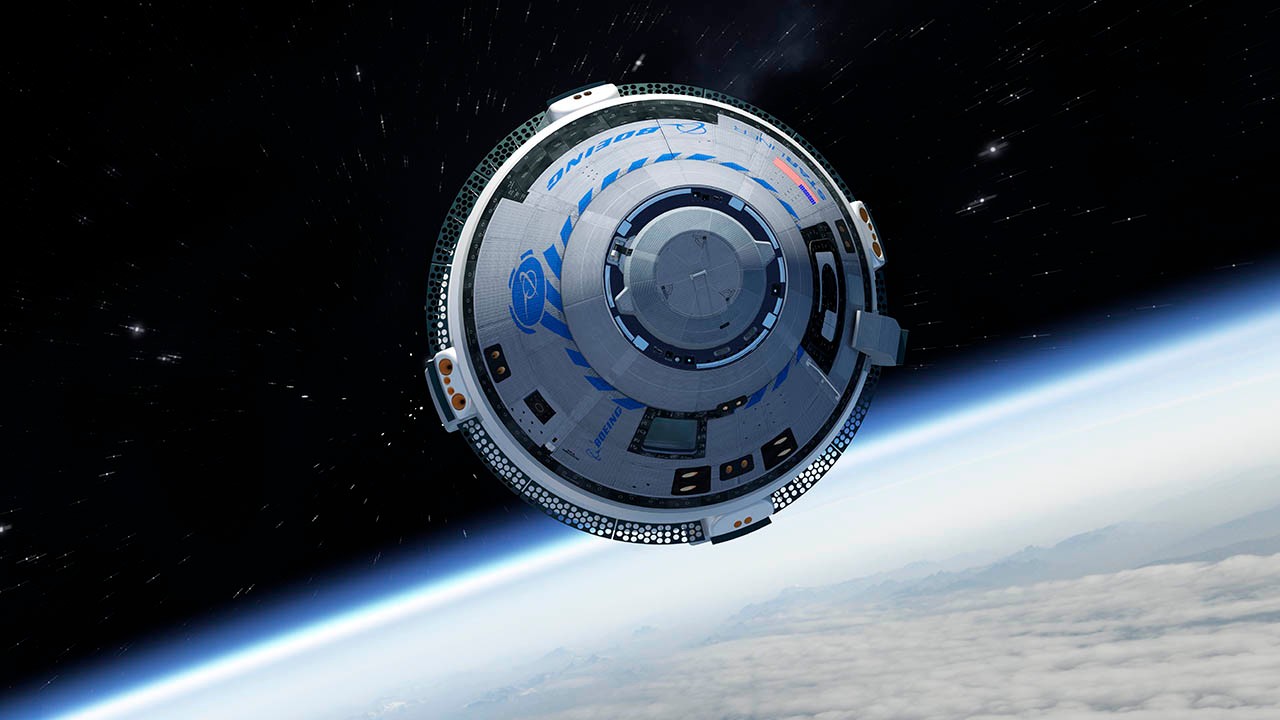
Image (Credit): Artist’s rendering of the Boeing Crew Space Transportation (CST)-100 Starliner spacecraft. (Boeing)

Here are some recent stories of interest.

Space.com: New NASA Astronauts ‘Thrilled’ to See 1st Boeing Starliner Crew Launch in May

A new spacecraft will at last launch its first crew in May, and a fresh group of NASA astronauts say they’re excited to support it. NASA’s newest astronaut group graduated from basic training on March 5, just in time for the first Boeing Starliner test launch with astronauts, which is now expected in May…When it’s up and running, Starliner will regularly carry astronauts to and from the ISS alongside SpaceX’s Crew Dragon vehicle, which began its own astronaut flights in 2020. The newest astronaut cohort can’t wait to climb on board the Boeing craft.

Sky & Telescope: Giant Ancient Volcano Discovered on Mars

It’s not every day that a giant volcano is discovered hiding in plain sight. By reviewing satellite imagery from many missions, scientists have spotted the remains of a colossal volcano on Mars. The volcano, provisionally named “Noctis Mons,” had been imaged repeatedly since the early 1970s, but extensive erosion had concealed it from view. Researchers have also spotted hints at an adjacent glacier buried underneath the volcanic slopes. Noctis Mons is located near the Martian equator, in the eastern part of the Tharsis volcanic province, sandwiched between the vast canyons of Valles Marineris and the fractured maze-like terrain of Noctis Labyrinthus.

University of Ottawa: New Research Suggests that Our Universe has No Dark Matter

The current theoretical model for the composition of the universe is that it’s made of ‘normal matter,’ ‘dark energy’ and ‘dark matter.’…A University of Ottawa study published today challenges the current model of the universe by showing that, in fact, it has no room for dark matter...This discovery challenges the prevailing understanding of the universe, which suggests that roughly 27% of it is composed of dark matter and less than 5% of ordinary matter, remaining being the dark energy.
Space Stories: Biomolecules on Mars, a “Dead” Galaxy, and the Most Distant Galaxies

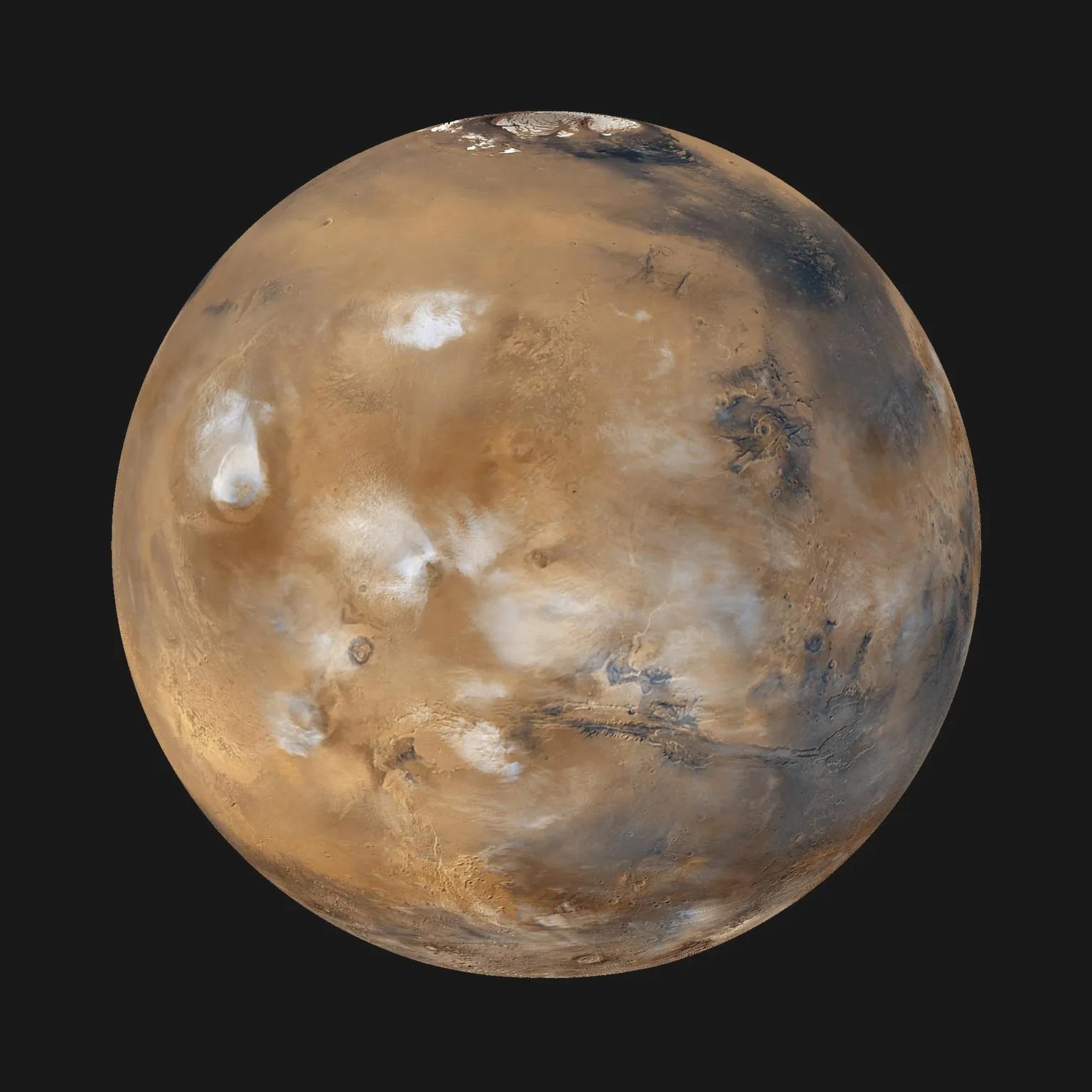
Image (Credit): Image of Mars captured by the NASA Mars Global Surveyor MOC wide angle cameras. (NASA)

Here are some recent stories of interest.

Tohoku University: Biomolecules from Formaldehyde on Ancient Mars

Organic materials discovered on Mars may have originated from atmospheric formaldehyde, according to new research, marking a step forward in our understanding of the possibility of past life on the Red Planet. Scientists from Tohoku University have investigated whether the early atmospheric conditions on Mars had the potential to foster the formation of biomolecules – organic compounds essential for biological processes. Their findings, published in Scientific Reports, offer intriguing insights into the plausibility of Mars harboring life in its distant past.

University of Cambridge: Astronomers Spot Oldest “Dead” Galaxy Yet Observed

A galaxy that suddenly stopped forming new stars more than 13 billion years ago has been observed by astronomers. Using the James Webb Space Telescope, an international team of astronomers led by the University of Cambridge has spotted a ‘dead’ galaxy when the universe was just 700 million years old, the oldest such galaxy ever observed. This galaxy appears to have lived fast and died young: star formation happened quickly and stopped almost as quickly, which is unexpected for so early in the universe’s evolution. However, it is unclear whether this galaxy’s ‘quenched’ state is temporary or permanent, and what caused it to stop forming new stars.

Webbtelescope.org: Webb Unlocks Secrets of One of the Most Distant Galaxies Ever Seen

Delivering on its promise to transform our understanding of the early universe, the James Webb Space Telescope is probing galaxies near the dawn of time. One of these is the exceptionally luminous galaxy GN-z11, which existed when the universe was just a tiny fraction of its current age. One of the youngest and most distant galaxies ever observed, it is also one of the most enigmatic. Why is it so bright? Webb appears to have found the answer. Scientists using Webb to study GN-z11 have also uncovered some tantalizing evidence for the existence of Population III stars nestled in the outskirts of this remote galaxy. These elusive stars — the first to bring light to the universe — are purely made of hydrogen and helium. No definitive detection of such stars has ever been made, but scientists know they must exist. Now, with Webb, their discovery seems closer than ever before.

A Day in Astronomy: The Mariner 6 Heads to Mars

Image (Credit): The Mariner 6 spacecraft. (NASA)

On this day in 1969, NASA’s Mariner 6 was launched from Cape Canaveral using the Atlas-Centaur AC-20 rocket. The mission of Mariner 6 was to conduct a flyby of Mars and analyze the Martian atmosphere and surface with remote sensors.

This mission, as well as the Mariner 7 launch the following month, provided solid evidence that the dark features on the planet’s surface were not canals (as astronomer Percival Lowell and other had proposed).

You can find NASA’s Mariner information here.

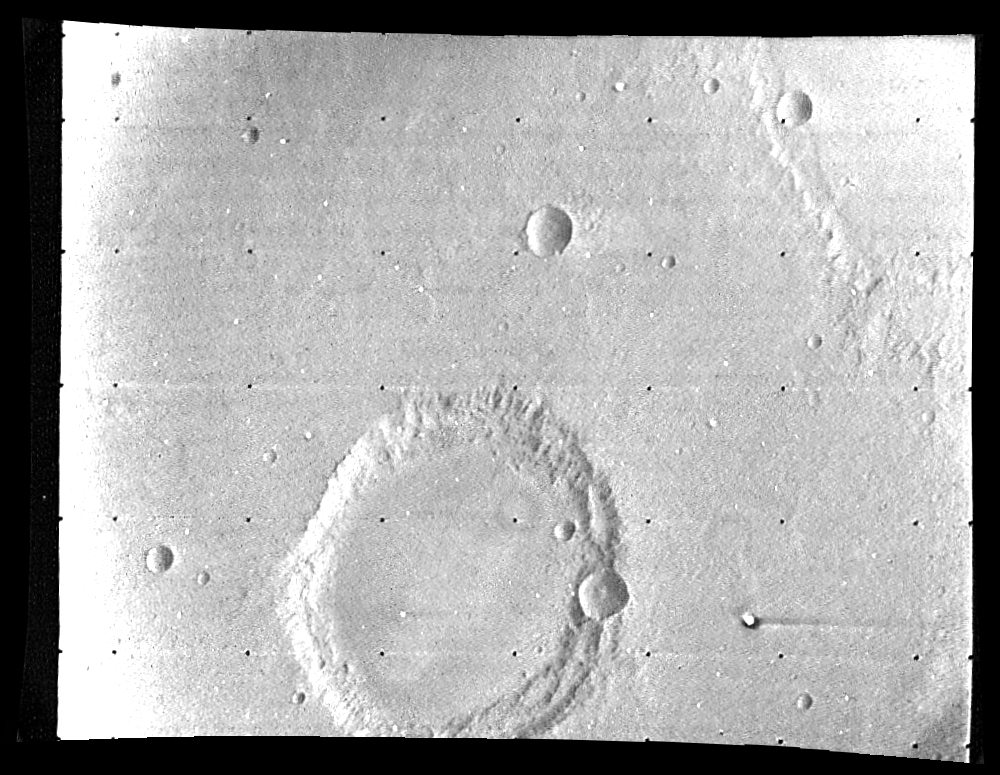
Image (Credit): Close up of Mars taken by Mariner 6. (NASA)

Volunteers Needed for Mars Study

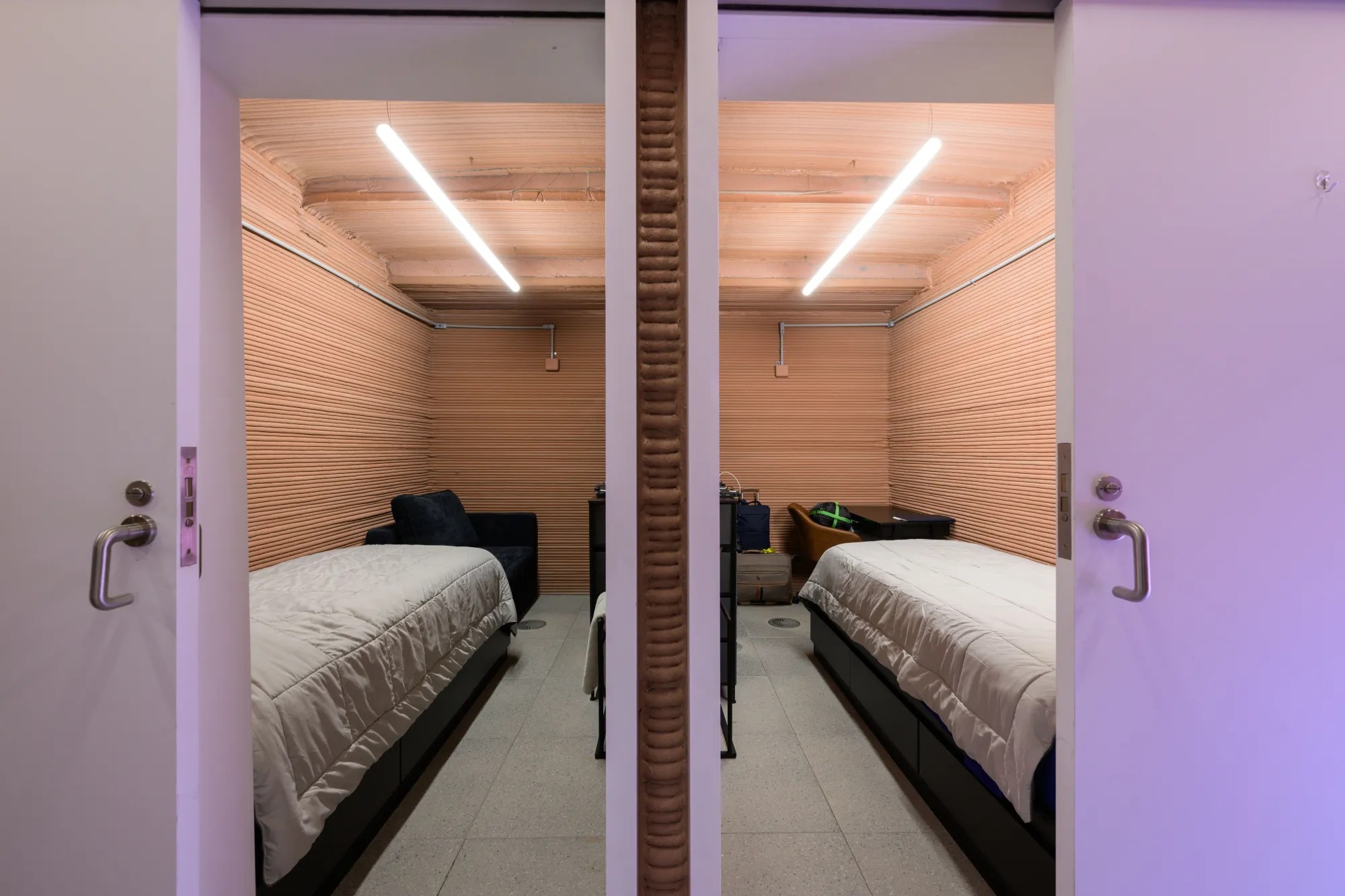
Image (Credit): A picture of the 1,700-square-foot CHAPEA habitat, which contains individual living quarters for four volunteer crew members. (NASA/Bill Stafford)

Are you a motivated U.S. citizen or permanent resident who is a non-smoker, 30-55 years old, and proficient in English for effective communication between crewmates and mission control? Are you interested in helping NASA with its Mars program? If so, you have until April 2nd to contact NASA and volunteer for its second Crew Health and Performance Exploration Analog (CHAPEA) mission, which is set to begin in spring 2025.

And what does this mission entail? You will live in a 3D-printed habitat (the Mars Dune Alpha) with three other crew members for about a year. The mission includes simulated spacewalks, physical and behavioral health and performance challenges, and more.

NASA goals for the CHAPEA mission is as follows:

To obtain the most accurate data during the analog, the analog mission will be as Mars-realistic as feasible, which may include environmental stressors such as resource limitations, isolation, equipment failure, and significant workloads. The major crew activities during the analog may consist of simulated spacewalks including virtual reality, communications, crop growth, meal preparation and consumption, exercise, hygiene activities, maintenance work, personal time, science work, and sleep.

It may sound like a return to the time of Covid, but this time the results will be recorded and used by scientists for future space programs.

If this sounds like something you might like to do, you should consider sending in an application.

Bad News for NASA’s JPL and the Mars Sample Return

NASA has started to crack under budget uncertainty.

The Washington Post has reported that NASA’s Jet Propulsion Laboratory (JPL) is laying off 530 employees and another 40 contractors. Overall, this is an eight percent drop in JPL staffing, most of it related to the Mars Sample Return (MSR) efforts that have been facing cost overruns and questions from Congress.

JPL management explained the reduction in a memo to employees:

I am writing to share as much detail and clarity on our actions as I can, including reviewing the factors that have led to this decision, and our next steps. First, how we got here. Without an approved federal budget including final allocation for MSR FY24 funding levels, NASA previously directed JPL to plan for an MSR budget of $300M. This is consistent with the low end of congressional markups of NASA’s budget and a 63% decrease over the FY23 level. In response to this direction, and in an effort to protect our workforce, we implemented a hiring freeze, reduced MSR contracts, and implemented cuts to burden budgets across the Lab. Earlier this month, we further reduced spending by releasing some of our valued on-site contractors.

This may be a short layoff should NASA get more funding from Congress, but even then it is possible that some of the great talent associated with the program will head off into the sunset to find more secure employment.

Will we ever get a sample back from Mars? Can we get the information we need via other means for now until the budget situation improves (as well as more partner funding)? Will the Chinese or another party find the means to do something we cannot?

NASA has a lot of balls in the air and may lack the necessary funding to keep them all afloat, as was highlighted in an earlier post.

It appears one of the balls has dropped.