Pic of the Week: Forth Starship Test is a Success

Image (Credit): The Starship rocket lifting off its launch pad in Texas earlier today. (SpaceX)

This week’s image shows the launch of the forth test of SpaceX’s Starship, which went further than any of the tests to date. In it’s summary of the flight, SpaceX noted:

Flight 4 ended with Starship igniting its three center Raptor engines and executing the first flip maneuver and landing burn since our suborbital campaign, followed by a soft splashdown of the ship in the Indian Ocean one hour and six minutes after launch.

You can see the full flight in this video.

As with yesterday’s successful launch of Boeing’s Starliner, today’s successful flight gave NASA greater assurance that the commercial sector is picking up the pace to assist the U.S. with both the International Space Station and Artemis program to the Moon (and eventually Mars).

Note: I like The Economist’s headline on the mission: “Elon Musk’s Starship Makes a Test Flight Without Exploding.”

Space Quote: Congressional Appeal for More NASA Funding

“An improved appropriation for FY 2025 of $9 billion for SMD will give the agency the necessary resources to pursue Decadal priorities such as the Earth System Observatory, Geophysical Dynamics Constellation, Habitable Worlds Observatory, and Mars Sample Return, while maintaining our nation’s highly-skilled workforce and fleet of operating and developing spacecraft including the Chandra X-Ray Observatory, Hubble Space Telescope, Perseverance and Curiosity rovers, among others. These investments in our high-tech STEM workforce and university systems will provide positive value to every congressional district.”

-Statement in a May 1, 2024 letter to the House Appropriations Subcommittee on Commerce, Justice, Science, and Related Agencies from 44 Members of Congress regarding increased funding to NASA related to its Science Mission Directorate (SMD). The letter notes that “…the FY 2025 President’s Budget Request of $7.6 billion for NASA Science represents a $1.1 billion decrease in purchasing power from its peak in FY 2020 and would be the smallest budget in eight years when adjusted for inflation.”

Space Stories: Protests to Save Chandra, Problems Retrieving Martian Sample, and TESS is Getting Testy

Here are some recent stories related to NASA missions.

PhysicsWorld: US Astronomers Slam Cuts to the Chandra X-ray Observatory

X-ray astronomers in the US have begun a campaign to save the Chandra X-ray Observatory from budget cuts that would effectively end the mission. They assert that the craft, which was launched in 1999, has plenty of life left in it. Cancelling support could, they say, damage scientific efforts to understand the universe and the careers of an emerging generation of X-ray astronomers.

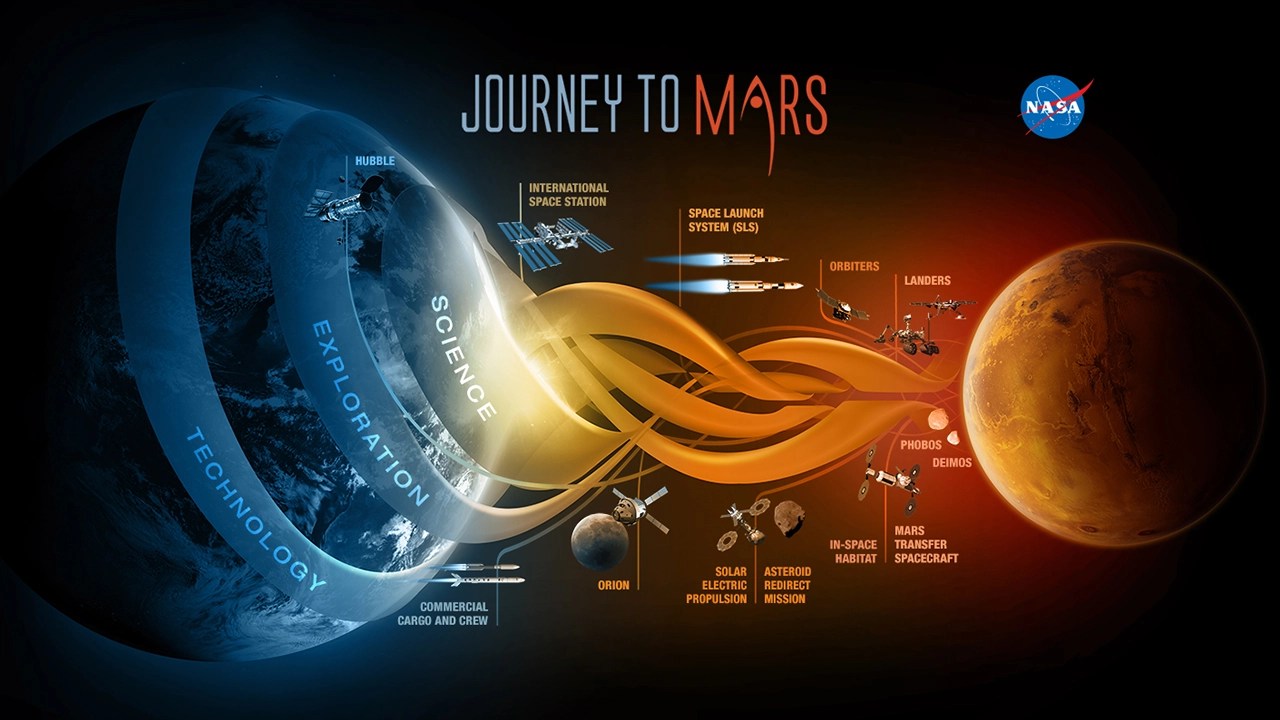
CNN: NASA Rethinks Plan to Return Rare Mars Samples to Earth

“Mars Sample Return will be one of the most complex missions NASA has ever undertaken. The bottom line is, an $11 billion budget is too expensive, and a 2040 return date is too far away,” Nelson said. “Safely landing and collecting the samples, launching a rocket with the samples off another planet — which has never been done before — and safely transporting the samples more than 33 million miles (53 million kilometers) back to Earth is no small task. We need to look outside the box to find a way ahead that is both affordable and returns samples in a reasonable time frame.”

NASA: NASA’s TESS Temporarily Pauses Science Observations

NASA’s TESS (Transiting Exoplanet Survey Satellite) entered into safe mode April 8, temporarily interrupting science observations. The team is investigating the root cause of the safe mode, which occurred during scheduled engineering activities. The satellite itself remains in good health. The team will continue investigating the issue and is in the process of returning TESS to science observations in the coming days.

Oops – Sorry About That, Mars

Image (Credit): Illustration of how DART’s impact altered the orbit of Dimorphos about Didymos. (https://dart.jhuapl.edu/)

You may remember how NASA’s Double Asteroid Redirection Test (DART) mission was a great success in that it demonstrated that we can divert an asteroid, should it be necessary.

Well, that’s not the whole story. A new study has found that the redirected asteroid debris may threaten Mars in the future. How far into the future? In one case, it will be 6,000 years into the future, and the second about 15,000 years into the future.

It would be nice to think that we will have habitats if not cities on Mars at that point (and maybe even a Musk Mountain looming over one of the cities), so this could be relevant. So maybe today’s practice run will be tomorrow’s disaster. Then again, I am pretty sure that such a future society will also have the ability to deflect these asteroids, possible building on what we learned from DART.

All of this does make you think about other areas where our tampering may come back to bite us.

Pic of the Week: The Gediz Vallis Channel

Image (Credit): Panoramic shot of Mar’s Gediz Vallis channel taken by the Curiosity rover. (NASA/JPL-Caltech)

This week’s image comes from NASA’s Curiosity rover in the Gediz Vallis channel. It is a 360-degree panorama shot from back on February 3. The rover has diligently continued its exploration of the Martian surface since it first landed in 2012.

In terms of this latest rover location, NASA stated:

NASA’s Curiosity rover has begun exploring a new region of Mars, one that could reveal more about when liquid water disappeared once and for all from the Red Planet’s surface. Billions of years ago, Mars was much wetter and probably warmer than it is today. Curiosity is getting a new look into that more Earth-like past as it drives along and eventually crosses the Gediz Vallis channel, a winding, snake-like feature that – from space, at least – appears to have been carved by an ancient river.

That possibility has scientists intrigued. The rover team is searching for evidence that would confirm how the channel was carved into the underlying bedrock. The formation’s sides are steep enough that the team doesn’t think the channel was made by wind. However, debris flows (rapid, wet landslides) or a river carrying rocks and sediment could have had enough energy to chisel into the bedrock. After the channel formed, it was filled with boulders and other debris. Scientists are also eager to learn whether this material was transported by debris flows or dry avalanches.