
Space Stories: Spirals in the Oort Cloud, Killer Asteroid Heading Towards Moon, and Starlink Messes Up Astronomy

Image (Credit): Halley’s Comet. (NASA Jet Propulsion Laboratory, California Institute of Technology)

Here are some recent space-related stories of interest.

NDTV: Visual Glitch Leads To Accidental Discovery Of Spiral In Mysterious Oort Cloud

Scientists have long assumed the Oort Cloud, one of the most mysterious structures in our solar system, to be spherical. But during the pre-production of their new space show, “Encounters in the Milky Way,” they noticed a strange spiral pattern in the middle of the cloud. The show, which premiered on Monday at New York City’s Hayden Planetarium, featured a computer-generated visualisation of the Oort Cloud on the dome. The team was reviewing the animation when they noticed what appeared to be a spiral structure inside the typically spherical cloud shape.

Daily Mail: NASA Issues Urgent Update on ‘City Killer’ Asteroid Heading Towards the Moon in 2032

The ‘city killer’ asteroid 2024 YR4 may not be on a collision course with Earth anymore. But NASA has raised the odds of it hitting the moon in just seven years’ time. According to the space agency, there’s now a 4.3 per cent chance that 2024 YR4 will smash into the moon on December 22, 2032…The impact event would be the first time scientists could watch a known asteroid create a lunar crater in real-time.

New Scientist: Starlink Satellites are Leaking Radio Signals that May Ruin Astronomy

SpaceX’s Starlink satellites are leaking radio waves to such an extent that it could threaten our ability to study and understand the early universe, say astronomers. Interference from the thousands of Starlink satellites in orbit, where they provide a global internet service, has been a continuing concern for astronomers, who say that the radio emissions from the craft could affect sensitive telescopes that observe distant, and faint, radio sources. SpaceX has worked with astronomers to try to prevent this interference, by switching off their internet-transmitting beams when they fly over key telescopes, but it turns out that this isn’t enough.

Giving Everything to SpaceX is Risky? Who Knew?

Credit: Image by David Stephanus from Pixabay.

According to the Washington Post, the leaders at NASA and the Department of Defense (DOD) have finally figured out that Mr. Musk is a potential threat to our space program and national security. Now where did they get that idea?

The newspaper stated:

NASA and Pentagon officials moved swiftly this past week to urge competitors to Elon Musk’s SpaceX to more quickly develop alternative rockets and spacecraft after President Donald Trump threatened to cancel Space X’s contracts and Musk’s defiant response.

Why did it take so long? And maybe instead of nagging SpaceX’s competitors, NASA and the DOD need to do more.

Boeing’s Starliner may need some propping up at the moment as an alternative to getting humans to the International Space Station (ISS), and other parties that can assist with the ISS and military satellite launches may need help as well.

Such careful planning should have been done long ago. Compromising NASA is one thing, but putting our nation’s defense in the hands of one unreliable man was foolish from the start. David killed the Goliath represented by the large aerospace companies, but now David has gone mad. Great plan, everyone.

It may be time to consider nationalizing SpaceX if it become an Achilles heel to our nation, particularly if Mr. Musk decides to take all of his marbles and go home (or simply loses all of his marbles).

This reminds me of Russia where President Putin put so much power into the hands of one of his warlords only to see that warlord turn his weapons on Moscow.

I expect things will settle down, but the risk remains. It is time for NASA and DOD to make some clear plans to expand the procurement base and rapidly fund alternatives to SpaceX.

As far as the future of NASA, which is the focus of this website, this is another wrench in the machinery. The White House budget already guts much of NASA’s programs, leaving most of the focus on Artemis, which needs a SpaceX Human Landing System, and Mars, which has been pushed to the front of the line only because of Musk’s influence at the White House.

So now what?

It seems Mr. Musk is not the only party undergoing a rapid unscheduled disassembly.

Space Quote: Japanese Lunar Lander Fails a Second Time

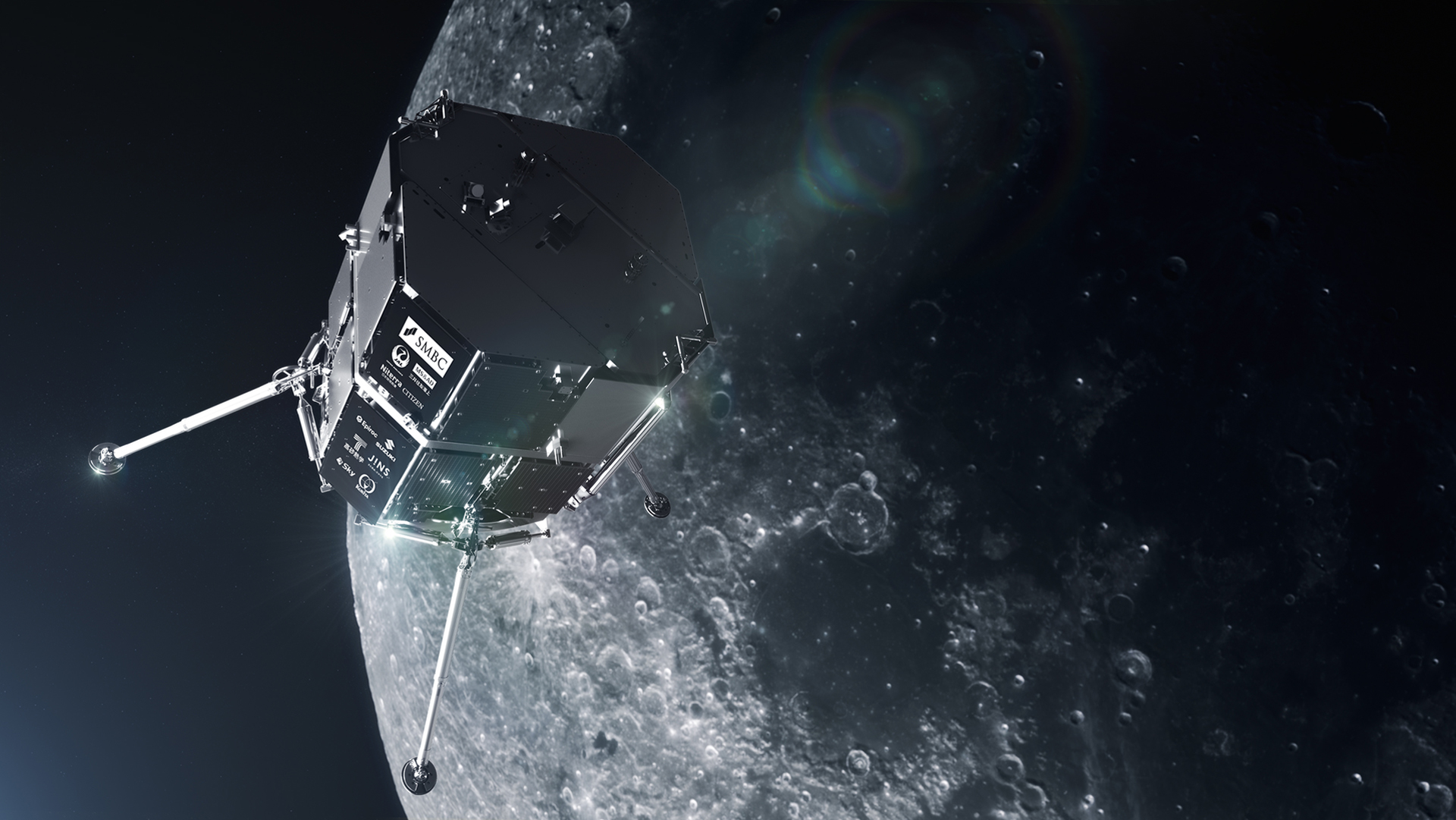
Image (Credit): Artist’s rendering of the Resilience lunar lander approaching the moon. (ispace)

“Given that there is currently no prospect of a successful lunar landing, our top priority is to swiftly analyze the telemetry data we have obtained thus far and work diligently to identify the cause.”

-Statement by Takeshi Hakamada, CEO and founder of Japan’s private space company ispace, in a press release following the failure of the company’s second lunar lander mission to the Moon. The company noted that the lander experienced a “hard landing” when it failed to sufficiently decrease its speed on approach. The mission started back in January when a SpaceX Falcon 9 rocket carried both this mission as well as Firefly Aerospace’s Blue Ghost, which had a successful landing on the lunar surface. The ispace lander was named Resilience – something it will need more of to stay in the space race.

Space Stories: Dozens of Space Missions Cancelled, NASA Climate Cuts Impact Industry, and Budget Cuts Hurt Huntsville

Credit: Image by Mohamed Hassan from Pixabay.

Here are some recent stories about the planned budget cuts at NASA.

USA Today: Dozens of NASA space missions could be axed under Trump’s budget: Here’s a look at 6

A total of 41 science projects would get the ax under the proposal, which would be NASA’s biggest single-year cut in the agency’s history, according to the Planetary Society. Many of the science missions President Donald Trump looks to cancel are still in development, while others are extended operations with uncrewed vehicles already deployed to orbit. Here’s a look at six different types of space missions, from Mars exploration to future moon landings, that could be under threat if Trump’s budget were to go into effect.

Politico: The Domino Effect of Trump’s NASA Climate Cuts

President Donald Trump wants to decimate NASA’s climate research capacity. That could ultimately disrupt multiple sectors of the economy, writes Scott Waldman. In the White House budget documents released last week, Trump proposed slashing a quarter of NASA’s funding, specifically targeting the agency’s research on climate change. But many of NASA’s instruments that track human-caused climate change provide other critical data. The agriculture industry, for example, relies on satellites and instruments that not only track climate change but also keep tabs on shifts in climatic zones that affect plant growth. Trump wants to eliminate funding that keeps those tools operational.

Advance Local: Trump’s Budget Puts Huntsville-made Spacecraft on the Chopping Block

NASA is being directed to phase out multibillion-dollar programs, managed from its flagship center in Huntsville, that are designed to ferry people to and from the moon…Eliminating SLS and Orion will, “[pave] the way for more cost-effective, next-generation commercial systems that will support subsequent NASA lunar missions,” according to budget documents. Both are key programs for Marshall Space Flight Center, one of the largest of NASA’s 10 field centers, which employs nearly 7,000 federal workers and contractors in Huntsville and manages a multibillion-dollar budget related to human spaceflight.

The Atlantic Council Likes Space Robots

Credit: Image by Christopher White from Pixabay.

If you have not heard of the Atlantic Council you are not alone.

The Atlantic Council defines itself defines itself as a nonpartisan organization that is “…an essential forum for navigating the dramatic economic and political changes defining the twenty-first century by informing and galvanizing its uniquely influential network of global leaders.”

So what does it have to say about the current state of the US space program? It seems to want more robots, artificial intelligence, and virtual reality. It also claims China is moving in this direction.

In a recent article, the Atlantic Council proposed the following to improve the space program for this century:

  • Modernize NASA’s organizational structure by integrating the robotic and human initiatives;
  • Reformulate NASA’s Artemis campaign by changing its plan so that early flights are robotic, with work and preparations being performed by intelligent machines ahead of crewed missions; and
  • Equip lunar robots with virtual reality so intelligent space exploration machines could enable scientists, engineers, and others on Earth to become active participants in the exploration of the Moon, distant planets, and beyond.

Fortunately, the article is not recommending the removal of humans from space flight, but rather the use of technology to enhance these missions, reduce overall costs, and broaden public and scientific support. This would include the expansion of private sector involvement. It’s not a bad idea as NASA struggles with the Artemis mission and potentially other missions due to budget cuts.

Of course, the amazing telescopes that we are trying to maintain and expand upon are already top of the line technology that have expanded public support for astronomy, but this has come at great cost (exceeding cost projections) and has not been protected from budget cuts.

A mix of approaches sounds fine, but a reliable flow of funds with clear expectations also sound nice. We are not going to get that with this White House based upon what we have seen so far. Just finding a leader for NASA that is palatable to the White House is proving impossible.

New ideas should always be welcome, but what is really essential at the moment is stable leadership. Without that all other efforts will go nowhere.