Athena is On Her Way to the Moon

Image (Credit): The launch of Intuitive Machines’ Nova-C lunar lander (IM-2) from Launch Complex 39A at NASA’s Kennedy Space Center in Florida on Wednesday, February 26. (NASA)

Yesterday’s launch of Intuitive Machines’ IM-2 mission carrying the Athena lander was a success. The private sector mission, part of NASA’s Commercial Lunar Payload Services initiative, is heading to the Moon to look for water at the lunar South Pole. The launch follows the less successful IM-1 mission from last year with the Odysseus lander.

Athena is expected to land on the lunar surface on March 6, about four days after the scheduled landing of Firefly Aerospace’s Blue Ghost spacecraft.

NASA instruments aboard the IM-2 mission include:

  • Polar Resources Ice Mining Experiment-1 (PRIME-1): This experiment will explore the Moon’s subsurface and analyze where lunar resources may reside. The experiment’s two key instruments will demonstrate the ability to extract and analyze lunar soil to detect volatile chemical compounds that turn into gas. The two instruments will work in tandem: The Regolith and Ice Drill for Exploring New Terrains will drill into the Moon’s surface to collect samples, while the Mass Spectrometer Observing Lunar Operations will analyze these samples to determine the gas composition released across the sampling depth. The PRIME-1 technology will provide valuable data to better understand the Moon’s surface and how to work with and on it.
  • Laser Retroreflector Array (LRA): This collection of eight retroreflectors will enable precision laser ranging, which is a measurement of the distance between the orbiting or landing spacecraft to the reflector on the lander. The LRA is a passive optical instrument and will function as a permanent location marker on the Moon for decades to come.
  • Micro Nova Hopper: Funded by NASA’s Space Technology Mission Directorate Tipping Point initiative, Intuitive Machines’ Micro Nova hopper, Grace, is designed to enable high-resolution surveying of the lunar surface under its flight path. This autonomous propulsive drone aims to deploy to the surface and hop into a nearby crater to survey the lunar surface and send science data back to the lander. It’s designed to hop in and out of a permanently shadowed region, providing a first look into undiscovered regions that may provide critical information to sustain a human presence on the Moon.
  • Nokia Lunar Surface Communications System (LSCS): Also developed with funding from NASA’s Tipping Point initiative, Nokia’s LSCS 4G/LTE communications system will demonstrate cellular communications between the Intuitive Machines lander, a Lunar Outpost rover, and the Micro Nova hopper. Engineered to transmit high-definition video, command-and-control messages, and sensor and telemetry data, the LSCS aims to demonstrate an ultra-compact advanced communication solution for future infrastructure on the Moon and beyond.

Let’s hope the second mission goes without a hitch. We need a win for NASA and its efforts to expand the commercial space industry.

Credit: Intuitive Machines

Pic of the Week: The Far Side of the Moon

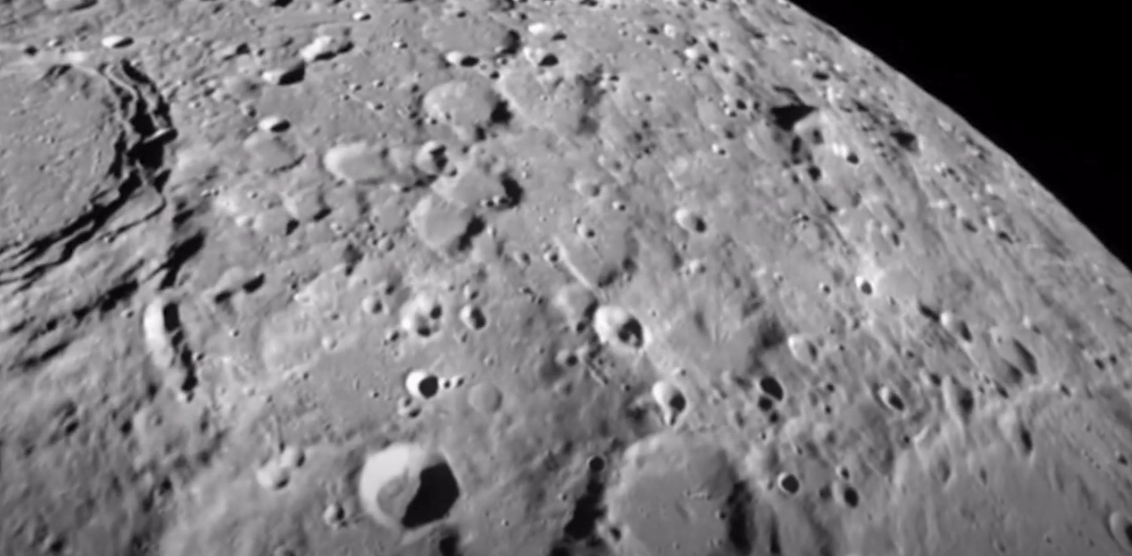
Image (Credit): The far side of the Moon captured by the Blue Ghost spacecraft. (Firefly Aerospace)

The image above is part of a video taken last week showing the far side of the Moon by Firefly Aerospace’s Blue Ghost spacecraft. The spacecraft is about 120 kilometers above the lunar surface. You can see the video here.

Regarding the video, the company noted:

In this orbit, the team will experience planned rolling comms blackouts as Blue Ghost goes around the far side of the Moon. When on the near side, the team will continue to downlink data and finalize the plan for our next maneuver that will get Blue Ghost even closer to the lunar surface and keep us right on track for landing on March 2.

You can learn more about the Blue Ghost’s mission here.

Space Stories: Distant Metalic Mining, Mapping Water on the Moon, and Lunar Cell Phone Service

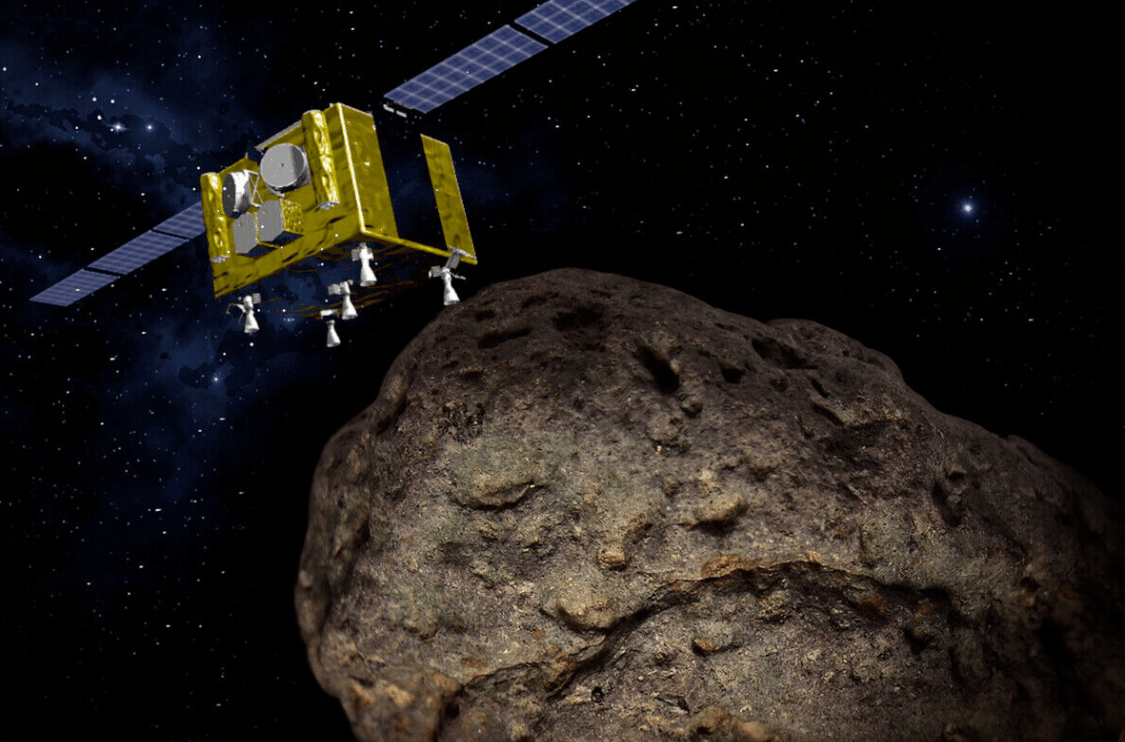
Image (Credit): Artist’s rendering of the Odin spacecraft approaching an asteroid. (Astroforge)

Here are some recent stories of interest related to the upcoming Intuitive Machines’ launch to the Moon.

CNN: A Tiny Spacecraft is Poised to Launch on an Unprecedented Deep-space Mission. The CEO Behind it is ‘Terrified’“

His venture may seem far out, but asteroid mining CEO Matt Gialich has no illusions. The engineer cofounded the bold California startup AstroForge in 2022 with the aim of hunting for precious metals in space, and he is all too aware that success is not guaranteed…The probe is set to lift off aboard a SpaceX Falcon 9 rocket from NASA’s Kennedy Space Center in Florida on February 26. AstroForge’s spacecraft will ride alongside Athena, a lunar lander developed by the startup Intuitive Machines, until it breaks off on its own.

Caltech: NASA’s Lunar Trailblazer is Launching to the Moon’“

NASA’s Lunar Trailblazer mission is led by Caltech’s Bethany Ehlmann, professor of planetary science and the Allen V. C. Davis and Lenabelle Davis Leadership Chair and director of the Keck Institute for Space Studies, and the mission is operated by IPAC at Caltech. The Lunar Trailblazer small satellite, or smallsat, will orbit the Moon to understand the nature of water on the Moon’s surface, providing maps to guide future robotic and human explorers. Prior missions have seen hints of ice and other forms of water that could be used in a variety of ways, from purifying it for human use, to processing it for fuel and breathable oxygen for future human Moon landings.

Fox News: NASA Will Test Cell Phone Service on the Moon in Latest Mission’“

NASA and Intuitive Machines are gearing up for a Wednesday evening liftoff, and one of the payloads will test a moon-based cell network. Researchers with Nokia Bell Labs Solutions Research developed the network and say it’s the same tool that we use here on Earth when we pick up our phones and make a call. But they had to make a cell tower much smaller so it could fit in a rocket and land on the moon.

Moonshot: Russia and the Costs of Failure?

Yuri Borisov, who has red Roscosmos since July 2022, was dismissed from his position last Thursday. It was called a normal rotation. However, you may recall the failed Russian attempt to put its Luna-25 lander on the Moon in August 2023, which happened during Mr. Borisov’s tenure.

His replacement is Dmitry Bakanov, who served as a deputy transport minister. Mr. Bakanov also ran the Gonets Satellite System company before joining the government. Gonets is more-or-less the Russian version of SpaceX’s Starlink.

Roscosmos has been struggling the last few years with troubled missions, including a leaking in one of its International Space Station (ISS) modules and cancelled partnerships with other nations due to Russia’s invasion of Ukraine. That said, its Soyuz rockets and spacecraft continue to be major components supporting the ISS.

Boeing Layoffs are Bad News for NASA’s Artemis Program

Image (Credit): Boeing’s Space Launch System. (NASA)

As if things could not get worse over at NASA, it now has to contend with Boeing’s financial problems. Boeing is considering laying off about 400 employees working on the Space Launch System (SLS), or about one third of the employees working on the system. The SLS is the backbone of the Artemis program returning the U.S. to the Moon and eventually Mars.

This follows problems last year with Boeing’s Starliner mission to the International Space Station. The two astronauts on the first manned Starliner mission are still on the station due to safety concerns about their return to Earth on the same spacecraft that brought them to the station.

None of this portends well for Boeing, NASA, or the space industry in general. This may simply throw more work towards SpaceX, making NASA more reliant on a company whose head seems more interesting in tearing down the U.S. government than focusing on the U.S. space mission. Besides, after the loss of the latest Starship, SpaceX is not in any position to replace what would be lost with the SLS. The end of the SLS may simply mean the end of any chance for the U.S. to beat China to the Moon.

This may serve the interests of Elon Musk, who always preferred going Mars, but given the lack of preparation for such a mission beyond a rocket (including lessons learned from the Artemis program), it seems even the Mars mission may be drifting into the sunset.

We need a strong NASA and clear mission priorities that are achievable in the short term. With a billionaire tourist taking over as NASA’s new leader, we need to be very careful NASA does not simply become another Dancing with the Stars for C-list celebrity wannabes.