This week’s image comes from NASA’s Astronomy Picture of the Day site. This beautiful photo taken by photographer Alexandros Maragos shows the recent blue supermoon in all its glory with the Temple of Poseidon in Greece in the foreground.

This week’s image comes from NASA’s Astronomy Picture of the Day site. This beautiful photo taken by photographer Alexandros Maragos shows the recent blue supermoon in all its glory with the Temple of Poseidon in Greece in the foreground.

Here are some recent stories of interest.
—SETI Institute: “SETI Institute Starts First Low Frequency Search for Alien Technology in Distant Galaxies“
The SETI Institute, the Berkeley SETI Research Center and the International Centre for Radio Astronomy Research announced a groundbreaking study using the Murchison Widefield Array (MWA) in Western Australia. Led by Dr. Chenoa Tremblay of the SETI Institute and Prof. Steven Tingay of Curtin University, this research is the first to search for signs of alien technology in galaxies beyond our own, focusing on low radio frequencies (100 MHz).
This innovative study used the MWA’s large field of view (FOV), allowing the team to cover about 2,800 galaxies in one observation, of which 1300 we know the distance to. Usually, the search for extraterrestrial intelligence (SETI) has focused on signals within our galaxy. This new approach goes further, looking at distant galaxies. This new approach looks at distant galaxies, making it one of the most detailed searches for super civilizations—those more advanced than ours. To send a signal from another galaxy, a civilization would need technology powerful enough to use the energy of their sun or several stars in their galaxy.
—KXAN: “College Students Sought to Help NASA Return to Moon“
NASA needs some help with frozen liquid. As part of the space agency’s planned trip to the moon as part of the Artemis mission, NASA is looking for a way to store “super-chilled” propellants for months on end. They’re asking college students for help. Announced earlier this month, NASA’s 2025 Human Lander Challenge (HuLC) is open for submissions. The competition, now in its second year, is asking for students to develop innovative methods for “in-space cryogenic liquid storage.”
—University of Portsmouth: “Citizen Science Project Identifies 20 New Astronomical Discoveries“
A citizen science project, which invites members of the public to take part in identifying cosmic explosions, has already identified 20 new astronomical discoveries. Over 2,000 volunteers across 105 different countries have worked on 600,000 classifications over a six-month period. The project ‘Kilonova Seekers’ aims to find kilonovae – the cosmic explosions of neutron stars and black holes colliding in distant galaxies. Volunteers are asked to play ‘spot the difference’ using data from the two Gravitational-wave Optical Transient Observer (GOTO) telescopes, which are located on opposite sides of the planet – on La Palma, in Spain’s Canary Islands, and Australia’s Siding Spring Observatory.

Here are some recent stories of interest.
—NBC News: “NASA Inspector General Gives Damning Assessment of Boeing’s Quality Control in New Report“
The report, released Thursday by NASA’s Office of Inspector General, calls into question Boeing’s standards and quality control for its part in NASA’s efforts to return astronauts to the moon. In NASA’s development of its next-generation megarocket, known as the Space Launch System, it gave Boeing the contract to build the rocket system’s powerful upper stage. But according to the report, Boeing’s quality control systems fall short of NASA’s requirements, and some known deficiencies have gone unaddressed. What’s more, the workers on the project are not, as a whole, sufficiently experienced or well trained, according to the inspector general.
—Space News: “NASA Payload to Fly on First Blue Origin Lunar Lander Mission“
A NASA payload will hitch a ride to the moon on Blue Origin’s first lunar lander mission, scheduled to launch as soon as next March. In an Aug. 6 procurement filing, NASA revealed it selected Blue Origin to fly a camera system to study how engine plumes interact with regolith at south polar regions of the moon, collecting data to support future crewed landing missions. The payload, called Stereo Cameras for Lunar Plume Surface Studies (SCALPSS), will fly through NASA’s Commercial Lunar Payload Services (CLPS) program.
—NASA: “How NASA Citizen Science Fuels Future Exoplanet Research“
NASA’s upcoming flagship astrophysics missions, the Nancy Grace Roman Space Telescope and the Habitable Worlds Observatory, will study planets outside our solar system, known as exoplanets. Over 5,000 exoplanets have been confirmed to date — and given that scientists estimate at least one exoplanet exists for every star in the sky, the hunt has just begun. Exoplanet discoveries from Roman and the Habitable Worlds Observatory may not be made only by professional researchers, but also by interested members of the public, known as citizen scientists.

“I’m very disappointed in the recent NASA decision to cancel the VIPER rover…Please work with me as the bill moves forward to look for ways to repurpose the lander portion of this mission to advance moon-to-Mars objectives. The mission directly supports a national imperative for continued US leadership in science and exploration in the face of urgent geopolitical competition.”
-Statement by Senator Shelley Moore Capito (R-WV) at a July 25, 2024 budget hearing, as quoted by CNN. The CNN story highlights efforts by The Planetary Society to encourage the continuation of the mission as well as NASA’s efforts to solicit U.S. industry and international partners’ “expressions of interest” by August 1, 2024 for ways to use “the existing VIPER rover system at no cost to the government.”

Nature Astronomy abstract of the study findings:
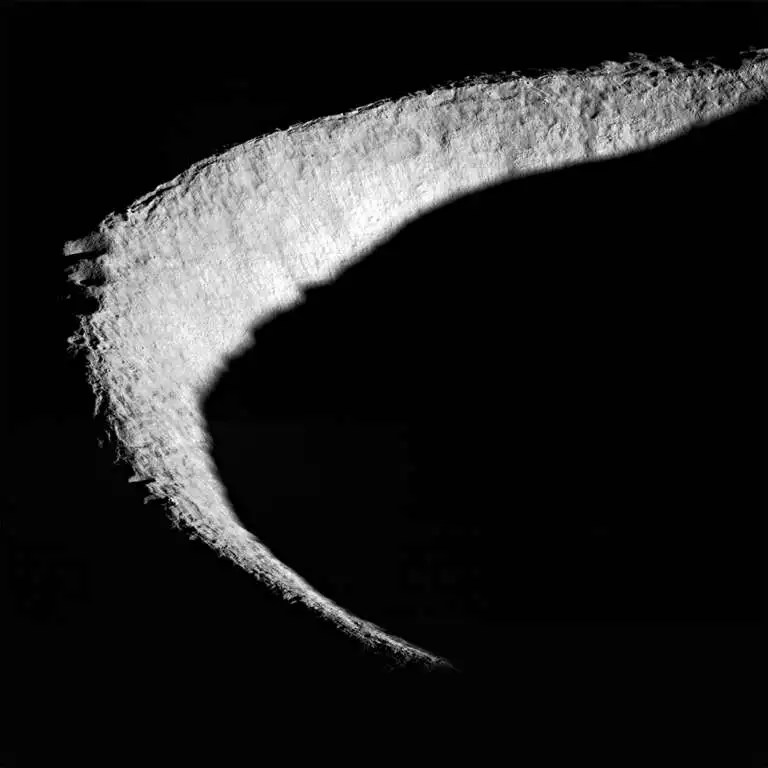
Several potential subsurface openings have been observed on the surface of the Moon. These lunar pits are interesting in terms of science and for potential future habitation. However, it remains uncertain whether such pits provide access to cave conduits with extensive underground volumes. Here we analyse radar images of the Mare Tranquillitatis pit (MTP), an elliptical skylight with vertical or overhanging walls and a sloping pit floor that seems to extend further underground. The images were obtained by the Mini-RF instrument onboard the Lunar Reconnaissance Orbiter in 2010. We find that a portion of the radar reflections originating from the MTP can be attributed to a subsurface cave conduit tens of metres long, suggesting that the MTP leads to an accessible cave conduit beneath the Moon’s surface. This discovery suggests that the MTP is a promising site for a lunar base, as it offers shelter from the harsh surface environment and could support long-term human exploration of the Moon.
Citation: Carrer, L., Pozzobon, R., Sauro, F. et al. Radar evidence of an accessible cave conduit on the Moon below the Mare Tranquillitatis pit. Nat Astron (2024).
https://doi.org/10.1038/s41550-024-02302-y
Study-related stories: