The Artemis II Mission Has a Patch

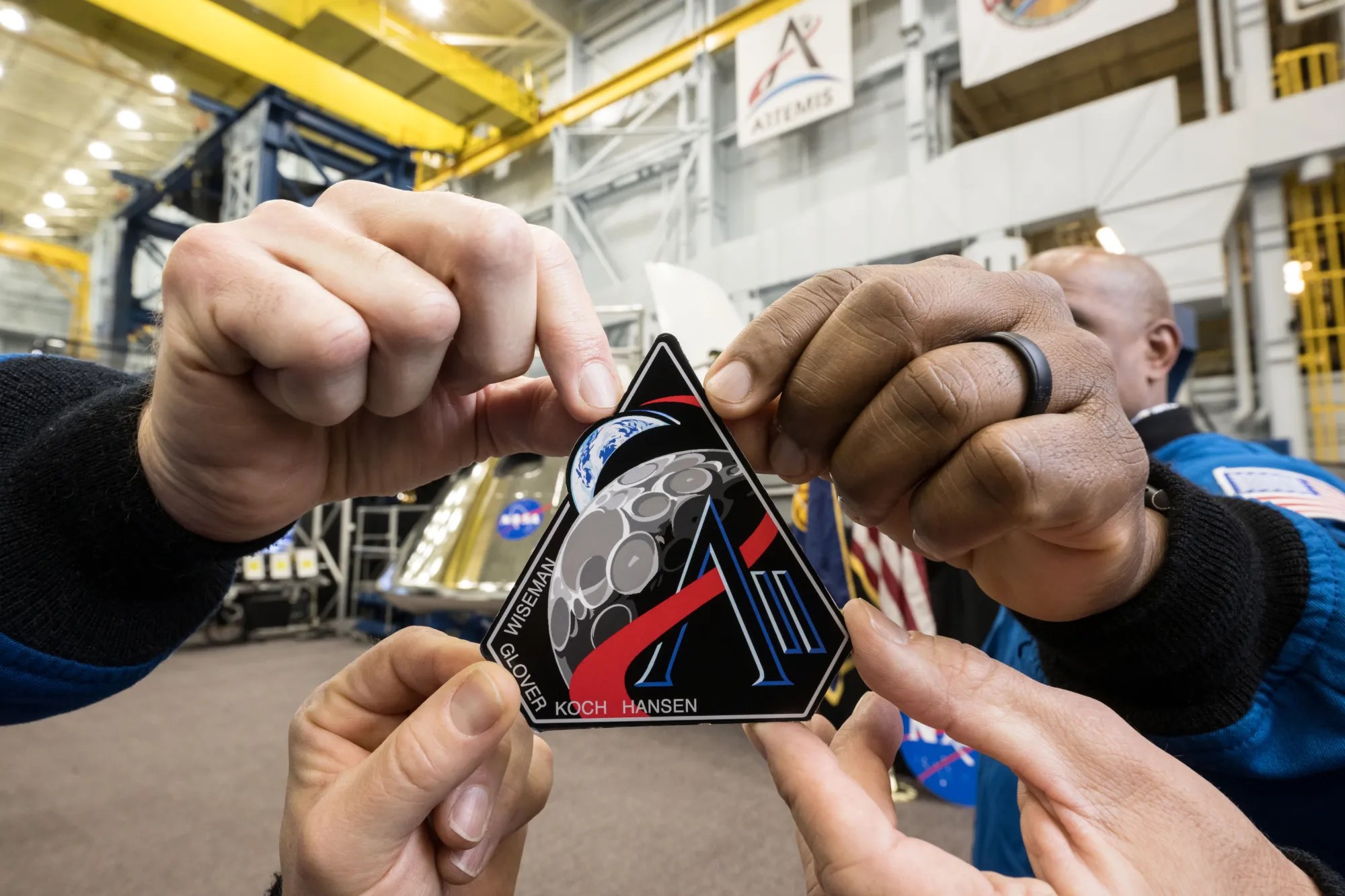
Image (Credit): Mission patch for the Artemis II mission. (NASA)

This week NASA unveiled the new mission patch for the Artemis II mission to return astronauts to lunar orbit (shown above). The Artemis II crew designed the patch with the hope that the mission to the Moon will occur next year. The four astronauts selected for the crew are NASA Commander Reid Wiseman, pilot Victor Glover, and mission specialist Christina Koch, and Canadian Space Agency mission specialist Jeremy Hansen.

The crew also provided this description of the new mission patch:

The Artemis II test flight begins when a mighty team launches the first crew of the Artemis generation. This patch designates the mission as “AII,” signifying not only the second major flight of the Artemis campaign, but also an endeavor of discovery that seeks to explore for all and by all. Framed in Apollo 8’s famous Earthrise photo, the scene of the Earth and the Moon represents the dual nature of human spaceflight, both equally compelling: The Moon represents our exploration destination, focused on discovery of the unknown. The Earth represents home, focused on the perspective we gain when we look back at our shared planet and learn what it is to be uniquely human. The orbit around Earth highlights the ongoing exploration missions that have enabled Artemis to set sights on a long-term presence on the Moon and soon, Mars.

Now we have to do everything possible to make this mission happen before things fall apart at NASA or all of the attention shifts to a less likely quick mission to Mars.

A Day in Astronomy: Birth of Wernher von Braun

Image (Credit): Wernher von Braun (center) with President John F. Kennedy discussing the Saturn Launch System. (NASA)

On this day in 1912, Wernher Magnus Maximilian, Freiherr von Braun was born in Wyrzysk (once German, now Polish). He became an aerospace engineer for both the Germans during World War II as well as the Americans following the war.

Wernher von Braun designed the V-2 rocket that terrorized Great Britain during the war. He used that knowledge to assist NASA with the Saturn V rocket that became the backbone of the Apollo Moon missions.

In a speech on the eve of the Apollo 11 launch, he stated:

If our intention had been merely to bring back a handful of soil and rocks from the lunar gravel pit and then forget the whole thing, we would certainly be history’s biggest fools. But that is not our intention now—it never will be. What we are seeking in tomorrow’s [Apollo 11] trip is indeed that key to our future on earth. We are expanding the mind of man. We are extending this God-given brain and these God-given hands to their outermost limits and in so doing all mankind will benefit. All mankind will reap the harvest…. What we will have attained when Neil Armstrong steps down upon the moon is a completely new step in the evolution of man.

This was only 24 years after the end of World War II. He came a long way from his days of bombing his fellow citizens in Europe.

More than 50 after the last Apollo launch we are still trying to “reap the harvest” started by those earlier missions.

Blue Ghost: Mission Accomplished

Image (Credit): Blue Ghost’s shadow on the lunar surface with the Earth on the horizon.(Firefly Aerospace)

NASA and Firefly Aerospace plan to have a news conference tomorrow at 2pm to discuss the end of the Blue Ghost mission on the Moon. The lunar lander set down on March 2. It began its mission immediately, knowing the disappearance of the Sun on March 16 would mark the end its work.

Those speaking at tomorrow’s news conference are:

  • Joel Kearns, deputy associate administrator for exploration, Science Mission Directorate, NASA Headquarters in Washington;
  • Jason Kim, CEO, Firefly Aerospace;
  • Ray Allensworth, spacecraft program director, Firefly; and
  • Adam Schlesinger, Commercial Lunar Payload Services project manager, NASA Johnson.

In a press release earlier today, Firefly stated:

Firefly Aerospace…today announced it met 100 percent of its mission objectives for Blue Ghost Mission 1 after performing the first fully successful commercial Moon landing on March 2, completing more than 14 days of surface operations (346 hours of daylight), and operating just over 5 hours into the lunar night with the final data received around 6:15 pm CDT on March 16. This achievement marks the longest commercial operations on the Moon to date.

After a number of issues with the first commercial missions, this is very good news.

A Different Take on the Lunar Eclipse

Image (Credit): The March 14, 2025 total lunar eclipse as seen from the Moon’s surface thanks to Firefly’s Blue Ghost Mission 1 lunar lander. (Firefly Aerospace)

If you were lucky enough to capture the total lunar eclipse last Friday, you are lucky. However, the image above shows a very different view of the event from an even luckier little craft on the Moon’s surface. That’s right, Firefly’s Blue Ghost lunar lander took a moment away from its work to snap this amazing image of a solar eclipse caused by the Earth blocking to Sun’s light.

The future should bring more craft and even humans to the lunar surface, which will provide many more amazing images of our floating blue marble.

A Very Mixed Week in Space

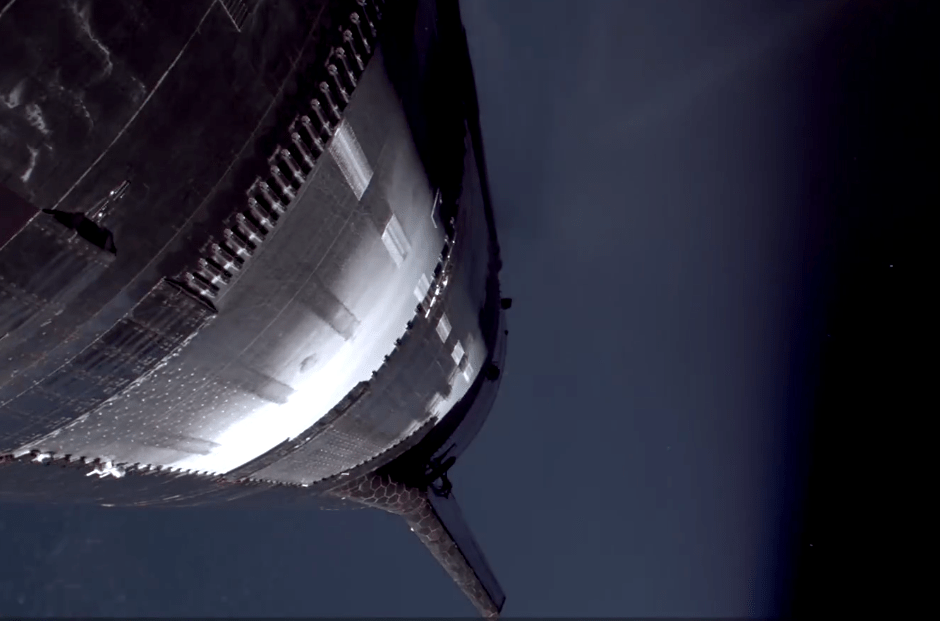
Image (Credit): One of the last images of the eighth Starship flight on Thursday right before the rocket exploded. (SpaceX)

Let’s start with the good news. This past week two U.S. commercial space companies put landers on the Moon. Both Firefly’s Blue Ghost and Intuitive Machines’ Athena are now residents of the Moon. This is a terrific accomplishment for these relatively new players.

Now the bad news. Athena landed incorrectly and cannot carry out its mission. In fact, it died after only one day on the lunar surface. In addition, the Lunar Trailblazer that accompanied Athena on this mission with plans to orbit and map the Moon also appears to be a lost cause. And finally, SpaceX’s eighth test of its Starship ended with a fiery explosion over the Caribbean, much like its seventh test.

Add to this the potential dismantling of NASA should rumors of a 50 percent cut be true, and you have a very mixed week with too little good news (much like the stock market).

One common element in at least two of the stories – Starship explosion and NASA cuts – relates to Mr. Musk. One wonders whether more attention to SpaceX and less time ransacking the federal government might have led to better outcomes this week. I’m not a rocket scientist, but that seems to make some sense to me.