We Need Mr. Musk to Concentrate on Starship

Credit: Image by mariocus from Pixabay.

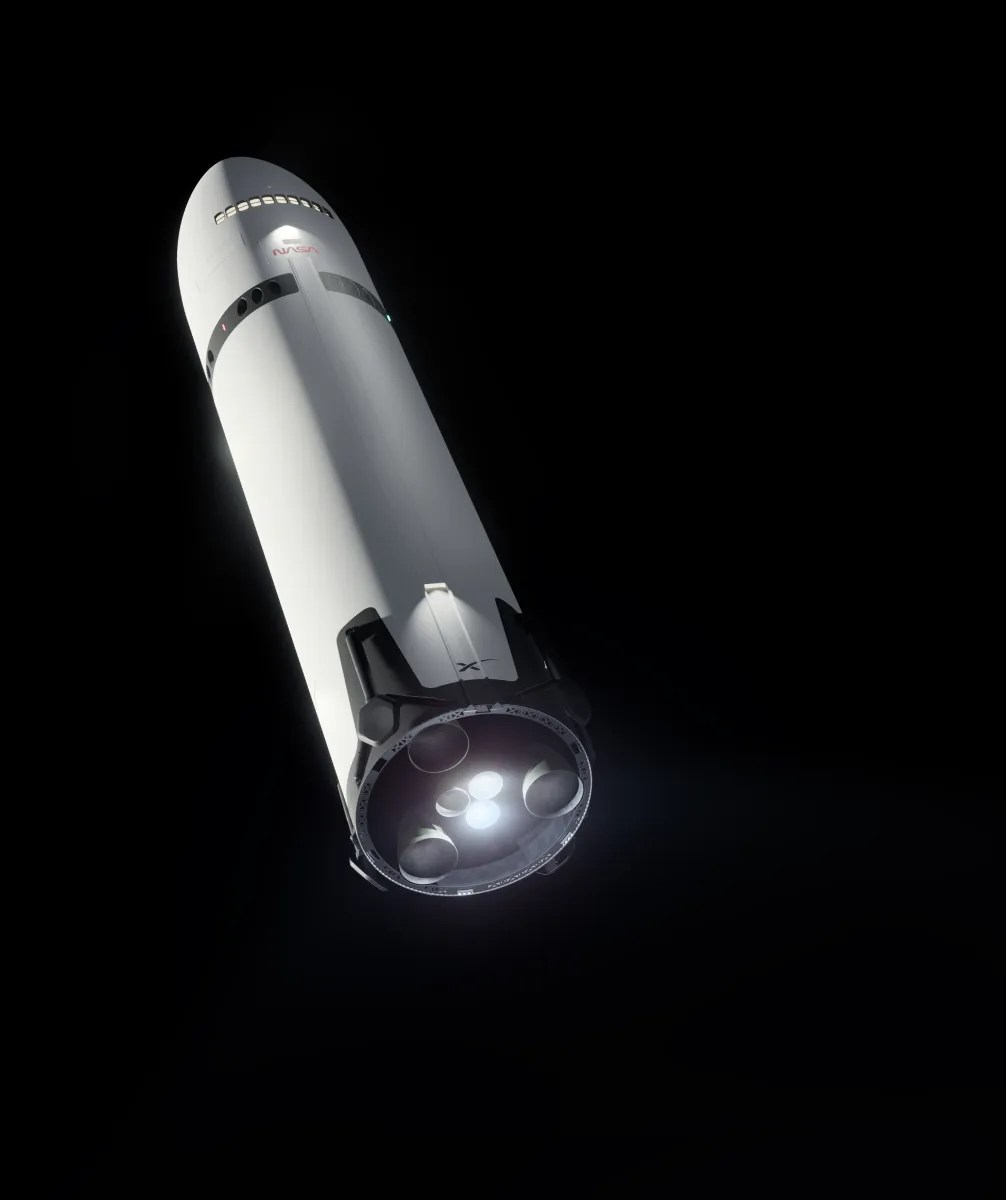
Now that Mr. Musk is done with his misadventures in Washington, DC, everyone was hoping he would start to focus more on SpaceX and the Starship tests that are critical to NASA’s Artemis mission. That may be too reasonable.

First, we see that Mr. Musk is getting involved in British politics again. That has never been a good thing for the Brits or his ignored companies. I agree with the UK’s Energy Secretary Ed Miliband when he states,

We have a message for Elon Musk. Get the hell out of our politics and our country.

And now we read that the Russians are interested in a rail tunnel between Alaska and Russia, with Musk’s Boring Company taking the lead. President Trump said he is considering it.

It sounds like a ruse to me. President Putin is ten times smarter than Mr. Musk when it comes to foreign affairs, so it is likely this is something he can dangle in front of Musk to distract him and maybe even bring him over to his side on the Ukranian issue where Starlink is still a critical resource. President Putin’s Chinese friends will also be very happy for the distraction if it delays U.S. ambitions related to the Moon.

None of this makes a lot of sense. Russia’s main export is energy, which is more economical by ship (and Alaska is not looking for any competition with its oil industry). Plus, the Russian side of the tunnel is underdeveloped and not ready for the inflows the tunnel would bring. Besides, I thought we were trying to restrict Russian trade.

It all sounds like a pipe dream (or tunnel dream) with no real purpose other than to play the trade card for Trump while making Musk feel like an important piece of the puzzle.

Both President Trump and Mr. Musk have trouble focusing unless they see themselves personally benefiting, and the Russians know this.

NASA needs to drum up a Moon tunnel real quick for Mr. Musk’s company if it wants to regain his attention.

Space Stories: Layoffs at NASA’s JPL, Rocky Giants in our Solar System, and New Findings from Apollo 17

Here are some recent space-related stories of interest.

NBC News: NASA’s Jet Propulsion Laboratory Lays Off 550 Workers

NASA’s Jet Propulsion Laboratory announced Monday that it will cut around 550 jobs — around 10% of its staff. In a statement posted online, the lab’s director, Dave Gallagher, said the layoffs are part of a broad “realignment of its workforce” and not a result of the government shutdown. The cuts will affect positions across the NASA center’s technical, business and support areas, he said.

Space.com: Uranus and Neptune May Not Be ‘Ice Giants’ After All, New Research Suggests

Astronomers have long called Uranus and Neptune the “ice giants” because models suggested that these outer planets’ interiors are largely made of mixtures of water, ammonia and other ices — compounds that freeze easily in deep space. But new research reveals that we actually know very little about what’s going on inside these planets, causing researchers to propose that Uranus and Neptune be called “rocky giants” instead.

Brown University: “With New Analysis, Apollo Samples Brought to Earth in 1972 Reveal Exotic Sulfur Hidden in Moon’s Mantle

In a study published in JGR: Planets, researchers report a sulfuric surprise in rock samples taken from the Moon’s Taurus Littrow region during Apollo 17. The analysis shows that volcanic material in the sample contains sulfur compounds that are highly depleted of sulfur-33 (or 33S), one of four radioactively stable sulfur isotopes. The depleted 33S samples contrast sharply with sulfur isotope ratios found on Earth, the researchers say.

Study Findings: Lunar Surface and Subsurface Water Revealed by Chang’e-6

Image (Credit): Artist’s rendering of the Chang’e-6 probe. (China Daily)

Nature Astronomy abstract of the study findings:

The processes driving the formation and distribution of lunar water (OH/H2O), particularly in the subsurface, remain poorly understood. An opportunity to study subsurface water comes from lander plumes, which can displace and expose millimetre- to centimetre-sized regolith during the descent of the lander. Here we analyse data from the Chang’e-6 landing site and find that plume-disturbed areas exhibit distinct temperature and water-content patterns, which are driven by the redistribution of fine regolith. The average water content of the exposed fine regolith of the shallow subsurface is ~76 ppm, which is lower than the surface abundance of ~105 ppm measured at the surface. The Chang’e-6 landing site also contains on average approximately twice the water content than the Chang’e-5 one. Temporal variations of water content are observed at identical locations but different local times, exhibiting a minimum at local noon. We suggest that the differences in water content are correlated with the regolith glass abundance, particle sizes, depths and local times, reinforcing the hypothesis that solar wind implantation and impact gardening govern lunar water formation and distribution.

Citation: Liu, B., Zeng, X., Xu, R. et al. Lunar surface and subsurface water revealed by Chang’e-6. Nat Astron (2025).

https://doi.org/10.1038/s41550-025-02668-7

Study-related story:

Chinese Academy of Sciences – “Chang’e-6 Probe Data Reveal Water Distribution on Moon”

NASA Moves Away from an ISS Cargo Contractor

Image (Credit): The Dream Chaser and Shooting Star Cargo Module. (Sierra Space)

Back in 2016 NASA was looking for more commercial cargo haulers for its International Space Station (ISS), and Sierra Space’s reusable Dream Chaser spaceplane was one of those options. NASA contracted for multiple resupply missions to the ISS. However, all of that is now over.

NASA has announced that the contract has been modified so that Sierra Space is only to provide a “free flight demonstration” in 2026. What that means is that NASA will give the company a chance to prove its technology, but it will stop financing these efforts. And NASA will not commit to any future resupply missions, but may choose to do so at a later point.

It sounds like quite a gut-punch to another commercial option for the ISS at the same time that Boeing’s Starliner is still limping along. That leaves SpaceX and Northrop Grumman as the only players on the field as the station heads towards it decommissioning in 2030.

Sierra Space can certainly pursue other commercial space opportunities, which is expected to include commercial space stations at some point in the future. Even so, it appears NASA has lost confidence in the company’s ability to deliver on earlier promises related to the ISS.

In a recent press release, the company has put the most positive spin it can on this new arrangement:

Sierra Space is prioritizing first-flight readiness with Dream Chaser, targeting a launch in late 2026 to align with expected launch vehicle availability. Sierra Space and NASA worked together to reach this mutually beneficial agreement that provides greater mission flexibility for Dream Chaser’s first flight. This flight aims to demonstrate critical capabilities for NASA’s ISS resupply and future Commercial LEO Destinations (CLD) missions and position Dream Chaser as a national asset available for future national security and defense demonstrations.

Sierra Space has many other ongoing projects under a variety of government and private sector contracts, including NASA. For instance, it signed a contract with NASA earlier this year to study the use of the company’s expandable space station technology on the Moon.

So the company will be staying busy even after this latest setback. That said, getting the Dream Chaser into orbit on schedule has to remain a key priority for a company that want’s to be a big player in the space race ahead.

A Day in Astronomy: Luna 16 Lunar Sample Return

Image (Credit): USSR postage stamp commemorating the Luna 16 mission. (USSR Post)

On this day in 1970, the USSR’s Luna 16 spacecraft returned to Earth with a lunar sample. The Luna 16 spacecraft landed on the Moon on September 20 to collect a 3.5 ounce sample before returning to Earth.

While the Apollo 11 and 12 missions had already returned with more than 120 pounds of lunar material, it was still an important milestone for the USSR’s space program. Two more Luna missions would bring back additional lunar samples in the 1970s.

The Russian’s last attempt to send a spacecraft to study the Moon’s surface was in 2023 with Luna 25, which ended in failure.