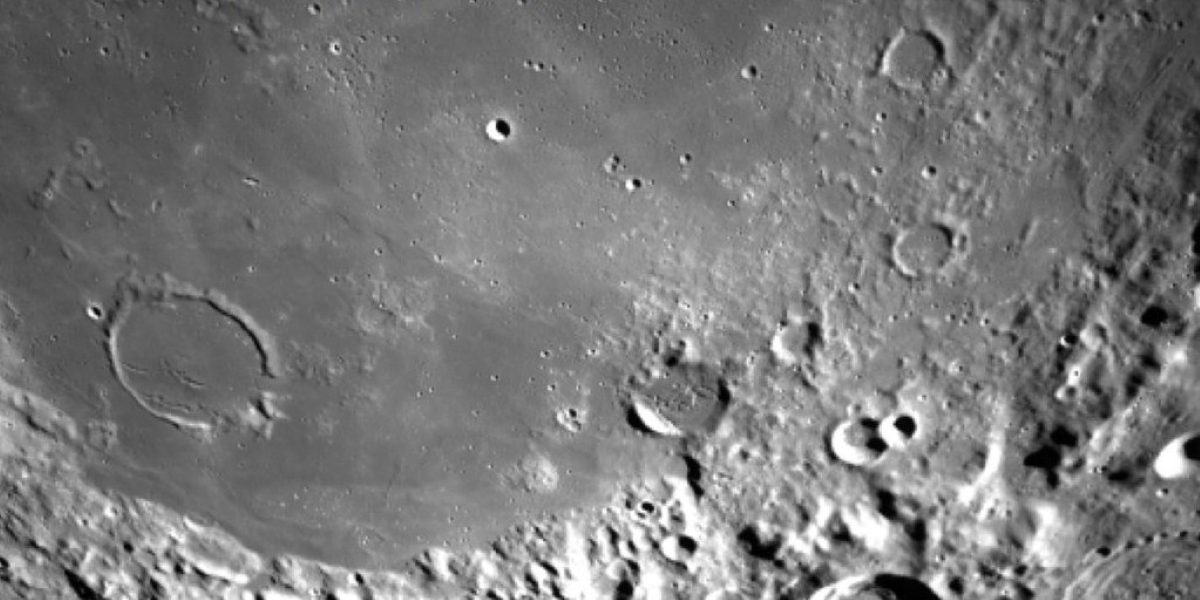
Russia Returns to the Moon

Image (Credit): The Soyuz rocket carrying the Luna-25 lander launched from Russia’s Vostochny Cosmodrome. (Agence France-Presse)

Russia’s Luna-25 mission has begun with the successful lift-off of the Soyuz 2.1 rocket yesterday (2:11 a.m. on Friday Moscow time or Thursday at 7:10 pm EDT). After its planned arrival on August 21, Luna-25 will be searching for water at the lunar south pole.

The mission was off and then on again over the years as Russia became super cautious with its return to the Moon. The country’s invasion of Ukraine led to the loss of European partners as well as sanction-related shortages, so Russia has no one to blame but itself. Science was pushed aside as it bullied its neighbors.

One can only wonder whether Russia knows how to start anew. Even the name of the mission, Luna, is a Cold War leftover. It would be the same as NASA restarting the Apollo program rather than the more comprehensive and Mars-focused Artemis mission.

There is plenty of room on the Moon for multiple national missions. Moreover, similar to the International Space Station, it would be beneficial for US and Russian scientists to share data and ideas. It would just be easier if Russian rockets were only focused on the Moon rather than Ukrainian cities.

Space Stories: Fast-Spinning Martians, Artemis 3 Mission Issues, and an Ancient Star Cluster

Image (Credit): Image of Mars taken by the United Arab Emirates’ “Amal,” or “Hope,” probe. (Mohammed bin Rashid Space Center/UAE Space Agency, via AP)

Here are some recent stories of interest.

Space.com : “Mars is Spinning Faster and its Days are Getting Shorter. Scientists Aren’t Sure Why

The length of Mars’ day is shortening by three-quarters of a millisecond each year as the planet’s rotation spins up, according to new results from NASA’s InSight lander…Planetary scientists are not entirely sure why this is happening, but it is likely related to the redistribution of Mars’ mass, which can have an effect on the planet’s rotation like an ice skater pulling in their arms to spin faster. This redistribution might be caused by the accumulation of ice on Mars’ polar caps, experts believe, or by the surface itself slowly rebounding from residing under the weight of immense glaciers that existed at equatorial latitudes during the world’s most recent ice ages, which ended about 400,000 years ago.

SpaceNews.com : “NASA Weighs Changes to Artemis 3 if Key Elements are Delayed

NASA has left the door open for changing the scope of Artemis 3, currently set to be the first crewed lunar landing of the program, if key elements suffer major delays. Speaking at an Aug. 8 briefing at the Kennedy Space Center, Jim Free, NASA associate administrator for exploration systems development, said the Artemis 3 mission still has a formal launch date of December 2025 but that he was monitoring potential delays in hardware needed for the mission. “We may end up flying a different mission if that’s the case,” he said. “If we have these big slips out, we’ve looked at if can we do other missions.” Artemis 3 could also change based on the outcome of Artemis 2, he added.

ScienceNews.com : “A Star Cluster in the Milky Way Appears to be as Old as the Universe

One of the oldest known objects in the universe is wandering around the Milky Way. Star cluster M92, a densely packed ball of stars roughly 27,000 light-years from Earth, is about 13.8 billion years old, researchers report in a paper submitted June 3 to arXiv.org. The newly refined age estimate makes this clump of stars nearly the same age as the universe. Refining the ages of clusters like M92 can help put limits on the age of the universe itself. It can also help solve cosmic conundrums about how the universe evolved.

DRACO: A New Approach for Traveling to Mars

Image (Credit): Artist’s rendering of the DRACO spacecraft. (DARPA)

When you hear the word DRACO, you may think of the Harry Potter series or even severe Athenians, but NASA wants you to think of speedy travel to Mars. DRACO, or Demonstration for Rocket to Agile Cislunar Operations, is NASA’s plan to develop a nuclear thermal rocket engine with the Defense Advanced Research Projects Agency (DARPA). Defense contractor Lockheed Martin was recently tapped to lead this effort.

Such an engine would shorten the journey to Mars, thereby exposing astronauts to less risk from solar energetic particles and galactic cosmic rays as well as lessening the amount of supplies needed for the trip. The rocket engine could also be used initially for shorter trips to the Moon.

Dr. Stefanie Tompkins, director, DARPA, stated earlier:

The space domain is critical to modern commerce, scientific discovery, and national security. The ability to accomplish leap-ahead advances in space technology through the DRACO nuclear thermal rocket program will be essential for more efficiently and quickly transporting material to the Moon and eventually, people to Mars.

You can read more about this new rocket approach and the parties involved at this NASA link.

Travel to Moon and Mars Not Most Important Missions for the Public

While both Buzz Aldrin and I believe that lunar and Martian colonies are important, it would appear the public has other ideas about NASA’s priorities. The graphic above shows in a recent Pew Research Center study indicates the more Americans are interested in monitoring the Earth’s climate as well as watching for asteroids.

Even finding exoplanets that could support life seems to be more important than occupying local moons and planets. I am not sure how that would help us now if we want to spread the risk of living on one planet, as some propose. We are nowhere near sending a probe to exoplanets, let alone getting humans there.

The study has quite a bit to ponder, including:

  • 58% of U.S. adults believe it is essential to include the use of human astronauts in the U.S. space program, while 41% say astronauts are not essential;
  • Some 44% of Americans have a great deal of confidence private companies will make a profit in their space-related ventures;
  • As the public considers the possibilities ahead for ordinary citizens to orbit the Earth in a spacecraft, more Americans say they would not want to orbit the Earth than say they would (58% to 42%); and
  • About seven-in-ten Americans (72%) say it is essential for the U.S. to continue to be a world leader in space exploration, and eight-in-ten (80%) say the space station has been a good investment for the country.

I am not sure the survey shows a lot of consistency in the answers, but this can be a difficult topic at the outset. NASA should just be worried if Americans saw no reason for a space program, which does not seem to be the case. As noted above, the majority of Americans want a strong space program. Let’s see if that helps with the ongoing congressional budget discussions.

Pic of the Week/A Day in Astronomy: Moon Landing

Image (Credit): Astronaut Edwin E. (Buzz) Aldrin Jr., Lunar Module (LM) pilot, climbs down the LM ladder, preparing for his first steps on the Moon. (NASA)

On this day in 1969, the Apollo 11 crew stepped on the Moon for the first time, showing that mankind could actually travel to another world. The image above shows Astronaut Buzz Aldrin preparing the step on the Moon as the second human to ever walk on the lunar surface.

Buzz Aldrin has plenty of quotes related to his Moon mission and life in general, but I like his quotes about our next trip to Mars, like this one:

When we set out to land people on the surface of Mars, I think we should as a nation, as a world, commit ourselves to supporting a growing settlement and colonization there. To visit a few times and then withdraw would be an unforgivable waste of resources.

NASA’s Artemis mission is retracing Buzz Adrin’s steps, which is a good sign given that we visited only a few times and then withdrew for decades. Let’s hope Artemis gets us settlements on both the Moon and Mars.