NASA OIG: Artemis Partnerships with International Space Agencies

I was looking through audit reports from the Government Accountability Office and NASA’s Office of Inspector General (OIG) to see what was being said about NASA’s programs. The only report of interest so far pertained to the Artemis mission and the need for greater coordination among the various partners. Audit reports often make these same recommendations over and over again, yet it does make sense that NASA’s largest outreach program since the International Space Station (ISS) should have all the pieces in place, yet it does not.

Here is the first finding in the OIG report:

Interest in the Artemis campaign is high across the international space community, as evidenced by NASA’s 54 Artemis-related international instruments and the 23 signatories to the Artemis Accords. However, the Agency lacks an overarching strategy to coordinate Artemis contributions from international space agencies and entities. Except for the Gateway Program, the Artemis campaign does not have comprehensive forums—boards, panels, and working groups— for its international partners to routinely discuss topics such as flight and mission planning, safety, and research integration. In contrast, the ISS Program–seen as a model of long-term international space cooperation–employs these forums as well as on-site representation from partner agencies.

The OIG report makes a number of recommendations related to this issue and other identified by auditors. The report also includes some helpful graphics and tables that illustrate all of the pieces going into the three Artemis missions as well as the parties contributing those pieces. This looks significantly more complex than the ISS, so I would think good coordination would be even more critical.

Image (Credit): Contributions to the Artemis Program by NASA and partners. (NASA OIG)
Image (Credit): A table from the NASA OIG report IG-23-004. (NASA OIG)

Good Article: The Sad State of Russia’s Space Program

Image (Credit):  A destroyed Russian tank in the village of Dmytrivka, Ukraine. (CNN/Alex Chan Tsz Yuk/SOPA Images/Sipa/Reuters)

Wired magazine’s latest article, “Russia’s Space Program Is in Big Trouble,” summarizes a sad trend since Russia’s invasion of Ukraine. With all of the nation’s attention on an unnecessary war, the space program, like many things nowadays in Russia, has taken a back seat.

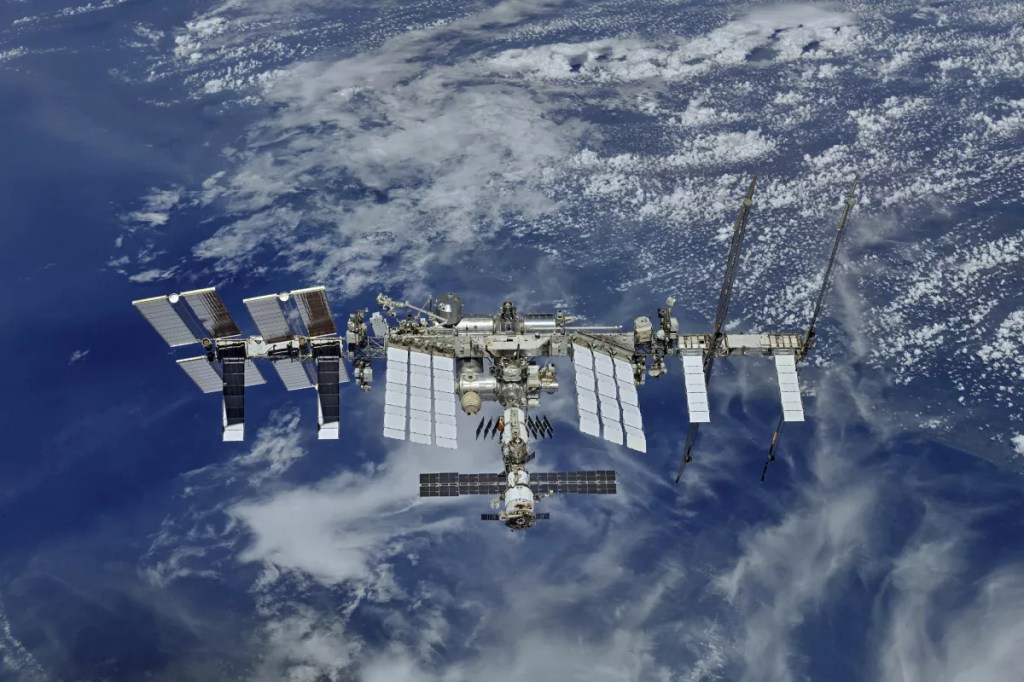
Problems can be seen with the spacecraft – two Russian capsules at the International Space Station (ISS) sprung leaks – as well as ground control. Assets at Russia’s spaceport in Kazakhstan are being seized, while corruption and other problems are delaying a new spaceport within Russia’s borders.

Russia also lacks a partner for a new space station after the ISS, and its mission to the Moon with China look’s tenuous. Does the country have a plan for the future beyond militarizing space?

The article concludes with these words:

The Soviet Union may have put the first human into space—but now, 60 years later, Russia faces a near-future in which it is no longer able to do that. 

No Pyrrhic victory in Ukraine will change this.

Extra: The Wall Street Journal also had a good article about the situation in Russia. The article, “Russia’s Economy is Starting to Come Undone,” includes an interview with Oleg Mansurov, who hoped to create the next SpaceX with his company SR Space. However, the situation in Ukraine has caused his investors to flee. As a result, he is staying afloat as an IT company for now. He notes:

We became more focused not on the development of a long-term product that would make some kind of qualitative leap but on simply becoming a classic business and generating revenue…We understood we just had to survive.

Space Stories: Possible Starship Launch, South Korean Rocket Test, and Massive Early Stars

Here are some recent stories of interest.

Forbes: “Elon Musk Gets More Specific About Starship’s First Rocket Launch to Space

We’ve been waiting for nearly two years to see Elon Musk’s big rocket blast off again, and now the SpaceX founder is starting to narrow the targeted time frame for Starship’s first orbital attempt. The controversial entrepreneur said on Twitter last week that the next generation vehicle destined to take astronauts to the moon and perhaps start a civilization on Mars “will be ready to launch… in a few weeks, then launch timing depends on FAA license approval.”

Space News: “South Korea’s Innospace Succeeds in Test Launch

South Korean rocket startup Innospace successfully launched a suborbital rocket from Brazil over the weekend, demonstrating a hybrid motor it plans to scale up into a small orbital launch vehicle. The launch of Innospace’s HANBIT-TLV suborbital rocket took place March 19 from the Alcântara Space Center, and the company called the flight a success, although it did not disclose the rocket’s peak altitude. 

Space.com: “The Early Universe was Crammed with Stars 10,000 Times the Size of our Sun, New Study Suggests

The first stars in the cosmos may have topped out at over 10,000 times the mass of the sun, roughly 1,000 times bigger than the biggest stars alive today, a new study has found. Nowadays, the biggest stars are 100 solar masses. But the early universe was a far more exotic place, filled with mega-giant stars that lived fast and died very, very young, the researchers found.

Space Quote: Firefly is Going to the Far Side of the Moon

“We look forward to Firefly providing this [Commercial Lunar Payload Services] delivery… This lunar landing should enable new scientific discoveries from the far side of the Moon during the lunar night. This particular group of payloads should not only generate new science but should be a pathfinder for future investigations exploiting this unique vantage point in our solar system.”

Statement by Joel Kearns, Deputy Associate Administrator for exploration in NASA’s Science Mission Directorate, regarding the $112 million contract award to Firefly for a commercial lunar delivery targeted to launch in 2026 through NASA’s CLPS initiative that support the Agency’s Artemis program. NASA noted that the three payloads are (1) the Lunar Surface Electromagnetics Experiment-Night (LuSEE-Night), (2) Lunar Pathfinder, and (3) User Terminal. You can read more about the Firefly mission here. Firefly also issued its own press release.

Prototype of the New NASA Space Suits

Image (Credit): New Axiom Extravehicular Mobility Unit spacesuit. (NASA)

It is called the Axiom Extravehicular Mobility Unit, or AxEMU, but you can call it a lunar spacesuit. The newly designed spacesuit was on display today at the Space Center Houston’s Moon 2 Mars Festival. While the final suit will be in white, you get the idea with the prototype on display.

Axiom Space, the maker of the spacesuit, noted:

Since a spacesuit worn on the Moon must be white to reflect heat and protect astronauts from extreme high temperatures, a cover layer is currently being used for display purposes only to conceal the suit’s proprietary design. Axiom Space collaborated with costume designer Esther Marquis from the Apple TV+ series, “For All Mankind” to create this custom cover layer using the Axiom Space logo and brand colors.

It makes it sound like something being designed for Hollywood fans rather than a NASA-procurement contract. Is Axiom Space competing with Elon Musk on his design (see below)? Or maybe the company is trying to match the spacesuits from Lost in Space (also below)?

Whatever the case, NASA hopes to use these new suits for the lunar exploration under Artemis III. Moreover, NASA states these suits can fit “…at least 90 percent of the US male and female population.” I think they mean 90 percent of the population qualifying for such a mission. We cannot even fit the average American into train seats made for Europeans, so either the qualifying population is limited or these suits have a LOT of stretch-room.

Image (Credit): SpaceX astronaut spacesuits for the Dragon capsule. (SpaceX)
Image (Credit): Spacesuits on Lost in Space. (Netflix)