Artemis I: Failure is Not an Option

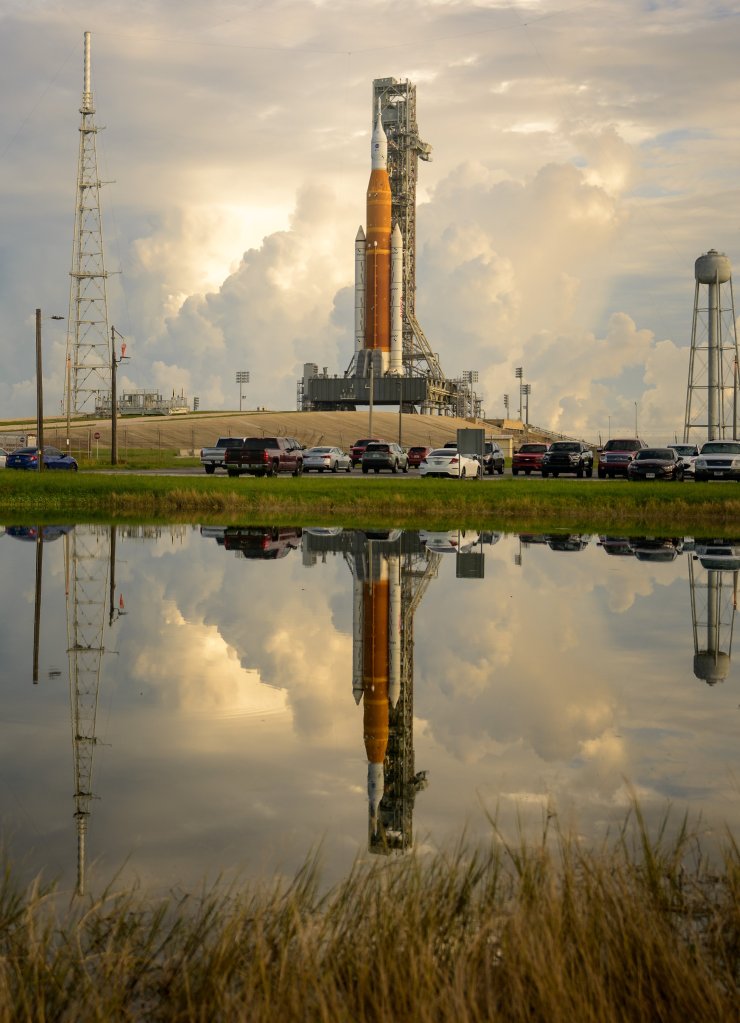
Image (Credit): Artemis I mission awaiting launch on September 3, 2022. (NASA)

This is the mission status from 11:22 am today:

The launch director waived off today’s Artemis I launch attempt at approximately 11:17 a.m. EDT. Teams encountered a liquid hydrogen leak while loading the propellant into the core stage of the Space Launch System rocket.  Multiple troubleshooting efforts to address the area of the leak by reseating a seal in the quick disconnect where liquid hydrogen is fed into the rocket did not fix the issue. Engineers are continuing to gather additional data.

An early September launch is not possible, so here are the future launch windows that NASA can consider:

September 19 – October 4 

  • 14 launch opportunities 
  • No launch availability on Sept. 29 and Sept. 30

October 17 – October 31 

  • 11 launch opportunities 
  • No launch availability on October 24, 25, 26, and 28 

November 12 – November 27 (preliminary) 

  • 12 launch opportunities 
  • No launch availability on November 20, 21, and 26 

December 9 – December 23 (preliminary) 

  • 11 launch opportunities 
  • No launch availability on December 10, 14, 18, and 23 

Space Quote: Why the Moon?

Image (Credit): President John F. Kennedy addressing a crowd at Rice University’s stadium in Houston
reaffirming his support for America’s space program including landing a man on the Moon. (NASA)

But why, some say the Moon? Why choose this as our goal? And they may well ask, why climb the highest mountain? Why – 35 years ago – why fly the Atlantic? Why does Rice play Texas? We choose to go to the Moon, we choose to go to the Moon in this decade and do the other things, not because they are easy, but because they are hard, because that goal will serve to organize and measure the best of our energies and skills, because that challenge is one that we are willing to accept, one we are unwilling to postpone, and one in which we intend to win, and the others too.

-Statement by President John F. Kennedy at Rice University in Houston on September 12, 1962 discussing plans to send a man to the Moon. Next month, NASA and Rice University in Houston will host multiple events from September 10-12 celebrating the 60th anniversary of his historic speech.

Credit: NASA

Artemis 1: Ready for Launch

Image (Credit): Lightening striking the Artemis I launch pad on August 27, 2022. (NASA)

Even after thunderstorms threatened the Artemis I launchpad over the weekend, everything is still a go for tomorrow’s scheduled launch at 8:33 am EDT of NASA’s Space Launch System rocket.

This NASA video shows you the entire plan for the Artemis I unmanned mission around the Moon. A few mission facts from the NASA site are also provided below.

Mission Facts:

  • Launch date: Aug. 29, 2022
  • Mission duration: 42 days, 3 hours, 20 minutes
  • Total distance traveled: 1.3 million miles
  • Re-entry speed: 24,500 mph (Mach 32)
  • Splashdown: Oct. 10, 2022

Now all we can do it await the new day.

Update: Given some engine problems Monday morning, it appears we will need to wait a little longer for this launch. The next window is September 2nd if NASA is ready. We have waited this long, so a few more days will not matter too much. I think the dummies on board are pretty patient.

Image (Credit): Artemis I mission patch. (NASA)

South Korea Shoots for the Moon

Image (Credit): The launch of the South Korean Danuri spacecraft on August 4, 2022 from Florida. (AP)

Last week, South Korea launched a spacecraft towards the Moon via a SpaceX rocket. As with other nations and programs (the U.S., Russia, the European Space Agency, Japan, China, Luxembourg, Israel, and India), South Korea hopes to learn more about the Moon and share it with the scientific community. NASA also has a role in this latest mission, having added instruments to the spacecraft.

The Korea Pathfinder Lunar Orbiter, dubbed the Danuri, will be South Korea’s first foray towards the Moon. It will not reach the Moon until December, and then remain in orbit for about a year. In terms of the overall mission of the spacecraft, NASA noted:

…the objectives are to develop indigenous lunar exploration technologies, demonstrate a ‘space internet,’ and conduct scientific investigations of the lunar environment, topography, and resources, as well as identify potential landing sites for future missions.

In addition to other equipment, NASA added a high-sensitivity camera called ShadowCam, which will look for evidence of ice in the lunar craters.

South Korea is also part of the Artemis Accords, which the U.S. and other nations signed to establish a lunar presence to be followed by travel to Mars. At the time of the signing, South Korea’s Minister of Science and ICT stated:

For successful space exploration, it is critical to implement space development activities transparently and responsibly by collaborating with the international community…With the signing of the Artemis Accords, Korea would be able to strengthen cooperation with nations participating in the Accords in exploring the outer space.

It is encouraging to see more cooperation in the space realm, even if things are rocky with Russia, one the the bigger players to date.

Space Stories: Radioactive Ceres, Moon Clues, and Starlink’s Shine

Here are some recent stories of interest.

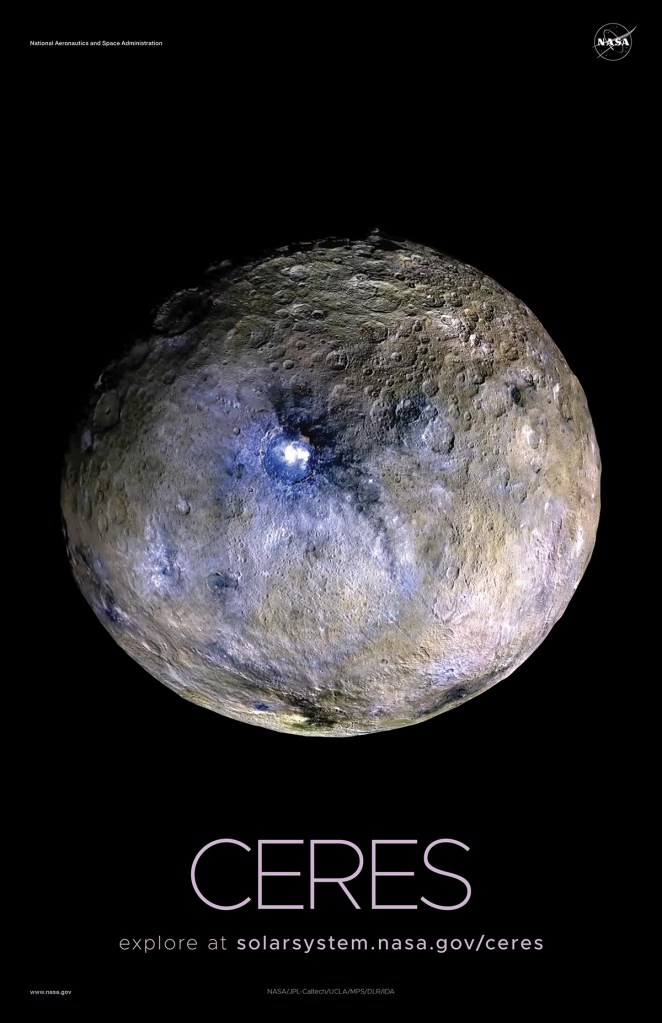
SkyandTelescope.org: “Asteroid Ceres Was Radioactive — And That Could Explain a Lot

A team of U.S. planetary scientists has shown that unexpected surface features on the dwarf planet Ceres can be explained by radioactive decay in its interior long ago. If they are right, their model could explain features not just on other dwarf planets, but also on some of the icy moons in the outer solar system.

ScienceDaily.com: “One More Clue to the Moon’s Origin

Researchers discover the first definitive proof that the Moon inherited indigenous noble gases from the Earth’s mantle. The discovery represents a significant piece of the puzzle towards understanding how the Moon and, potentially, the Earth and other celestial bodies were formed.

UniverseToday.com: “Starlink Satellites Are Still Bright

The new generation of Starlink satellites remain above the accepted brightness threshold. It’s one of the stranger sights of the modern Space Age. Recently, we found ourselves under the relatively dark skies of southern Spain. Sure enough, within a few minutes, we caught sight of a chain of flashing ‘stars’ winking in and out of view in quick succession.