Video: The Problem With “The Rare Earth Hypothesis”

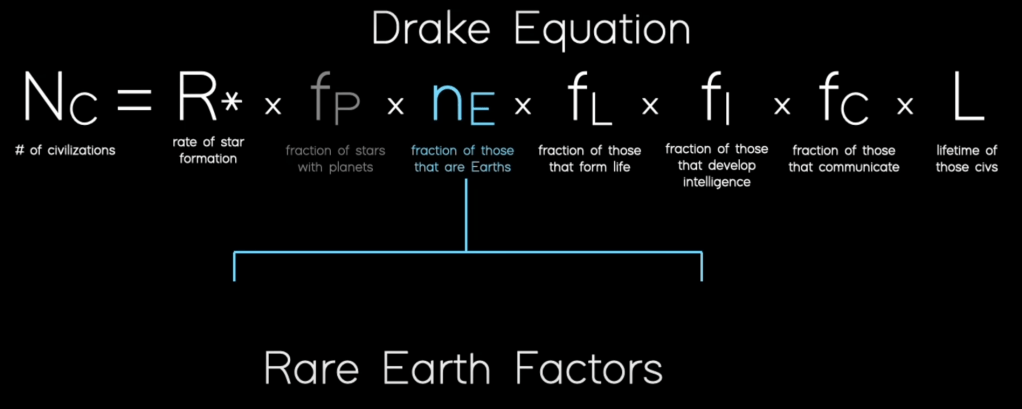
Image (Credit): Upgraded Drake Equation to account for the Rare Earth factors. (Cool Worlds Lab)

Cool Worlds Lab has another great video out, this time discussing the Rare Earth Hypothesis. This hypothesis assumes that a multitude of factors are necessary for life to develop in the universe, and the program goes deeper into a few of these factors, including the need for:

  1. A magnetosphere;
  2. Plate tectonics;
  3. A large moon;
  4. Impacts from asteroids and comets; and
  5. A Jupiter-sized planet.

The program challenges some of these factors and also highlights the need for a more open understanding of the origins of life beyond our current understanding. Basically, the conditional probably of the Drake Equation or even the modified Drake Equation unnecessarily leads one down a very narrow path.

It’s an eye-opening review of the evidence and worth watching. Check it out.
Female Dummies in Space?

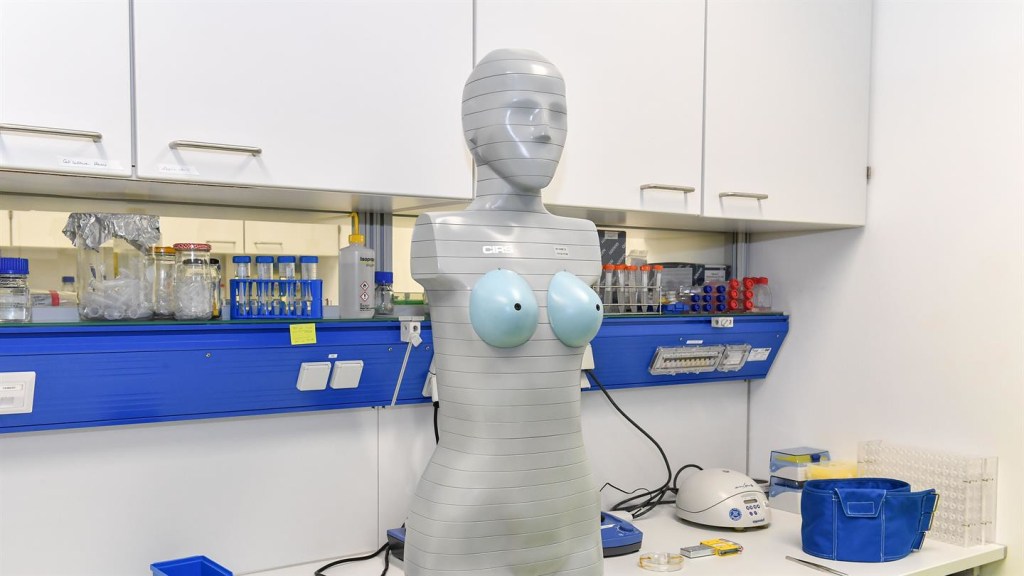
Image (Credit): The Helga manikin to be used on the Orion capsule to the Moon. (German Aerospace Center)

No, it is not a new television show or a rude comment, but rather a real plan to test the effects of space radiation on manikins that simulate the female body. The test is in preparation for future Artemis missions to the Moon. NASA is concerned about the effects of radiation on female astronauts since their anatomy is different than that of males and may be more prone to certain types of cancer.

As reported by Phys.org, the two manikins – Helga and Zohar – will fly aboard the Orion capsule for about six weeks as part of his first uncrewed flight to the Moon. While Helga will fly in the Orion capsule unprotected, Zohar will be wearing a radiation protection vest. In this way, scientists can study the full effect of the vest.

The experiment was designed by the German Aerospace Center (hence the German manikin names), which has conducted similar studies aboard the International Space Station (ISS). However, the radiation levels for a lunar mission will be much higher than that found on the ISS.

The Artemis mission will be the first time a female leaves low-Earth orbit , so it is essential that we know the potential impact of this trip on females. We wish the best to both Helga and Zohar.

A Day in Astronomy: Lunar Orbiter 4

Image (Credit): An artist’s image of NASA’s Lunar Orbiter at the Moon. (NASA)

On this day in 1967, NASA launched Lunar Orbiter 4 to continue a survey of the Moon (also conducted by three previous Lunar Orbiter missions) in preparation of the Apollo Moon missions. While NASA lost contact with the spacecraft on July 17th, the mission was a success. On October 6th, the spacecraft crashed onto the Moon’s surface. A total of five such missions were conducted, which mapped 99 percent of the Moon.

The rest is history with the successful Apollo missions, still the only program to land humans on the Moon. We shall see who follows in our footsteps, though we will be back on the Moon soon enough as part of the Artemis Program.

You can read more about the Lunar Orbiter missions at this NASA history link. The conclusion on the Lunar Orbiter missions states:

On September 2 Homer E. Newello Associate Administrator for Space Science and Applications, certified that the fifth mission was an unqualified success according to prelaunch objectives. Deputy Administrator Robert C. Seamans, Jr., concurred on September 6. Both NASA officials also assessed the whole program as successful; five missions had been flown out of five planned. Indeed the final Orbiter had capped an impressive effort by the Office of Space Science and Applications to bring man closer to stepping down upon the lunar soil and understanding where it was that he would be landing in the near future…

Five Orbiters had enabled the Manned Space Flight Network to train personnel in tracking and to check out equipment and computer programs for the manned lunar missions beginning with Apollo 8 in December 1968 and including Apollo 10 through 17, of which all but Apollo 10 and 13 landed on the Moon. (Apollo 10 tested the complete spacecraft in lunar orbit and Apollo 13 aborted its landing mission because an onboard oxygen tank exploded in cislunar space.) The Office of Manned Space Flight could not have obtained the needed tracking experience at a timely date if NASA had not flown the five Lunar Orbiter spacecraft.

Space Quote: The End of Astronauts?

Credit: Belknap Press/Harvard University Press

“We should not have publicly funded programmes to send people to the moon, still less to Mars…It’s hugely risky, hugely expensive, and there’s no practical or scientific benefit to sending humans. It’s a pretty bad bargain for the taxpayer.”

-Statement by Lord Martin Rees, co-author of the book The End of Astronauts, speaking to the The Guardian. He argues that private sector humans and government robots are the future of space exploration. In other words, let billionaires die space, while the government avoids this risk. Harvard University Press states:

In The End of Astronauts, Goldsmith and Rees weigh the benefits and risks of human exploration across the solar system. In space humans require air, food, and water, along with protection from potentially deadly radiation and high-energy particles, at a cost of more than ten times that of robotic exploration. Meanwhile, automated explorers have demonstrated the ability to investigate planetary surfaces efficiently and effectively, operating autonomously or under direction from Earth. Although Goldsmith and Rees are alert to the limits of artificial intelligence, they know that our robots steadily improve, while our bodies do not. Today a robot cannot equal a geologist’s expertise, but by the time we land a geologist on Mars, this advantage will diminish significantly.

You can read an excerpt from the book at Slate.

Canada Wants its Own Space Force

Credit: Canadian Space Agency.

It was only a matter of time. Canada wants to develop its own version of the US Space Force later this year. According to media reports, the Canadian Space Division would eventually employ about 270 people, versus about 16,000 in the US program.

The two nations are not alone. A quick check on Wikipedia shows space forces in numerous countries, from Italy to Peru, though the definition of “space force” is pretty wide.

Even with their growth, not everyone is a fan. The Cato Institute had this to say in its 2020 report, Space Force: Ahead of Its Time, or Dreadfully Premature?:

This investigation determines that the Space Force’s establishment is hobbled by unclear goals and uncertain effects, contending that the Space Force lacks a clearly defined organizational culture and a clear strategic purpose, both core elements of organizational success, and that the decision to create the service is premature at best and irresponsible at worst.

Not a ringing endorsement, but maybe a sign that some more thinking needs to go into the role of these new organizations. Yet just as the air force was a natural break away from the army, the space force is a natural offspring of the air force. What comes after that? Maybe a Lunar Force or a Martian Force when we start to occupy space. I would love to see those recruitment videos.

Image (Credit): Image from a US Space Force recruitment video. (USSF)