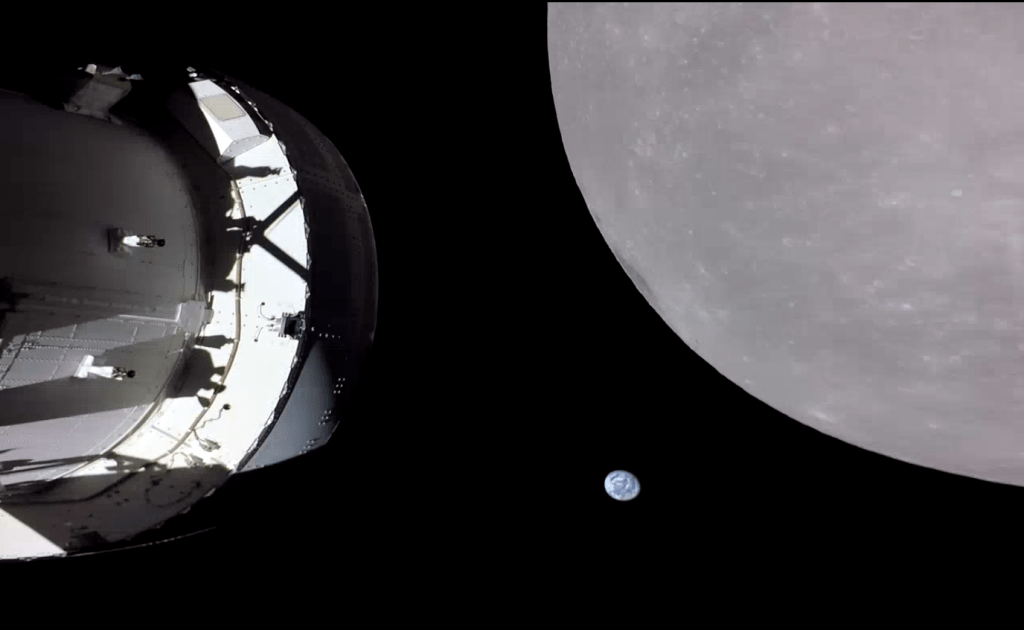
Image (Credit): The Earth is seen setting from the far side of the Moon just beyond the Orion spacecraft in this video taken on the sixth day of the Artemis I mission by a camera on the tip of one of Orion’s solar arrays. (NASA)
The Artemis I mission is going well. On day six (November 21), the Orion capsule had a successful flyby of the moon and traveled to within 81 miles of the lunar surface. After a slow start to the launch, NASA engineers must be somewhat relieved.
NASA provided an update on the mission yesterday. You can find many more details on the mission in that one hour briefing.
Stay tuned for some space records later this week, as noted by NASA:
Orion will travel about 57,287 miles beyond the Moon at its farthest point from the Moon on Nov. 25, pass the record set by Apollo 13 for the farthest distance traveled by a spacecraft designed for humans at 248,655 miles from Earth on Saturday, Nov. 26, and reach its maximum distance from Earth of 268,552 miles Monday, Nov. 28.
And be sure to stay abreast of the mission via the Artemis blog.
Image (Credit): Graphic showing Lunar Gateway elements from commercial and international partners. (NASA)
Late last week, the White House announced that Japan plans to support the operations of the International Space Station (ISS) through 2030 as well as further collaborate with the United States on the Artemis Lunar Gateway platform that will orbit the Moon.
On November 17, Vice President Kamala Harris stated:
The United States welcomes Japan’s intention to extend its support of International Space Station (ISS) operations through 2030, following the United States’ announcement of our ISS extension one year ago. In addition, our two countries are taking a step forward by reaching an agreement on collaboration on the Lunar Gateway orbiting platform, which will pave the way for the return of humanity to the Moon.
Under a previous agreement that has been expanded further, Japan’s JAXA has promised a number of contributions to the Lunar Gateway, including:
Critical components of the International Habitation (I-HAB) module that will provide the heart of the Gateway space station’s life support capabilities, as well as space for crew to live, conduct research, and prepare for lunar surface activities during Artemis missions. Japan will provide I-HAB’s Environmental Control and Life Support System (ECLSS), thermal control system functions, and cameras.
Batteries for I-HAB, the Habitation and Logistics Outpost (HALO) module, the initial crew cabin for astronauts visiting the Gateway, and the European System Providing Refueling Infrastructure and Telecommunication (ESPRIT) refueling module.
The JAXA HTV-XG spacecraft for launch and delivery of a logistics resupply mission for Gateway, scheduled for no later than 2030.
With the successful start of Artemis I lunar mission, it is good to hear that partner nations are increasing their support for a return to the Moon as well as plans to travel to Mars. While the United States went to the Moon alone last century, the Artemis partnership ensures this century’s return to the Moon is an international project.
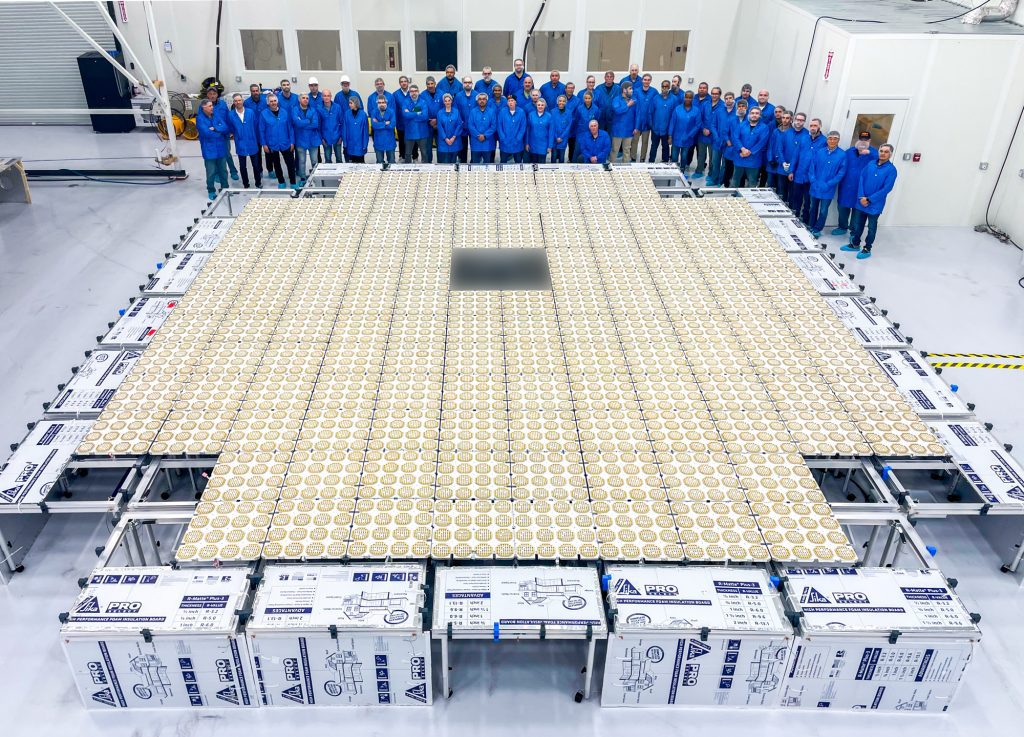
Image (Credit): AST SpaceMobile’s BlueWalker 3 test satellite, which is 693 square feet in size. (AST SpaceMobile)
It is called Bluewalker 3, and it may change the night sky for years to come. Launched in September 2022 aboard a SpaceX rocket, the Bluewalker3 prototype communications satellite from AST SpaceMobile spread its 693 square feet antenna array in low-Earth orbit. It has now become as bright as the brightest stars in the evening sky. And more of these satellites will soon be launched – 168 of them.
Needless to say, astronomers on the ground are perturbed. As noted in Science, astronomer Meredith Rawls of the University of Washington, Seattle, stated, “It’ll show up as a superbright streak in images and potentially saturate camera detectors at observatories.”
That is not to say it will be the brightest man-made object in the night sky. The International Space Station wins that battle being about 40 times brighter than the Bluewalker3, but there is only one ISS versus the 168 Bluewalker satellites being planned.
But wait, there’s more. The Bluewalker satellites direct-to-mobile cell service will also impact radio astronomers.
All of this has astronomers up in arms, leading to complaints against the use of such satellites. The Federal Communications Commission (FCC) is monitoring the matter.
As reported by NBC News, the FCC is also placing new restrictions on satellites at the end of their mission life, but this will not help with all of the new satellites going up today that will be crowding the night sky for many years to come.
If this continues, we may need that planned lunar base as a telescope collection point, at least until the objects orbiting the Moon become a problem.
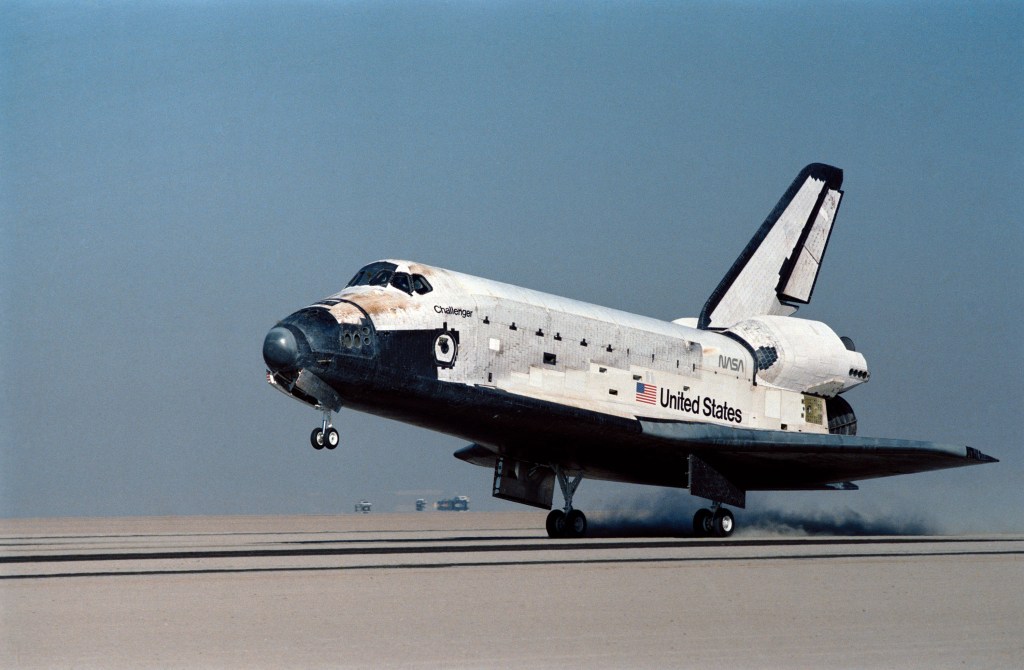
NASA leaders recently viewed footage of an underwater dive off the East coast of Florida, and they confirm it depicts an artifact from the space shuttle Challenger. The artifact was discovered by a TV documentary crew seeking the wreckage of a World War II-era aircraft. Divers noticed a large humanmade object covered partially by sand on the seafloor. The proximity to the Florida Space Coast, along with the item’s modern construction and presence of 8-inch square tiles, led the documentary team to contact NASA.
China has completed a first hot fire test of a fully-assembled powerful new engine that could power new launch vehicles and boost the country’s space capabilities. The full system test of the 500-ton-thrust, dual nozzle kerosene-liquid oxygen staged combustion cycle engine took place on Nov. 5, marking a milestone for the rocket engine.
A Northrop Grumman capsule delivered several tons of supplies to the International Space Station on Wednesday despite a jammed solar panel. The shipment arrived two days after launching from Virginia. Only one of the cargo ship’s two round solar panels opened following liftoff. Flight controllers tried in vain to open the stuck panel, but managed to draw enough power for the flight with just one.
Image (Credit): Status of Tropical Storm Nicole on Thursday morning. (The National Hurricane Center)
Florida does have its issues this time of year (and I don’t mean elections), making rocket launches more difficult. Now Tropical Storm Nicole is battering the state, leading to a delay in the upcoming Artemis I launch. The new launch date is November 16, as noted on NASA’s latest Artemis blog:
NASA is continuing to monitor Tropical Storm Nicole and has decided to re-target a launch for the Artemis I mission for Wednesday, Nov. 16, pending safe conditions for employees to return to work, as well as inspections after the storm has passed. Adjusting the target launch date will allow the workforce to tend to the needs of their families and homes, and provide sufficient logistical time to get back into launch status following the storm.