Image (Credit):Star Trek panel at the San Diego Comic Con in July 2022. (Films that Rock)
This week’s image shows Patrick Stewart (Captain Picard) and Gates McFadden (Dr. Beverly Crusher) discussing Star Trek at the 2022 Comic Con in San Diego, CA. You can watch the full panel discussion here. You can also watch the season three (and final season) trailer for Star Trek: Picardhere, indicating our favorites from The Next Generation will be returning one more time.
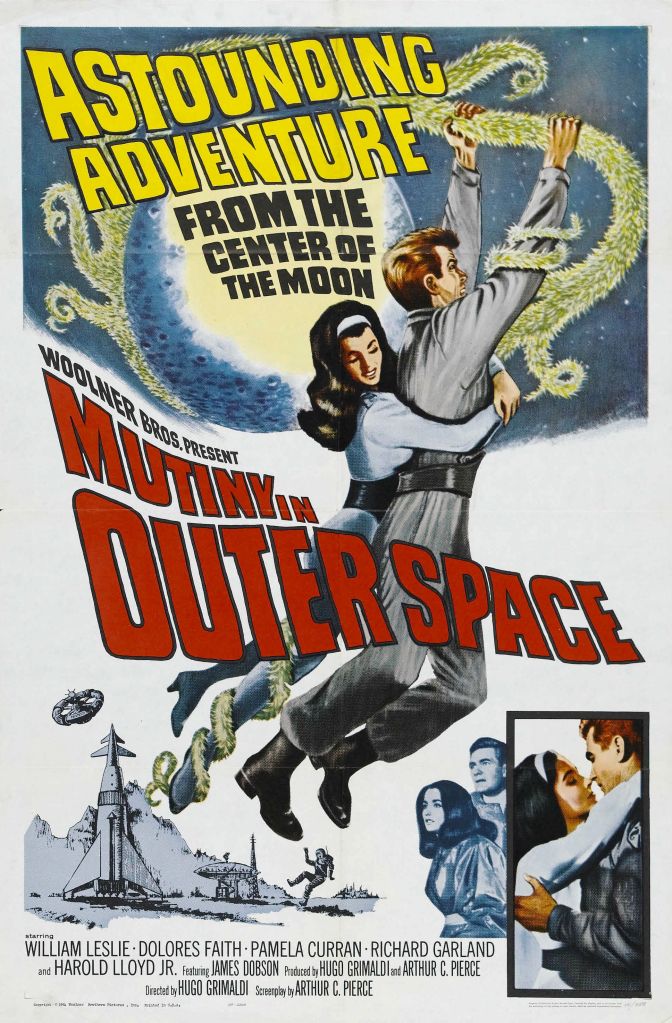
Image (Credit): Poster for the 1965 film Mutiny in Outer Space. (Hugo Grimaldi Film Productions)
If Hollywood is not planning to provide any summertime space movies, maybe it’s time to check the archives for something fun from the past. One such movie is Mutiny in Outer Space, a black and white film from 1965. You can find it on the Internet Archive and Youtube.
The story involves a space station infected by a lunar sample and efforts by the crew to contain the damage. It reminded me of Star Trek with deadly tribbles, though the special effects are pretty primitive compared to Star Trek, which came out the next year in color. Even so, the story hit on some themes that are recognizable today, such as space junk threatening the space station, the discovery of water on the Moon, and the establishment of lunar bases.
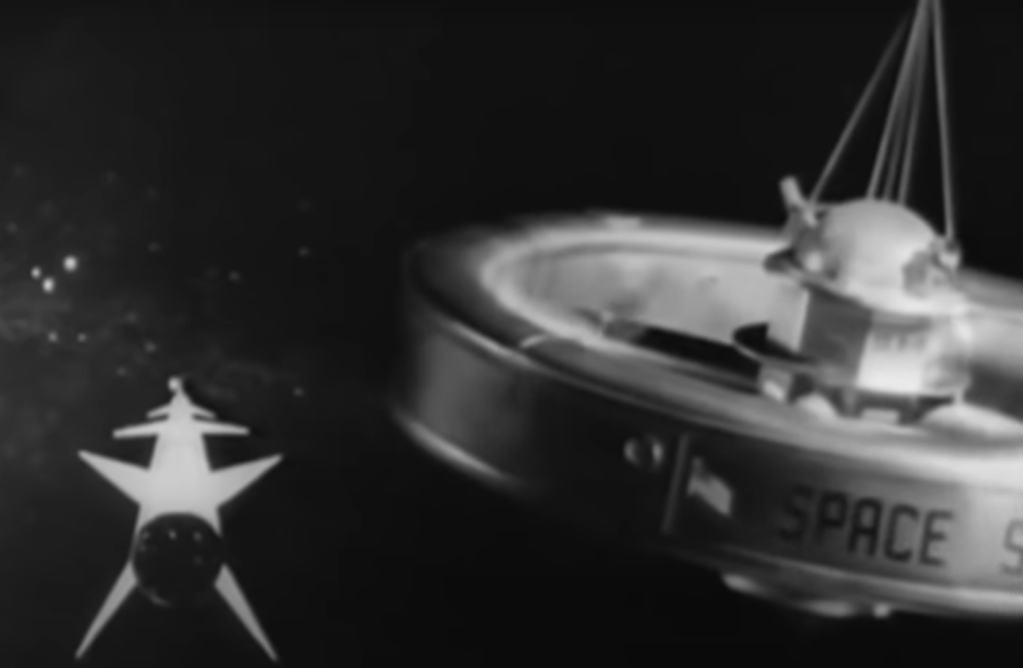
One humorous bit from the movie was the arrival of astronauts from the Moon at the space station. It appears the incoming rocket was unable to dock at the station, so the two astronauts had to float from the rocket to the space station. After they departed, the rocket oddly broke into two pieces and somehow landed on the space station like a suitcase on top of a station wagon. I remember hearing that Star Trek did away space transportation, and such awkward scenes, by simply creating the transporter room. It saved a lot of production money and became a key part of the series.
The film is earnest and humorous at the same time. I recommend you check out the film if you need a fun diversion some evening.
Image (Credit): Scene from the film Mutiny in Outer Space. (Hugo Grimaldi Film Productions)
With the fourth of July weekend upon us, we still lack a Hollywood blockbuster space adventure film. However, an Austrian space drama arrived this weekend – Rubikon. Here is the basic plot in the year 2056:
Following a catastrophe on Earth, the planet is covered in a toxic fog. The crew in the space station, must decide whether to risk their lives to get home and search for survivors, or stay safe in the station’s “algae symbiosis system”.
It sounds a lot like another film with George Clooney from 2020. Do you remember The Midnight Sky?:
This post-apocalyptic tale follows Augustine (George Clooney), a lonely scientist in the Arctic, as he races to stop Sully (Felicity Jones) and her fellow astronauts from returning home to Earth, where a mysterious global catastrophe has taken place.
Yes, astronauts are looking down on a dying planet, again. Didn’t Interstellar also having a dying Earth? Makes you kind of miss Star Trek with its hopeful story lines.
So far, Rubikon has 30 percent on Rotten Tomatoes, so don’t get your hopes too high. Some of the reviews are shown below. Yet if you need a space adventure film this weekend, you now have one.
Image (Credit): Comments on the film Rubikon. (Rotten Tomatoes)
Astronomers recently reported that a strange ring just outside of the Milky Way galaxy that may be an intergalactic supernova remnant. SciTechDaily had a story on the discovery first reported in the journal Monthly Notices of the Royal Astronomical Society.
Initially detected by the Australian Square Kilometre Array Pathfinder (ASKAP), the object (later named J0624–6948) is believed to be located in the Large Magellanic Cloud, which is a satellite galaxy of the Milky Way.
Professor Miroslav Filipovic from Western Sydney University stated:
The most plausible explanation is that the object is an intergalactic Supernova Remnant due to an exploded star that resided in the Large Magellanic Cloud outskirts that had undergone a single-degenerate type Ia supernova which involves the explosion of two stars orbiting each other.
If you are a fan of The Lord of the Rings films, the image may remind you of another ring and accompanying poem:
Three Rings for the Elven-kings under the sky, Seven for the Dwarf-lords in their halls of stone, Nine for Mortal Men doomed to die, One for the Dark Lord on his dark throne In the Land of Mordor where the Shadows lie. One Ring to rule them all, One Ring to find them, One Ring to bring them all, and in the darkness bind them, In the Land of Mordor where the Shadows lie.
I have not sought comments from NASA on this connection just yet.
Image (Credit): Ring from the Fellowship of the Ring movie. (Warner Bros. Entertainment)
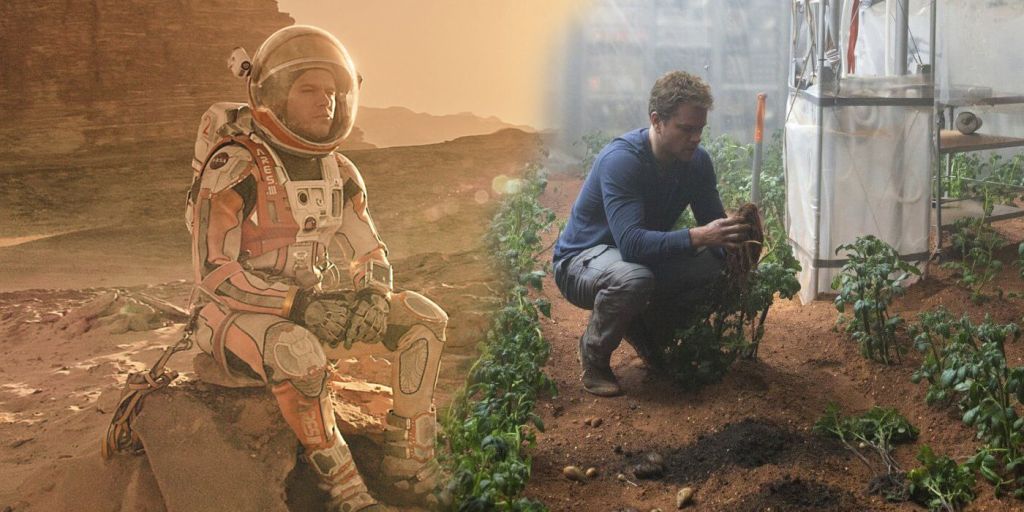
Image (Credit): Matt Damon on Mars in the film The Martian. (20th Century Fox)
Back in a November 2020 article, Science News discussed the difficulties of farming on Mars, noting it was not as easy as Matt Damon’s character made it seem in the film The Martian. In fact, toxins discovered in the Martian soil has proven that growing potatoes with a bit of man-made manure is not possible.
In the article, “Farming on Mars will be a Lot Harder Than ‘The Martian’ Made it Seem,” the author noted that researchers put together a variety of soil samples to match the surface of Mars and determined that the soil that most closely matched the Martian soil was unable to grow vegetation for any length of time. Once that soil was modified to include calcium perchlorate, which makes up about 2 percent of Martian soil, nothing could grow at all. In other words, Matt Damon would have starved if he only had a latrine to support him.
The researchers are testing other possible soil types using materials that can be found on Mars, so Martian potatoes (or at least legumes) may be possible. We will just need to send Mr. Damon back to Mars to test these new approaches.
Extra: The BBC’s Science Focus website posted a more hopeful article around the same time highlighting what can be grown on Mars, but it also outlined a number of problems that will impact Martian farming, including less sunlight, lower temperatures, thinner atmosphere, radiation, and extreme seasonal variations. We don’t always realize how good we have it back here on our home planet.






 Our Awesome Universe