Movie: A Million Miles Away

Credit: Amazon Prime

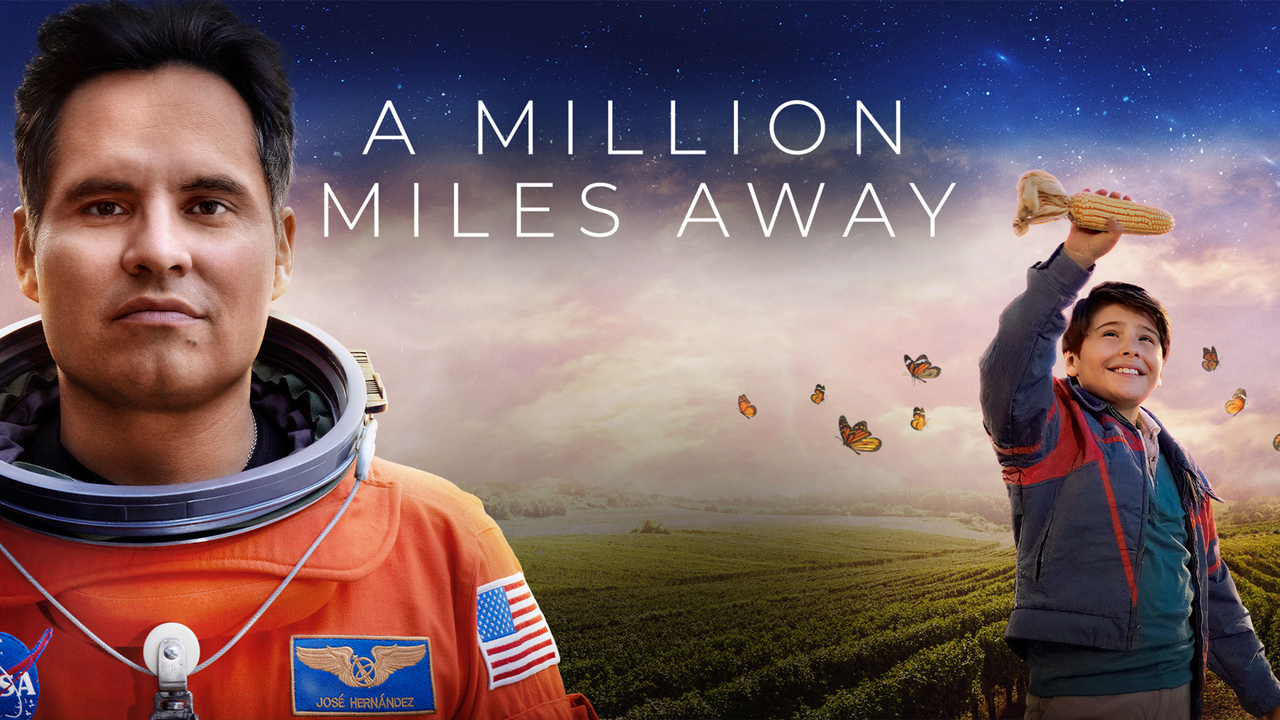
I recently watched the movie A Million Miles Away after experiencing a summer with no blockbuster films addressing anything interesting related to space travel or alien life. I was happy that this new movie (available on Amazon Prime last month) addressed both, but the “alien” life related to migrant farmers seeking a better life in America.

You will quickly become hooked on the dreams of future astronaut José Hernández as he winds a narrow path to become a NASA flight engineer. You can see a clip of the film here.

The first hour of the film covers the story of his youth, education, and start of a family. After that, you are with him as he is tested by NASA trainers in a way that few of us can imagine. His story intertwines with the Shuttle Columbia disaster, which add another interesting and somber layer to his story.

The film is later interlaced with images of the actors and real persons, including images of José Hernández as he worked on the International Space Station.

Its a great story for the entire family. Yes, it is old story about following your dreams, but it also shows what other may sacrifice along the way to make the dreams of a child or spouse possible.

Rotten Tomatoes shows an Audience Score of 96 percent. I agree with the audience on this one.

Image (Credit): Astronaut José Hernández. (NASA)

Satellite News: Otter Pup to the Rescue

Credit: Starfish Space

Things are looking up for the satellite business. That is, things should shortly be coming down from space that no longer need to be there, and that is a good thing. And Starfish Space hopes to be the one to bring down those satellites.

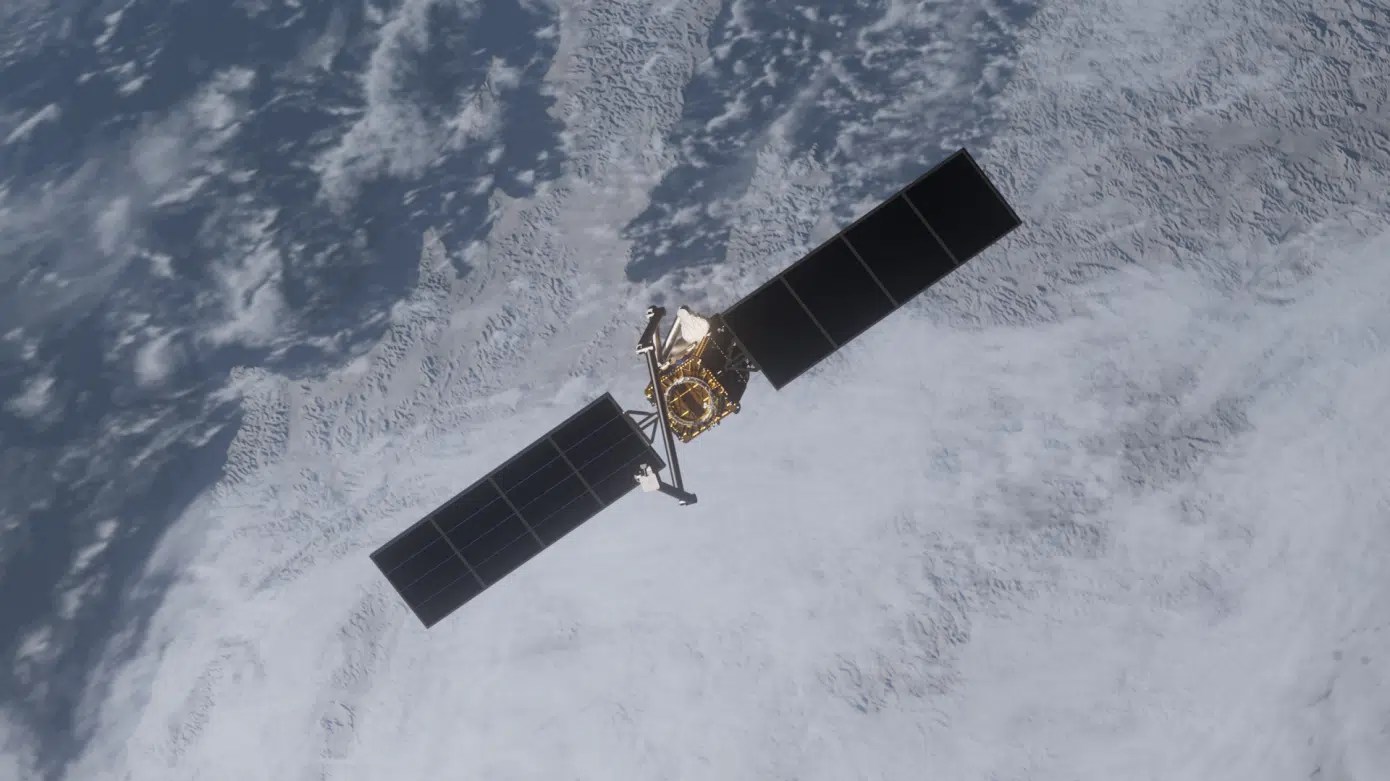
Here is the story. Starfish Space has created the electric-propulsion Otter Pup prototype spacecraft to act as a tug boat in space that can safely nudge old satellites and debris out of orbit. This will be the basis for the commercially-available Otter spacecraft in the near future. The mission of this spacecraft could also be expanded to serve as a “robotic repair crew.”

It sounds so promising that NASA has awarded the company with a contract to expand its work in this area.

This is good news for anyone concerned about the growing amount of traffic and debris in low-Earth orbit. We have no problem tossing things into space, but we have not given enough thought to what happens later. The Otter Pup is a step in the right direction.

Note: You can see a July 2022 Starfish Space presentation to NASA about the Otter spacecraft here.

Image (Credit): The Otter Pup prototype spacecraft . (Starfish Space)

Space Stories: Psyche Ready to Go, Interesting Exoplanets, and Protecting Astronaut Health

Image (Credit): Artist’s rendering of NASA’s Psyche mission approaching the asteroid Psyche. (NASA)

Here are some recent stories of interest.

Universe.com: “NASA’s Psyche Now Set to Launch October 12

With just under two weeks until its planned launch, NASA’s Psyche mission has been rescheduled. As per a NASA blog post, the agency along with SpaceX are now aiming for liftoff on October 12 at 10:16 A.M. EDT from the Kennedy Space Center in Florida — the first of several NASA science missions that will ride to space on a Falcon Heavy Rocket. The mission was originally set to launch October 5.

Trottier Institute for Research on Exoplanets: “UdeM-Led Study of Exoplanet TRAPPIST-1 b Reveals New Insights into its Atmosphere and Star

A team of astronomers has made an important leap forward in our understanding of the intriguing TRAPPIST-1 exoplanetary system. Not only has their research shed light on the nature of TRAPPIST-1 b, the exoplanet orbiting closest to the system’s star, but it has also shown the importance of parent stars when studying exoplanets. The findings, published today in Astrophysical Journal Letters, shed light on the complex interplay between stellar activity and exoplanet characteristics.

NASA: “NASA Funds Eight Studies to Protect Astronaut Health on Long Missions

NASA is funding eight new studies aimed at better understanding how the human body reacts to spaceflight. These studies will be done on Earth without the need for samples and data from astronauts. Collectively, these studies will help measure physiological and psychological responses to physical and mental challenges that astronauts may encounter during spaceflight. With this information, NASA may be better able to mitigate risks and protect astronaut health and performance during future long-duration missions to the International Space Station, the Moon, Mars, and beyond. 

Space Quote: New Horizons for New Horizons

Image (Credit): Artist’s rending of the New Horizons spacecraft approaching Pluto. (Johns Hopkins University Applied Physics Laboratory/Southwest Research Institute (JHUAPL/SwRI))

“The New Horizons mission has a unique position in our solar system to answer important questions about our heliosphere and provide extraordinary opportunities for multidisciplinary science for NASA and the scientific community…The agency decided that it was best to extend operations for New Horizons until the spacecraft exits the Kuiper Belt, which is expected in 2028 through 2029.”

Statement by Nicola Fox, NASA’s associate administrator for NASA’s Science Mission Directorate in Washington, regarding the plans for the New Horizons spacecraft. The NASA statement notes that starting in fiscal year 2025, the New Horizons spacecraft will focus on gathering unique heliophysics data, which does not preclude additional flybys of later identified items in the Kuiper Belt.

Future Plans for a Spaceship to Decommission the ISS

How much does it cost to decommission a space station? Well, according to NASA as cited by London’s Daily Mail, it will cost at least $1 billion to ensure the International Space Station (ISS) finds a safe spot to crash. And NASA even has a name for the spacecraft that will be needed to steer the ISS into the Earth – the US Deorbit Vehicle (USDV) – because everything needs an fancy acronym.

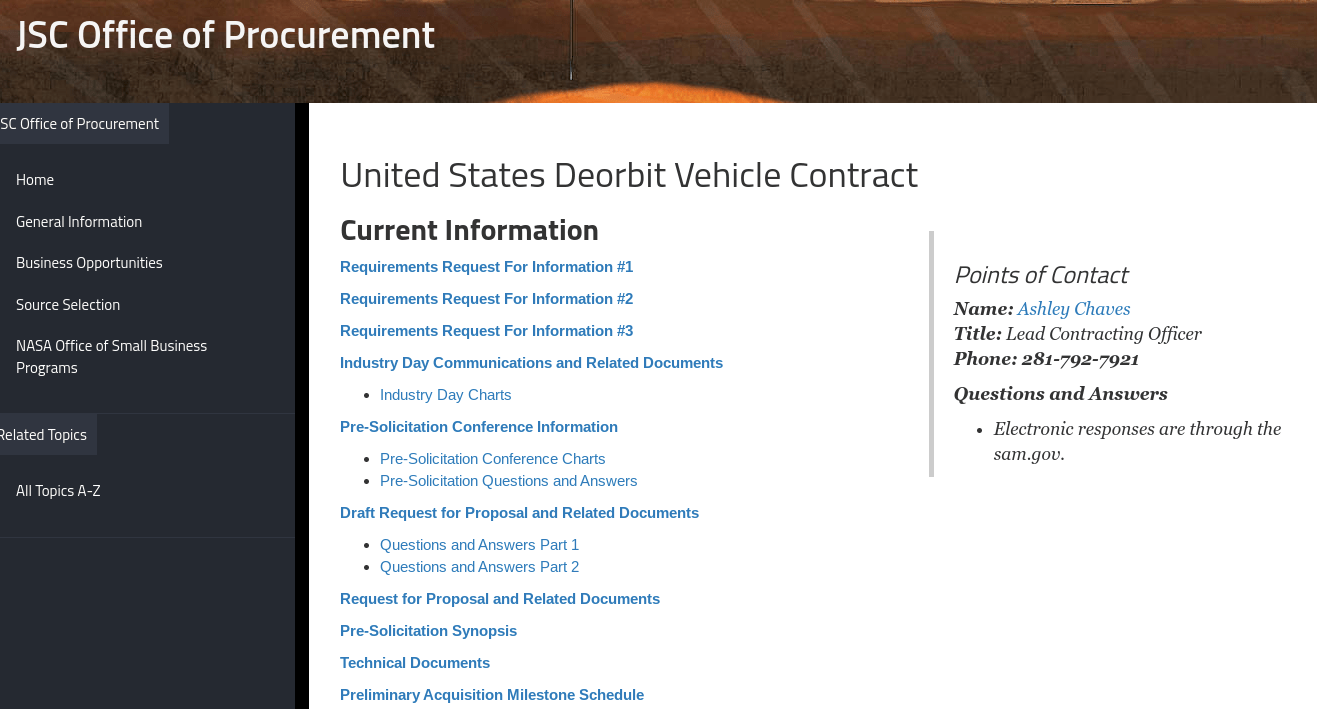
The ISS is not expected to disappear until 2031, but plans are underway to start the decommissioning process now. If you want to help build the USDV you have until November of this year to share your plans with NASA (see below and visit this link). Just as we have companies in a race to put humans on the Moon again, we will now have a race for the final days of the ISS.

And where will the ISS end up? In its Requiremenst for Request Information, NASA is asking for a “controlled reentry into an unpopulated region.” It appears the goal is to aim any burning remains at Point Nemo, which is a spot in the Pacific Ocean used many times for such purposes (see the diagram above).

The US apparently has plans for an ISS replacement. I just hope at least part of the new station is in orbit by 2031. We do not need a long gap with no space station. The gap between end of the space shuttle and the restart of US-controlled rocket missions to the ISS was far too long. We have time to get it right.

Credit: NASA