Space Stories: New Horizon Questions, A Dark Spot on Neptune, and Prioritizing Exoplanets

Image (Credit): NASA’s New Horizons spacecraft. (NASA/Johns Hopkins University Applied Physics Laboratory/Southwest Research Institute)

Here are some recent stories of interest.

Space.com : “NASA’s New Horizons Mission Faces an Uncertain Future (op-ed)

With its budget being trimmed for 2024, NASA is making some weighty decisions… and one includes drastically trimming New Horizons funds by replacing the current science staff with a new team in an effort to save about $3 million—a rounding error in terms of the planetary science budget...As it stands, New Horizons will exit the Kuiper Belt around 2028 and should continue operating until 2050.

ScienceDaily : “Mysterious Neptune Dark Spot Detected from Earth for the First Time

Using ESO’s Very Large Telescope (VLT), astronomers have observed a large dark spot in Neptune’s atmosphere, with an unexpected smaller bright spot adjacent to it. This is the first time a dark spot on the planet has ever been observed with a telescope on Earth. These occasional features in the blue background of Neptune’s atmosphere are a mystery to astronomers, and the new results provide further clues as to their nature and origin.

Universe Today : “TESS has Found Thousands of Possible Exoplanets: Which Ones Should JWST Study?

We will soon have more than 10,000 worlds where life might be able to survive. It’s an amazing idea, but with so many exoplanets we don’t have the resources to search for life on all of them. So how do we prioritize our search? That’s the focus of a recent paper on the pre-print server arxiv. In it, the team strives to identify the “best in class” candidates for exoplanets that could be further studied by the spectroscopic cameras of the James Webb Space Telescope (JWST). Their list could not only help astronomers find evidence of life but also help us understand the range of atmospheres exoplanets have.
A New Crew Departs for the ISS

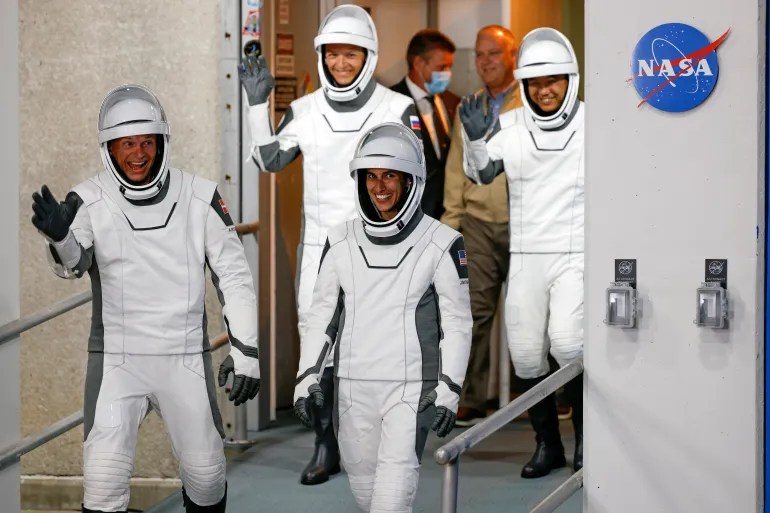
Image (Credit): ISS crew preparing for August 26, 2023 launch. (Terry Renna/AP Photo)

A new crew departed Earth for the International Space Station (ISS) at 3:27am ET today from NASA’s Kennedy Space Center in Florida via a SpaceX Falcon 9 rocket. The crew includes:

  • NASA astronaut Jasmin Moghbeli,
  • ESA (European Space Agency) astronaut Andreas Mogensen,
  • JAXA (Japan Aerospace Exploration Agency) astronaut Satoshi Furukawa, and
  • Roscosmos cosmonaut Konstantin Borisov.

The new crew should be onboard the ISS tomorrow morning, bringing the number of occupants at the station to 11 until 4 crew members return to Earth in a few days.

Russia is probably happy to have attention back on the ISS rather than the Moon for the moment. It has not been a good week for the Russian space program.

You can read more about the new crew members at this NASA site.

A Day in Astronomy: Launch of the Spitzer Space Telescope

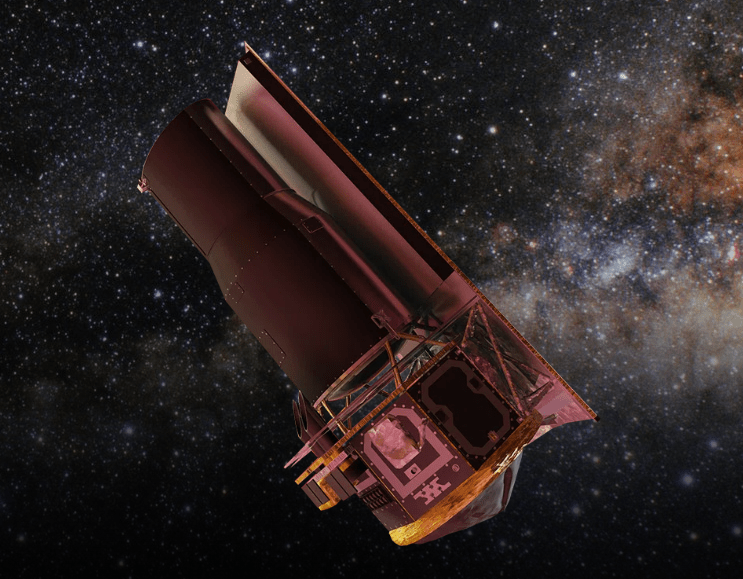
Image (Credit): Artist’s rendering of the Spitzer Space Telescope. (NASA/JPL)

On this day in 2003, NASA launched the Spitzer Space Telescope to conduct infrared astronomy. Spitzer continued to operate until January of 2020.

NASA’s Jet Propulsion Laboratory (JPL) noted some of the triumphs of the space telescope, including:

  • revealing a system of seven Earth-size planets around a star 40 light-years away;
  • creating an unprecedented map of the Milky Way;
  • directly observing light from a planet outside our solar system;
  • directly identifying molecules in the atmospheres of exoplanets; and
  • revealing Saturn’s largest ring.

An impressive list of accomplishments for any telescope.

You can read more about Spitzer at this NASA mission website as well as this JPL website.

“India Is on the Moon”

Image (Credit): The ISRO mission control room celebrating the successful landing of the Chandrayaan-3 mission on the Moon. (ISRO)

Now that is a clear message from S. Somanath, chairman of the Indian Space Research Organization (ISRO). The Chandrayaan-3 spacecraft landed on the lunar surface at  8:34 am ET today.

India is now the fourth nation to land on the moon, not that other nations haven’t tried.

This victory is all the sweeter following Russia’s loss of the Luna-25 spacecraft. We needed some good news this week.

NASA Administrator Bill Nelson stated:

Congratulations ISRO on your successful Chandrayaan-3 lunar South Pole landing! And congratulations to India on being the 4th country to successfully soft-land a spacecraft on the Moon. We’re glad to be your partner on this mission!

NASA provided the mission with a passive laser retroreflector array for lunar ranging studies.

The mission rover (shown below) should be moving about south pole soon enough to start its experiments in the vicinity.

You can learn more about the mission and equipment at this ISRO site.

Credit: ISRO

A Day in Astronomy: The Launch of Voyager 2

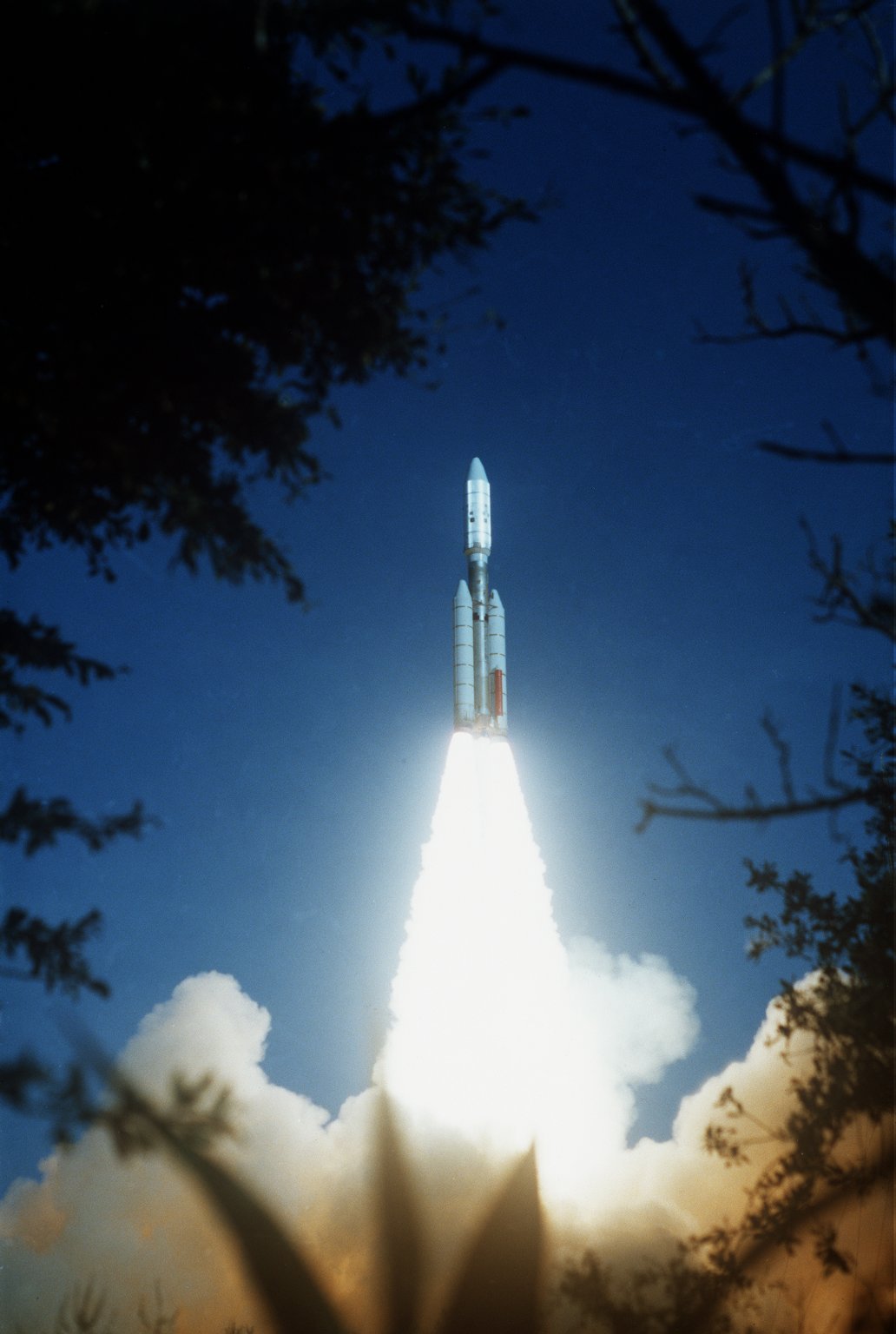
Image (Credit): The launch of Voyager 2. (NASA)

On this day in 1977, NASA launched the Voyager 2 space probe from the Kennedy Space Center at Cape Canaveral in Florida to study the solar system’s outer planets as well as interstellar space beyond the Sun’s heliosphere.

The Voyager 2 space probe is still talking to us as it continues its journey beyond the planets with a special message for anyone it may encounter.

During its initial mission, the space probe provided us with many images from an little known region of our solar system, including the image below of Jupiter’s moon Europa.

Image (Credit): Europa during Voyager 2’s closest approach. (NASA)