The Psyche Mission Begins

Credit: NASA

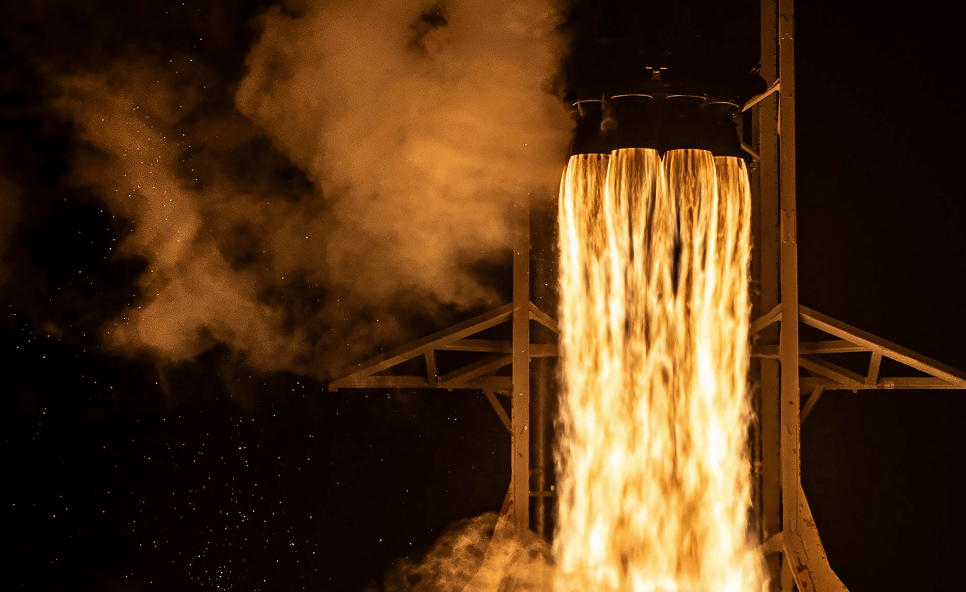
It may be Friday the 13th, but the news has been positive about the Psyche spacecraft, which earlier today successfully launched from  NASA’s Kennedy Space Center in Florida.

Here is part of a statement by Arizona State University Professor Lindy Elkins-Tanton, the Principal Investigator (PI) of the Psyche mission, from back in 2017 as she awaited word on whether the Psyche mission had been green-lighted by NASA:

I’ve only been working on this project for five and a half years. Some of my competitors have been through the process before with the same ideas, and are coming up on a decade of trying to fly their concept. Still, five and a half years. About 150 people have worked on this concept with me. We’ve written about 2,000 pages, including the step 1 and step 2 proposals and all the written, edited, revised, formatted, and published answers to questions that came in between. We have art and models and videos and new scientific and engineering results because of all our efforts to understand how to get to the metal world Psyche and what we might find if we did, and how we could measure it and send the information back to Earth and understand it and interpret it for everyone in the world.

To say our hearts are in this project would be too facile, too surficial, too trite. We have lived and breathed this. We know and love each other and we know each other’s families and we have learned when to be quiet and let the other person work through a peak of frustration late at night after no rest for weeks. We have sweated through countless reviews and celebrated with numerous cakes and dinners the many intermediate successes that allowed us to get here, the ultimate intermediate success, the privilege to wait for the phone call.

Here is PI Lindy Elkins-Tanton’s quote from earlier today:

We said ‘goodbye’ to our spacecraft, the center of so many work lives for so many years – thousands of people and a decade…But it’s really not a finish line; it’s a starting line for the next marathon. Our spacecraft is off to meet our asteroid, and we’ll fill another gap in our knowledge – and color in another kind of world in our solar system.

Congratulations to PI Lindy Elkins-Tanton and her team on a job well done (so far, of course).

NASA Gets Ready for a Thursday Launch to Asteroid Psyche

Image (Credit): The Psyche spacecraft sits aboard a SpaceX Falcon Heavy rocket earlier today at Launch Complex 39A. (NASA/Aubrey Gemignani)

After a number of delays, the Psyche mission appears ready to go as the spacecraft sits at Launch Complex 39A at the Kennedy Space Center in Florida. The launch is scheduled for tomorrow at 10:16 a.m. EDT.

The spacecraft will not reach the metal-rich asteroid Psyche until 2029. It will then orbit the asteroid for about two years collecting data to learn more about an object that astronomers believe may contain clues about the formation of the rocky planets closest to the Sun.

The scientific goals of the mission are to:

  • Understand a previously unexplored building block of planet formation: iron cores.
  • Look inside terrestrial planets, including Earth, by directly examining the interior of a differentiated body, which otherwise could not be seen.
  • Explore a new type of world. For the first time, examine a world made not of rock and ice, but metal.

NASA has a good track record this years with asteroid missions, so let’s hope the positive track record continues with tomorrow’s launch.

Update: Bad weather had delayed the launch until Friday, October 13th.

Image (Credit): Artist’s rendering of asteroid Pysche. (NASA)

Space Stories: Fancy Space Suits, Giant Blinding Satellites, and More Russian Space Station Leaks

Credit: Dezeen

Here are some recent stories of interest.

Dezeen: “Prada Designing Lunar Spacesuits for NASA Moon Mission

Fashion house Prada has teamed up with commercial space company Axiom Space to create lunar spacesuits for NASA’s Artemis III mission, which will be the first crewed moon landing since 1972. Called Axiom Extravehicular Mobility Unit (AxEMU), the suits will be designed to give astronauts “advanced capabilities for space exploration,” Prada said. They are an evolution of NASA’s Exploration Extravehicular Mobility Unit (xEMU) spacesuit design and will use “innovative technologies and design” to be more flexible and provide more protection against the harsh lunar environment, according to the brand.

Scientific American: “Giant Satellite Outshines Most Stars in the Sky

On some nights, one of the brightest objects in the sky is neither a planet nor a star. It is a telecommunications satellite called BlueWalker 3, and at times it outshines 99% of the stars visible from a dark location on Earth, according to observations reported today in Nature. BlueWalker 3 is the most brilliant recent addition to a sky that is already swarming with satellites. The spaceflight company SpaceX alone has launched more than 5,000 satellites into orbit, and companies around the globe have collectively proposed launching more than half a million satellites in the coming years — a scenario that astronomers fear could hamper scientific observations of the Universe.

The Guardian: “Third Space Station Leak in a Year Prompts Doubts About Russia’s Programme

The Russian segment of the International Space Station (ISS) has sprung its third coolant leak in under a year, raising new questions about the reliability of the country’s space programme even as officials said crew members were not in danger. Flakes of frozen coolant spraying into space were seen in an official live feed of the orbital lab provided by Nasa on Monday, and confirmed in radio chatter between US mission control and astronauts. “The Nauka module of the Russian segment of the ISS has suffered a coolant leak from the external (backup) radiator circuit, which was delivered to the station in 2012,” Russian space agency Roscosmos said on Telegram, adding temperatures remained normal in the affected unit.

Movie: A Million Miles Away

Credit: Amazon Prime

I recently watched the movie A Million Miles Away after experiencing a summer with no blockbuster films addressing anything interesting related to space travel or alien life. I was happy that this new movie (available on Amazon Prime last month) addressed both, but the “alien” life related to migrant farmers seeking a better life in America.

You will quickly become hooked on the dreams of future astronaut José Hernández as he winds a narrow path to become a NASA flight engineer. You can see a clip of the film here.

The first hour of the film covers the story of his youth, education, and start of a family. After that, you are with him as he is tested by NASA trainers in a way that few of us can imagine. His story intertwines with the Shuttle Columbia disaster, which add another interesting and somber layer to his story.

The film is later interlaced with images of the actors and real persons, including images of José Hernández as he worked on the International Space Station.

Its a great story for the entire family. Yes, it is old story about following your dreams, but it also shows what other may sacrifice along the way to make the dreams of a child or spouse possible.

Rotten Tomatoes shows an Audience Score of 96 percent. I agree with the audience on this one.

Image (Credit): Astronaut José Hernández. (NASA)

Satellite News: Otter Pup to the Rescue

Credit: Starfish Space

Things are looking up for the satellite business. That is, things should shortly be coming down from space that no longer need to be there, and that is a good thing. And Starfish Space hopes to be the one to bring down those satellites.

Here is the story. Starfish Space has created the electric-propulsion Otter Pup prototype spacecraft to act as a tug boat in space that can safely nudge old satellites and debris out of orbit. This will be the basis for the commercially-available Otter spacecraft in the near future. The mission of this spacecraft could also be expanded to serve as a “robotic repair crew.”

It sounds so promising that NASA has awarded the company with a contract to expand its work in this area.

This is good news for anyone concerned about the growing amount of traffic and debris in low-Earth orbit. We have no problem tossing things into space, but we have not given enough thought to what happens later. The Otter Pup is a step in the right direction.

Note: You can see a July 2022 Starfish Space presentation to NASA about the Otter spacecraft here.

Image (Credit): The Otter Pup prototype spacecraft . (Starfish Space)