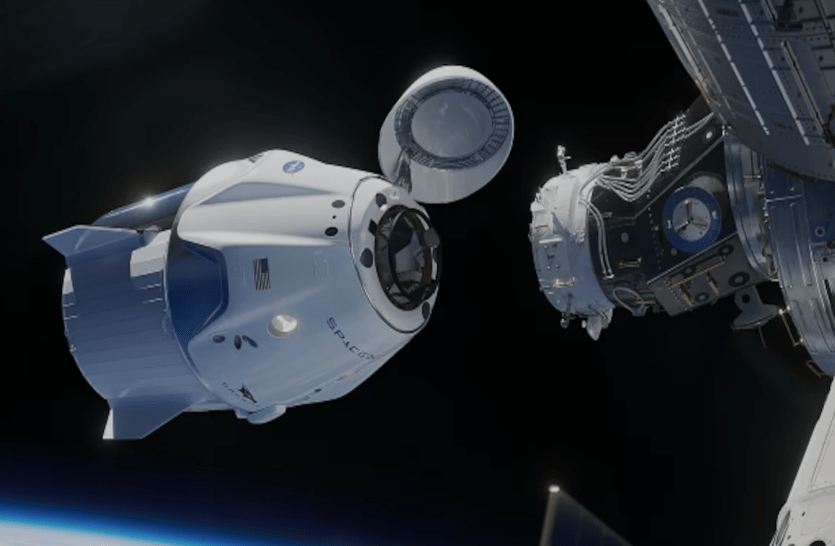
Image (Credit): The SpaceX Dragon with the Crew-6 team docking with the ISS. (NASA)
“I join the nation in congratulating Sultan al-Neyadi as he begins his pioneering mission aboard the International Space Station. His inspiring achievement is a source of great pride to the UAE and another milestone in the journey of our nation and the ambitions of our people.“
–Statement by United Arab Emirates (UAE) President Sheikh Mohamed bin Zayed Al Nahyan after the launch of the Crew-6 mission to the International Space Station (ISS), which included UAE astronaut Sultan al-Neyadi. All four members of the Crew-6 mission arrived safely at the ISS earlier today.
Image (Credit): A SpaceX Falcon 9 rocket with the company’s Dragon spacecraft on top. (NASA/Joel Kowsky)
This week’s image shows the SpaceX Falcon 9 rocket and Dragon capsule awaiting the launch of the Crew-6 mission to the International Space Station. The rocket launched at 12:34 a.m. EST today from Launch Complex 39A at NASA’s Kennedy Space Center in Florida. You can read more about the successful launch here.
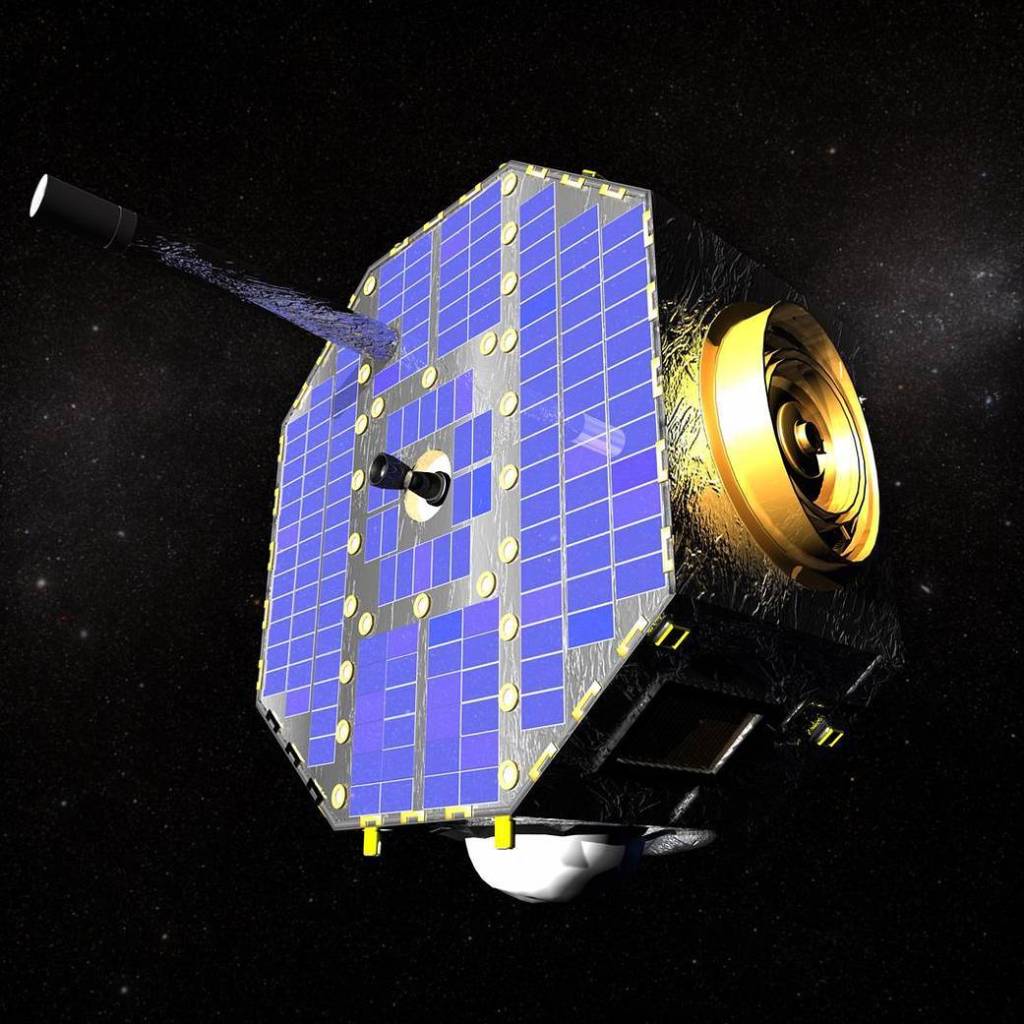
Image (Credit): Artist’s rendering of NASA’s IBEX spacecraft. (NASA)
NASA’s Interstellar Boundary Explorer (IBEX) is having some problems. On February 18, the IBEX flight computer reset itself and placed the spacecraft into contingency mode. This is not good for it ongoing mission to map the boundary of our solar system. The spacecraft’s system should do a full reset again in a few days, so NASA may get a break and be able to communicate with IBEX again shortly.
The IBEX spacecraft was launched back in October 2018 as the first spacecraft specifically designed to collect data across the entire sky about the heliosphere and its boundary. The mission has already been very instructive, as NASA explains:
Scientists have used this [IBEX] data to make the first maps of our heliosphere boundary. Our heliosphere boundary does not emit light that we can detect, which means it would be impossible to image using conventional telescopes. Instead of collecting light, like other telescopes do, IBEX collects particles coming from the boundary so that we can learn about the processes occurring there. The boundary of the Solar System protects us from harmful cosmic rays. Without it, four times more cosmic rays would enter our Solar System and potentially damage our ozone layer and DNA. It is important to study this region to know how it works.
Image (Credit): Artist’s rending of our solar system’s heliosphere. (NASA/IBEX/Adler Planetarium)
Update: As of March 2, the IBEX spacecraft is fully functional again. You can read more about it here.
Image (Credit):The SpaceX rocket with the Crew-6 mission at Kennedy Space Center in Florida. (SpaceX)
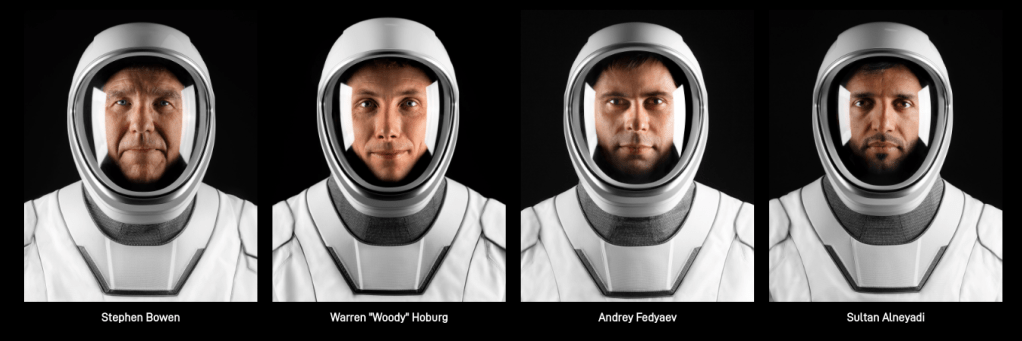
Today’s SpaceX launch of a four-man crew to the International Space Station (ISS) has been delayed. Just three minutes before the planned launch of the Crew-6 mission, designed to carry astronauts Stephen Bowen and Warren “Woody” Hoburg, cosmonaut Andrey Fedyaev, and Emerati astronaut Sultan Alneyadi, SpaceX experienced a problem with the engine igniter fluid.
The next window for the launch is this Thursday in the hopes that better weather will be available (compared to tomorrow’s weather).
The four crew members’ photos are provided below. Below you can also find a profile on each crew member:
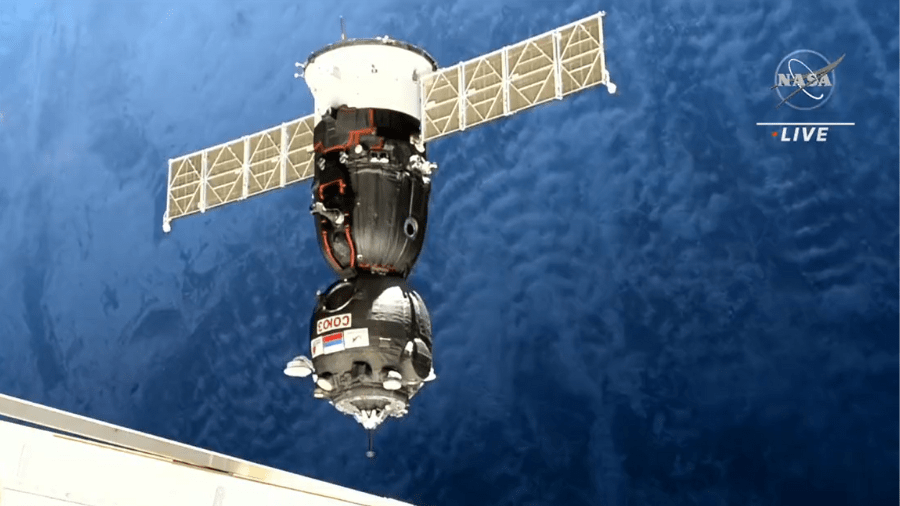
Image (Credit): Soyuz M-23 capsule approaching the ISS. (NASA)
Yesterday, Russia’s M-23 capsule has safely arrived at the International Space Station (ISS). It was carrying supplies but no crew. Now the M-22 crew has a safe way to return to Earth when the are ready.
SpaceX and NASA are targeting no earlier than Monday, February 27 for Falcon 9’s launch of Dragon’s sixth operational human spaceflight mission (Crew-6) to the International Space Station from Launch Complex 39A (LC-39A) at NASA’s Kennedy Space Center in Florida. The instantaneous launch window is at 1:45 a.m. ET (6:45 UTC), with a backup opportunity available on Tuesday, February 28 at 1:22 a.m. ET (6:22 UTC).
Things are starting to return to normal up there. Boring is welcome at this point.
Image (Credit): SpaceX Crew 6 mission on the launchpad. (SpaceX)





 Our Awesome Universe
