First Photos from James Webb Space Telescope to be Released on July 12th

Image (Credit): Artistic image with the JWST mirrors. (NASA)

NASA recently announced, in partnership with the European Space Agency and the Canadian Space Agency, that the first photos from the James Webb Space Telescope will be released from NASA’s Goddard Space Flight Center via a televised broadcast beginning at 10:30 a.m. EDT on Tuesday, July 12, 2022. The first images will also be posted here.

All of this follows the recent micrometeroid incident. NASA has been pretty quiet since reporting on the initial damage, though the pictures appear to be arriving as expected, so that is good news.

In terms of any future repairs to the JWST, a NASA Q&A with Paul Geithner, the deputy project manager – technical for James Webb Space Telescope, gives us some idea about the difficulties of such a mission:

​Q: Webb was not designed to be serviced, but could it eventually be repaired or refueled during a robotic service mission?

Paul: Conceivably, some robotic servicing of Webb could be possible. A robot could grapple Webb at the same place where it was attached to the Ariane launch vehicle, which is the launcher interface ring on the Sun-facing spacecraft bus, and then add fuel to its propulsion tank. Given that Webb is an exquisitely sensitive infrared observatory, and much of it is at cryogenic temperatures, opportunities and benefits of servicing are limited.

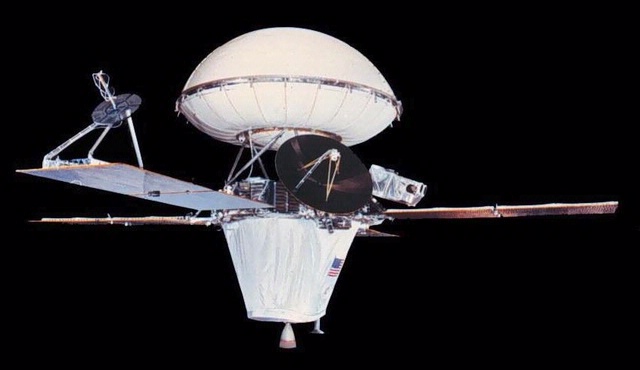
Image (Credit): JWST mission quick facts. (NASA)

A Day in Astronomy: Viking 1 Begins Obit of Mars

Image (Credit): Viking orbiter spacecraft. (NASA/National Space Science Data Center)

On this day in 1976, NASA’s Viking 1 spacecraft began its orbit of Mars. Launched in August 20, 1975, it took the Viking 1 spacecraft 11 months to travel to Mars. Viking 1 was a combination of orbiter and landing craft. The attached lander did not land on the Martian surface until July 20th, setting down on the western slope of Chryse Planitia (the Plains of Gold).

The Viking 1 orbiter operated successfully for four years, circling Mars 1,489 times. In addition to orbiting Mars, the orbiter also approached the Martian “moon” Phobos to learn more about the captured asteroid.

As with other missions at the time, there was a Viking 1 and a Viking 2. Viking 2 also had an orbiter and lander, both of which operated successfully.

The Viking missions greatly expanded our knowledge of Mars and its “moons.” In NASA’s fact sheet we learn that the two orbiters sent back 52,000 photographs (and mapped 97 percent of the Martian surface) and the landers sent back 4,500 photographs. Some of the discoveries include:

  • The permanent north cap is water ice; the southern cap probably retains some carbon dioxide ice through the summer.
  • Water vapor is relatively abundant only in the far north during the summer, but subsurface water(permafrost) covers much if not all of the planet.
  • Northern and southern hemispheres are drastically different climatically, because of the global dust storms that originate in the south in summer.

NASA has been back to the Martian surface many times since this first set of missions, but nothing can surpass the initial excitement of Viking missions.

More Studies of the Moon – This Time Volcanoes

Image (Credit): The beautiful Gruithuisen Domes on the surface of the Moon. (NASA/GSFC/Arizona State University)

Earlier this month, NASA announced plans to to study volcanoes on the Moon as part of the Artemis Program. The mission, called the Lunar Vulkan Imaging and Spectroscopy Explorer (Lunar-VISE) investigation, will involve a stationary lander and mobile rover.

The mission will entail a 10-day survey of the summit of one of the Gruithuisen Domes to learn more about how these domes were formed without water or plate tectonics and how they evolved over time. The results will feed into future planning regarding robotic and human missions to the lunar surface.

Speaking of volcanoes on the Moon, you may have already read about the potential benefits of placing humans below the lunar surface in lava tubes. Such benefits include avoiding extreme temperature swings, radiation, and meteorite impacts. This NASA video, “Lava Tubes: Science Beneath the Surface of the Moon,” provides more background on NASA’s efforts to learn more about the Moon’s surface and the role of lava tubes.

This lava tube idea is also being pursued for a Martian habitat as well. I am not sure if people want to travel to a distant world only to hide underground, but given the dangers of surface habitation it seems this might be our best chance for long-term survival. Yes, a new race of extraterrestrial groundhogs.

Nearby Planetary System Discovery: Two Earth-sized Planets

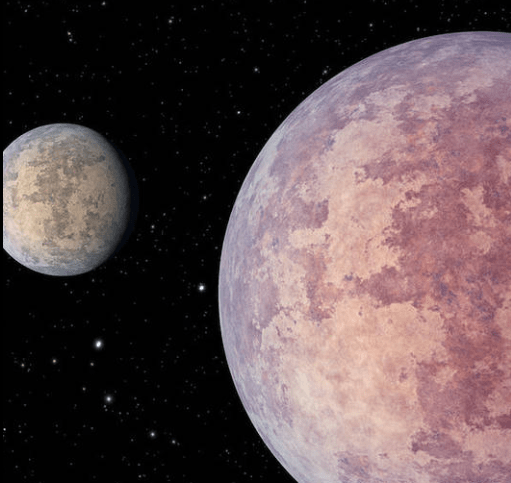
Image (Credit): Artist’s image of two new planets orbiting HD 260655. (NASA)

MIT News reports a star about 33 light years away contains two Earth-like planets, one that is 1.2 times the size of the Earth and the second that is about 1.5 times the size.

The discovery of these exoplanets orbiting the M-dwarf star, named HD 260655, came about when scientists combined data from NASA’s Transiting Exoplanet Survey Satellite (TESS) with data from the High Resolution Echelle Spectrometer (HIRES) in Hawaii and CARMENES at the Calar Alto Observatory in Spain. 

While both planets are too close to their sun, and thereby too hot to have liquid water on their surface, they are still objects for further study. The article quotes Michelle Kunimoto, a postdoc in MIT’s Kavli Institute for Astrophysics and Space Research and one of the discovery’s lead scientists:

Both planets in this system are each considered among the best targets for atmospheric study because of the brightness of their star…Is there a volatile-rich atmosphere around these planets? And are there signs of water or carbon-based species? These planets are fantastic test beds for those explorations.

Pic of the Week: The Helicopter’s Shadow

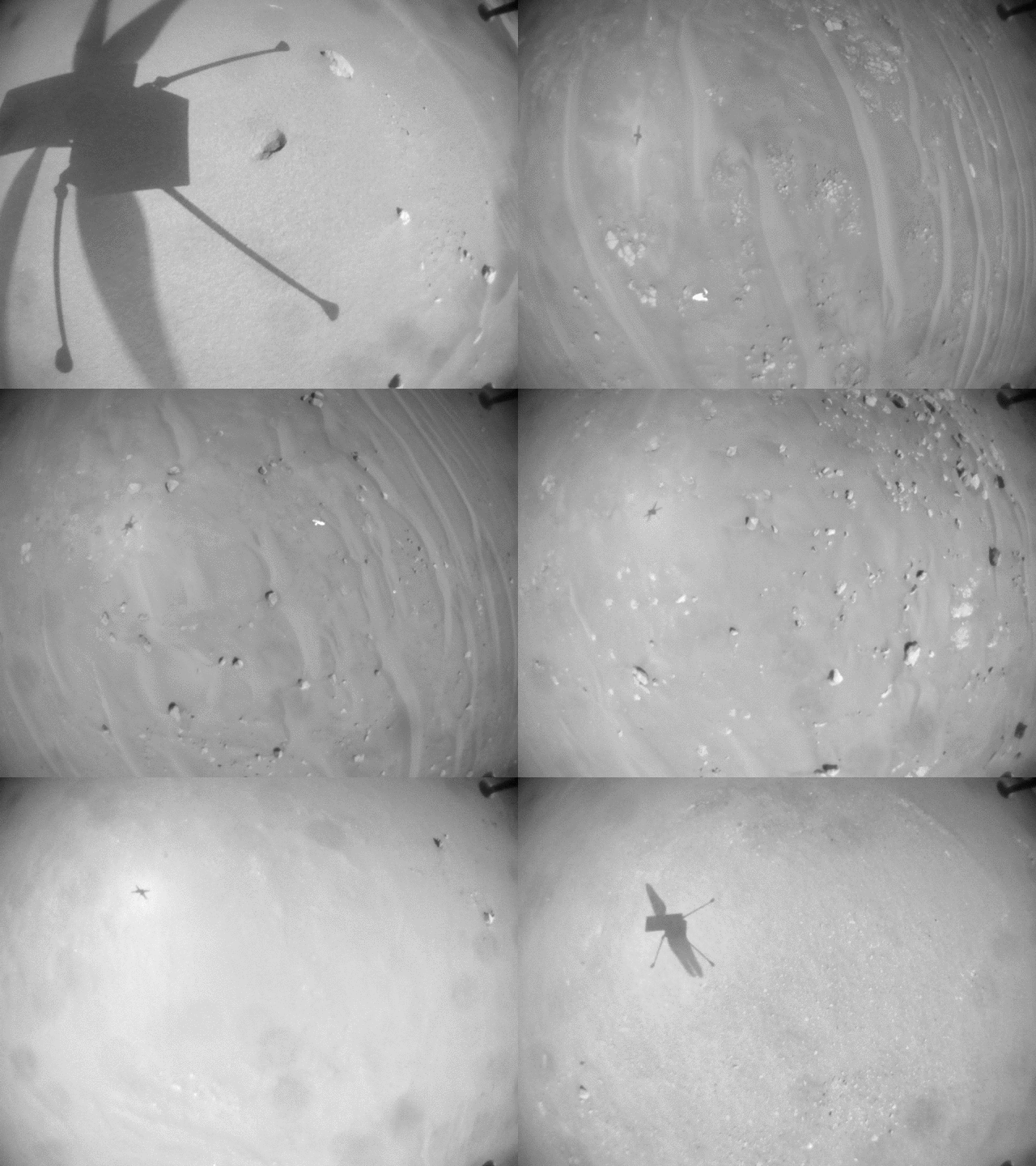
Image (Credit): Shadow of the Ingenuity Helicopter on Mar’s surface. (NASA/JPL-Caltech)

This week’s image, and the related animated gif, are from the navigation camera aboard NASA’s Ingenuity Mars Helicopter during its 25th flight on April 18, 2022 over the surface of Mars. Here is a little more information from NASA’s Jet Propulsion Laboratory (JPL):

The first frame of the clip shows the view about one second into the flight. After reaching an altitude of 33 feet (10 meters), the helicopter heads southwest, accelerating to its maximum speed in less than three seconds. Ingenuity first flies over a group of sand ripples then, about halfway through the video, several rock fields. Finally, relatively flat and featureless terrain appears below, making a good landing spot. The video of the 161.3-second flight was speeded up approximately five times, reducing it to less than 35 seconds.

Ingenuity’s navigation camera has been programmed to deactivate whenever the rotorcraft is within 3 feet (1 meter) of the surface. This helps ensure any dust kicked up during takeoff and landing won’t interfere with the navigation system as it tracks features on the ground.